
 Search

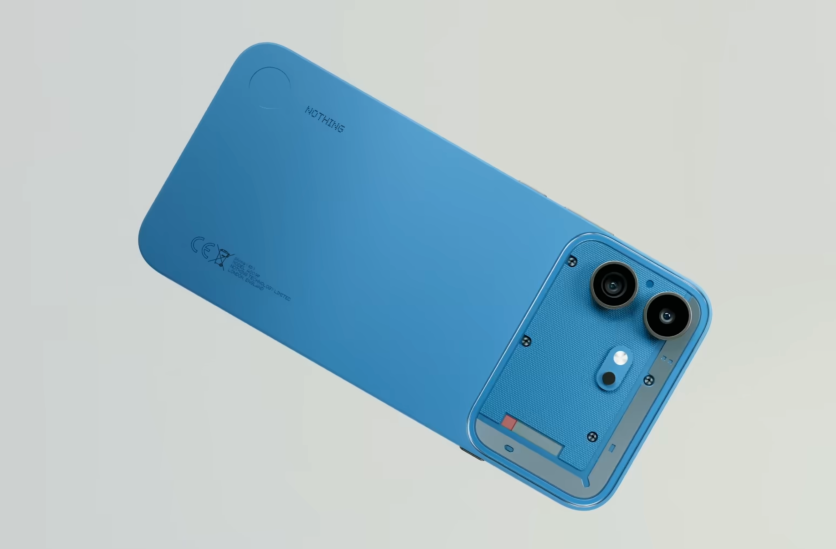
Nothing Phone (4b) Nothing.tech
Nothing's first b-series smartphone — the Phone (4b) — goes on sale in India on Monday, July 14, at 12 noon IST through Flipkart, Croma, Reliance Digital, and Vijay Sales, starting at ₹34,999. The device is London startup Nothing's answer to a painful question: what do you sell at the entry level when the components that used to make budget phones affordable now cost significantly more because AI data centers are consuming them first?
The answer is a deliberate series of tradeoffs. The Phone (4b) is powered by a Snapdragon 6 Gen 4 processor instead of the 7s Gen 4 found in the Phone (4a), uses LPDDR4X RAM instead of LPDDR5, and pairs with UFS 2.2 storage rather than UFS 3.1. What it offers in return is Nothing's full design language — semi-transparent unibody, the new 45-LED Glyph Bar, Nothing OS 4.1 on Android 16 — alongside a 6,000 mAh battery that is the largest the company has ever shipped in a phone, and a six-year security patch commitment that outpaces most rivals in the ₹30,000 bracket.
Whether those terms are acceptable depends almost entirely on how much a buyer values longevity and design differentiation over raw benchmark numbers. Buyers who prioritize on-paper performance per rupee will find stronger options from OnePlus, Xiaomi, and Realme at similar prices. Buyers who want six years of security patches and a phone that does not look like everything else in the segment are buying something nobody else is currently selling at this price point.
Read more: Nothing Ear (3a) Arrives at $99 With LDAC and a Recording Feature No Rival Has
Read more: Nothing Phone Features and Nothing OS Design: How This Android Smartphone Trends Ahead of the Competition
Memory Costs Killed CMF — and Created the b-Series
The backstory matters here. Nothing had planned to release a CMF Phone 3 Pro in 2026, the successor to the well-received CMF Phone 2 Pro. That phone was canceled outright — not delayed, canceled — because a global shortage of DRAM and NAND flash memory, driven largely by AI data center demand for High Bandwidth Memory at TSMC and Samsung fabs, pushed component costs sharply higher across the board. Carl Pei said publicly in early 2026 that the "more specs for less money" model that many value brands were built on is no longer sustainable.
Rather than revive CMF under tighter margins or simply leave the entry tier vacant, Nothing chose to absorb the budget segment back under its main brand. The b-series slots below the a-series and directly replaced where CMF had been. The phone is not cheaper because Nothing cut corners carelessly; it is cheaper because the components needed to make it cheaper without those tradeoffs are now priced into a different market tier.
That context shapes how the spec sheet should be read.
Under the Hood: What the Chip Actually Costs You
The Snapdragon 6 Gen 4 (part number SM6650) is Qualcomm's most recent 6-series chip, built on TSMC's 4nm process node. It is the first in the 6-series to use ARMv9 CPU cores — specifically, a 1× Cortex-A720 prime core at 2.3 GHz, three more A720 gold cores at 2.2 GHz, and four Cortex-A520 efficiency cores at 1.8 GHz, per Notebookcheck's specification sheet. The GPU is an Adreno 810.
One important technical distinction the draft launch coverage typically misses: the Snapdragon 6 Gen 4 supports both LPDDR5 RAM (up to 3,200 MHz) and UFS 3.1 storage in its specification sheet. Nothing chose LPDDR4X (running at 2,133 MHz) and UFS 2.2 for the Phone (4b). These are OEM cost decisions, not chip-imposed constraints. The phone could have shipped with faster memory; it did not because doing so would have raised the bill of materials and, with it, the retail price.
What that means in practice: independent benchmarks on the Snapdragon 6 Gen 4 (tested in the Oppo K13 5G) show an AnTuTu score around 894,500, GPU stability of 99.6% in sustained stress testing — exceptional for the segment — and CPU throttling to 85% of peak performance under extended load, versus roughly 90% for chips in the 7-series. The GPU does not drop frames during long gaming sessions. The CPU does soften slightly under sustained load, which matters for demanding workloads over multi-minute intervals, not for typical daily use.
UFS 2.2 storage in practice delivers sequential read speeds around 850 MB/s versus approximately 2,100 MB/s for UFS 3.1. For app switching, everyday browsing, and streaming, this difference is largely invisible. For large game installations, video file transfers, and boot times, the gap is measurable. Independent testing by DropGB has found that real-world app launch times on UFS 2.2 devices sometimes match or exceed UFS 3.1 devices due to software optimization and UMCP packaging, but the benchmark gap on paper is roughly 2.5× in favor of 3.1. At ₹35,000, several reviewers flagged UFS 2.2 as a below-segment-norm choice.
Nothing has paired the chip with a 20,829 mm² vapor chamber cooling system to manage sustained thermal loads. The company claims an 18.8°C reduction in peak CPU temperature under load, which is consistent with the GPU's measured 99.6% stability — the cooling is doing real work here, not just specification padding.
Six Thousand Milliamps, One Market
India receives a 6,000 mAh battery. Every other market gets 5,200 mAh. The reason is regulatory rather than commercial: international air freight regulations (IATA restrictions on lithium-ion cells) limit battery capacity in certain shipping configurations above specific thresholds, making it logistically simpler to ship a smaller cell to most global markets where the phone arrives by air. India's local supply chain allows for ground transport and in-country assembly that sidesteps those limits.
Nothing says the 6,000 mAh cell retains 90% of its original capacity after 1,200 full charge cycles — roughly three years of daily charging. For comparison, Apple rates newer iPhones (iPhone 15 and later) for 1,000 charge cycles before hitting 80% capacity, while older models were rated at 500, so the degradation claim is meaningfully better than what flagship competitors typically publish. The device charges at 33W wired, reaching 50% in roughly 27 minutes and full in about 80 minutes. There is no wireless charging at this price tier.
Display, Design, and Glyph Bar
The 6.77-inch Super AMOLED panel runs at up to 120 Hz with a 2,000-nit peak brightness and an in-display optical fingerprint sensor. Outdoor visibility under direct sunlight, per Forbes reviewer Prakhar Khanna's hands-on testing, is good at 1,200 nits of high-brightness-mode output. One aesthetic note from Khanna: the corner bezels have non-uniform curvature, a minor but visible finish detail that distinguishes this from the Phone (4a)'s panel treatment.
The Glyph Bar is the Phone (4b)'s most differentiated hardware feature. It consists of 45 mini-LEDs arranged across five squares within the camera module housing — four white squares and one red — reported as up to 40% brighter than prior Glyph implementations with no light bleed between segments. In practice it functions as an ambient notification system integrated with Nothing OS's Live Updates: the bar can relay real-time status from Uber, Zomato, and Google Maps, display charging progress and countdown timers, light custom patterns for specific callers, and activate a red recording indicator when video capture is active — a privacy feature that first appeared on the flagship Phone (3). No rival at this price point offers an equivalent ambient display on the rear panel.
The polycarbonate unibody borrows its design language from the Phone (4a) Pro, with a semi-transparent section around the camera module. Nothing rates it at 20% more bend-resistant than the Phone (3a) Lite. The IP64 rating means dust-tight and splash-resistant, not waterproof — buyers who want full submersion protection should note that the Phone (4a) achieves IP65. The phone ships in Black, White, and Blue. A limited red RCB Edition, produced in partnership with the Royal Challengers Bengaluru cricket franchise, was sold exclusively at the Nothing flagship store in Bengaluru on July 10 and is no longer available at retail.
Camera: Capable, Not Complete
The rear system pairs a 50 MP Samsung sensor with dual-axis optical and electronic image stabilization and an 8 MP ultrawide covering a 119.5° field of view. The selfie camera is 16 MP. Nothing's TrueLens Engine 4 handles computational photography, and the phone supports Ultra XDR photo capture developed in collaboration with Google, simultaneous dual-camera capture from front and rear, and 4K video at 30 fps.
Early hands-on notes from Forbes found the default color tuning "too contrasty with fewer details" in initial shots, though this is a software calibration issue that can be addressed via updates. The main sensor is a 1/2.76-inch format compared to the 1/1.57-inch sensor in the Phone (4a), a physically smaller capture area that affects low-light performance in particular. Buyers who frequently shoot telephoto subjects or rely on portrait modes should note the absence of a third camera: the Phone (4a) adds a 50 MP telephoto lens and a 32 MP front camera. Those capabilities are simply not available on the Phone (4b).
Pricing and Competitive Context
| Variant | List Price | Effective Price (bank discount + exchange) |
|---|---|---|
8 GB / 128 GB | ₹34,999 | ₹29,999 |
8 GB / 256 GB | ₹38,999 | ₹33,699 |
Nothing is offering an instant 7.5% bank discount alongside an exchange bonus that brings the base variant under ₹30,000 for qualifying buyers. The Phone (4a) now starts at ₹39,999 following a price increase triggered by the same memory shortage, so the Phone (4b) represents a roughly ₹10,000 gap at list price between Nothing's two India mid-range options.
The ₹30,000 to ₹40,000 bracket in India is where competition is sharpest. The OnePlus Nord 5 sits at ₹33,999 with a Snapdragon 8s Gen 3 chip, a 6,800 mAh battery, and a 1.5K display — a stronger specifications package at a lower price than the Phone (4b). The Redmi Turbo 5 at ₹40,999 carries a MediaTek Dimensity 8500 Ultra, a 7,540 mAh battery with 100W charging, and an IP69K rating. Samsung's Galaxy A-series, Realme's GT line, and iQOO's Z-series all compete in the same bracket with varying spec profiles and charging speeds.
Where Nothing differentiates is narrower than the full specification sheet. The Glyph Bar ambient display has no direct equivalent in this price tier. Nothing OS's minimal software skin is among the cleanest available on Android outside of Google's Pixel line. And the six-year security patch commitment — against typical four to five years from Samsung, and often fewer from Chinese OEMs at this tier — is a concrete long-term value argument that specification sheets do not capture. For a buyer planning to use this phone for four or five years, the software support gap matters in a way that the UFS 2.2 storage gap largely does not.
Read more: Nothing CEO Carl Pei Says AI Agents Are Replacing Apps On Your Phone 'Whether You Like It or Not'
Software: Android 16 Out of the Box, and What Changed
The Phone (4b) ships with Nothing OS 4.1, based on Android 16, with three years of OS upgrades and six years of security patches. Essential AI tools — including Essential Space (ambient capture), Essential Voice (AI voice restructuring), and Essential Search — are preloaded. The Glyph Bar's Live Updates integration works natively with a growing list of apps. Nothing has removed the lockscreen advertisements known as "Lock Glimpse" — a feature that appeared across the Phone (3a) lineup and drew significant user backlash — from the Phone (4b) entirely; review units confirmed clean lock screens.
Frequently Asked Questions
Is the Nothing Phone (4b) going on sale Monday in India?
The Phone (4b) opens for purchase at 12 noon IST on Monday, July 14, 2026, via Flipkart and offline partners including Croma, Reliance Digital, and Vijay Sales. The base 8 GB/128 GB variant starts at ₹34,999 list, dropping to ₹29,999 effective with bank discounts and an exchange bonus.
Why does the Nothing Phone (4b) have a weaker chip and slower storage than the Phone (4a)?
The Snapdragon 6 Gen 4 in the Phone (4b) is a lower-binned chip than the Snapdragon 7s Gen 4 in the Phone (4a). Nothing also paired it with LPDDR4X RAM and UFS 2.2 storage rather than LPDDR5 and UFS 3.1 — critically, not because the chip cannot support the faster memory (it can), but because choosing slower-generation NAND and RAM reduces the bill of materials cost at a time when memory prices are sharply elevated due to AI data center demand. The tradeoff is real but narrower in everyday use than benchmark comparisons suggest; sustained gaming loads and large file transfers are where the gap is most noticeable.
Why does the India version have a larger battery than the global version?
The India variant gets a 6,000 mAh cell while global markets receive a 5,200 mAh unit, because international air freight regulations (IATA standards for lithium-ion cells) restrict battery capacity above certain thresholds in air cargo. India's ground-transport and local supply chain options allow Nothing to ship a larger cell there without those constraints. Both variants use the same 33W wired charging.
How does the Nothing Phone (4b)'s software support compare to rivals in the same price range?
Nothing promises six years of security patches and three Android OS upgrades. In the ₹30,000 to ₹40,000 India bracket, Samsung's Galaxy A-series typically offers four to five years of patches, OnePlus and Realme offer around four years at this tier, and Xiaomi devices vary by model. The six-year security commitment is the longest offered by any competitor at this price point in India as of July 2026.

-
 C114 Communication Network
 -
 Communication Home
