
 Search

Irobot.com
iRobot — founded in 1990 by MIT roboticists, bankrupt by late 2025, and now wholly owned by Shenzhen's Picea Robotics — announced on Monday, July 7, its most significant product expansion in the company's history: the Roomba Electro Plus, a $399.99 cordless hard-floor cleaner that is the first Roomba product to not be a robot. The announcement also covered five redesigned Roomba robot vacuums priced from $599.99 to $999.99, all currently available for pre-order at irobot.com and expected to reach select retailers later this month. What the press release does not cover — and what every buyer of a home-mapping device from a Chinese-owned company should read before placing that order — is what China's National Intelligence Law actually requires of Picea, and why iRobot's Bedford, Massachusetts engineering team cannot make that problem go away.
iRobot's First Non-Robot Cleaner Enters a Crowded Market Six Months After Bankruptcy
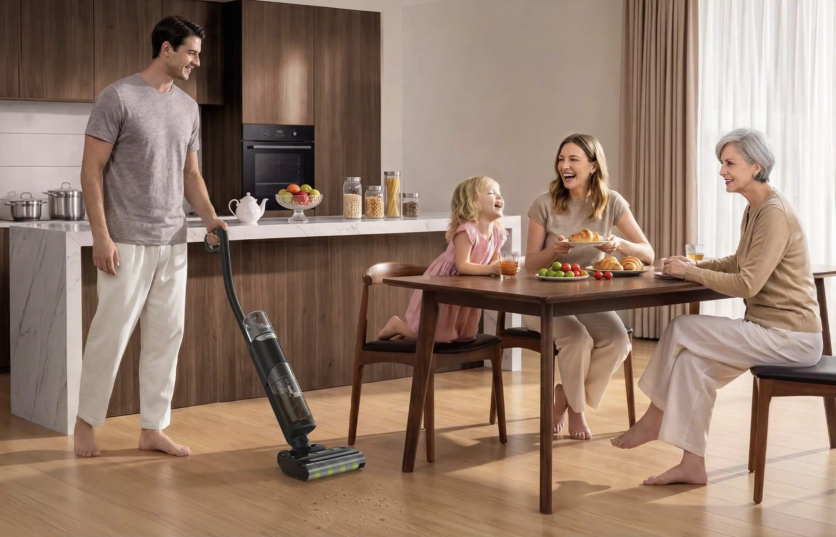
For the first six months of its existence under Picea's ownership, iRobot was rebuilding: keeping the app running, honoring warranties, retaining staff in Bedford, and launching the compact Roomba Mini in the United Kingdom and Europe in March. The July 7 launch changes the size of that ambition considerably. The Roomba Electro Plus is iRobot's first cordless, user-operated cleaning device — no autonomy, no scheduling, no app required. It combines vacuuming, mopping, disinfecting, self-cleaning, and self-drying in a single push-it-yourself machine designed for sealed hard floors: tile, hardwood, laminate, vinyl, and stone.
The competitive landscape the Electro Plus enters is not waiting for iRobot. Tineco, Dreame, and Roborock have been selling cordless wet-dry floor washers for years. VacuumWars' current best-in-class ranking puts the Tineco Floor One S9 Artist Steam at the top for its combined steam-and-suction performance, with the Dreame Aero Pro as the best-value alternative. iRobot is the new entrant in a segment it did not previously serve — a fact that matters for warranty track record, service infrastructure, and real-world performance claims that no pre-order buyer can verify independently yet.
Read more: Roomba's Rise and Fall: Remembering the Robot Vacuum Amidst iRobot's Bankruptcy Filing
How Electrolyzed Water Actually Disinfects — and What the Conditions Are
The Electro Plus's central claim is that it kills 99.99% of bacteria, viruses, and fungi without any added chemicals. The mechanism is real chemistry: the device runs tap water through an electrolytic cell, passing an electrical current through the water. At the anode, chloride ions in the tap water are oxidized to produce hypochlorous acid (HClO) — the same compound produced in dilute form by your own immune system's white blood cells. iRobot chief engineer Adam Pope confirmed to CNET that the system "takes the naturally occurring chlorine in the water from your tap and creates hypochlorous acid with it using an electrical current." Hypochlorous acid penetrates cell membranes and disrupts pathogen proteins, which is why it is considered an effective disinfectant at a bactericidal level comparable to dilute bleach — without bleach's fumes, residue, or corrosive chemistry.
The engineering reason this technology requires an on-demand generation system rather than a refillable chemical tank is worth understanding: electrolyzed water degrades quickly after it is produced. The solution loses potency within minutes of generation, which is why the Electro Plus generates it continuously during use rather than storing it. That design choice is what makes the "no chemicals" claim accurate — but it also means the disinfecting power is only present while the device is actively running and generating fresh solution. A quick pass over a floor, or use on floors with heavy mineral deposits in the tap water, may not achieve the same kill rate as the laboratory conditions under which the 99.99% figure was established.
For households with sealed hard floors and children or pets at floor level, the combination of genuine disinfection chemistry and chemical-free residue is a meaningful advantage over traditional mops and steam cleaners. Steam cleaners work through heat (requiring a warm-up period and risking thermal damage to some floor finishes); chemical cleaners require ventilation and a dry floor before it is safe for small humans and animals. The Electro Plus addresses both limitations — provided users understand they are trading the certainty of a labeled disinfectant product for the on-demand chemistry of an electrolytic cell.
The ThermaClean dock automatically washes, sanitizes, and dries the roller mop after each session. Users will still need to empty the dirty water tank and refill the clean water tank manually after each use.
What the New Roomba Robot Lineup Actually Offers
The five new Roomba robot models range from $599.99 to $999.99, all available for pre-order now. Each uses ClearView Pro LiDAR or Dual-line LiDAR navigation combined with PrecisionVision AI obstacle detection. The pairing matters: LiDAR emits laser pulses and measures return time to build a precise 3D point cloud of room geometry, while the PrecisionVision AI camera adds semantic understanding on top — recognizing and logging specific obstacles including pet waste, cables, and socks so the robot can route around them or flag them in the companion app.
At the top of the range, the Roomba Max 775 Combo ($999.99, pre-order) delivers four times stronger suction than prior Max models, a 167°F mop wash cycle, and a retractable mop that lifts automatically before crossing carpet — an architecture that allows it to vacuum and mop in a single run without dragging a wet pad onto rugs. The Max 715 Vacuum ($699.99, pre-order) matches the suction capability with 30,000 Pa but removes the mopping hardware, targeting households that prioritize vacuum performance over combo functionality.
The Plus 575 Combo ($799.99, pre-order) features a body redesigned to be 46% smaller than prior-generation models — allowing it to reach under furniture that earlier Roombas could not navigate — alongside SmartScrub technology for more intensive floor scrubbing on hard surfaces. The Plus 515 Combo ($699.99, pre-order now) and Plus 415 Combo ($599.99, pre-order now) fill out the range with varying mop-pad and navigation configurations at lower price points.
Across the lineup, AutoWash or AutoEmpty docks wash mop pads with heated air and empty debris automatically, with iRobot claiming maintenance cycles of up to three months between manual interventions. Whether that figure holds in high-traffic households with heavy pet-hair volume is something pre-order buyers cannot yet verify independently.
What Roborock and Dreame Have That iRobot Does Not — and What They Share
Chinese brands Roborock, Dreame, and Ecovacs already occupy the premium robot vacuum segment with mature navigation systems, years of software refinement, and a track record of real-world performance data. Roborock's ReactiveAI obstacle avoidance has been refined across multiple product generations; Dreame's MopExtend technology, which physically extends the mop pad to reach floor edges and baseboards, addresses a cleaning gap that iRobot's new lineup has not specifically matched. In the hard-floor cleaner segment where the Electro Plus competes, the current category leaders (Tineco, Dreame's H15 Pro line) have longer testing histories at this point.
What iRobot has that those competitors lack — for the moment — is meaningful brand recognition with mainstream American consumers who associate Roomba with robot vacuums the way Kleenex is associated with tissue. Whether that brand advantage translates to first-mover trust in a new product category, or whether it simply exposes iRobot to sharper comparisons against category incumbents, will only become clear once independent reviews arrive.
What iRobot now shares with Roborock and Dreame, however, is the structural legal exposure that comes with Chinese ownership. A March 2025 VacuumWars analysis found that Roborock's updated privacy policy explicitly discloses that user data may be processed in China and shared with affiliates; an AV-TEST audit flagged Roborock's data transmission as deficient. iRobot — as of January 23, 2026 — is in the same legal category.
Read more: iRobot Declares Bankruptcy: Roomba Maker to Be Acquired by Shenzhen Picea After 35 Years
Chinese Law and Your Floor Plan: What iRobot's New Owner Cannot Legally Promise
This section is not speculation about Picea's intentions. It is a description of Chinese law as it currently applies to any company headquartered in or operationally controlled from mainland China.
China's National Intelligence Law (2017), Article 7, states that all organizations and citizens "shall support, assist, and cooperate with national intelligence efforts in accordance with law." Article 14 of the same law authorizes intelligence agencies to "demand assistance" from those organizations. China's Counter-Espionage Law (2014) goes further: when state security organs investigate and seek to collect evidence, "the relevant organizations and individuals shall provide it truthfully and may not refuse." The Data Security Law (2021) and Cybersecurity Law (2016) additionally govern data classification, storage obligations, and government access to network data.
These laws apply to Picea — the Shenzhen company that now owns 100% of iRobot's equity. They do not apply to iRobot Safe Corporation, the U.S.-incorporated subsidiary that iRobot established on January 23 to govern American consumer data. But iRobot Safe's operational independence from Picea has not been independently audited, and its legal standing as a firewall against a Chinese government demand made to Picea directly has never been tested in court. No public confirmation of a CFIUS review or clearance was announced before or after the January 23 closing — the U.S. Department of Justice formally notified the Delaware bankruptcy court on January 21 that such a review could affect the deal, and the deal closed two days later.
What does a Roomba collect that would make any of this matter? PrecisionVision AI logs obstacle identities, not just positions. LiDAR-based SLAM builds a persistent 3D floor plan of each room's geometry, furniture placement, and occupancy patterns. The iRobot app stores smart maps to cloud servers by default, allowing syncing between devices. In homes, that data represents a detailed spatial and behavioral record of the household. In offices, hospitals, or any commercial facility using a Roomba, it represents a map of where doors are, where high-value equipment is stored, and which areas see the most foot traffic. Legal analysts writing about the acquisition noted that these concerns are not hypothetical: the data collected by mapping robots "isn't just about suburban living rooms."
CEO Gary Cohen has said clearly that iRobot's data "is staying on our servers in the US," that it is encrypted, and that iRobot Safe was specifically designed to address this structural concern. Those assurances may well hold in practice. But they are operational commitments — they cannot override the legal obligation Picea faces under Chinese law if the Chinese government makes a formal demand for data access or intelligence cooperation. The honest answer to "is my floor map safe?" is: it is as safe as iRobot Safe's independence from Picea, and that independence has not been externally verified.
What you can do now, before buying:
- In the iRobot app settings, turn off cloud Smart Map storage — the robot can still clean, but the persistent home map will not sync to iRobot's servers.
- Delete stored maps periodically via the app.
- Review and limit data-sharing permissions in the iRobot Home App's privacy settings.
- If you are using Roomba in a commercial facility with sensitive security requirements, consider whether Chinese-owned LiDAR-mapping technology is appropriate for that environment regardless of data-storage location.
- CCPA rights (California) allow you to request review and deletion of your data from iRobot's servers.
What iRobot's Next Six Months Must Prove
iRobot's strategic logic for the Electro Plus is straightforward: the robot vacuum segment has become a race to the bottom on specs between Roborock, Dreame, and Ecovacs. A complementary product category — one that addresses the gap every robot vacuum owner knows but rarely admits (you still need a manual cleaner for stairs, spills, and the kitchen floor) — gives iRobot a differentiated story at a price point where the Roomba brand name carries weight.
The electrolyzed water technology came from Picea's own manufacturing capabilities, not from iRobot's Bedford R&D team. That is a meaningful fact: the first post-bankruptcy product expansion is built on technology developed by the new Chinese owner, not the legacy American engineering operation. It says something about the direction of the relationship — Picea is not just a passive capital source but an active technology contributor. Whether Bedford engineers will shape the next generation of products or primarily execute Picea's innovation roadmap is a question the July 7 launch cannot answer yet.
For now, iRobot has answered the most basic question: it is not retreating. Whether buyers who care about data sovereignty should answer back with a pre-order depends on how seriously they weigh the performance story against the legal one.
Making the Decision: A Four-Part Framework
Performance gaps: The Electro Plus enters a category where it has no prior track record. Independent lab testing of the 99.99% kill claim has not yet been published. The new Roomba robot models compete against Roborock and Dreame lineups with more generations of real-world refinement and established obstacle-avoidance track records.
Benchmark and claim reliability: The 99.99% disinfection figure is standard laboratory-conditions language — it depends on pH, dwell time, and tap water mineral content. No third-party product testing on the Electro Plus has been published at the time of this writing. Take the figure as a reasonable claim for normal use conditions, not a guaranteed outcome on every floor in every home.
Ecosystem and service maturity: iRobot has emerged from a Chapter 11 bankruptcy six months ago. The Electro Plus is the company's first product in a new category. Service infrastructure, spare parts availability, and long-term app support are genuine unknowns for a company that is still demonstrating post-bankruptcy operational stability.
State data-sharing obligations: iRobot is owned by a Shenzhen company legally subject to China's National Intelligence Law (2017), Counter-Espionage Law (2014), and Data Security Law (2021). These laws create a compelled-cooperation obligation for Picea that no U.S. subsidiary structure or server-location policy can legally override if the Chinese government makes a direct demand. iRobot Safe Corporation is a genuine operational attempt to address this, and it may prove sufficient in practice — but it has not been independently audited, and no CFIUS clearance was publicly confirmed.
For buyers whose primary concern is cleaning chemistry, iRobot has built a technically coherent product around real disinfection science, priced competitively against category peers. For buyers whose primary concern is data sovereignty, the four-part framework above is the honest answer to the question "should I buy a Roomba now that it is owned by Picea?" — and that answer is more complicated than any launch press release will tell you.
Frequently Asked Questions
What does "electrolyzed water" actually mean, and does it really disinfect without chemicals?
Electrolyzed water is produced by running an electrical current through a salt-water solution, which generates hypochlorous acid — a natural oxidizing compound that penetrates bacterial and viral cell membranes and disrupts their protein structures. The chemistry is well-established: it is used in food processing, medical facilities, and commercial cleaning. The Roomba Electro Plus generates this solution on-demand as you clean (it cannot be stored because it degrades within minutes). The "no chemicals" claim is accurate in the sense that no added cleaning agents, bleach, or detergents are required; the disinfecting agent is produced from tap water and electricity. The 99.99% kill figure comes from laboratory conditions; real-world results depend on dwell time, pH, and tap water mineral content.
Is iRobot safe to buy now that it is owned by a Chinese company?
That depends on what you mean by "safe." From a cleaning and product-functionality standpoint, iRobot's engineering team remains in Bedford, Massachusetts, and the products appear to function as described. From a data standpoint, the concern is structural and legal: Picea, which owns 100% of iRobot, is subject to China's National Intelligence Law (2017) and Counter-Espionage Law (2014), which require Chinese companies to cooperate with government intelligence requests and prohibit refusing to provide information when asked. iRobot established a U.S. subsidiary (iRobot Safe Corporation) to govern American consumer data separately, and CEO Gary Cohen says data is on U.S. AWS servers. Those are genuine mitigation efforts. But they are operational commitments, not legal shields against a direct Chinese government request made to Picea. No independent audit of iRobot Safe's separation from Picea has been published, and no formal CFIUS clearance was publicly confirmed before the deal closed in January 2026.
How does Roomba's floor mapping compare to competitors like Roborock and Dreame — and what is the data risk across all three?
Roborock and Dreame also use LiDAR-based SLAM to build persistent 3D floor maps and store them in cloud servers. Both are Chinese companies with the same structural legal exposure under China's National Intelligence Law. Roborock's March 2025 privacy policy explicitly disclosed that user data may be processed in China and shared with affiliates; an AV-TEST security audit flagged Roborock's data transmission as deficient. Dreame faces the same exposure but has not had the same public controversy. The practical distinction is that Roborock and Dreame process data on Chinese servers while iRobot, under its current structure, processes data on U.S.-based AWS servers. Whether that geographic distinction provides meaningful protection if Picea is asked to cooperate with a Chinese government data request is the question neither iRobot nor any Chinese-owned smart home company has yet had to answer publicly.
What specific steps can I take to protect my privacy if I already own or plan to buy a Roomba?
Four practical steps: First, in the iRobot Home App, go to Settings and disable cloud Smart Map storage — the robot will still clean systematically but the persistent floor plan will not sync to iRobot's servers. Second, periodically delete your stored home maps from the app. Third, review and limit data-sharing permissions in the app's privacy section; opt out of data use for product improvement if that option is available. Fourth, California residents can submit a CCPA data request to iRobot to review, correct, or delete the personal data the company holds. None of these steps fully eliminates the structural legal risk if Picea itself is subject to a Chinese government intelligence request — but they reduce the volume of data on iRobot's servers that could be subject to such a request.

-
 C114 Communication Network
 -
 Communication Home
