
 Search

Rangerover.com
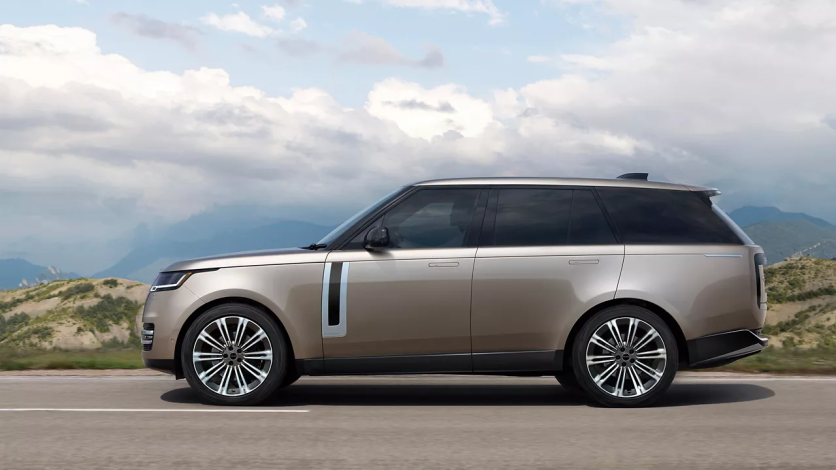
The Range Rover Electric stood in front of real customers for the first time today as the 2026 Goodwood Festival of Speed opened its gates in West Sussex, UK — placing JLR's most consequential vehicle in a generation in production specification before a public audience, with order books expected to open alongside a full global reveal in the October–December 2026 window and a US starting price of approximately $130,000.
After a launch campaign that began with prototype testing in 2023, slipped from a planned 2024 delivery, endured an August 2025 cyberattack that cost the company an estimated £1.9 billion, and was pushed again before landing on a confirmed Q4 2026 window, the car occupying a dedicated Range Rover gallery at the Goodwood Estate today is no longer a concept or a camouflaged test mule — it is the production vehicle, in the specification buyers will receive.
Production-Spec Confirmation Closes a Three-Year Gap
The Goodwood appearance, confirmed by Land Rover Media Newsroom on 2 July, marks the public's closest look yet at a vehicle that has accumulated more than 45,000 miles of development testing across environments ranging from Arctic Sweden to the deserts of the UAE. Unlike the Chelsea Flower Show display in May — where only exterior design cues were visible — the Goodwood exhibition presents the full vehicle in its production configuration.
JLR's Chief Growth Officer Lennard Hoornik disclosed at the company's Investor Day on 17 June that 78,000 people have already registered interest in the vehicle. Critically, those are not pre-orders: registration required no deposit, and the distinction matters for understanding actual demand. Still, Hoornik noted that 70% of that group consists of conquest buyers who do not currently own a Range Rover — a figure that, if it holds through to actual sales, would represent a meaningful expansion of JLR's customer base at a moment when the company's global retail sales fell 15.3% year-on-year in Q1 FY27.
Read more: Range Rover Electric Confirmed for Late 2026 Launch With 76,976 on Waitlist
What 800V Architecture Means for Range Rover Buyers
At the engineering core of the Range Rover Electric sits an 800V electrical architecture — the same voltage class as the Porsche Taycan and Hyundai Ioniq 6 — that JLR designed entirely in-house rather than sourcing from an established Tier 1 supplier. That decision, which JLR engineers acknowledged added approximately one year to the development timeline, is also the reason the car arrived at Goodwood with 67 patents attached to it and a claim of technical differentiation competitors cannot simply buy off the shelf. As Top Gear reported after extensive prototype access, no available external battery met the brief for a vehicle that must operate across extreme temperature ranges.
The practical consequence for buyers: the 800V architecture supports DC fast charging at up to 350 kW, enabling a 10-to-80% charge on the 118 kWh nickel-manganese-cobalt battery pack in approximately 25 minutes at a compatible ultra-rapid charger. The caveat is real — ultra-rapid chargers capable of delivering 350 kW remain a minority of total public charging infrastructure in the UK, EU, and US as of mid-2026. JLR's 800V system also handles 400V charger compatibility by splitting the battery into two 400V banks charged in parallel, so the architecture does not strand buyers at standard fast-chargers — a feature Electrifying.com confirmed in its prototype review.
The battery pack itself uses 344 double-stacked prismatic cells — a configuration made possible by the Range Rover's height, which provides vertical packaging space unavailable in lower-slung platforms. Two permanently excited synchronous motors, one per axle, deliver a combined 542 hp (404 kW) and 627 lb-ft of torque, produced entirely at JLR's Electric Propulsion Manufacturing Centre in Wolverhampton. That represents in-house motor manufacturing — still unusual for a legacy automaker and part of the same vertical integration philosophy that extended development time. Estimated real-world range sits in the 300-mile region on the WLTP cycle, though JLR has not yet published a final homologated figure, with Top Gear's prototype drive confirming homologation was still underway at the time of review.
ThermAssist: Why Cold-Weather Charging Is a Genuine Engineering Achievement
The most heavily engineered element of the Range Rover Electric is not its battery or its motors but its thermal management system, which JLR calls ThermAssist and describes as the subject of more internal patents than any other component on the vehicle. The system functions as an advanced heat pump that continuously monitors more than 700 parameters to determine optimal battery and cabin temperatures.
The practical performance thresholds: ThermAssist enables reliable DC fast charging at ambient temperatures as low as -10°C and recovers cabin heat from battery waste energy at temperatures down to -15°C. Against the Jaguar I-Pace — JLR's previous EV — the system is 40% more efficient, according to Autocar's first drive. That gap matters because cold-weather range loss is the single most common complaint among EV owners in northern markets, and the Range Rover's core market skews heavily toward cold climates where ICE models have historically outperformed EVs in real-world range retention.
The thermal system also enables a feature that distinguishes the Range Rover Electric from most luxury EV competitors: the heat pump can scavenge thermal energy from the propulsion battery itself to warm the cabin, reducing the energy penalty that most EVs incur when running resistance heaters in winter — resistance heaters that can cut WLTP range by 20-40% in sub-zero conditions.
Off-Road Capability: What Stayed, What Changed
JLR's engineers faced a precise tradeoff: the MLA-Flex platform that underpins the current combustion Range Rover was designed from the outset in 2021 to accommodate BEV drivetrains alongside ICE and PHEV powertrains, which means the electric version shares the same body structure, off-road geometry software, twin-chamber air suspension, and Hill Hold logic as its combustion sibling. The 850 mm wading depth — retained from the ICE model's wading capability (which tops out at 900 mm) — and the terrain management software carry over in full.
What changes is traction control. Traditional ABS-based systems sense wheel slip at approximately 100-millisecond intervals and respond by modulating brake calipers. The Range Rover Electric's Intelligent Torque Management system moves that function directly into each electric drive unit, cutting reaction time from 100 milliseconds to one millisecond — a 100x improvement that Autocar confirmed produces a "remarkable difference" in off-road capability, enabling the car to find traction bit by bit on gradients and surfaces that would require momentum management in an ICE equivalent. JLR's Chief Programme Engineer Simon Fairbrother made this assessment in Autocar's first-drive coverage.
The one capability the battery packaging cannot replicate: towing capacity. The 118 kWh battery pack's physical envelope reduces maximum towing from 3.5 to 2.5 tonnes — a 28.6% reduction that disqualifies the Range Rover Electric for buyers who routinely tow horse trailers, boats, or heavy caravans at the model's upper limit. JLR has developed dedicated software to estimate electric range under tow, but Autocar's prototype test confirms the structural limit itself is a function of physics, not software — the battery occupies space that the combustion drivetrain's packaging allowed for structural tow points.
Ground clearance also drops by approximately 10% versus the ICE version, and the breakover angle reduces from 27 to 23 degrees — real concessions for serious off-road use, though JLR's own engineers note the car handled everything thrown at it in pre-launch testing at Eastnor Castle.
Goodwood 2026: Record Concentration of Electric Performance Debuts
The Range Rover Electric is the headlining act at a Goodwood 2026 that may represent the single greatest concentration of electric and hybrid performance debuts in the event's 33-year history. Also appearing on opening day: the McLaren 788HS (world premiere of MSO's twin-turbo V8 swan song, limited to 200 examples at approximately $600,000); the Toyota GR GT in its European public debut run; the Yangwang U9 Xtreme, BYD's hypercar making its European debut with a claimed 308.4 mph certification; and the Alpine A110 FUTURE, a development mule for the next-generation electric A110 built on Alpine's new 800V Performance Platform — all among the key Goodwood 2026 debuts.
The concentration of electrified debuts at an event historically defined by combustion performance is not accidental. Goodwood functions as one of the automotive industry's primary platforms for production confirmations — the car that climbs the hill is, by convention, a car that exists. For JLR, whose retail sales have declined across every market in Q1 FY27, the choice to bring the Range Rover Electric in production specification to Goodwood rather than behind a camera curtain is a deliberate public commitment: the car is real, the timeline is confirmed, and the 78,000 people on the interest list can see it for themselves.
The Range Rover Sport SV Ultimate Edition is also running the hillclimb across all four days of the 2026 festival, providing a performance curtain call before the refreshed Range Rover Sport arrives for model year 2027.
Engineering at Scale: What Comes Next for JLR's EV Lineup
The Range Rover Electric is the first of five JLR launches confirmed for the next 18 months. CEO PB Balaji stated at Investor Day that the pipeline includes the Range Rover Sport Electric, two vehicles on the new Electrified Modular Architecture (EMA), and the Jaguar Type 01 grand tourer — with Type 01 production beginning in August 2026.
The EMA platform, which will underpin the Range Rover Velar EV and Defender Sport EV among others, uses a native 800V architecture with 92% drivetrain efficiency, compared with 85% on the MLA-Flex platform that carries the Range Rover Electric. That efficiency difference reflects the EMA's purpose-built EV design versus MLA-Flex's multi-powertrain flexibility.
Battery cell supply for the Range Rover Electric currently comes from an external supplier that JLR has not publicly named. JLR's own gigafactory in Somerset — which would bring cell production in-house to match its already in-house motors and battery assembly — is more than one year behind schedule due to a combination of supply chain disruption and construction delays. Until the gigafactory is operational, the vertically integrated manufacturing story JLR is telling at Goodwood remains partly contingent on external supply.
For prospective buyers, the decision framework heading into Q4 2026 is specific: the Range Rover Electric is the right choice for buyers whose Range Rover use does not routinely involve towing above 2.5 tonnes, who primarily drive in climates where cold-weather range loss is a concern, and who value the charging speed advantage of 800V infrastructure at a starting price of approximately $130,000. Buyers who need the full 3.5-tonne tow rating, or who require maximum wading depth for regular off-road use, remain better served by the current combustion or plug-in hybrid variants until JLR addresses those constraints in future generations.
Order books open alongside the full global reveal, which JLR has scheduled for later in 2026. Pricing for the UK market has not been confirmed. The festival continues through 12 July.
Frequently Asked Questions
When will the Range Rover Electric be available to buy?
JLR has confirmed that order books will open alongside a full global reveal later in 2026, with customer deliveries scheduled for the October–December 2026 window. The car is being built at JLR's Solihull plant in the UK and will reach markets in a phased rollout, with the UK, Ireland, Sweden, Germany, and the Netherlands expected among the first markets, followed by the US and China as the highest-volume targets.
Can the Range Rover Electric tow, and does it match the diesel model?
The Range Rover Electric has a maximum towing capacity of 2.5 tonnes, down from 3.5 tonnes on combustion and plug-in hybrid variants — a reduction of approximately 28.6%. The limitation is structural: the 118 kWh battery pack occupies packaging space that the combustion drivetrain's layout allowed for heavier tow-point engineering. JLR has developed software to estimate real-time electric range under tow, but the capacity ceiling itself is a hardware constraint that software cannot resolve. Buyers who regularly tow horse trailers, large boats, or heavy caravans near the 3.5-tonne limit will need to use a combustion or hybrid variant for those applications.
Why did it take so long to build — and what does the delay actually represent?
JLR originally targeted a 2024 delivery for the Range Rover Electric. The primary cause of the delay was not competitive hesitation or demand uncertainty: it was the decision to design and build the 800V battery pack, electric motors, and thermal management system entirely in-house rather than sourcing from existing Tier 1 suppliers. A JLR spokesperson told Top Gear that external sourcing could have brought the car to market a year earlier but that no available external battery met the brief for a vehicle that must operate in conditions ranging from -40°C to +50°C. The August 2025 cyberattack that cost JLR an estimated £1.9 billion added further delay to the production preparation timeline. What the delay bought — 67 patents, a proprietary 800V system, and a thermal management system that operates to specifications competitors are still targeting — is visible at Goodwood today.

-
 C114 Communication Network
 -
 Communication Home
