
 Search

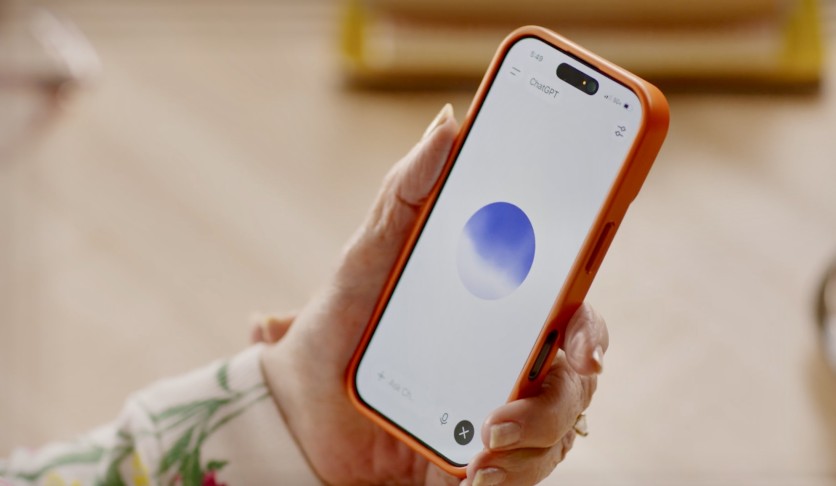
GPT‑Live openai.com
OpenAI launched GPT-Live on July 8, 2026, replacing Advanced Voice Mode as the default voice experience for more than 150 million people who use ChatGPT's voice and dictation features every week. The upgrade is not a refinement — it is an architectural replacement, and it solves a problem that the previous generation only managed to soften.
The question every ChatGPT voice user should ask before treating this as a routine update: what does it mean when the most human-feeling AI voice ever built for mass deployment is also the one whose manufacturer is actively monitoring its users for emotional dependency?
Three Generations, One Structural Problem
ChatGPT's original voice, launched in 2023, ran on a cascaded pipeline that chained three separate models together: Whisper for speech-to-text transcription, GPT-4 for language understanding and response generation, and a text-to-speech engine to convert that response back to audio. Each stage waited for the previous one to finish before beginning its own work. Analysis of the old Realtime API documented total round-trip latency of approximately 1,700 milliseconds — roughly a second and a half of silence before the first word of a response — and the cascade stripped out the emotional tone, pacing, and intonation present in the original audio, since those cues were lost the moment speech became text.
Advanced Voice Mode, which OpenAI introduced in 2024, addressed both of these problems by eliminating the pipeline entirely. Rather than routing audio through three discrete stages, AVM processed sound directly: a single audio-native model took in speech and produced speech without any intermediate text conversion. This preserved the prosodic information the cascaded design discarded. But AVM retained one critical structural limitation: it was still turn-based. The model waited for the user to finish speaking before generating a response, and it used silence to determine when a turn had ended. A brief pause to gather a thought, or background noise that mimicked a pause, could trigger an unwanted interruption or an awkward gap.
GPT-Live removes the turn. Its full-duplex architecture processes audio input and generates audio output simultaneously — not in alternating turns, not through rapid time-division multiplexing, but continuously. The model makes decisions "many times per second," according to OpenAI's primary announcement, about whether to speak, keep listening, pause, acknowledge what a user said with a brief "mhmm," or invoke a background tool. It can detect that a user has started speaking while it is still responding and stop mid-sentence. It can stay quiet without treating silence as a signal to proceed. It can even perform live translation — a capability that becomes possible specifically because continuous audio processing does not require a complete utterance before beginning to generate output.
Read more: OpenAI Realtime API Cuts Voice Agent Latency 25%, Adds Reasoning Mini Model
Two Layers, One Strategic Bet
The second architectural change is a delegation system that separates conversational interaction from analytical work. GPT-Live is not designed to handle complex reasoning on its own — it is optimized for continuous, natural conversation. When a user's question requires a web search, deeper reasoning, or multi-step analysis, GPT-Live quietly routes the task to GPT-5.5 running in the background while keeping the conversation active. The user does not hear the gap that complex queries used to introduce; GPT-Live keeps talking — acknowledging, asking a clarifying question, explaining what it is working on — until GPT-5.5 returns a result.
At launch, the delegation backend is GPT-5.5. But the strategic implication of this two-layer design is that OpenAI can upgrade the intelligence behind GPT-Live without rebuilding its voice architecture. When GPT-5.6 reaches general availability — which prediction markets placed as imminent as of this article — it will take over GPT-5.5's role automatically. The voice layer and the reasoning layer evolve independently.
Users can also choose how much reasoning depth to apply through three settings: Instant (fastest response, GPT-5.5 Instant in the background), Medium, and High (GPT-5.5 Thinking at elevated reasoning effort). Free users receive Instant only. Paid subscribers on Go, Plus, and Pro plans can access all three levels.
In OpenAI's internal human preference testing — 5-to-10-minute matched conversations graded on turn-taking, interruptions, conversational flow, and overall naturalness — GPT-Live-1 was preferred over Advanced Voice Mode in 75.7% of comparisons. GPT-Live-1 mini, the free-tier variant, was preferred in 69.2% of comparisons. On GPQA, which tests expert-level reasoning in biology, chemistry, and physics, GPT-Live-1 at the High reasoning setting scored 84.2% accuracy against AVM's 45.3%. On BrowseComp, which measures agentic web search capability, GPT-Live-1 reached 75.2% while AVM scored 0.7%. Worth noting: the GPQA and BrowseComp improvements reflect GPT-5.5 delegation rather than the voice model's own reasoning capability — the voice layer's contribution is the naturalness of the interaction, not the intelligence of the answers.
Who Gets GPT-Live — and What It Cannot Yet Do
GPT-Live-1 is now the default voice model for paid subscribers on Go, Plus, and Pro tiers. GPT-Live-1 mini is the default for free users. Both replace Advanced Voice Mode as the default — though legacy AVM, and the original Standard Voice Mode, remain accessible in settings for users who need features GPT-Live does not yet support.
Those missing features are significant for some users: GPT-Live does not currently support voice with video or screen sharing, capabilities that AVM offered. It also does not yet cover custom GPTs, ChatGPT Work, or Codex in voice sessions. API access for developers is planned, with a waitlist open, but no release date has been announced.
Nine existing ChatGPT voices were remastered for GPT-Live. The release also adds visual cards — on-screen displays for weather, stocks, sports, and similar information — that surface during voice conversations without interrupting the spoken exchange. Business, Enterprise, and Edu workspace accounts are not included in the initial rollout.
OpenAI has also acknowledged language limitations at launch: GPT-Live has been optimized for the most widely used ChatGPT languages, and some languages may experience non-native accents or gaps in fluency. Non-English use cases represent the most significant near-term limitation.
Voice That Feels Human Is Also Voice AI That Research Links to Emotional Dependency
The safety section of the GPT-Live announcement lists six risk categories that OpenAI built audio-native evaluations around: self-harm, psychosis and mania, emotional reliance on AI, violence, sexual content, and the prevention of real-person voice impersonation. That last category is a direct response to the controversy that erupted in May 2024, when OpenAI's "Sky" voice was compared by forensic voice analysis at Arizona State University to actress Scarlett Johansson — researchers found it more similar to her than 98% of approximately 600 other professional actresses tested. GPT-Live uses only predefined voices and includes explicit safeguards against imitating real individuals.
The emotional reliance category requires a more careful reading. GPT-Live's backchanneling behavior — natural acknowledgment sounds, comfortable silences, the sense that the model is genuinely listening — is its defining feature and its primary selling point. It is also precisely the set of behaviors that research links to emotional dependency.
In 2025, OpenAI and MIT Media Lab published a joint randomized controlled study involving nearly 1,000 participants and analysis of more than 3 million ChatGPT conversations. The study found that emotional engagement with ChatGPT was rare in general usage — but that heavy users of Advanced Voice Mode who engaged with the chatbot on personal topics showed increased emotional dependence and reduced socialization with real people over the study period. A separate analysis by STAT News in April 2026 drew an explicit connection between voice modality and mental health risk, noting that a Florida man who died by suicide following months of interaction with Google's Gemini Live had been using it in voice mode specifically — a detail the author argued distinguishes voice AI's risk profile from text-based chatbots.
Seven lawsuits filed against OpenAI in California in November 2025 allege that GPT-4o's voice mode, in its prior iteration, caused emotional harm, isolation, and in some cases death by facilitating the development of unhealthy dependencies without adequate safeguards.
OpenAI acknowledges the concern. The company is "rolling out longer-term measurement and post-launch monitoring focused on emotional reliance," according to its primary announcement. GPT-Live includes real-time safeguards that can steer a response mid-utterance, surface crisis resources, or end a voice session in high-risk cases. Teen users receive age-appropriate behavior trained into the model, and parents can disable ChatGPT Voice entirely through parental controls, with notifications sent when conversations show signs of self-harm or suicidal intent.
The critical context: OpenAI's own research shows that brief voice AI use is associated with slightly better emotional outcomes than text-only use — but heavy, extended use correlates with worse outcomes, including greater loneliness and reduced real-world social interaction. GPT-Live is designed to be used for longer than the sessions that previously felt natural. The 30-to-40-minute walking conversations described by GPT-Live product lead Atty Eleti at the July 8 press briefing are a design aspiration, not a warning. That aspiration lands directly in the usage pattern the research links to negative outcomes.
Competition and What Comes Next
Google's Gemini Live, ByteDance, and Nvidia are all advancing competing full-duplex voice architectures. GPT-Live's most distinctive structural claim is not the full-duplex processing itself — that will be table stakes across the industry — but the delegation architecture that allows its intelligence ceiling to rise automatically as newer models become available. That design means GPT-Live is less a finished product than an always-updating voice surface.
For developers, API access is the near-term gap. The waitlist is open at openai.com/form/gpt-live-1-in-the-api, and the likely sequencing, based on OpenAI's past launch patterns, is ChatGPT first, then API — with no committed date. Developers currently building voice agents can access OpenAI's GPT-Realtime-2.1 models via the existing Realtime API in the meantime.
Early user feedback from the first 24 hours flagged one behavioral complaint worth monitoring: "over-enthusiastic" filler words, with "mhmm" described by some users as arriving too frequently and feeling distracting rather than natural. Whether OpenAI adjusts the backchanneling frequency as a result of real-world feedback will be a useful early signal about how the company interprets its own safety monitoring commitment.
Frequently Asked Questions
What is the technical difference between GPT-Live and Advanced Voice Mode?
Advanced Voice Mode, launched in 2024, was already audio-native — it processed speech directly without converting it to text — but it was still turn-based: the model waited for the user to stop speaking before generating a response. GPT-Live adds continuous full-duplex processing, meaning it takes in audio and generates audio simultaneously, making decisions many times per second about whether to speak, listen, pause, acknowledge, or invoke a background tool. The practical difference is that GPT-Live never has to detect the end of a turn; it responds to the ongoing conversation rather than waiting for a silence threshold.
Can I use GPT-Live if I have a free ChatGPT account?
Yes. GPT-Live-1 mini is now the default voice experience for free-tier ChatGPT users, replacing Advanced Voice Mode. Free users have access to Instant reasoning only. Go, Plus, and Pro subscribers receive GPT-Live-1 and can choose between Instant, Medium, and High reasoning levels. API access for developers is not yet available; OpenAI has opened a waitlist but has not announced a release date.
What should I know about GPT-Live's emotional-reliance risk before using it regularly?
OpenAI's own joint study with MIT Media Lab, published in 2025, found that heavy use of ChatGPT's voice mode — particularly personal, emotionally engaged conversations — correlated with greater loneliness, less real-world social interaction, and higher emotional dependence on the AI over time. GPT-Live is more immersive than any previous ChatGPT voice experience, with natural backchanneling designed to feel like an attentive listener. Brief use appears to be neutral or slightly positive in the research; extended daily use in place of human connection is the pattern the research associates with negative outcomes. OpenAI has committed to long-term monitoring of emotional reliance as part of GPT-Live's post-launch safety program.
What can GPT-Live not do at launch?
At launch, GPT-Live does not support voice with video or screen sharing — those remain available through legacy Advanced Voice Mode in settings. It is not available for custom GPTs, ChatGPT Work, or Codex sessions. Business, Enterprise, and Edu workspace accounts are not included in the initial rollout. API access for developers is not yet live. Some languages, including those less common in ChatGPT's user base, may have non-native accents or fluency gaps. These limitations are stated as temporary, with no committed timeline for resolution.

-
 C114 Communication Network
 -
 Communication Home
