
 Search

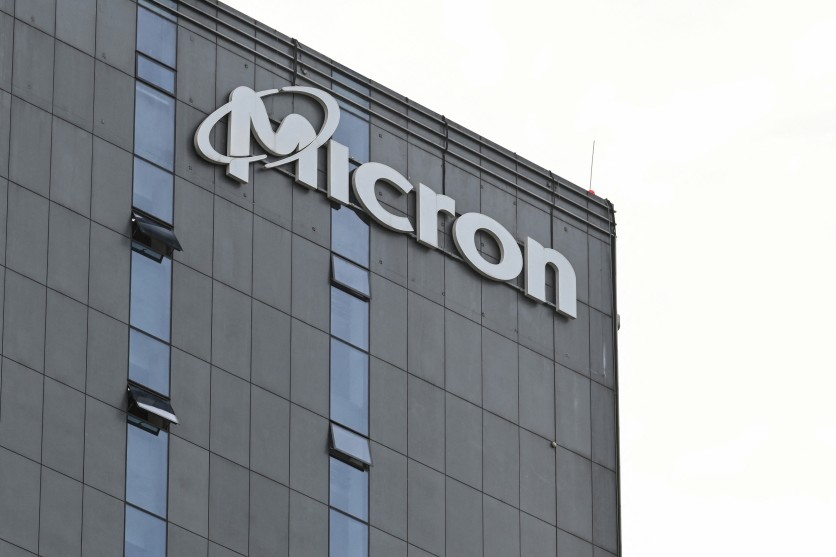
A view of a building where the facilities of US semiconductor giant Micron is located in Shanghai on May 22, 2023. US semiconductor giant Micron has failed a national security review, China's cybersecurity watchdog said on May 21, telling operators of "critical information infrastructure" to stop buying its products. Hector RETAMAL/Getty Images
On Thursday, Micron Technology Chief Executive Sanjay Mehrotra stood in a Central New York field and poured the first concrete for what will become the largest semiconductor manufacturing site in American history. In the same breath, Mehrotra announced that Micron is raising its planned U.S. investment to more than $250 billion through 2035 — a $50 billion increase over its prior commitment — as the company chases a goal of producing 40% of its DRAM on domestic soil. If you are buying a PC or a phone this year, none of this will lower your bill. But for anyone trying to understand when the worst memory shortage in modern semiconductor history might end, Thursday's event in Clay, New York delivered a concrete timeline — and a cold one.
Why RAM Costs Nearly Four Times More Than It Did a Year Ago
Before explaining what Micron's announcement means, it is worth explaining the crisis that makes it matter. Dynamic random-access memory prices surged approximately 90 to 95% quarter-over-quarter in the first quarter of 2026, according to TrendForce — the steepest quarterly jump in the memory industry's recorded history. The cheapest 32GB DDR5 kit available in the United States had climbed to $374.97 by early June, according to PCPartPicker data tracked by Tom's Hardware, from under $100 a year earlier. Apple raised prices on its full Mac and iPad lineup on June 25, hiking the MacBook Air by $200, the MacBook Pro 14-inch by $300, and the iPad Air by $150 — and in a public statement, Apple said it had "never seen a component price increase this much, this quickly." Dell, HP, Lenovo, Acer, and ASUS implemented price increases of 15 to 20% across their PC lineups earlier in 2026. IDC projects the global PC market will contract 11.3% this year, and the smartphone market by nearly 14%.
The cause of this crisis is architectural, not accidental. Samsung, SK Hynix, and Micron — three companies that together produce roughly 95% of all the world's DRAM — have systematically redirected their manufacturing capacity toward high-bandwidth memory, or HBM: the specialized, three-dimensionally stacked memory chips that power Nvidia's AI accelerators and the data center buildouts of Microsoft, Google, Meta, and Amazon. HBM achieves its extraordinary bandwidth — a single HBM3E stack delivers around 1.2 terabytes per second, compared to roughly 70 gigabytes per second for a DDR5 DIMM — by stacking eight to twelve DRAM dies vertically, connecting them with thousands of copper through-silicon vias, and placing the resulting stack directly beside the compute logic on a silicon interposer. That architecture is enormously efficient for AI workloads. It is enormously inefficient in wafer terms. A single HBM die is physically larger per bit than its standard DDR equivalent: as SemiAnalysis documented, SK Hynix's D1z DDR4 achieves a bit density of 0.296 gigabits per square millimeter, while HBM3 comes in at 0.16 gigabits per square millimeter. According to TrendForce, producing one gigabyte of HBM consumes the equivalent wafer area of roughly four gigabytes of standard DRAM. The TSV manufacturing process adds steps that cannot be performed on a standard DDR production line; converting capacity takes months of process engineering and new packaging infrastructure.
The economic logic is equally direct. HBM generates an estimated three to five times more revenue per wafer than standard consumer DDR5. With AI spending from the major cloud providers collectively expected to top $650 billion in 2026 infrastructure capital expenditure, the hyperscalers have effectively outbid the PC and phone market for access to the world's DRAM fabs. By 2026, HBM consumes roughly 23% of total global DRAM wafer output, up from approximately 19% in 2025, according to TrendForce. Projections for additional quarterly price increases remained steep into Q3 2026, with investment bank Jefferies forecasting 40 to 50% QoQ gains in the third quarter and 30 to 40% in the fourth. No major analyst projects meaningful price relief before late 2027.
Read more: Micron Earnings 2026: Record Margins Confirm the AI Memory Tax on Your Next PC
Read more: DDR5 RAM Hits $375 Floor for PC Builders: HBM Takes Three Times More Wafers
Micron's Announcement, Unwrapped
Against that backdrop, Thursday's event in Clay, New York was simultaneously a construction milestone, a financial commitment, and a geopolitical statement. Less than six months after breaking ground in January, Micron completed initial site preparation and poured the first concrete at what it calls the largest private investment in New York State history — a milestone the company reached more than one quarter ahead of schedule.
The updated $250 billion figure, up from roughly $200 billion committed in June 2025, encompasses Micron's planned U.S. manufacturing and R&D investment through 2035 across three sites. On the manufacturing side: the Clay, New York four-fab megacampus spanning 1,377 acres; expanded operations in Boise, Idaho; and the existing Manassas, Virginia plant, which launched initial 1-alpha (1α) DRAM manufacturing — the company's most advanced DDR4 technology, built on a fourth-generation 10-nanometer-class process — in May of this year, with qualified production expected by end-2026. The 1α node delivers roughly 40% higher bit density than the preceding 1z generation and was the first time any DRAM technology at that level of advancement had ever been manufactured on U.S. soil.
The new investment also includes a separate $3 billion commitment to develop the broader U.S. semiconductor supply-chain ecosystem, including $500 million in strategic financing for GlobalWafers, a Taiwan-based silicon wafer supplier, to scale its Texas operations under a decade-long supply contract. Bechtel has been selected as engineering, procurement, and construction partner for the first New York fab, with Jacobs and Gilbane Building Company also participating. To date, Micron has directed approximately $675 million — more than half the total awarded value — to New York-based contractors and suppliers, with more than 80% of on-site workers drawn from New York State residents.
Commerce Secretary Howard Lutnick, New York Governor Kathy Hochul, and Senator Chuck Schumer were among the officials on hand. "Today, Micron pours the foundation on its massive semiconductor campus in upstate New York and increases its American investment commitment to $250 billion, creating nearly 100,000 jobs," Lutnick said at the event. Schumer credited the $6.1 billion in CHIPS Act direct funding and associated Investment Tax Credits he helped secure as foundational to making the project viable.
Why Earlier-Than-Expected Concrete Still Means Waiting Until 2030
Here is where the consumer math becomes unsparing.
The first New York fab is not expected to begin production until approximately 2030, based on Micron's own environmental filings and SEC disclosures. Fabs 2, 3, and 4 at the Clay campus extend the buildout toward 2033, 2035, and 2041 respectively. The 40% domestic DRAM target is a 2035 goal. Thursday's concrete pour, however encouraging as a construction milestone, does nothing to accelerate any of those dates.
The nearer-term supply math depends on Idaho. Micron's first new Idaho fab is expected to deliver initial wafer output in mid-calendar 2027, with a second Idaho fab following in late 2028. Virginia's 1α node serves long-lifecycle industrial, automotive, aerospace, and defense customers — not consumer PC or smartphone channels. So the realistic schedule for any new U.S.-origin DRAM reaching the consumer market in meaningful volume runs: Idaho in 2027 to 2028, with some supply benefit at the margins; New York beginning to contribute from approximately 2030 onward.
The fact that construction arrived roughly three months ahead of the schedule published in Micron's environmental impact statement is genuinely meaningful in a category where schedule slippage is the norm. The Clay project has already experienced years of delay since it was first announced in October 2022, and reaching vertical construction ahead of plan suggests the operational machinery — workforce hiring, supply contracts, regulatory coordination — is functioning at higher tempo than prior history suggested. Whether that tempo holds through a multi-decade buildout is a different question.
The broader context makes Thursday's schedule achievement sit next to an uncomfortable data point: Micron's fiscal third-quarter 2026 results, released June 24, showed revenue of $41.46 billion — a 346% increase year-over-year and a company record — driven entirely by the pricing power that the shortage creates. Non-GAAP gross margin reached 84.9%, also a record, and the company guided fiscal Q4 to $50 billion in revenue at approximately 86% gross margin. Micron CEO Mehrotra has stated the company has no "line of sight as to when memory supply will be able to catch up with increasing demand," and confirmed that its 16 non-cancelable Strategic Customer Agreements with hyperscalers — representing $22 billion in committed deposits — run through 2030, contractually pricing future capacity at today's elevated levels.
A company earning 85% gross margins on its primary product, with locked multi-year supply contracts to its most profitable customers, has no economic incentive to rush consumer-grade supply to market.
What HBM Is and Why It Ate Your RAM Budget
The shortage is architectural at its root, and understanding why requires understanding what high-bandwidth memory actually is and why it competes so directly for the factory lines that make standard DDR.
Both HBM and DDR5 are built from DRAM cells — capacitor-transistor pairs that store one bit each and must be refreshed continuously because the capacitor leaks. The difference is packaging. A standard DDR5 module mounts planar DRAM dies on a printed circuit board and connects to the processor via a relatively narrow bus operating at high clock speeds. HBM takes those same DRAM dies, thins them to roughly 50 microns, stacks up to twelve of them vertically, and uses thousands of copper through-silicon vias to connect them internally before placing the entire stack on a silicon interposer directly adjacent to the GPU or AI accelerator. The result is a bus 1,024 bits wide — compared to 64 bits for a DDR5 channel — operating at lower clock speeds that are less demanding in terms of power and signal integrity. One HBM3E stack delivers around 1.2 TB/s; a pair of DDR5 DIMMs delivers around 140 GB/s.
The tradeoff is silicon area. The TSV process adds manufacturing steps that standard DDR lines are not equipped to perform, and the vertical integration means each HBM die must accommodate the copper pillars that pass signals through it — consuming die area that would otherwise store bits. The net result is HBM die density runs roughly 85% lower per square millimeter than equivalent DDR, and each gigabyte of HBM consumed approximately three to four times the wafer capacity of a gigabyte of standard DRAM in 2026.
That ratio, not any particular business decision, is what makes the shortage structural rather than cyclical. Until HBM-specific tooling, packaging infrastructure, and advanced cleanroom capacity expand materially — which requires the same multi-year fab construction timelines affecting everything else — every wafer going to a hyperscaler's AI accelerator is a wafer that does not become a PC builder's DDR5 kit.
Micron's New York fabs are designed to run its most advanced process nodes — the 1γ (1-gamma) generation currently ramping in volume and successor nodes that will exist by 2030 — which use extreme ultraviolet lithography and high-K metal gate technology to achieve more than 30% bit density improvement over 1β, with DDR5 speeds up to 9,200 megatransfers per second. That technical lead, when those fabs eventually run, is what Micron is betting will matter in the late-2020s competitive landscape.
Micron's Sovereignty Bet — and Its Oligopoly Problem
Strip away the consumer price story and what remains is a geopolitical wager.
The United States currently produces almost no DRAM domestically. The global market is dominated by Samsung and SK Hynix, manufacturing primarily in South Korea and, increasingly, Southeast Asia. CXMT, China's state-backed DRAM challenger headquartered in Hefei, set its IPO subscription date for July 16 — one week after Micron's Clay announcement — aiming to raise approximately $4.3 billion on Shanghai's STAR Market. CXMT is roughly two to three process generations behind the South Korean leaders, according to SemiAnalysis, and its average selling prices are now within 5 to 10% of Samsung, SK Hynix, and Micron — a narrowing gap that U.S. national security planners are watching. The concentration of global memory supply in a handful of countries, any of which could experience political or physical disruption that cascades through global electronics and defense systems, is the national security argument that underpins both the CHIPS Act and Micron's willingness to accept the project's decade-long timeline.
Governor Hochul called Thursday's milestone "the largest private investment in New York State history." Commerce Secretary Lutnick linked it explicitly to national security and technological leadership.
But the sovereignty argument contains a dimension the announcement did not address: market structure. Samsung, SK Hynix, and Micron together control roughly 95% of global DRAM production — the same three companies involved in a 2002–2005 U.S. Department of Justice price-fixing prosecution covering coordinated supply restrictions from 1999 to 2002. In that case, Samsung and SK Hynix's predecessor Hynix pleaded guilty and paid criminal fines — Samsung paid $300 million and Hynix paid $185 million, with total industry fines exceeding $700 million and prison sentences for several executives. Micron cooperated with the DOJ investigation under the agency's leniency policy and avoided criminal conviction. On June 25, 2026 — the same day Apple announced its MacBook and iPad price hikes — a group of U.S. consumers and small businesses filed Garciaguirre v. Samsung Electronics in the Northern District of California, alleging that the three companies coordinated the current AI-era capacity reallocation as a supply restriction rather than acting on independent business judgment. The allegations are unproven, and the companies have not yet responded in court.
What U.S. domestic production eventually provides, if the New York and Idaho fabs reach their targets, is a structural alternative: a memory supply source outside the oligopoly's current geography, operating under U.S. legal jurisdiction and potentially subject to different competitive dynamics than a three-firm global market operating primarily from South Korea. Whether domestic capacity actually produces lower prices — or simply shifts Micron's pricing power from export markets to domestic ones — is a question the 2035 timeline will eventually answer.
Read more: RAM Prices Will Not Fall to 2025 Levels: Lenovo at ISC 2026 Issues Survival Guide
Read more: RAM Prices 2026: Buy Now or Wait as Gartner Forecasts 130% Memory Cost Surge
When Should You Expect Relief?
The answer to that question depends on your time horizon.
If you are buying a PC, a laptop, or a smartphone in the next twelve months, Micron's Clay announcement will not change your price tag. The RAM crunch is structural, it is driven by architectural constraints in HBM manufacturing that no policy decision can quickly dissolve, and Thursday's concrete pour accelerates nothing that matters before 2027. Jefferies projects DRAM prices will climb another 40 to 50% in the third quarter of 2026 compared to the second, and a further 30 to 40% in the fourth. Lenovo's executive director Martin Hiegl told the ISC 2026 supercomputing conference in Hamburg last month that DRAM prices will not return to pre-surge levels for at least five years — a structural floor, not a temporary peak. Gartner projects a 130% surge in combined DRAM and SSD prices by year-end 2026, lifting average PC prices 17% and eliminating the sub-$500 entry-level laptop from the market by 2028. AMD CEO Lisa Su said at Computex that DDR5 prices will not normalize until 2028.
If you are buying a PC in the 2029 to 2032 window, the calculation shifts. Micron's Idaho Fab 1 should be delivering meaningful volume by 2028; New York Fab 1 is approaching initial production around 2030. The combined additions from the Idaho and New York projects, together with Samsung's Pyeongtaek expansion and SK Hynix's Cheongju M15X facility, represent the first meaningful capacity expansion since the current shortage began — and if AI infrastructure demand growth moderates relative to supply growth, the period from 2028 to 2030 is where prices might begin a real descent.
Micron's $250 billion investment is best understood as a sovereign infrastructure project rather than a market intervention. The concrete poured Thursday in Clay will, eventually, become walls, then cleanrooms, then production lines running the world's most advanced DRAM nodes. When those lines run at scale, the United States will have something it has lacked for decades: a domestic source for the memory chips that run everything from fighter jets to smartphones. Whether that changes what consumers pay, or simply changes who captures the margin on what they pay, depends on competitive dynamics that will not be visible until the decade turns.
For now: if you need RAM, the time to buy remains before the next quarterly price update, not after.
Frequently Asked Questions
Will Micron's $250 billion announcement lower RAM prices in 2026?
No. The first meaningful supply contribution from Micron's new U.S. fabs is not expected until Micron's Idaho facilities deliver initial wafer output in mid-2027. The Clay, New York campus — the centerpiece of Thursday's announcement — is on track for first production around 2030. The current DRAM shortage is driven by a structural reallocation of existing manufacturing capacity toward high-bandwidth memory for AI accelerators, and that reallocation is entirely unaffected by a groundbreaking in Central New York. Multiple analysts, including IDC, TrendForce, and Gartner, project that meaningful price relief will not arrive before late 2027 at the earliest.
What is high-bandwidth memory, and why does it cause DDR5 prices to rise?
High-bandwidth memory is a specialized DRAM type used in AI accelerators and high-performance computing. Unlike standard DDR5, which mounts flat dies on a circuit board, HBM stacks up to twelve DRAM dies vertically and connects them with thousands of copper pillars called through-silicon vias. This architecture delivers extremely wide memory bandwidth — around 1.2 TB/s per stack — but requires roughly three to four times as much silicon wafer area per gigabyte as standard DRAM. When Samsung, SK Hynix, and Micron redirect their manufacturing lines to HBM to serve high-margin AI datacenter customers, they produce fewer consumer DDR5 chips from the same factories. Scarcity follows, and prices rise.
When will the DRAM shortage end, and when should I expect lower RAM prices?
No major analyst currently projects meaningful price relief before late 2027. AMD CEO Lisa Su said at Computex 2026 that DDR5 prices will not normalize until 2028. Micron's CEO has stated the company has no "line of sight" as to when supply will catch up with demand. A Lenovo executive warned at the ISC 2026 conference that prices will not return to pre-surge levels for at least five years. New fabrication capacity from Micron's Idaho fabs (2027–2028), Samsung's Korean expansion, and SK Hynix's Cheongju M15X facility is the supply most likely to moderate prices — though Micron has locked its future capacity under non-cancelable customer agreements through 2030, which limits how sharply prices can fall even when new supply arrives.
Does Micron's domestic manufacturing bet address the oligopoly problem in the memory market?
Possibly, in the long run — and that is the underappreciated dimension of Thursday's announcement. Samsung, SK Hynix, and Micron together control roughly 95% of global DRAM production. In the early 2000s, Samsung and SK Hynix's predecessor Hynix pleaded guilty in U.S. federal court to criminal DRAM price-fixing that ran from 1999 to 2002, paying $300 million and $185 million respectively, with total fines exceeding $700 million; Micron cooperated with the DOJ investigation and avoided criminal conviction. A new class-action lawsuit filed June 25, 2026 in California federal court — Garciaguirre v. Samsung Electronics — alleges the three companies coordinated the current AI-era capacity reallocation to restrict conventional DRAM supply; the allegations are unproven and the companies have not yet responded. If Micron's New York fabs eventually run at scale under U.S. jurisdiction, they could structurally alter the competitive dynamics of DRAM in ways that national security arguments alone do not capture — introducing a domestic player operating under different legal and political pressures than the current South Korea-dominated market. Whether that translates to lower consumer prices or simply shifts where the margin accrues is the open question the 2035 timeline will eventually resolve.

-
 C114 Communication Network
 -
 Communication Home
