
 Search

Denza.com
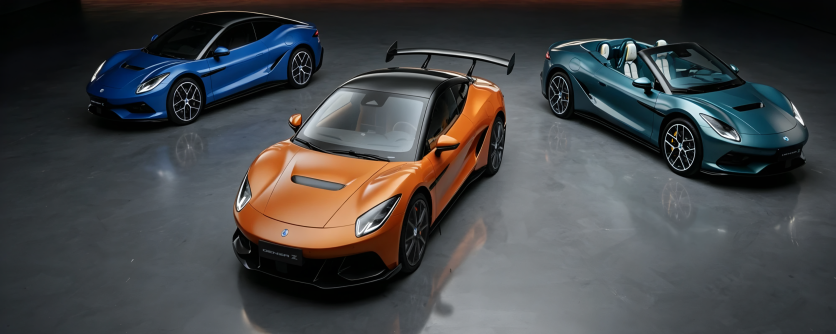
BYD's premium sub-brand Denza made its British market entry official on Thursday at the Goodwood Festival of Speed, unveiling the global premiere of the Z Coupe and Z Racing — a 1,604 PS, four-seat electric supercar that demonstrated charging from 10 to 70 percent in five minutes flat, and confirmed UK prices starting at £142,900. Before writing a deposit check, buyers should know one condition the spec sheet does not list: China's National Intelligence Law, Article 7, legally requires BYD to cooperate with Chinese government intelligence requests on demand, and no privacy certification, no GDPR compliance, and no European data-storage arrangement extinguishes that obligation.
Denza Z Performance: 1.96 Seconds, 217 mph, and a 2,230 kg Kerb Weight
Designed under Wolfgang Egger — whose past credits include the Alfa Romeo 8C Competizione, Lamborghini, and Audi — the Z is built around a tri-motor all-wheel-drive platform called e3 Sports Car, producing a combined 1,604 PS (metric) and 1,240 Nm of torque from a single 500 kW front motor and two independent 340 kW rear units. The standard Coupe reaches 62 mph in 2.25 seconds; the Spider takes 2.3 seconds. The Z Racing, fitted with an optional semi-slick tyre package, sharpens that to 1.96 seconds and raises the top speed ceiling from 186 mph to 217 mph — where its aggressive carbon-fibre aerodynamic package generates 1,060 kg of downforce.
Three things will calibrate expectations. Kerb weight across the range runs from 2,230 kg for the Coupe to 2,300 kg for the Spider — significantly heavier than a Porsche 911 Turbo S, though power output is more than double. WLTP range is 254 miles for the Coupe and 236 miles for the Racing; independent reviewers at Electrifying.com estimate real-world range for the Z at under 200 miles, meaningfully below the WLTP figure. In spirited driving, under 200 miles is a realistic expectation — a genuine constraint for a car positioned as a GT. None of the acceleration claims have yet been verified by an independent third-party tester; the car made its public debut on Thursday and no journalist road test has been published as of today.
The platform brings two technologies new to BYD production vehicles: steer-by-wire (no mechanical connection between steering wheel and front axle — China's first fully in-house developed SBW system, from BYD's FinDreams chassis division), and DiSus-M magnetorheological suspension, which applies an electromagnetic field to iron-particle-filled damper fluid to change stiffness in under 10 milliseconds. The combination enables a "Compass Turn" function that allows the car to pivot around its front axle. Interior specification includes an 8.88-inch driver display, 12.8-inch Google-integrated infotainment, and a 12-speaker Devialet sound system, with massage and ventilation functions standard on all four seats.
Read more: Denza Z Electric Sports Car Revealed in Production Photos Ahead of Goodwood Debut
UK pricing runs from £142,900 for the Coupe to £159,900 for the Spider and £172,900 for the Z Racing — positioning the entry trim marginally below a Porsche 911 Carrera 4 GTS (£145,900) with double the power output. A Z Special Edition targeting a Nürburgring electric lap record with more than 1,973 PS and a sub-1.7-second 0-62 mph time is confirmed but not yet priced. Chinese pre-orders open July 13; UK order books are expected to open in late summer when Denza's first British retail sites launch, with customer deliveries scheduled before the end of 2026.
How Flash Charging 2.0 Actually Works — and What It Requires From Your Infrastructure
The five-minute figure is not a theoretical ceiling: it is what BYD demonstrated live at Goodwood on Thursday, and what the Wikipedia-documented chemistry produces under verified conditions. Understanding why it works at 1,500 kW without overloading the street grid requires looking at three engineering decisions BYD made simultaneously.
First, the battery chemistry. Blade Battery 2.0 uses BYD's FlashPass ion architecture: a cathode with multi-level particle-size construction for denser packing, an electrolyte optimized by AI algorithms for high ionic conductivity, and an anode with penetrated migration channels enabling 360-degree lithium-ion intercalation. The result is a 10C peak charge rate — meaning the battery can accept a current ten times its nominal capacity — which is what makes 1,500 kW physically possible for the cell. This represents a 5 percent energy density improvement over the first-generation Blade Battery and raises the capacity-retention warranty threshold by 2.5 percentage points.
Second, the vehicle architecture. The Denza Z's Flash Charging capability is built on a 1,000V high-voltage system — significantly above the 800V architecture in today's fastest-charging European EVs (Porsche Taycan, Hyundai IONIQ 6, Audi e-tron GT), which cap their acceptance at roughly 320 kW regardless of charger output. A standard 400V EV plugged into a 1,500 kW Flash Charger will simply charge at its own maximum rate, typically 150-250 kW. The full five-minute speed is exclusive to BYD Group vehicles with 1,000V Blade 2.0 architecture.
Third, the charging station design. Each Flash Charging terminal pairs with an on-site battery energy storage system of 370 kWh — two 185 kWh cabinets — that charges steadily from the grid during off-peak hours and discharges rapidly during each vehicle session. This decouples the 1,500 kW burst from any single moment of grid demand, preventing the voltage spike that would otherwise require municipal infrastructure upgrades. BYD estimates this approach cuts station construction costs by roughly 60 percent compared to a conventional ultra-rapid charger requiring dedicated grid reinforcement. The infrastructure also uses a T-type overhead cable design — a 2 kg "zero-gravity" charging gun on a sliding overhead rail — that prevents cable ground contact and allows the driver to reach ports on any side of the car without repositioning.
BYD has confirmed approximately 300 Flash Charging stations planned for the UK and 3,000 across Europe by end-2026, with European units using the CCS2 connector standard (not the Chinese GB/T). Denza Z9GT buyers — the first UK vehicle to receive Flash Charging — are offered 18 months of complimentary access to the network. As of today, Flash Charging infrastructure in Britain is still being built; buyers placing orders in late summer will be taking delivery into an infrastructure rollout rather than an established network.
Read more: BYD Seal 08 Earns 65,000 Orders in 30 Hours for $29,000 Flagship Sedan
Eight Debuts on Day One: Goodwood's Largest Chinese EV Presence
The Denza Z was the headline act in what BYD Group staged as a coordinated show across its three brands on the opening day. Yangwang — BYD's ultra-luxury tier — brought the U9 Xtreme hypercar to Goodwood for its European debut. The U9 Xtreme holds the production car top speed record at 308.3 mph, set in September 2025, and its DiSus-X intelligent body control system allowed it to navigate the 1.16-mile hill climb route despite its extreme performance envelope. The Yangwang U8L luxury SUV and U7 saloon — the latter having driven overland from China to West Sussex for the occasion — completed the brand's contingent.
On the BYD brand stand, the Shark pick-up truck made its Goodwood debut alongside the Dolphin G DM-i, which BYD positions as the only plug-in hybrid in the supermini segment, claiming up to 646 miles on a combined charge and tank of fuel. The Denza BAO 5 rugged SUV made its European premiere, demonstrating its 544 PS DMO plug-in hybrid powertrain on a dedicated off-road course. BYD's 2,016-square-metre stand — among the largest in the event's history — remains open to the public through Sunday, July 12.
The Z9GT shooting brake, confirmed as the first Denza model to reach UK customers, will be the first car in Britain compatible with Flash Charging infrastructure when its deliveries begin. It will arrive in UK showrooms before the Z supercar, giving Denza a retail footprint and service network ahead of the higher-stakes supercar launch.
Denza in the UK Market: What Competing at This Price Point Actually Requires
At £142,900, the Z Coupe arrives in territory occupied by the Porsche 911 Carrera 4 GTS (£145,900), and for £172,900 the Racing undercuts the 911 Turbo S (£199,500) while claiming significantly more power. On paper, those comparisons favor the Denza. The engineering substance behind them — Flash Charging at 1,500 kW, steer-by-wire, magnetorheological suspension, tri-motor torque vectoring — is real and not borrowed from suppliers: BYD's FinDreams division developed the SBW system entirely in-house.
Four things the comparison does not capture: Denza has less than one year of European retail history. No UK dealer network exists yet; showrooms open "late summer" 2026. Independent performance benchmarking of the Z has not been published as of today. And resale value for a brand that British buyers do not yet know is an open question that six-figure purchase decisions normally require an answer to. Autocar's reviewer, who drove the Z9GT saloon — the Z's closest stablemate — found the car technically impressive but noted "oddities that prevent it feeling like a Porsche rival." The Z supercar is a different proposition with a more focused brief, but the ecosystem around both cars is the same.
For buyers weighing the Z against a Taycan Turbo S (£162,200) or an AMG GT (£159,870), the charging advantage is real and potentially decisive: five minutes to 70 percent versus 22 minutes for the Taycan at its 320 kW maximum. What Flash Charging cannot yet offer is ubiquity — a network of 300 UK stations by end-2026 versus Ionity's existing 4,000-plus charging points at roughly 350 kW, or Tesla's Supercharger network. The gap narrows as BYD builds out, but buyers in 2026 will be early adopters of the infrastructure as much as the car.
What Chinese Law Requires Every BYD Buyer to Know
Every Denza Z sold in the UK is a connected-vehicle platform. Its built-in SIM maintains a permanent cellular data link; the car collects GPS location history at high frequency, driving behavior, infotainment usage, and smartphone contacts and identity data mirrored through the cabin's Bluetooth and USB connections. BYD states it does not transmit personal data from Europe or the UK to China and holds R155 and R156 international cybersecurity certifications. Those certifications address BYD's own internal data management practices.
They do not address the following: China's National Intelligence Law (2017), Article 7, states that "all organizations and citizens shall support, assist, and cooperate with national intelligence efforts in accordance with law." This is a compelled-access obligation that applies to BYD as a Chinese-incorporated company, regardless of where its vehicles operate, where their data is physically stored, or what privacy commitments the company makes to European regulators. China's Cybersecurity Law (2017) and Data Security Law (2021) add data localization and government-access provisions. The Counter Espionage Law (2023) extended compelled access to data and materials related to "national security and interests." None of these are overridden by GDPR compliance, R155/R156 certification, or European data-center storage.
Two documented security findings are relevant context. Security researchers at Quarkslab removed the telematics unit from a BYD Seal sold in the UK and subsequently dismantled in Poland, and found that GPS data had been recorded multiple times per second with timestamps from the car's production in China through its entire UK operational life. Every stop, route, and speed was preserved in the log. Separately, PlaxidityX researchers extracted the full GPS history, contact list, healthcare provider details, and cellular identity (CCID, IMSI, MAC, and IMEI) from a 2023 BYD Atto 3 unit without sophisticated tools; data was stored unencrypted, and the researchers confirmed ongoing transmission to Chinese servers via a pre-installed GSM modem (CVE-2025-7020). BYD has denied unauthorized government access to vehicle data and responsibly disclosed that CVE-2025-7020 was patched.
UK consequences have been structural rather than theoretical. The Ministry of Defence banned Chinese-manufactured vehicles from sensitive military sites in April 2025. The Special Boat Service banned them from its Poole headquarters in July 2026. The UK government is formally assessing the national security implications, including remote kill-switch and surveillance capabilities. The US Department of Commerce enacted rules in March 2026 requiring connected vehicle software to be certified as free of Chinese-origin components; bipartisan US legislation to codify a full ban on Chinese connected vehicles is in progress.
What readers can do to reduce exposure: avoid connecting a phone by Bluetooth or USB cable (limits smartphone data mirroring); avoid sensitive conversations in the car (microphones are fitted); if the car is on a home IoT network, segment it from devices containing sensitive data. No technical mitigation fully addresses the structural legal obligation created by Chinese national law. That condition is attached to the car at the point of purchase and does not change based on where the vehicle is driven or where its data is stored.
Frequently Asked Questions
How does BYD Flash Charging reach 1,500 kW without overloading the electricity grid?
Each Flash Charging terminal is paired with an on-site battery energy storage system of 370 kWh — two 185 kWh cabinets — that charges steadily from the grid during off-peak hours. When a vehicle plugs in, the station discharges the buffer rapidly rather than drawing 1,500 kW directly from the street grid at that moment. This decoupling is what makes the headline speed physically achievable in a standard commercial location. The vehicle also needs a 1,000V Blade Battery 2.0 architecture to accept the full rate; most current European EVs, built on 400V or 800V platforms, will charge at their own maximum speed rather than the station's ceiling.
Does China's National Intelligence Law apply to my BYD or Denza car if I buy it in the UK?
Yes. China's National Intelligence Law (2017), Article 7, requires all Chinese organizations and citizens to cooperate with state intelligence authorities on demand. BYD, as a company incorporated and headquartered in China, is subject to this requirement regardless of where its vehicles are sold, where their data is stored, or what European privacy certifications it holds. This is a fixed statutory obligation, not a claim BYD disputes or one that GDPR compliance cancels. Security researchers have documented that BYD vehicles store GPS location history, contact data, and cellular identity in their infotainment systems; BYD denies actively transmitting this data to China and holds R155/R156 certification for its own data management practices. No independent audit of its actual transmission behavior in Europe has been published.
What are the Denza Z's UK prices and when can I order one?
The Denza Z Coupe starts at £142,900, the Spider at £159,900, and the Z Racing at £172,900. UK order books are expected to open in late summer 2026 when Denza's first British retail locations launch. Customer deliveries are scheduled before the end of 2026. The Denza Z9GT shooting brake — a lower-priced, related model — is expected in UK showrooms ahead of the Z supercar and will be the first Denza in Britain compatible with the Flash Charging network.
How does the Denza Z's real-world range compare to its WLTP figure?
The Z Coupe is rated at 254 miles under the WLTP test cycle; the Z Racing is rated at 236 miles. Those figures are claimed by Denza and have been independently cited by multiple automotive outlets but have not yet been verified by an independent road test, as the car only made its public debut on July 9. Real-world range in spirited driving will be lower — independent reviewers of the Z9GT saloon found it met WLTP efficiency at moderate pace but noted the figure drops meaningfully under harder use. Buyers intending to use the Z as a cross-country GT car should plan stops with current Flash Charging network availability in mind.

-
 C114 Communication Network
 -
 Communication Home
