
 Search

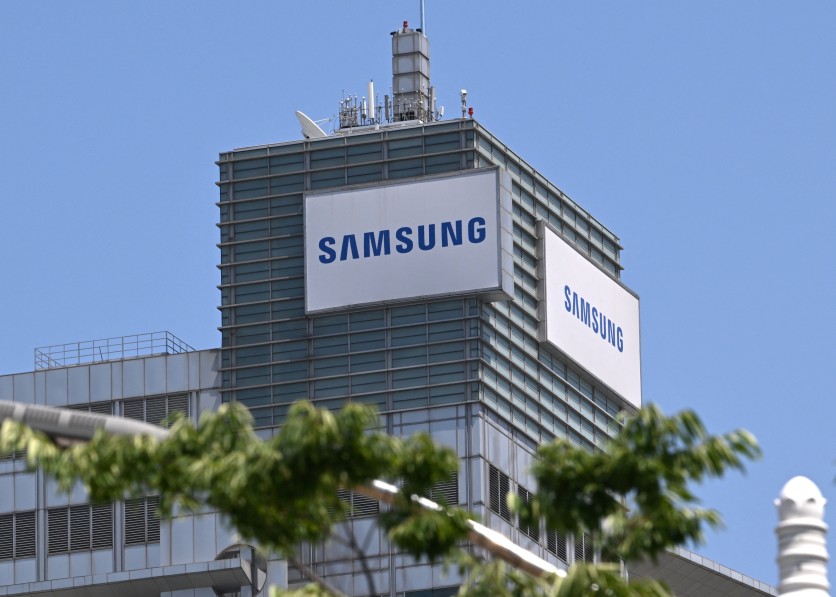
The logo of Samsung Electronics is seen on the top of a building at the company's headquarters in Suwon on May 22, 2026. Samsung labour union members will begin voting on May 22, on a tentative wage deal that could deliver hefty bonuses to chip workers and helped avert a major strike at the South Korean tech giant this week. Jung Yeon-je/AFP via Getty Images
Samsung Electro-Mechanics said Thursday it has signed a final agreement to establish a 480 billion won ($310 million) joint venture with Dongwoo Fine-Chem, a wholly owned South Korean subsidiary of Japan's Sumitomo Chemical Co., to produce a key material for next-generation semiconductor substrates, according to The Korea Herald. The partners aim to begin full-scale operations in the second half of 2027.
The Deal
The venture, tentatively named GlaSSEM, will produce "glass core," the material at the heart of the glass substrates emerging as a possible breakthrough in advanced chip packaging. The name combines the initial letters of glass, Samsung, Sumitomo, electronic and materials.
The total investment is 480 billion won. Samsung Electro-Mechanics will hold 66.2% and Dongwoo Fine-Chem the remainder, according to a regulatory filing — with Samsung Electro-Mechanics acquiring 63.82 million shares for 319.1 billion won in a purchase scheduled for Sept. 1. The two companies plan to complete incorporation by the end of this year, and the venture will be headquartered at Dongwoo Fine-Chem's plant in Pyeongtaek, Gyeonggi Province, which will also serve as its production base.
Read more: TSMC Readies Panel-Level Packaging for AI Chips, Setting Up a Showdown With Samsung
Why Own the Material
The strategic logic is vertical integration. A glass substrate is built around a glass core — the central load-bearing layer that gives the substrate its defining advantages. Compared with conventional plastic, or organic, substrates, glass has a lower coefficient of thermal expansion and better flatness, so a large package built on glass stays flatter and more stable where an organic one warps — an edge that matters as AI servers and high-performance computing chips demand ever larger, more densely packed packages with finer circuitry.
Glass core is therefore the single most important material in that shift, and it is also one of the hardest to make well. By producing it through a joint venture rather than buying it from outside suppliers, Samsung Electro-Mechanics is betting that owning the material will give it an edge on cost and speed over rivals — such as SKC's Absolics — that source glass core externally, as all of them race to win qualification from major AI-chip customers.
The Partnership and What Comes Next
The venture pairs Samsung Electro-Mechanics' substrate design and manufacturing with Sumitomo Chemical's materials technology and Dongwoo Fine-Chem's Korean production infrastructure. Samsung Electro-Mechanics said the tie-up will help secure a stable supply of glass core and strengthen its position in next-generation package substrates. The company has already built a pilot line at its Sejong plant, where it is producing prototype glass substrates.
GlaSSEM plans to install production equipment, stabilize processes and complete quality checks in stages ahead of the targeted 2027 launch, positioning it to respond to demand from global technology companies weighing whether to adopt glass substrates. Chang Duck-hyun, president and chief executive of Samsung Electro-Mechanics, called the venture a strategic decision to preemptively secure core competitiveness in glass cores. Sumitomo Chemical Chairman Keiichi Iwata said the partnership would strengthen both companies' competitiveness in advanced semiconductor materials and support long-term technology cooperation.
Read more: Nikon Undercuts ASML on ArF Lithography: Intel Seals $3.3B India Glass Substrate Deal
Frequently Asked Questions
What is glass core?
Glass core is the central glass layer at the heart of a glass substrate — the structure that connects a semiconductor chip to a circuit board. It is considered the key material in glass substrates because glass expands under heat at nearly the same rate as silicon and stays exceptionally flat, so a large chip package built on a glass core resists the warping that affects conventional plastic (organic) substrates. That stability is increasingly important as AI and high-performance-computing chips grow into large, densely packed packages. Glass core is also technically difficult to manufacture consistently, which is why securing a reliable supply of it has become a strategic priority.
What is GlaSSEM?
GlaSSEM is the tentative name for the joint venture Samsung Electro-Mechanics is establishing with Dongwoo Fine-Chem, a wholly owned Korean subsidiary of Japan's Sumitomo Chemical, to produce glass core. The name combines the initial letters of glass, Samsung, Sumitomo, electronic and materials. The venture represents a total investment of 480 billion won ($310 million), with Samsung Electro-Mechanics holding a 66.2% majority stake and Dongwoo Fine-Chem the remainder. It will be based at Dongwoo Fine-Chem's plant in Pyeongtaek, Gyeonggi Province.
Why is Samsung partnering with Sumitomo?
The joint venture combines complementary strengths: Samsung Electro-Mechanics brings semiconductor substrate design and manufacturing expertise, Sumitomo Chemical contributes materials technology, and its Dongwoo Fine-Chem subsidiary provides the Korean production base. For Samsung Electro-Mechanics, the deal is a vertical-integration play — by producing glass core in-house through the venture rather than buying it on the market, the company aims to secure a stable supply and gain an advantage on cost and production speed over competitors that source the material externally.
When will the glass-core venture start production?
The companies plan to complete the incorporation of GlaSSEM by the end of 2026, with Samsung Electro-Mechanics' share purchase scheduled for Sept. 1, 2026. Full-scale operations are targeted for the second half of 2027, after the venture installs production equipment, stabilizes its processes and completes quality checks in stages. These are the company's stated targets; actual timing will depend on how the ramp-up and customer qualification progress.

-
 C114 Communication Network
 -
 Communication Home
