
 Search

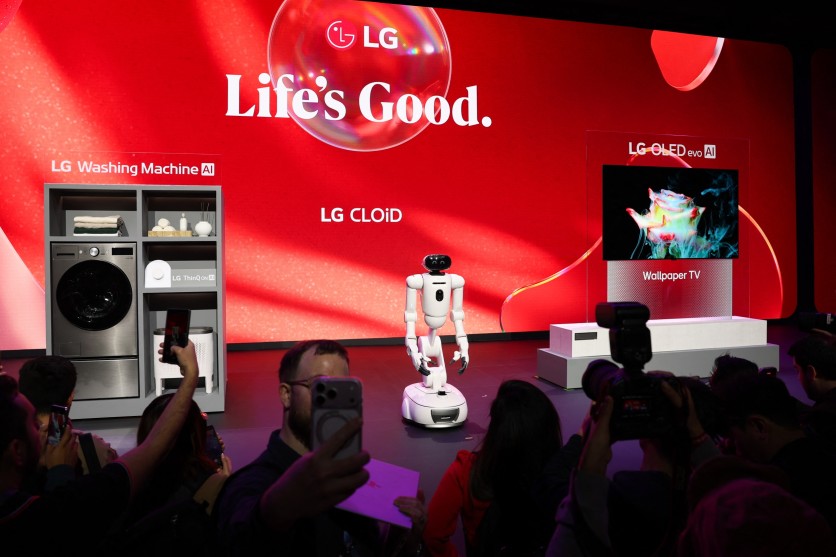
The LG CLOiD Home Robot is demonstrated for a zero labor home during the LG press conference ahead of the annual Consumer Electronics Show (CES) in Las Vegas, Nevada on January 5, 2026. Patrick T. Fallon/AFP via Getty Images
LG Electronics is establishing a Robotics Business Center reporting directly to the CEO, consolidating its robotics operations — from spotting business opportunities to supply chain and manufacturing — into a single organization as it accelerates one of its designated future growth areas.
A corporate-structure change is rarely the most exciting kind of news, but this one is a statement of intent. By pulling robotics into a CEO-reporting, end-to-end business unit four months ahead of its normal reshuffle, LG is signaling that it is done treating the field as an R&D project and is moving to commercialize it — and the unit is built to execute two specific bets, both of which lean on strengths LG already has rather than chasing the field.
A Fast-Tracked, CEO-Level Reorganization
Announced June 30 and effective July 1, the reorganization is a "one-point" move made about four months ahead of LG's regular year-end reshuffle, underscoring how central robotics has become to its strategy. The new center will run as an end-to-end business unit covering business development, sales, and operations, led by Song Si-yong, who previously headed manufacturing capability enhancement, production system solutions, and the Smart Factory Solution Center at LG's Production Engineering Research Institute. LG said the structure will strengthen governance over the robotics push, according to The Korea Herald, enabling faster decisions, more agile execution, in-house technology development, and better cost competitiveness.
Bet One: Owning the Robot's Most Expensive Part
The first bet is hardware, and it plays directly to LG's home turf. The single most expensive component of a humanoid robot is the actuator — the motorized joint module that bundles a motor, gearing, and control electronics to act as the robot's muscle. A single humanoid needs dozens of them, and they are estimated to account for 40% to 60% of a robot's total build cost, so whoever can make them cheaply and reliably holds a structural advantage.
That is precisely where LG thinks it can win. The company has designed and mass-produced electric motors for home appliances since 1962 and now turns out some 45 million motors a year — the kind of manufacturing scale that is the hard part of entering humanoid hardware. Under the new center, LG is preparing domestic in-house production of actuators based on that motor base, while also pursuing external supply to other robot makers, building on the AXIUM actuator brand it unveiled alongside its home humanoid CLOi D. CEO Ryu Jae-cheol has said the company will make 2026 a pivotal year for robotics, leaning on that motor base to become a key actuator supplier.
Read more: LG Home Robot CLOi D Heads to the Factory Before the Living Room
Bet Two: Manufacturing the Data a Robot Can't Download
The second bet is data, and it addresses what is widely seen as the hardest bottleneck in humanoid development. A large language model can learn from text already on the internet, but a robot that must grip a cup, open a door, or carry a shifting load needs physical-interaction data that simply doesn't exist online — it has to be generated by robots actually performing those motions and recording the outcomes, over and over.
That is what LG's "data factory" is for. Under the center, LG will set up a dedicated organization for a robot-training data factory — widely seen as a core pillar of future robot competitiveness — and use the high-quality data it generates to advance its Robot Foundation Model (RFM), the software "brain" that lets a robot perceive a situation and decide how to act. The large-scale facility, being built at the Yangjae R&D Campus in Seoul's Seocho district, is targeted to begin operating within the year. To accelerate the work, LG is leaning on a recently announced AI factory partnership with Nvidia, under which it will use tools like Isaac Sim to train and validate robots in physically accurate virtual environments before deployment, and the GR00T foundation model to give them stronger reasoning.
Three Fronts and "One LG"
LG plans to attack the robot market on three fronts — adding home robots through the new center to the industrial robots of subsidiary RoboStar and the commercial service robots of subsidiary Bear Robotics. It also intends to knit together group affiliates such as LG CNS and LG AI Research under its "One LG" approach, while broadening global big-tech partnerships.
Calling 2026 the foundation-laying year for its robotics business, LG aims to become a comprehensive robotics solutions company spanning finished robots, core components like actuators, and the data factory that generates and trains on robot data. Whether that ambition pans out is a question for the years ahead — but the reorg makes clear the company intends to pursue it with the hardware and the data brain under a single CEO-level roof.
Read more: Samsung LG Robotics Investment Drives 117% Revenue Surge, Insider Probe Clouds Gains
Frequently Asked Questions
Why is LG creating a robotics business center?
LG Electronics announced on June 30, 2026, that it is setting up a Robotics Business Center reporting directly to CEO Ryu Jae-cheol, effective July 1. The move consolidates robotics operations — from business development to supply chain and manufacturing — into one end-to-end organization. LG made the change about four months ahead of its regular year-end reshuffle, an off-cycle timing that signals how central robotics has become to its strategy. The company says the structure will enable faster decisions, more agile execution, and better cost competitiveness as it shifts from development toward commercialization.
What is an actuator in a robot?
An actuator is the motorized joint module that moves a robot's arms, legs, and hands — essentially a humanoid's muscles. Each unit bundles a motor, gearing, and control electronics, and a single humanoid robot can require dozens of them. Actuators are the single most expensive component of a humanoid, estimated at roughly 40% to 60% of its total build cost, which is why companies that can manufacture them cheaply and reliably hold a key advantage. LG is leveraging its appliance-motor manufacturing — about 45 million motors a year, with motor design dating to 1962 — to produce its own AXIUM actuators.
What is LG's robot data factory?
It is a large-scale facility LG is building at its Yangjae R&D Campus in Seoul to generate the physical-interaction data that robots need to learn. Unlike a text-based AI, which can train on data already on the internet, a robot needs real-world experience — how to grip objects, move them, and handle changing loads — that has to be physically generated. LG's robots perform tasks in the facility to produce that behavioral data, which is then used to train its Robot Foundation Model, the software that lets a robot perceive and act. The facility is targeted to begin operating within 2026.
What is LG's robot strategy?
LG says it aims to become a comprehensive robotics solutions company spanning finished robots, core components like actuators, and the data factory that generates and trains on robot data. It plans to address the market on three fronts: home robots through the new center, industrial robots through its subsidiary RoboStar, and commercial service robots through its subsidiary Bear Robotics. LG also intends to connect group affiliates such as LG CNS and LG AI Research under a "One LG" approach and to expand global partnerships, including an AI factory collaboration with Nvidia. LG has called 2026 the foundation-laying year for the business.

-
 C114 Communication Network
 -
 Communication Home
