
 Search

Valve
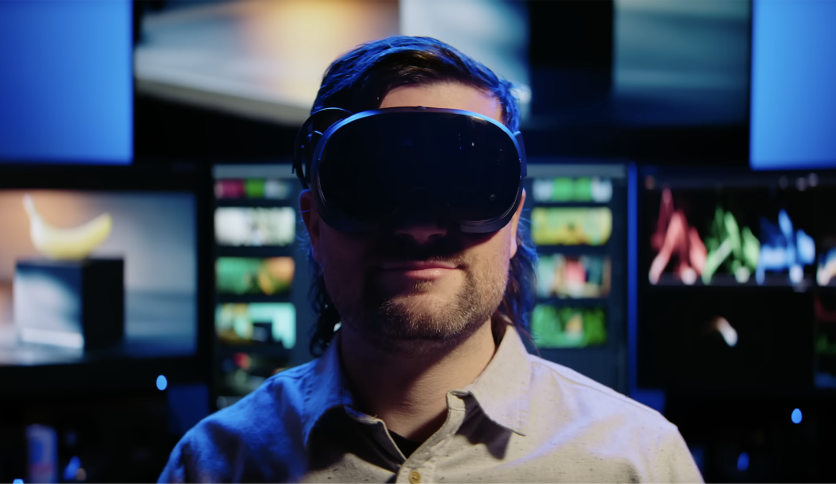
Valve's Steam Frame standalone VR headset moved a step closer to launch this week when Portal 2, the company's 2011 puzzle classic, became one of the first games to receive a Steam Frame compatibility rating — earning a "Playable" badge after passing four of the system's five certification criteria and failing only on native display resolution. The rating appeared in SteamDB on June 29, first spotted by leaker Brad Lynch (@SadlyItsBradley), with coverage spreading across gaming press today. It arrived the same day Steam Machine, the compact SteamOS living-room PC that shares Valve's hardware-launch trio with the Frame, began shipping to customers at $1,049 — a sequence that makes June 30, 2026 the most information-dense day in the Steam Frame's pre-launch timeline.
A second Valve-owned title, Day of Defeat, received an Unsupported rating at the same time, confirming that Valve's certification pipeline is running across multiple games simultaneously. That detail matters: when similar compatibility badges began appearing for the Steam Deck in late 2021, the handheld shipped within weeks. Industry watchers are drawing an identical inference here.
Steam Frame Certification Works Like Steam Deck Verification — With One Key Difference
The Steam Frame's compatibility rating system is a direct extension of the Steam Deck's Verified program. Valve tests each game against five criteria and assigns one of three badges: Verified (passes all checks), Playable (passes most checks but requires some workarounds), or Unsupported (broken or unavailable). Portal 2 cleared four of the five requirements without issue — the game runs with the headset's default controller configuration, displays accurate Steam Frame button icons, renders readable interface text, and uses default graphics settings that perform adequately on the hardware. Its single failure is the resolution check: the 2011 engine cannot scale to the Steam Frame's dual 2,160-by-2,160-pixel-per-eye LCD display.
One detail that the ratings do not address: these certification results apply to games running locally on the Steam Frame's own processor, not to titles streamed wirelessly from a gaming PC. Portal 2 could still run at higher visual quality in streaming mode, where the host computer handles all rendering. That distinction is central to how Valve has framed the device, and it shapes how readers should interpret a Playable score for an aging game.
What the Steam Frame Actually Is
The Steam Frame is Valve's first standalone VR headset and the successor to the tethered Valve Index, which retired from production after the announcement. Where the Index required a desktop PC and a maze of cables and external tracking stations, the Frame is self-contained: it runs a version of Valve's Arch Linux-based SteamOS on a Qualcomm Snapdragon 8 Gen 3 system-on-chip with 16 GB of LPDDR5X RAM, uses four onboard monochrome cameras for inside-out positional tracking via simultaneous localization and mapping, and ships in 256 GB and 1 TB storage configurations. A microSD card slot is included and is compatible with cards from Valve's Steam Deck handheld.
The headset's dual 2,160-by-2,160 per-eye LCD panels are viewed through pancake lenses and support refresh rates of 72, 80, 90, and 120 Hz, with an experimental 144 Hz mode available via software. Eye tracking is built in. Weight is 185 grams for the optical core module alone and roughly 440 grams with the integrated head strap, battery, and facial interface attached. The controllers use tunneling magnetoresistance thumbsticks rather than the Hall-effect sensors in Meta's Quest 3 controllers — a technology Valve says delivers better precision and resists the stick drift that has plagued controllers across the industry.
Read more: Steam Frame FCC Embargo Lifts: TMR Controllers and Hot-Swap Battery Confirmed
How Foveated Streaming Makes Wireless PC VR Work
The certification news lands against a technical backdrop that gives it added significance. Valve positions the Steam Frame not primarily as a standalone device — though it can run lighter titles natively — but as a wireless PC VR streaming terminal, a category it calls "streaming-first." The engineering decision at the heart of that positioning is foveated streaming, and it is the reason the concept is plausible at the Frame's resolution.
The problem with streaming VR wirelessly is bandwidth. Sending a full 2,160-by-2,160-per-eye image at 90 or 120 frames per second over a home Wi-Fi network at sufficient fidelity to feel indistinguishable from a wired connection requires more throughput than most wireless setups can consistently deliver without introducing compression artifacts or latency spikes. Valve's solution uses the Steam Frame's eye-tracking cameras to identify in real time exactly where the user is looking — the foveal point — and instructs the encoder to send that region at full bitrate. Peripheral vision, where the human eye's acuity drops sharply, is streamed at much lower resolution. The encoder sends four views rather than two: a high-fidelity foveal view and a low-resolution full-field view for each eye.
Valve engineer Jeremy Selan described the math to PC Gamer at the Frame's announcement: if the foveal area represents roughly ten percent of the total field of view, concentrating bandwidth there produces a potential ten-times improvement in bandwidth, latency, and signal robustness compared to streaming the entire frame uniformly. Critically, the technique operates at the encoder level — no game or application needs to be specifically coded to support it. Valve applies it to everything streamed to the headset, including titles that predate the Frame's existence.
The wireless architecture is built to match. The headset includes two Wi-Fi 7 radios: one handles the 5 GHz band for standard internet connectivity, and the other runs on the 6 GHz band dedicated exclusively to streaming traffic. A Wi-Fi 6E USB adapter bundled with the Frame connects to the host PC, creating a peer-to-peer 6 GHz link between the two devices that bypasses the home network entirely. Valve chose 6 GHz specifically because its shorter range reduces the number of neighboring networks competing for spectrum — a deliberate tradeoff that prioritizes low-latency consistency over wireless range.
The Snapdragon 8 Gen 3 does not need to render demanding PC VR titles at the Frame's native resolution and high frame rate — that work stays on the desktop GPU. The headset decodes the incoming foveated video stream and displays it. Under this design philosophy, the chip is sufficient for its role as a streaming decoder while also capable enough for lighter standalone titles on its own. The risk that reviewers will probe is whether the actual wireless experience lives up to the specification, because streaming quality depends on real-world network conditions, router placement, and host GPU performance that a spec sheet cannot guarantee.
Read more: Steam Frame VR Headset Targets Meta Quest 3 With Double RAM and Foveated Streaming
Pricing Remains Unconfirmed as DRAM Costs Reshape Expectations
Valve has not announced a retail price. When the Steam Frame was revealed in November 2025, the company said it expected to price the headset below the original Valve Index's $999 full-kit cost. In February 2026, Valve acknowledged that a global DRAM shortage driven by AI data center demand had forced a revision to both its pricing and its timeline, with the company stating publicly that costs would be higher than anticipated.
The launch of the Steam Machine at $1,049 today provides a concrete data point. Valve engineer Lawrence Yang told The Verge the company is selling the Steam Machine at cost, meaning the figure reflects actual 2026 component prices. RAM contract prices rose more than 170 percent year-over-year between Valve's November announcement and mid-2026, driven by hyperscaler AI infrastructure orders consuming the same production capacity that supplies consumer LPDDR5X memory. The Steam Frame's 16 GB of LPDDR5X — double the Meta Quest 3's 8 GB — makes it among the most memory-intensive standalone VR headsets on the market and exposes it to the same cost pressures that pushed the Steam Machine above early estimates. Analyst estimates based on component costs and early retailer database listings place the expected range for the 256 GB base model at $899 to $1,199. Valve has not confirmed any figure, and no pre-order window has been announced.
Why Portal 2 Is an Early Candidate — and What the Rating Doesn't Cover
Valve did not choose Portal 2 at random. The 2011 puzzler is one of the company's most beloved first-party titles, has strong motion-control community support, and produces minimal motion sickness — characteristics that make it a frequent first recommendation for VR newcomers even without a native VR mode. Its Playable rating in standalone mode is worth noting for what it confirms: the translation stack works. The Steam Frame runs Portal 2's x86 Windows build fully standalone through the FEX-Emu x86-to-ARM translation layer on top of Proton's Windows-to-Linux compatibility layer — a chain of software translation that produces a game that plays correctly, buttons map properly, and text reads clearly, all on hardware the 2011 engine was never written to support.
The resolution shortfall is a function of the engine's age, not the headset's architecture. Portal 2 was built for 1080p monitors. The Steam Frame's 2,160-by-2,160 native resolution is a display standard the game simply was not designed to address. A community or official patch could resolve this, as has happened for many older titles on the Steam Deck.
Half-Life: Alyx, Valve's flagship VR title and the most anticipated candidate for a Frame Verified badge, had not received a compatibility rating at the time of publishing. Alongside Portal 2 and Day of Defeat, it is the most-watched title in the certification queue. Early hands-on reports from November 2025, when Valve invited press to its Bellevue, Washington headquarters, found Alyx streaming from a nearby gaming PC to the Frame produced a smooth, high-fidelity result — but standalone native performance sat around 40 to 50 frames per second, below the 90 FPS threshold Valve's Frame Verified program requires for standalone certification.
Launch Signals Are Stacking Up
The Portal 2 rating is the latest in a sequence of pre-launch indicators that have accelerated through June. Approximately 35 tons of hardware labeled "Virtual Reality Devices" cleared into Valve's US warehouses around June 10. The FCC embargo on Steam Frame controller documentation lifted on schedule June 18, releasing external and internal controller photographs and confirming the Enthusiast Kit accessory bundle, which includes a hot-swappable headset battery pack. SteamDB updater Brad Lynch also spotted Valve adding Steam Frame Welcome Tour strings and graphics in a Steam client backend update this week.
The Steam Machine's timeline offers a template: it used a randomized pre-order lottery opening June 22, closing June 25, and began delivering purchase invitations today, June 30. Valve has described the wait between the Steam Machine shipping and the Steam Frame's own announcement as brief. Today's convergence of the Steam Machine's launch date with the Portal 2 rating — on the same day the Frame's pre-order window was rumored to open before the Steam Machine overtook that slot — makes the current moment the clearest signal yet that a formal Steam Frame announcement and pre-order is closer than any prior reporting has indicated.
Valve has committed to shipping the Steam Frame this summer, meaning no later than August 31. It has not specified a date, and no official price has been set.
Frequently Asked Questions
What does a "Playable" Steam Frame compatibility rating mean?
Valve's certification system for the Steam Frame mirrors the Steam Deck's program exactly. Verified means a game passes all five checks — input support, display resolution, seamlessness, system compatibility, and controller icons — and runs without any manual setup. Playable means the game works and is controllable but fails at least one check. Portal 2's single failure is display: its engine cannot render at the Steam Frame's native 2,160-by-2,160-per-eye resolution. Everything else — controls, icons, text, graphics defaults — passes. Importantly, these ratings apply to games running locally on the headset's own chip, not to PC-streamed content.
How does foveated streaming work and why does it matter for the Steam Frame?
Foveated streaming is Valve's approach to making wireless PC VR practical at high resolution. The headset's eye-tracking cameras determine in real time where the user is looking. The video encoder on the host PC then streams the foveal region — the area of actual focus — at full bitrate, while compressing the periphery where visual acuity naturally drops. Valve sends four video streams per frame: a high-resolution foveal view and a low-resolution full-field view for each eye. Valve engineer Jeremy Selan said the foveal area can represent about ten percent of the total field of view, making the bandwidth efficiency gain as high as tenfold compared to naive full-frame streaming. Because this technique operates at the encoder level, no game needs to be updated to benefit from it.
Does the Steam Frame require a gaming PC?
No, but the best experience for graphically demanding titles assumes one is nearby. The Frame runs games natively on its Snapdragon 8 Gen 3 chip through SteamOS, and lighter standalone titles are expected to run well without a connected PC. For the most demanding PC VR games — including Half-Life: Alyx at high frame rates — the "streaming-first" design means the host PC's GPU renders the game and the Frame decodes and displays a compressed wireless stream. A bundled Wi-Fi 6E USB adapter creates a dedicated 6 GHz peer-to-peer link between the PC and headset, bypassing the home network to minimize latency.
How does the Steam Frame compare to the Meta Quest 3?
The specifications favor the Steam Frame on paper. The Frame uses a Snapdragon 8 Gen 3 with 16 GB of LPDDR5X RAM; the Quest 3 uses a Snapdragon XR2 Gen 2 with 8 GB of RAM. Per-eye resolution is 2,160 by 2,160 on the Frame versus 2,064 by 2,208 on the Quest 3. The Frame runs the full Steam library via SteamOS and Proton; the Quest 3 runs Meta's Horizon OS with its own app ecosystem. The Quest 3 already has an established standalone library including major exclusives that will not come to the Frame; the Frame trades that catalog depth for access to thousands of PC VR and non-VR Steam titles. Pricing for the Steam Frame remains unannounced but is expected to be higher than the Meta Quest 3, which is currently priced at $599.99.

-
 C114 Communication Network
 -
 Communication Home
