
 Search

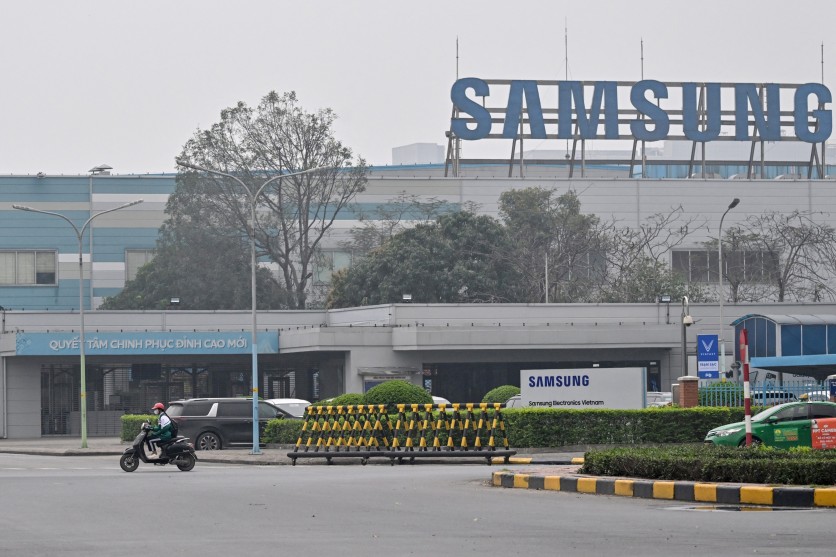
This photo taken on April 8, 2025 shows a woman riding an electric motorbike past a Samsung electronics factory in Bac Ninh province. Seeking low wages, South Korean tech giant Samsung Electronics has built factories in Vietnam for years, with nearly half its high-end mobile phones now put together in the southeast Asian country. Nhac NGUYEN/AFP
Samsung Electronics plans to spend roughly $1.5 billion on its first semiconductor test plant in Vietnam, a facility built to relieve a shortage of older memory chips that the artificial intelligence boom has quietly created. The investment, reported by Reuters on May 27 and detailed in a proposal Samsung submitted to Vietnamese authorities, places the plant in an industrial park in Thai Nguyen Province in northern Vietnam, about 60 kilometers north of Hanoi, with operations scheduled to begin in November 2027. For anyone buying a phone, a car, or a budget laptop, the project signals where the memory squeeze now bites hardest: not the cutting-edge chips that power AI data centers, but the cheap, mature memory that almost everything else depends on.
The 39 trillion Vietnamese dong outlay will build the test plant next to Samsung's existing smartphone and tablet manufacturing complex in Thai Nguyen, according to the proposal the company filed with local authorities to obtain environmental approval. It would be Samsung's first dedicated chip test plant in the country and will focus on legacy products rather than the advanced memory feeding AI servers. The company has told regulators it could reinvest profits from the project, "if any," into a second facility on the same site, potentially adding as much as $2.5 billion.
AI Boom Created a Shortage of Yesterday's Memory Chips
The strategic logic comes down to a problem the AI buildout created. Samsung and rival SK Hynix have redirected wafer capacity toward high-bandwidth memory and the newest DDR5 modules, the chips that feed Nvidia's AI accelerators and the data centers running them. That shift has come at the expense of older parts: output of DDR4 and low-power DDR4 has fallen sharply as manufacturers chase higher margins. With reduced supply, legacy DRAM spot prices have climbed faster than some leading-edge parts, an inversion of the usual order in which older memory gets cheaper as it ages.
Samsung Halted LPDDR4 Orders as Older Memory Grew Scarce
The squeeze is visible in Samsung's own catalog. In April, the company stopped accepting customer orders for LPDDR4 and LPDDR4X, and it has since marked both products as discontinued on its semiconductor site, repurposing those production lines for faster LPDDR5. The catch is that demand for the older chips has not gone away. Cars, industrial equipment, lower-end consumer electronics, and countless embedded systems still rely on them, leaving a supply gap precisely where Samsung is pulling back.
Read more: Memory Chip Shortage Hits $3 Trillion Market Value: Smartphones Cost 14% More in 2026
Testing Is the Back-End Bottleneck Samsung Wants to Widen
The Vietnam plant addresses that gap from an unusual angle. Testing sorts and validates finished chips for defects before they ship, and it is one of the back-end stages that can limit how quickly a memory maker moves product out the door. By adding test capacity aimed at legacy products in Vietnam, Samsung can keep its most advanced front-end wafer lines pointed at high-bandwidth memory and DDR5 while still serving customers who need yesterday's chips. The plant, in effect, widens a bottleneck rather than building new silicon from scratch.
Plant Will Validate 153 Billion Gigabits of DRAM Each Year
The proposal puts hard numbers on the capacity. The plant's maximum annual output is projected at 153.3 billion gigabits of DRAM, equivalent to about 19.1 billion gigabytes, and 255.6 billion gigabits of NAND flash, or roughly 31.8 billion gigabytes. Each product type will run on its own test line. Because individual DRAM chips carry smaller average capacities than NAND, the DRAM line is expected to handle more chips by unit count.
Why Is Samsung Building a Chip Plant in Vietnam?
Vietnam has become a major hub for semiconductor back-end work, the assembly, packaging, and testing stages that are more labor-intensive and less technically demanding than the front-end fabrication that patterns silicon. Samsung joins Intel, Amkor Technology, and Hana Micron, all of which already operate back-end plants in the country. The chipmaker has invested more than $23 billion in Vietnam over several decades, making it one of the country's largest foreign investors, and the new plant deepens a national strategy in Hanoi to climb the semiconductor value chain.
Read more: AI Server Spending Has Nearly Doubled DRAM Prices: Threatened Samsung Walkout Could Drive Them Higher Still
Operations Target November 2027 as Construction Proceeds
Construction is already underway. More than 200 Samsung engineers and staff have been working on the site since at least April, and Vietnamese authorities approved the investment in March. It remains unclear whether the project has secured every permit required for construction and operation; companies in Vietnam commonly begin preliminary groundwork while environmental approvals are still pending. Samsung has not publicly detailed the project beyond the regulatory filing, and the plant is scheduled to begin operations in November 2027.
Frequently Asked Questions
When will Samsung's Vietnam chip plant open?
Samsung is targeting November 2027 for the start of operations, according to the proposal it filed with Vietnamese authorities. Construction has already begun in Thai Nguyen Province, though it is not yet confirmed that the project holds every permit it needs.
What kind of chips will the Samsung Vietnam plant handle?
The facility is a test plant, not a fabrication plant, so it will validate finished memory chips rather than manufacture wafers. It focuses on legacy DRAM and NAND flash, with projected annual capacity of 153.3 billion gigabits of DRAM and 255.6 billion gigabits of NAND.
Why are older memory chips in short supply in 2026?
Memory makers have shifted wafer capacity toward high-bandwidth memory and advanced DDR5 to meet AI data-center demand, cutting output of older DDR4 and low-power DDR4 parts. Demand for those legacy chips remains strong in cars, industrial gear, and budget electronics, which has pushed their prices up.
Samsung's bet is that the AI era has not eliminated demand for older memory so much as starved it of capacity. By placing legacy test capacity in Vietnam, the company keeps its advanced lines free for high-margin AI memory while hedging against a shortage that has already lifted prices on the chips inside everyday devices. Whether the plant meaningfully eases that crunch will not be clear until it reaches operation in late 2027, with a second, larger facility on the table only if the first turns a profit.

-
 C114 Communication Network
 -
 Communication Home
