
 Search

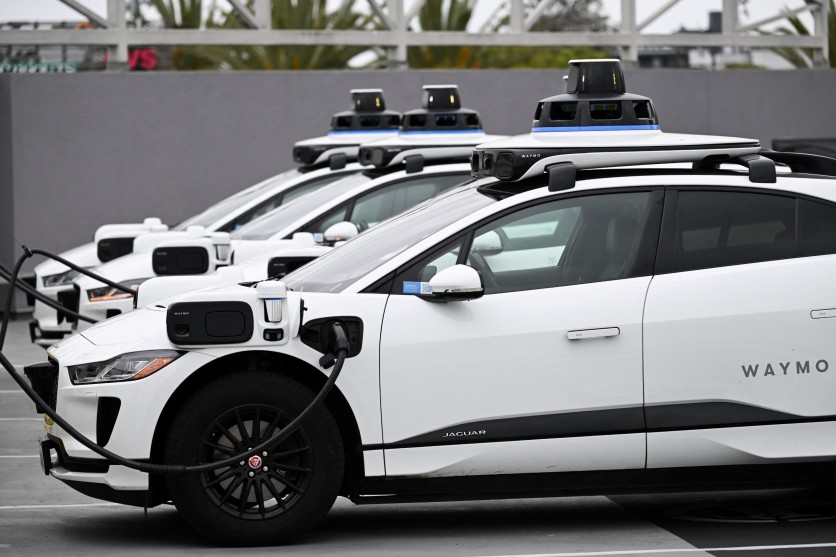
A Waymo autonomous self-driving Jaguar electric vehicle sits parked at an EVgo charging station in Los Angeles, California, on May 15, 2024. PATRICK T. FALLON/AFP via Getty Images
The federal government's three-decade-old requirement that every light vehicle have a foot-operated brake pedal has a comment deadline tomorrow — and what happens after it closes will determine whether Tesla's Cybercab and Amazon's Zoox can scale to mass production without hitting a regulatory ceiling.
The public comment period for docket NHTSA-2026-0728, NHTSA's proposed amendment to Federal Motor Vehicle Safety Standard No. 135, closes July 27, 2026, at the end of business. The proposed rule would remove the manual brake control requirement for vehicles designed exclusively for Automated Driving System operation — vehicles that will never have a human behind the wheel. Stopping distance performance requirements would remain unchanged. Approximately 52 public comments had been filed with the docket as of this writing.
If NHTSA finalizes the rule as proposed, it would create the first permanent federal certification pathway for pedal-free, wheel-free robotaxis — ending the exemption-and-cap system that has constrained the industry since purpose-built autonomous vehicles first reached public roads.
FMVSS No. 135 Has Required a Brake Pedal Since 1995
Federal Motor Vehicle Safety Standard No. 135, "Light vehicle brake systems," has governed braking performance for passenger cars and light trucks since 1995, when NHTSA harmonized domestic rules with international standards. Its core design requirement has been consistent across three decades: service brakes must be activated by a foot pedal, and the parking brake must be independently operable by a hand or foot control.
Those provisions made obvious engineering sense for every vehicle on the road at the time. They no longer describe vehicles like the Tesla Cybercab or the Amazon Zoox, which are built from the ground up without traditional manual controls. Including a brake pedal that could directly override ADS operation, NHTSA wrote in the proposed rule, "could pose a safety risk through intentional or unintentional misuse by a vehicle passenger."
Under the rules as they stand today, a manufacturer with a pedal-free robotaxi has only one path to legal deployment: file a petition under 49 CFR Part 555 for a temporary exemption. NHTSA caps each exemption at 2,500 vehicles per manufacturer per year, as confirmed by the Federal Register notice. That ceiling may be workable for a demonstration fleet, but it is structurally incompatible with mass commercial deployment.
What the Proposed Rule Would Change — and What It Would Not
The proposed amendment distinguishes how braking is initiated from how well a vehicle must stop. All stopping distance performance requirements under FMVSS No. 135 would remain exactly as they are, applied to ADS-equipped vehicles through an alternative test procedure: stopping distance would be measured from the moment an electronic command signal is transmitted to the service brake control, rather than from a pedal press — functionally equivalent in engineering terms, according to Sidley Austin's analysis.
The rule would also require that brake controls in pedal-free vehicles "be activated by on-board systems" — explicitly precluding remote commands from outside the vehicle, as the Federal Register notice states. Three additional changes are bundled with the brake control update: the "brake system warning indicator" would be renamed "brake system warning telltale" to align with FMVSS No. 101; warning telltales would need to be visible to all passenger positions, not just a driver's seat that doesn't exist; and the requirement that parking brakes be "friction type" would be dropped, acknowledging that drivetrain locks and electric park brakes can achieve the same hold-in-place function, according to a Crowell & Moring client alert.
What the proposed rule does not address: how a passenger should be able to direct a pedal-free robotaxi to stop in an emergency. In a footnote that, as Sidley's analysis noted, "likely followed substantial internal discussion," NHTSA stated it is "taking no position at this time as to how a passenger should be able to direct an ADS-operated vehicle to stop, or how the ADS should respond to such direction." The agency said it will address this through its defect authority and through future ADS performance standards — a standard that does not yet exist.
Tesla Took the Self-Certification Bet — and It Appears to Be Paying Off
Tesla's approach to the FMVSS problem was unusual in the industry. Rather than applying for a Part 555 exemption, the company engineered the Cybercab to comply with Federal Motor Vehicle Safety Standards as written and waited for the rules themselves to be updated, as Electrek reported.
That bet now looks well-placed. Production began at Gigafactory Texas in February 2026, with volume manufacturing following in April, according to EVXL's ongoing drone coverage. On May 26, the Cybercab received an EPA Certificate of Conformity as a battery-electric Zero Emission Vehicle, with an introduction-to-commerce date of May 29, 2026. The Cybercab's EPA filing, first surfaced by Electrek, revealed technical specifications not previously disclosed: a single front-wheel-drive 163 kW (219 hp) AC permanent magnet motor, a 47.6 kWh battery pack, a curb weight of 3,113 lbs (1,412 kg), and an adjusted real-world range target of approximately 293 miles.
Tesla VP of Vehicle Engineering Lars Moravy confirmed on X that the Cybercab will not be subject to NHTSA's 2,500-unit annual production cap. His answer when asked whether the cap applied: a single word — "No." Drone footage from July 18, 2026 logged 245 Cybercab units staged across Gigafactory Texas lots, a record count and more than double the 102 observed just five weeks earlier, according to EVXL.
The FMVSS 135 update, if finalized, would remove the remaining brake-control compliance ambiguity for the Cybercab at mass production scale. Because Tesla self-certified rather than petitioned for an exemption, it would not need to negotiate with NHTSA for every production run.
Zoox Took the Exemption Route — and Is Still Waiting
Amazon's Zoox reached the same regulatory destination by a different road. The company's purpose-built, bidirectional robotaxi — it seats four passengers face-to-face and is symmetrical front-to-back — has no steering wheel, no pedals, and no front seat reserved for a driver.
NHTSA granted Zoox a demonstration exemption on August 6, 2025, allowing operation on public roads under the agency's expanded Automated Vehicle Exemption Program, according to a U.S. Department of Transportation press release. That exemption required Zoox to remove all statements claiming its vehicles complied with applicable FMVSS — a formal acknowledgment that they did not fully comply as then written. Since launching free public rides in Las Vegas in September 2025, Zoox has served more than 500,000 riders total across four cities, as noted in TechTimes' June 2026 coverage.
The commercial exemption — which would allow Zoox to charge passengers — remained pending as of publication. NHTSA published a request for public comment on that petition; the comment period has since closed, and Zoox is waiting for a ruling, as TechCrunch reported. Both the demonstration and commercial exemptions are subject to the 2,500-vehicle annual cap.
A final FMVSS 135 rule would, for future designs, eliminate Zoox's need to operate under exemption — removing both the cap and the application process for vehicles it builds once it can self-certify compliance.
Zoox's path to that point, however, runs through a safety record that NHTSA is reviewing as part of the commercial exemption decision. As of March 2026, NHTSA had logged 123 accidents involving Zoox vehicles in autonomous mode, according to TechTimes. Zoox issued three separate software recalls in 2025: a March recall after unexpected hard braking caused two motorcyclists to rear-end test vehicles; a May recall covering 270 vehicles after a Las Vegas collision in which a Zoox robotaxi failed to correctly predict an approaching passenger car's path; and a December recall addressing 332 vehicles after 62 documented instances of lane-crossing and crosswalk-blocking near intersections, as documented by TechTimes.
AV STEP Withdrawal: More Manufacturer Latitude, Less Transparency
The FMVSS 135 rulemaking did not arrive alone. On the same day NHTSA published its proposed brake rule, the agency formally withdrew the AV STEP proposal — the voluntary oversight framework the Biden administration had put forward in January 2025, which would have required AV companies to submit detailed public disclosures in exchange for potential FMVSS exemptions, as published in the Federal Register.
NHTSA received 37 comments on AV STEP before withdrawing it, per the withdrawal notice. A central theme emerged across industry groups and safety advocates alike, though for opposite reasons: the program was not likely to work. The Alliance for Automotive Innovation raised concerns about the independent assessment requirements. Safety advocates, including the Owner-Operator Independent Drivers Association, argued that a voluntary program was not adequate regulatory oversight. Landline Media reported that OOIDA director of federal affairs Jay Grimes said bluntly that the voluntary structure "would not have implemented the necessary transparency and safety oversight of autonomous vehicles currently operating on our nation's roads."
NHTSA concluded that industry participation would have been minimal, and that the goals of AV STEP would be "better served by other initiatives."
The two actions together — updated FMVSS plus withdrawn voluntary disclosure program — signal a deliberate shift in federal AV policy under the Trump administration: targeted safety standard updates rather than a parallel transparency layer. NHTSA Administrator Jonathan Morrison confirmed in a Bloomberg interview published in July 2026 that the agency is targeting a 2028 deadline to finalize a comprehensive performance-based framework for ADS safety. That framework would shift from design-based rules (what physical equipment must a vehicle have) to performance-based standards (how must the system behave in defined scenarios).
"When it comes to vehicles that are designed to never be operated by a human, what we're looking to do with this rulemaking is to establish those same performance requirements but get rid of the design-restricting elements," Morrison said.
What Questions This Rule Doesn't Answer
Three significant questions remain explicitly unresolved by the proposed FMVSS 135 update, and the answer to each has been deferred:
The first is the passenger emergency stop interface. NHTSA requires that a pedal-free vehicle have some means for a passenger to direct it to stop, but explicitly declines to specify what that means must look like, how reliable it must be, or how the ADS must respond. Manufacturers would determine this themselves, and NHTSA would address failures through its defect authority after the fact, per Sidley Austin's analysis.
The second is the ADS braking decision standard. The proposed rule tests whether brakes work from the moment an electronic signal is transmitted — but has no companion standard governing whether the ADS sends that signal at the right moment in a given traffic scenario. NHTSA acknowledged this directly: "whether the vehicle's brakes are actuated appropriately given a specific driving scenario is an independent question" to be addressed in a separate future standard, as stated in the Federal Register NPRM.
The third is the first responder interaction gap. On July 9, 2026, NHTSA Administrator Morrison sent a letter to AV developers formally declaring that the inability of autonomous vehicles to safely detect and respond to emergency scenes — including flashing lights, flares, smoke, fire, and traffic cones — constitutes a "functional insufficiency," not an edge case, as TechCrunch reported. The agency demanded solutions by month's end. That letter arrived while the FMVSS 135 comment window was open, but the proposed rule addresses none of the behaviors it described.
Read more: DC Robotaxi Bill Omits Wheelchair Access While Waymo and Uber Clash Over Rules
Broader Pattern of FMVSS Modernization
The FMVSS 135 update is the fifth in a series of rulemakings under the Trump administration's Automated Vehicle Framework. Earlier in 2026, NHTSA published separate proposed rules to amend FMVSS No. 102 (transmission shift requirements), FMVSS Nos. 103 and 104 (windshield defrost and wipers), and FMVSS No. 110 (tire placards) — all applying the same logic: design requirements built around a human driver need to be updated for vehicles that will never have one, as TechCrunch noted.
Morrison confirmed separately that the agency is also evaluating whether to drop the steering wheel mandate entirely, saying of mirrors and manual controls in vehicles designed never to be operated by a human: "Does it make sense for a vehicle that is designed never to be operated by human to have mirrors? No. That's pretty common sense."
State legislatures have been less accommodating. In 2026, state legislatures in Illinois, Minnesota, New York, Oregon, Washington, Maryland, and Virginia all declined to pass comparable AV authorization bills amid public concern over safety and driver displacement, as AutoConnectedCar reported.
General Motors's experience with the Origin AV illustrates the cost of the previous regulatory environment: the company ended its Origin program in 2024 in part because of regulatory uncertainty around a vehicle designed without manual controls, according to TTNews.
Read more: Zoox Robotaxi Gets Production Redesign: NHTSA Must Approve Before Any Rider Pays
What Happens After Tomorrow
After the comment period closes July 27, NHTSA will review all public submissions before issuing a final rule. The agency has asked specifically whether the rule could take effect in less than 180 days after finalization — or even immediately upon publication — arguing that because the proposal removes requirements rather than adding them, manufacturers need no preparation time, per the Federal Register notice.
For Tesla, a finalized rule would resolve the remaining compliance ambiguity for Cybercab production at scale. For Zoox, it would ultimately end the exemption-and-cap structure — though the company still needs a favorable commercial exemption ruling first before it can charge passengers under its current design. For the AV industry broadly, a finalized rule would represent the first time FMVSS explicitly recognized and accommodated a vehicle with no human driver.
What a finalized rule would not do is answer what happens when a passenger in a pedal-free robotaxi needs the vehicle to stop and cannot make that happen. NHTSA's position — that this question will be addressed through future standards and defect authority — may be technically defensible as a sequencing decision. It also means that for the gap period between this rulemaking and the 2028 framework, the most important safety question in the passenger's seat of a purpose-built robotaxi remains unanswered at the federal level.
Frequently Asked Questions
What is the 2,500-vehicle cap, and does the FMVSS 135 rule change eliminate it?
The 2,500-vehicle-per-manufacturer-per-year ceiling is not directly in FMVSS 135 — it is a statutory cap under 49 CFR Part 555, the federal exemption process. Manufacturers that cannot self-certify FMVSS compliance must petition NHTSA for a temporary exemption, and the statute limits each exemption to 2,500 vehicles annually. If NHTSA finalizes the FMVSS 135 update, manufacturers like Zoox would be able to design future vehicles that self-certify compliance directly, eliminating the need for a Part 555 exemption and with it the production ceiling. Tesla's Cybercab already self-certified and has no cap.
How does Tesla's Cybercab comply with FMVSS if it has no brake pedal?
Tesla's self-certification bet — designing the Cybercab to meet FMVSS as currently written rather than seeking an exemption — works partly because the FMVSS 135 language specifies human-operated brake controls in a way Tesla appears to have addressed through its brake-by-wire architecture, with FMVSS compliance stickers visible on production units. The proposed rule update would explicitly validate this approach for the entire industry by replacing the design requirement (a pedal) with a performance requirement (stopping within defined distances from the moment an electronic signal is transmitted).
What happens if a passenger in a pedal-free robotaxi needs to stop the vehicle in an emergency?
NHTSA has explicitly declined to answer this question in the proposed FMVSS 135 rule. The agency acknowledged that passengers "should be able to direct an ADS-operated vehicle to stop" but stated it is "taking no position at this time as to how" that mechanism should work, or how the ADS must respond. The proposed rule requires that brake controls be activated by on-board systems — ruling out remote commands — but leaves the specific passenger-stop interface to each manufacturer's design. NHTSA said it plans to address this through future ADS performance standards and defect authority. Until those standards exist, the answer varies by manufacturer.
Does removing the brake pedal requirement mean the safety standards for stopping are being relaxed?
No. NHTSA's proposed rule specifically preserves all stopping distance performance requirements under FMVSS No. 135. What changes is the test method — stopping distance will be measured from the moment the electronic command signal is sent to the brake system, rather than from a pedal press. The engineering outcome required (vehicle stops within defined distances from defined speeds) remains identical. NHTSA was explicit: "Safety performance standards are not being relaxed — only the design pathway to achieve compliance is being updated."

-
 C114 Communication Network
 -
 Communication Home
