
 Search

Apple.com
Apple is about to eliminate the only affordable iPhone option during the 2026 holiday season — and it is doing so deliberately, while simultaneously launching a new Klarna-backed leasing program designed to soften the blow before any price is announced. The iPhone 18 Pro and iPhone 18 Pro Max are expected to arrive in September 2026 without a standard-model companion until spring 2027, and market analysts predict they will carry price tags roughly $200 higher than their predecessors. That combination — no budget option, higher premium prices, and a new AI feature wall that even some current iPhone 17 owners cannot clear — makes the purchase decision coming this fall one of the most consequential in Apple's recent history.
What Is the Apple Upgrade Program, and Why Did Apple Launch It Now?
The timing of Apple's new financing play is not coincidental. "Apple Upgrade," a device leasing program developed in partnership with buy-now-pay-later provider Klarna, is scheduled to launch in the United States on Tuesday, July 28, according to Bloomberg. The program will allow customers to lease most iPhone, Mac, iPad, and Apple Watch models: iPhones and Apple Watches on 24-month terms, iPads and Macs on 36-month terms. Customers will be able to pay off devices early, upgrade before a lease ends, or return equipment at term's end. Apple plans to discontinue new sign-ups for its existing iPhone Upgrade Program once Apple Upgrade launches.
The practical effect of the program is that a potential $200 price increase on the iPhone 18 Pro Max — which would push the starting price to approximately $1,299 for the Pro and $1,399 for the Pro Max, up from $1,099 and $1,199 for the iPhone 17 Pro models — spreads across a 24-month lease at around five extra dollars per month. Apple is not hiding the connection. By rolling out the program weeks before the iPhone 18 announcement, it is establishing an affordable-payment narrative before the sticker shock arrives.
Inside the A20 Pro: Why 2nm Silicon Costs So Much More
The most significant technical shift in the iPhone 18 Pro Max is also the biggest driver of its cost increase. Apple's A20 Pro chip is built on TSMC's N2 process — the world's first mass-production implementation of gate-all-around (GAA) nanosheet transistors, which entered volume production in the fourth quarter of 2025.
To understand why this matters, and why it costs more, requires understanding what changed architecturally. For approximately 15 years, the dominant transistor design in advanced chips was the FinFET, where the gate electrode wraps around three sides of a vertical silicon fin to control current flow. At the 2nm node, that architecture hits its physical limits: at smaller sizes, current leakage becomes increasingly difficult to manage with a three-sided gate. GAA nanosheet transistors replace the fin with a stack of thin horizontal silicon ribbons, and the gate electrode surrounds the channel on all four sides, producing tighter electrostatic control over the channel. The result is a chip that can pack more transistors into the same area without leaking current the way a scaled FinFET would.
TSMC's published figures put N2 at 10 to 15 percent faster than the 3nm N3E process at equal power, or 25 to 30 percent more power-efficient at equal speed, with a transistor density improvement of more than 15 percent. Those gains are real — but they arrive at a steep manufacturing cost. N2 wafers are priced at approximately $30,000 each, a roughly 66 percent premium over the 3nm node wafers that powered the A19 Pro. Apple has reportedly secured over 50 percent of TSMC's initial N2 capacity to cover the iPhone 18 lineup and M5-class Mac chips, but even with that leverage, the cost per functional chip is substantially higher.
Counterpoint Research estimates the total component cost for the 1TB iPhone 18 Pro Max will rise by nearly $300 compared to its predecessor — with NAND flash storage alone expected to exceed $250 per unit, a figure roughly equivalent to half the entire bill of materials for the iPhone 17 Pro Max. The chip shortage driving memory prices is directly tied to artificial intelligence demand: global AI server buildouts have consumed so much high-bandwidth memory and NAND capacity that contract prices for consumer-grade chips are climbing in step. Apple CEO Tim Cook has acknowledged that the memory situation is unlike anything he has seen in over 40 years.
Even with an average $200 retail price increase, Counterpoint expects Apple to accept slightly lower gross margins on the iPhone 18 Pro Max than it recorded on the iPhone 17 Pro Max in 2025. That is an unusual concession for a company that has spent years defending its hardware margins through storage tier pricing and services revenue.
Read more: With the iPhone 18 Launch Approaching: Here Are Confirmed Specs, Features, and Camera Upgrades
What Do You Actually Get for the Higher Price?
For buyers willing to absorb the price increase, the iPhone 18 Pro Max offers three independently meaningful hardware advances beyond the chip itself.
Battery life. Chinese regulatory 3C certification database filings, spotted in early July 2026, list the iPhone 18 Pro Max US eSIM model at 5,567 mAh — a jump of nearly 500 mAh, approximately 9.4 percent, over the iPhone 17 Pro Max's 5,088 mAh rating. The iPhone 18 Pro Max will be slightly thicker than its predecessor to accommodate the larger battery, reportedly weighing approximately 240 grams (8.5 oz). Combined with the A20 Pro's improved power efficiency and a new LTPO+ display panel, real-world battery life gains are expected to be the most significant in the Pro Max line in several years.
Camera hardware. Bloomberg's Mark Gurman has described the "biggest leap in camera hardware" in years for the iPhone 18 Pro. The main 48-megapixel Fusion camera is rumored to add a variable aperture — a physically adjustable iris that can widen to gather more light in dark environments or narrow to increase depth of field in bright conditions. The telephoto lens is also expected to receive a larger aperture. Camera component costs are expected to rise modestly as a result, contributing to the overall bill-of-materials increase.
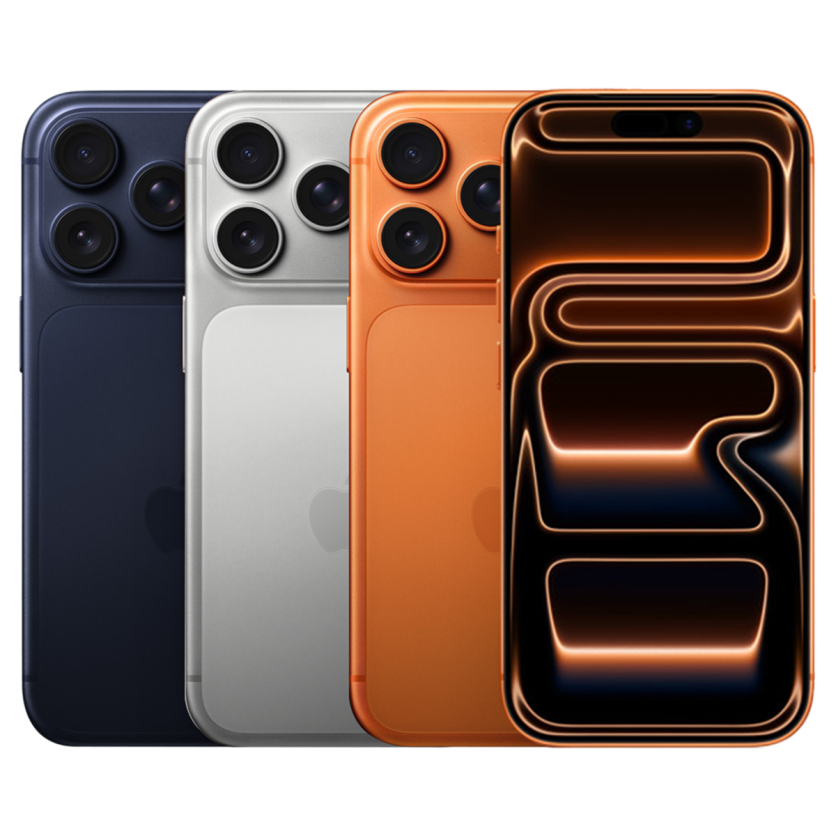
Design and display. Apple is expected to shrink the Dynamic Island by relocating Face ID's flood illuminator beneath the OLED display matrix — a manufacturing challenge requiring extremely tight yield tolerances from Samsung Display and LG Display panel suppliers. The redesigned rear panel will replace the current two-tone aluminum and glass finish with a more uniform, frosted appearance. Color options are expected to include Dark Cherry, Light Blue, Dark Gray, and Silver.
Does the iPhone 18 Pro Max Pass the AI Test?
The most strategically important feature of the iPhone 18 Pro Max has nothing to do with its camera or its battery. It is the 12 gigabytes of LPDDR5X RAM that qualifies the device to run Apple's AFM Core Advanced on-device AI model — the model that powers two features Apple highlighted as marquee capabilities during WWDC 2026: customizable Siri voice expressiveness and a major accuracy boost for systemwide speech-to-text dictation.
The technical reason is straightforward: running a large language model locally, without sending data to a server, requires holding significant portions of the model's parameters in fast, unified memory. Apple's most capable on-device model has a hard floor of 12GB. Devices below that threshold — including any phone with 8GB or 9GB of RAM — can run a less capable version of Apple Intelligence, but not the full feature set.
This is where the AI RAM wall gets uncomfortable. The iPhone 18 (base model), set to launch in spring 2027 with 9GB of RAM, will miss these two features. But so will anyone who upgraded to a standard iPhone 17 in fall 2025, since the iPhone 17 shipped with 8GB of RAM. The only currently shipping iPhones that qualify are the iPhone 17 Pro, the iPhone 17 Pro Max, and the iPhone Air — and the iPhone Air only because Apple designed it as a thin-and-light premium device. A buyer who purchased an iPhone 17 for $799 less than a year ago is already behind Apple's top-tier AI wall.
The iPhone 18 Pro and Pro Max will maintain 12GB of RAM and full AFM Core Advanced access. The iPhone Air 2, expected in spring 2027 alongside the base iPhone 18, will reportedly also carry 12GB.
No Budget iPhone This Fall: What That Means for Holiday Shoppers
Apple's decision to push the standard iPhone 18, the iPhone 18e, and a second-generation iPhone Air to a spring 2027 launch removes the $799 entry point from the 2026 holiday retail window entirely. The binary choice for a holiday shopper this year is stark: buy the iPhone 17, which is more than a year old and already one generation behind Apple's AI ceiling, or spend an estimated $200 more for the iPhone 18 Pro.
The resale value calculus adds another layer of pressure. When the iPhone 18 base model arrives in spring 2027 and Apple begins marketing 12GB of RAM as the AI-capable standard, the resale value of the iPhone 17 — which has only 8GB — will decline faster than under a normal upgrade cycle.
The Apple Upgrade leasing program, launching July 28, changes the math for some buyers. Under a 24-month iPhone lease, a $200 total price increase is approximately $8 per month. That is not nothing, but it is a substantially lower decision-point than writing a four-figure check at a store. Apple's calculation appears to be that the program will accelerate upgrade adoption at the Pro tier precisely because the budget tier is unavailable.
Not all analysts agree on the pricing trajectory. GF Securities equity analyst Jeff Pu has argued, based on Apple supply chain checks, that the company will prioritize keeping starting prices flat year-over-year to defend market share against high-end Android competition. Pu's position is that Apple's purchasing scale and component negotiation practices will absorb enough of the cost increase to leave the base price unchanged, even if higher-capacity storage tiers carry an increase. IDC Senior Director Nabila Popal says she believes "the days of $50 price increases are over," with IDC's analysis — updated after Apple raised Mac and iPad prices by up to $300 in late June — putting the likely outcome at a $200 hike for the Pro models.
Read more: iPhone 18 Pro Price Leak From Jeff Pu Brings Surprising News Apple Fans Didn't Expect
Apple's Calculated Bet, and What Comes Next
Apple's fall 2026 product slate consolidates all of its most advanced technology — 2nm silicon, GAA transistor architecture, the largest Pro Max battery ever, a variable aperture camera — into a single tier with no lower-priced companion. The iPhone 18 Pro Max arriving in September will be the most capable iPhone Apple has ever built. It will also very likely be the most expensive.
The Apple Upgrade leasing program, the memory-tier AI feature wall, and the absence of a base iPhone until spring 2027 are not independent decisions. They are a single coordinated strategy: move as many upgrade-eligible consumers as possible toward the Pro tier during the holiday quarter, sustain revenue per device even as component costs climb, and use on-device AI exclusivity as the structural argument for why the premium is worth paying.
Whether that bet pays off will be visible in Apple's December quarter earnings. For consumers deciding right now, the clearest framework is: if you need an iPhone before spring 2027 and want the full iOS 27 Apple Intelligence experience, the iPhone 18 Pro or Pro Max is your only path. If you can wait — or if AI features are not a factor — the iPhone 17 Pro Max remains a capable device with 12GB of RAM and full AI eligibility at a likely-discounted price once the iPhone 18 arrives. And if price is the primary constraint, the Apple Upgrade program launching July 28 may be the most important new Apple product of the summer.
Frequently Asked Questions
How much will the iPhone 18 Pro Max cost?
Apple has not officially announced pricing. Market research firm IDC revised its estimate in late June 2026 to project a $200 increase for the Pro and Pro Max models, which would put the iPhone 18 Pro starting at approximately $1,299 and the Pro Max at approximately $1,399 — up from $1,099 and $1,199 for the iPhone 17 Pro and Pro Max. Counterpoint Research analysis shows component costs for the 1TB model rising by nearly $300, driven by NAND flash, DRAM, and the new 2nm chip, though Apple is expected to apply tiered pricing increases across storage configurations rather than a flat increase across the lineup. GF Securities analyst Jeff Pu has argued Apple may keep base prices unchanged, so the official number will not be confirmed until Apple's September announcement.
What is the 2nm A20 Pro chip, and why does it matter?
The A20 Pro is Apple's first chip built on TSMC's N2 manufacturing process, which introduces gate-all-around (GAA) nanosheet transistors — a fundamental architectural shift from the FinFET design used in all prior iPhone chips. In a GAA transistor, the gate electrode surrounds the channel on all four sides, compared to three sides in a FinFET, giving engineers tighter control over current flow and less leakage at smaller physical sizes. TSMC's published benchmarks put N2 at 10 to 15 percent faster than the 3nm node at equal power, or 25 to 30 percent more power-efficient at equal speed. For iPhone 18 Pro Max owners, the practical payoff is faster performance, longer battery life from the same charge, and the sustained headroom to run larger on-device AI models.
Does the iPhone 18 Pro Max support the full Apple Intelligence feature set in iOS 27?
Yes. The iPhone 18 Pro and Pro Max will carry 12GB of LPDDR5X RAM, which meets the minimum threshold for Apple's AFM Core Advanced on-device model — the model that powers customizable Siri voice expressiveness and the advanced accuracy dictation feature in iOS 27. Devices with less than 12GB of RAM, including the iPhone 17 and the forthcoming base iPhone 18 (9GB), can run standard Apple Intelligence but will not support these two specific features. If accessing the full iOS 27 Siri AI feature set is a priority, only the iPhone 18 Pro, iPhone 18 Pro Max, the foldable iPhone Ultra, and — when available in spring 2027 — the iPhone Air 2 will qualify.
Should I buy the iPhone 18 Pro Max, wait for the base iPhone 18, or stick with iPhone 17?
The decision depends on three factors: timing, AI priority, and price tolerance. If you need an iPhone before spring 2027, the iPhone 18 Pro Max is the only new Apple flagship available in the fall 2026 window. If the full iOS 27 Apple Intelligence feature set matters — specifically Siri voice customization and advanced dictation — only a 12GB device qualifies, which means the Pro. If you can wait until spring 2027, the base iPhone 18 will launch at a lower price than the Pro, but with only 9GB of RAM and without those two AI features. If you are considering the iPhone 17 Pro Max, it has 12GB of RAM and full Apple Intelligence access, and its price will likely decrease once the iPhone 18 launches — making it a competitive option for buyers who do not need the latest camera hardware or the A20 Pro chip.

-
 C114 Communication Network
 -
 Communication Home
