
 Search

Lexus.com
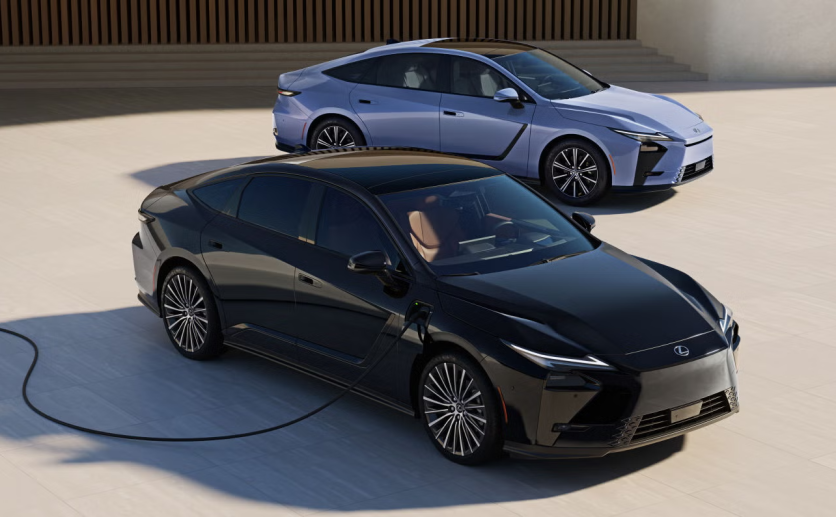
Three back-to-back evaluations published this week gave the redesigned 2026 Lexus ES its most consequential tests yet — and the results split cleanly by powertrain. The hybrid ES 350h beat a fully loaded Toyota Camry XSE on every dimension that matters to luxury buyers, while costing only about $6,000 more. The electric ES 350e delivered exceptional space and value — but dropped all three performance categories to the 2027 Mercedes-Benz CLA 250+, which posted 434 real-world miles of range to the Lexus's 307 and cuts recharge times nearly in half. A parallel interior evaluation at a Detroit media event confirmed the redesigned tech cabin as a decisive leap forward from the sluggish system the prior ES was known for.
For anyone shopping the luxury midsize sedan segment right now, the three tests together constitute a detailed decision framework. Here is what they found.
Why Lexus Made the ES So Much Larger
Before comparing the ES to anything, it helps to understand why the 2026 car grew so substantially. The eighth-generation ES rides on a redesigned version of Toyota's TNGA GA-K platform, engineered for the first time to carry either a hybrid or a fully electric powertrain inside the same body shell. That dual-compatibility requirement drove every dimension upward.
The electric ES 350e and ES 500e house a 74.7-kWh lithium-ion battery pack in the floor beneath the passenger compartment, a physically large component that mandates a higher floor height. To maintain proportions while sitting higher, Lexus stretched the body 6.5 inches longer and widened it 2.2 inches. The wheelbase grew 3.1 inches — and most of that gained length went directly into rear-seat legroom. The hybrid ES 350h, which uses a fuel tank and a compact hybrid battery beneath the rear seat instead, gains the same spacious interior because it shares an identical body shell.
The result is a sedan that is now longer and taller than segment rivals including the BMW i5 and Lucid Air, with a dramatically roomier rear seat and a larger trunk than the Mercedes-Benz CLA. The optional Executive package — exclusive to the ES 350e Luxury trim — takes that space further still, offering heated, ventilated, and massaging rear seats with an adjustable footrest on the passenger side.
The ES 350h's powertrain delivers equally meaningful upgrades. Lexus's sixth-generation hybrid system pairs a 2.5-liter four-cylinder with a larger, higher-output electric motor and an electronically controlled continuously variable transmission. Combined output rises to 244 horsepower from the prior model's 215, and for the first time in the ES lineup, an all-wheel-drive hybrid variant is available — a dedicated rear electric motor powers the rear axle independently when extra traction is needed. EPA estimated fuel economy is 46 mpg combined for the front-wheel-drive variant.
ES 350h vs. Toyota Camry Hybrid: When Spending More Makes Sense
Edmunds set up the most provocation-rich test first: the new ES 350h against a top-trim 2026 Toyota Camry XSE. Both cars share the TNGA GA-K platform — literally the same chassis architecture — so the question was whether the Lexus's premium badge reflects a real material difference or just an aspirational one.
It reflects a real difference, according to Edmunds' full comparison test.
The price gap is smaller than the brand gap suggests. A fully loaded Camry XSE can reach approximately $45,000, while the base ES 350h starts at $51,095 including destination — a difference of roughly $6,000. Both cars returned 46 mpg combined in Edmunds' real-world testing, despite the Camry's EPA rating being slightly higher. Both offer Traffic Jam Assist, a hands-free driving mode that activates below 25 mph and enables semi-autonomous following in stop-and-go traffic.
The execution gap is where the Lexus earns its premium. Edmunds found the ES delivered a noticeably smoother experience: a more powerful electric motor contributed to less vibration from the four-cylinder engine, and the ride quality was, in the testers' assessment, "absolutely serene" — with bumps and potholes barely registering in the cabin and minimal road or wind noise intruding. The Traffic Jam Assist system, which works in both cars, felt better calibrated in the Lexus: acceleration and braking were tuned to more closely match a human driver's habits, rather than the more abrupt interventions Edmunds noted in the Camry.
Interior materials represent the most tangible gap. The Camry XSE with the Premium Plus package is well-equipped — heated and ventilated front seats, a panoramic sunroof, a 10-inch head-up display, a 360-degree camera, and a digital gauge cluster — but Edmunds noted a significant quantity of easily scratched black plastic throughout the cabin. The ES cabin, by contrast, uses uniformly softer and more premium materials, and the Lexus is roughly nine inches longer overall, with most of that length benefiting rear-seat passengers.
Edmunds' conclusion: if a buyer is already considering spending $45,000 on a well-equipped Camry, the additional cost for the Lexus ES buys enough additional refinement and technology to be genuinely worth it. For buyers drawn to the $30,000-range Camry, the calculation is different — the ES is out of reach and likely unnecessary. But for the buyer already budgeting at the top of the mainstream segment, the ES makes a credible case.
ES 350e vs. Mercedes-Benz CLA 250+: Where the Electric Version Falls Short
The electric story is more complicated. Edmunds also compared the single-motor ES 350e against the 2027 Mercedes-Benz CLA 250+ — both freshly redesigned luxury electric sedans priced within approximately $500 of each other at approximately $49,000, with the ES starting at $48,895 and the CLA at $49,400.
The Lexus won the categories it was built to win. On interior space, the ES 350e is larger than the CLA — and, notably, larger than comparably priced rivals including the BMW i5 and Lucid Air — with a dramatically roomier rear seat and a larger trunk. Edmunds also found the Lexus delivered a smoother, more cushioned ride. On value, the ES comes with ventilated front seats and a wireless phone charger as standard equipment where the CLA charges extra.
On the fundamentals that define the EV ownership experience, the Mercedes won decisively — and the margins are not small.
Range: The ES 350e is EPA rated at 307 miles and matched that figure in Edmunds' real-world testing. The CLA 250+ is EPA rated at 374 miles and traveled 434 miles in Edmunds' real-world testing — 127 miles more than the Lexus in actual driving conditions.
Charging speed: The ES 350e peaks at 150 kilowatts on DC fast chargers. The Mercedes CLA can accept up to twice that power at appropriately equipped stations. In Edmunds' testing, the ES needed 13 minutes to add 100 miles of charge; the CLA needed seven minutes. That gap reflects a fundamental architectural difference: the CLA uses an 800-volt electrical architecture capable of sustaining far higher charge rates, while the ES 350e appears to use a 400-volt architecture with a 150 kW ceiling. On newer high-speed chargers already deploying 300-plus kilowatt stations along major corridors, the ES 350e cannot take advantage of faster infrastructure as it rolls out.
Performance: The 221-horsepower ES 350e took 7.6 seconds to reach 60 mph in Edmunds' testing, slower than Lexus's own estimated time of 7.4 seconds. The dual-motor CLA 350 (the more powerful CLA variant Edmunds tested alongside) reached 60 mph in 4.5 seconds. Even comparing single-motor variants, the gap is meaningful.
Infotainment: The Mercedes fields a full-width screen with lightning-fast response, though Edmunds noted it can be visually overwhelming. The Lexus Interface runs on the same 14-inch screen as the hybrid model and is easier to navigate, if less visually dramatic.
Edmunds' verdict: the Mercedes CLA earned an "Excellent" rating; the Lexus ES received "Very Good." For most shoppers, the Lexus is the better value given its standard feature set and larger cabin. For buyers who prioritize road-trip utility — longer range and faster recharging — the CLA is the more capable EV.
Inside the Cabin: Lexus Interface Finally Delivers
The third evaluation — AutoGuide's hands-on walkthrough at a Detroit media event — focused specifically on the interior technology, and the findings help contextualize why the cabin is earning attention from buyers who might previously have dismissed the ES.
Lexus replaced the prior generation's analog instrument cluster with a dual-display layout: a 12.3-inch digital gauge cluster behind the steering wheel and a 14-inch center touchscreen running the latest Lexus Interface architecture. That software is a close relative of the system debuting in the 2026 Toyota RAV4, but it is noticeably more polished and responsive in the ES.
The most significant change from prior Lexus systems is the elimination of infotainment lag. AutoGuide found the new interface responds as quickly as a modern smartphone — a meaningful shift from the sluggishness that was a consistent complaint about earlier Lexus and Toyota systems. Advanced driver assistance settings are accessible from a top-menu quick bar without navigating sub-menus. The system also introduces a customizable home screen, previously absent from Toyota and Lexus software, that allows drivers to pin their preferred widgets on startup.
Lexus also integrated AT&T 5G connectivity into the ES, a first for the brand, which enables faster over-the-air updates and connected services.
One design decision drew mixed comment: gear selection in the ES uses a compact toggle-style shift lever on the center console, rather than the dashboard-mounted buttons or rotary dials increasingly common in electric vehicles. AutoGuide noted it functions well but leaves open questions about whether it optimizes console storage space.
How to Choose: Hybrid, Electric, or Neither
Three evaluations, three different stories — all pointing toward the same underlying conclusion.
The hybrid ES 350h is the easier recommendation. At $51,095 base, it costs roughly $6,000 more than a fully loaded Camry XSE, and Edmunds found that gap to be genuinely justified by superior materials, smoother power delivery, better-calibrated driver assistance systems, and a markedly quieter cabin. The 46 mpg combined fuel economy matches what Edmunds observed in the Camry in real-world testing. For buyers who prefer not to charge at all — no cord, no planning — the ES 350h offers a compelling answer to anyone who was already considering the top of the mainstream sedan market.
The electric ES 350e requires more context. At $48,895 base, it is actually less expensive than the hybrid variant — and it offers a larger, quieter, more feature-rich cabin than nearly any other electric sedan at a similar price. The 307-mile EPA range is adequate for the majority of daily driving scenarios. But for buyers who do road trips, use the highway frequently, or care about future-proofing their charging experience as faster stations proliferate, the 150 kW charging ceiling and the 127-mile real-world range deficit against the Mercedes CLA are material limitations that no amount of rear legroom fully offsets.
The revised interior technology, with its smartphone-fast response, customizable layout, and first-ever AT&T 5G connectivity, represents a decisive improvement over prior generations and applies to both powertrain variants equally.
Frequently Asked Questions
Is the 2026 Lexus ES 350h worth buying over a Toyota Camry?
If you are considering a base Camry, probably not — the ES 350h's $51,095 starting price represents a significant jump. But if you are already budgeting near $45,000 for a well-equipped Camry XSE, Edmunds' comparison test found the ES hybrid is worth the additional cost. The ES delivers meaningfully better interior materials, a smoother and quieter ride, more rear-seat space, and better-calibrated driver assistance systems — without sacrificing fuel economy. Both cars returned 46 mpg combined in real-world testing.
What is the real-world electric range of the 2026 Lexus ES 350e?
In Edmunds' range testing, the ES 350e closely matched its EPA-estimated range of 307 miles. By comparison, the 2027 Mercedes-Benz CLA 250+ achieved 434 miles in real-world Edmunds testing — 127 miles more than the Lexus. The ES 350e also peaks at 150 kW on DC fast chargers, which adds 100 miles of range in approximately 13 minutes; the CLA can accept up to twice that charge rate and added 100 miles in seven minutes.
Does the Lexus ES 350e have all-wheel drive?
The ES 350e is front-wheel drive only. All-wheel drive is available on the more powerful ES 500e variant, which pairs dual electric motors for 338 horsepower and an EPA-estimated 276-mile range. The hybrid ES 350h is available in both front- and all-wheel-drive configurations, with all-wheel drive adding $1,400 to the $51,095 base price.
What makes the new Lexus infotainment system different from the previous generation?
The 2026 ES debuts a new-generation Lexus Interface running on a 14-inch touchscreen paired with a 12.3-inch digital gauge cluster. The most significant change is response speed: AutoGuide found infotainment lag has been virtually eliminated, with performance comparable to a modern smartphone — a sharp departure from the sluggishness that drew criticism in earlier Lexus systems. The new system also introduces a customizable home screen, a feature previously absent from Toyota and Lexus software, and marks the brand's first integration of AT&T 5G connectivity.

-
 C114 Communication Network
 -
 Communication Home
