
 Search

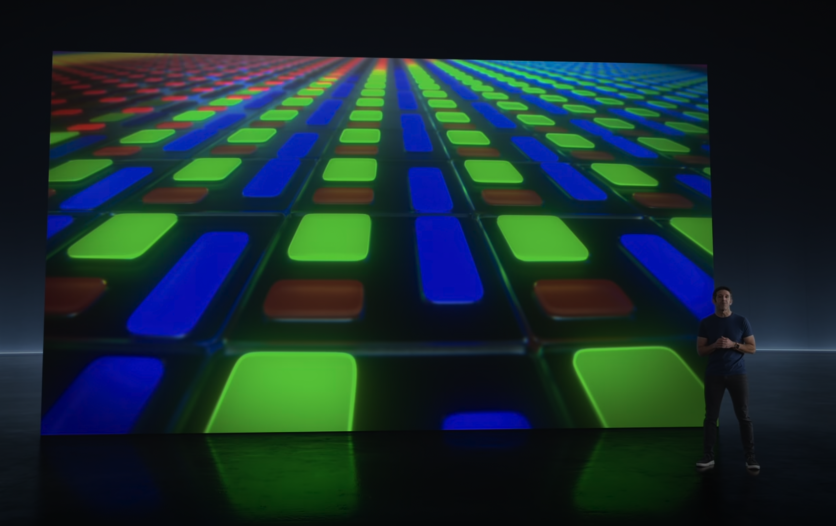
Apple Introducing OLED technology in May 7, 2024's Apple Event. Apple.com
Every wafer that Samsung, SK Hynix, and Micron convert from mobile DRAM to high-bandwidth memory for an AI data center is a wafer not producing the memory inside your next phone. That arithmetic has left Apple with almost no leverage over the component that is driving up its costs most — memory chips — and a great deal of leverage over the one it is actually squeezing: displays.
Industry sources told Korean trade publication The Elec on July 24 that Apple has proposed paying approximately $70 per OLED panel for the iPhone 18 Pro Max — a price Samsung Display and LG Display are expected to settle below, at roughly $66.50 per unit. That works out to approximately 20 percent below the roughly $80 Apple paid for iPhone 17 Pro Max panels, itself a step down from the $100-plus it paid for iPhone 16 Pro Max screens under some contract conditions. The demand is coming at a moment when panel makers are being asked to simultaneously introduce Samsung's newest M16 organic material set — a more complex formulation to produce — while accepting a lower price for the finished panel.
(Exchange rate as of July 25, 2026: 1 USD = 1,462 KRW; all Korean won figures converted at this rate. Conversions are approximate.)
What makes this negotiation significant is not the number itself — Apple squeezes suppliers on price with each product generation — but what the squeeze reveals about where power sits in the supply chain right now. Apple cannot tell Samsung or SK Hynix to lower memory prices; those companies have better customers for their capacity. Apple can tell Samsung Display and LG Display to lower panel prices, because the display market has competition, and both Korean suppliers know it.
Samsung and LG Named Chipflation at Korea's Biggest Display Show
The anxiety surfaced in public at K-Display 2026, South Korea's largest annual display industry exhibition, held at the COEX convention center in Seoul's Gangnam district from July 22 to July 24. Both Samsung Display and LG Display brought their chief executives to the event and both, speaking with reporters, used unusually candid language about the pressure they are navigating.
Samsung Display President Lee Cheong put the problem plainly: referring to the situation at K-Display 2026, "This year is extremely difficult because of chipflation," adding that "very strong pressure is coming in to lower component and display prices." He acknowledged that smartphone and IT device output is declining as finished-product makers try to absorb memory costs — which reduces overall panel demand at the same time that Apple is demanding a steeper price cut on the panels that are still being ordered.
Despite the pressure, Lee announced that Samsung Display intends to proceed immediately with a planned 67 trillion won (approximately $46 billion USD) investment to build a new OLED campus in South Korea's Chungcheong region, focused on 8.6-generation IT OLED production. "Since it is a promise made in front of many people, we naturally intend to push it forward immediately," Lee said.
LG Display's President Jeong Cheol-dong took a more measured tone, describing the pricing pressure as "at a manageable level because we are pursuing cost innovation." That same day, LG Display reported a second-quarter operating loss of 107.7 billion won (approximately $74 million USD), with Jeong pledging that the second half of 2026 would be stronger.
Both executives signaled that their answer to Chinese display maker BOE — which has been expanding OLED production capacity — is to widen the technology gap rather than compete on price. Apple's exclusion of BOE from high-end iPhone 18 panel supply gives the Korean makers some comfort; it also means Apple cannot credibly threaten to switch its most advanced displays to a Chinese source, which limits how hard it can actually push.
Why OLED Panels Are the One Place Apple Can Actually Push Back
The chipflation crisis, as Lee Cheong named it, starts with a zero-sum wafer problem. Samsung Electronics, SK Hynix, and Micron — three companies that together control more than 95 percent of global DRAM production — have systematically converted fabrication capacity toward high-bandwidth memory (HBM), the specialized stacked chip inside every Nvidia AI accelerator. HBM requires three to four times more wafer area per usable bit than the LPDDR5X mobile DRAM that goes inside smartphones. The economics are straightforward: an HBM3E module sells for approximately $60 to $100, compared to roughly $5 to $10 for a comparable quantity of conventional consumer DRAM. Manufacturers facing a fixed wafer supply will always prioritize the product that generates three to five times more revenue per wafer.
The result for Apple is a cost squeeze it cannot directly address. LPDDR5X contract prices surged significantly quarter-over-quarter in Q2 2026, according to TrendForce. TechInsights estimated that 12 gigabytes of DRAM cost Apple approximately $39 for the iPhone 17 Pro last year; the equivalent package for the iPhone 18 Pro is estimated to cost as much as $145 — a 272 percent increase for the same type and quantity of chip. Apple CEO Tim Cook told The Wall Street Journal in June 2026 that the situation was "unsustainable" and that he had "never seen anything like it in any area in over 40 years."
Apple cannot negotiate memory prices down; the suppliers have more attractive buyers. But displays are a different market. Samsung Display and LG Display compete with each other — and with a growing Chinese rival in BOE — which gives Apple the classic purchasing leverage it uses on every other component. The display negotiation is not a sign of Apple's strength. It is a sign of where Apple's strength ends.
What M16 Actually Is, and Why Getting It Cheaper Is Unusual
The M16 panels Apple is demanding at a lower price are Samsung Display's highest-performance OLED generation. The "M" designation refers to the organic material set — the specific combination of chemical compounds deposited in sub-pixel layers inside the display — and the M16 set introduces a change that display engineers have been working toward for years.
Standard OLED panels emit red, green, and blue light through sub-pixels. Red and green have used phosphorescent organic compounds for years, achieving internal luminous efficiency close to 100 percent — meaning nearly all electrical energy input is converted to light. Blue sub-pixels have historically used fluorescent materials, which operate at roughly 25 percent efficiency. That gap means blue sub-pixels require four times more power to produce equivalent brightness, which limits overall panel efficiency and constrains battery life.
M16 replaces the blue fluorescent materials with blue phosphorescent compounds, bringing all three primary sub-pixel colors to comparable efficiency levels. The practical results: improved peak brightness at lower power draw, longer panel lifespan, and better color accuracy. For iPhone 18 Pro users, this translates to screens that can sustain high brightness in sunlight while drawing less from the battery — a meaningful improvement for a device where on-device AI features are expected to increase computational workload.
The manufacturing complexity is real. Every time Samsung Display introduces a new organic material set, it must recalibrate evaporation parameters for each deposition layer, stabilize yields, and verify color consistency and longevity across millions of panels. Process engineers need months to bring a new material set to production efficiency. Apple is asking for those more complex panels at a price roughly 20 percent lower than it paid for last year's less demanding screens — an unusual and aggressive combination.
Who Is Supplying How Many Panels
According to market research firm UBI Research, Samsung Display is expected to supply approximately 46 million OLED panels across Apple's 2026 iPhone lineup: 2 million for the standard iPhone 18 model, 18 million for the iPhone 18 Pro, and 26 million for the iPhone 18 Pro Max. LG Display is forecast to supply approximately 41 million panels: roughly 1 million for the standard model, 19 million for the Pro, and 21 million for the Pro Max.
Samsung Display's larger allocation on the highest-volume Pro Max model means it carries the greatest financial exposure to Apple's price demands. If panels ultimately settle at $66.50 apiece across roughly 87 million total units, Apple would be sourcing approximately $5.8 billion worth of OLED panels — at a price that would have looked impossible to achieve for panels of this specification a year ago.
Will Buyers Pay More Anyway?
Whether Apple's display savings translate into lower retail prices for the iPhone 18 Pro is the question most buyers actually care about — and the evidence points toward no.
The display cut is real but it addresses only part of Apple's cost problem. Research firm TechInsights estimated that maintaining Apple's historical profit margin on the iPhone 18 Pro would require raising the starting price by approximately $270 over the iPhone 17 Pro, implying a launch price around $1,371. Apple is more likely to price at $1,299, analysts say, accepting a slight margin reduction.
Not all analysts agree on pricing. GF Securities analyst Jeff Pu, citing supply chain research, previously predicted Apple would keep iPhone 18 Pro and Pro Max prices flat at $1,099 and $1,199 respectively — absorbing increased costs to protect market share. Ming-Chi Kuo similarly suggested prices could hold. Tim Cook's own June 2026 statement that price increases were "unavoidable" appeared to supersede both predictions, but Apple has not officially confirmed pricing for any iPhone 18 model. Any figure discussed before the September 2026 launch event remains an analyst estimate.
What is not in dispute is the composition of the cost problem. The A20 Pro chip — Apple's first SoC built on TSMC's 2-nanometer process — is estimated to cost as much as $280 per unit. NAND flash storage costs for 1TB configurations are also projected to be significantly higher than prior-generation models, according to analyst estimates. Against a bill of materials that has expanded by an estimated $300 compared to the iPhone 17 Pro Max in its highest-storage configuration, saving $13 or so per display panel barely registers.
How Bad Is the Market Getting?
The iPhone 18 Pro's pricing uncertainty sits inside a broader market collapse. Global smartphone shipments fell 6.7 percent year-over-year to 277.5 million units in Q2 2026, according to IDC's Worldwide Quarterly Mobile Phone Tracker — the second consecutive quarter of year-over-year decline. Counterpoint Research's preliminary data put the decline at 11 percent, the steepest second-quarter drop since 2013.
IDC's Nabila Popal described the underlying pressure: memory costs are up nearly 300 percent from a year ago and now account for more than 65 percent of bill-of-materials cost at the low end of the market. IDC's Francisco Jeronimo put it plainly: "This memory crisis has split the smartphone market in two" — Apple and Samsung, which secured supply early and sell primarily at price points where memory is a smaller share of total cost, are pulling away, while Xiaomi, OPPO, and vivo have all seen sharp shipment declines.
Samsung and Apple were the only two vendors in the top five to grow shipments in Q2 2026, with Apple recording a 15 percent year-over-year increase to 55 million units.
What This Means If You Are Buying a Phone This Fall
For a consumer planning an iPhone 18 Pro or Pro Max purchase in autumn 2026, the practical implications are several.
Pricing will almost certainly be higher than the iPhone 17 Pro generation, even if Apple absorbs some of the increase through margin compression rather than passing it all to buyers. The display savings Apple has negotiated with Samsung and LG contribute to reducing the magnitude of any price increase — they do not eliminate it. The iPhone 18 Pro and Pro Max are expected to launch in September 2026, alongside Apple's first foldable iPhone. The standard iPhone 18 and iPhone 18e are expected in spring 2027.
Buyers on a tighter budget face a starker picture. IDC projects the average smartphone price across all brands will reach a record $523 in 2026 — a 14 percent increase. Memory now accounts for 60 percent of manufacturing cost on sub-$400 phones, making affordable devices either economically unviable or functionally underpowered.
The shortage that is causing all of this is not expected to ease quickly. IDC describes the shift in memory production as a "permanent reallocation" toward AI rather than a cyclical downturn. Intel CEO Lip-Bu Tan said at a February 2026 summit that relief would not arrive until 2028; Counterpoint Research analyst Tarun Pathak put the earliest possible supply-demand crossover at Q4 2027. Analysts and industry forecasters warn the shortage could persist well into the 2030s.
The Korean display industry's response to Apple's demands — accept the cut, widen the technology gap, keep building — reflects a recognition that this is the new ground truth. The display negotiation happening right now is not a fight about the cost of one phone. It is a negotiation over who absorbs the cost of AI's appetite for silicon, and how much of that cost reaches the pocket of the person buying the phone.
Frequently Asked Questions
Why is Apple cutting what it pays for displays when the iPhone is getting more expensive to build?
Chipflation — the AI-driven surge in memory chip prices — has increased Apple's iPhone 18 Pro bill of materials by an estimated $300 compared to the iPhone 17 Pro Max. Apple cannot negotiate down the price of DRAM or NAND flash because the three manufacturers that control 95 percent of global supply (Samsung Electronics, SK Hynix, and Micron) have better-paying customers in AI data centers. Displays are one of the few components where Apple retains genuine purchasing leverage, because Samsung Display and LG Display compete with each other and with the growing capabilities of Chinese maker BOE. The display price cut is Apple using the leverage it has, where it has it.
What is the M16 OLED panel, and why does it matter for battery life?
M16 is Samsung Display's highest-performance OLED organic material set. Its key advancement is replacing blue fluorescent sub-pixels — which convert only about 25 percent of electrical energy into light — with blue phosphorescent compounds, which approach the near-100-percent efficiency already achieved by red and green sub-pixels. Bringing all three primary sub-pixel colors to comparable efficiency means the display generates the same brightness at significantly lower power draw. For iPhone 18 Pro and Pro Max users, this translates into a display that can sustain peak brightness in sunlight while consuming less battery — a relevant improvement as on-device AI features add to computational power demands.
Will the iPhone 18 Pro cost more than the iPhone 17 Pro?
Apple has not confirmed pricing for any iPhone 18 model. Research firm TechInsights estimated that maintaining Apple's existing profit margin would require raising the iPhone 18 Pro's starting price by roughly $270 — implying a price around $1,299 to $1,371, compared to $1,099 for the iPhone 17 Pro. GF Securities and Ming-Chi Kuo both previously predicted prices would remain flat; Apple CEO Tim Cook's June 2026 statement that increases were "unavoidable" appeared to contradict those predictions. Pricing will be confirmed at Apple's September 2026 launch event.
How long will the memory chip shortage last?
Forecasts range from late 2027 to 2030 or beyond. Intel CEO Lip-Bu Tan said in February 2026 there would be "no relief until 2028." Counterpoint Research put Q4 2027 as the earliest possible supply-demand crossover. Industry forecasters and analysts warn the shortage could persist past 2030. IDC characterizes the underlying shift as a "permanent reallocation" of wafer capacity toward AI rather than a cyclical shortage, meaning consumer device prices may not return to 2024 levels even after acute scarcity eases — because chipmakers will retain the economic option to stay in high-margin AI-focused production rather than revert to consumer DRAM.

-
 C114 Communication Network
 -
 Communication Home
