
 Search

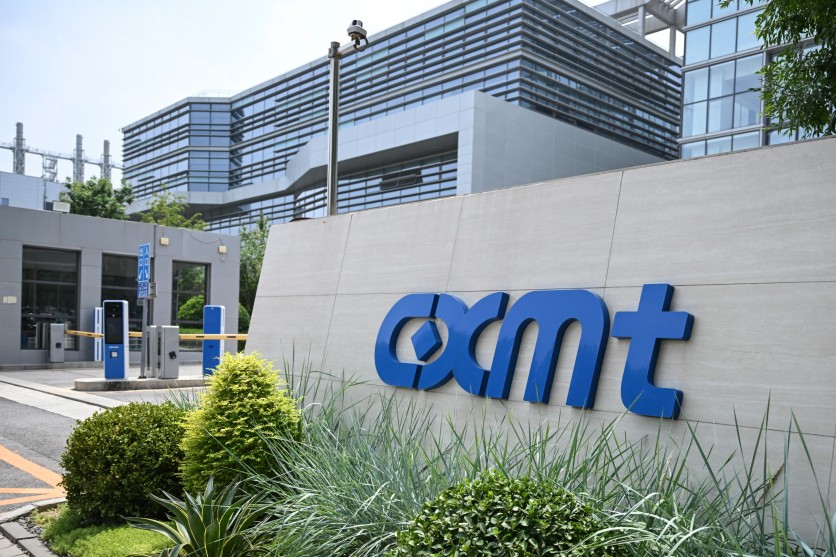
This photo shows a view of an entrance to the ChangXin Memory Technologies (CXMT) factory on the outskirts of Beijing on July 27, 2026. Pedro PARDO/AFP via Getty Images
ChangXin Memory Technologies surged 472% on its first trade in Shanghai on Monday (exchange rate as of July 27, 2026; conversions are approximate), opening at ¥49.50 per share (~$7.31) against an IPO price of ¥8.66 (~$1.28) and briefly touching ¥54.65 (~$8.07) by midday — catapulting the Hefei-based chipmaker past Industrial and Commercial Bank of China as the most valuable company listed on China's mainland exchanges, with a market capitalization of ¥3.31 trillion (~$489 billion). That first-day price action belongs in context: Samsung Electronics, the global DRAM leader with roughly 38% market share, carries a market capitalization that significantly exceeds CXMT's opening valuation — placing CXMT's $489B debut in a different category than any head-to-head parity with the incumbents. A company with 8% of the global DRAM market opening at $489 billion prices in technology CXMT does not yet have at scale, in a market segment it has not yet entered commercially. The DoD designation that declared CXMT a Chinese military company, and the intelligence law obligations that bind every company operating under Chinese jurisdiction, arrived before the first share changed hands and will still be there when the opening-day excitement fades.
CXMT Raises ¥57.92B (~$8.56B) in Asia's Largest IPO, Then Instantly Quadruples the Number
CXMT raised ¥57.92 billion (~$8.56 billion) by pricing 6.688 billion shares at ¥8.66 (~$1.28) each — Asia's largest IPO of 2026 and the biggest semiconductor listing ever on the Shanghai Stock Exchange's STAR Market. A full exercise of the over-allotment option could lift total proceeds to ¥66.61 billion (~$9.83 billion), surpassing the previous STAR Market record set in 2020 when chip foundry SMIC raised ¥53.2 billion (~$7.86 billion) in what had stood as the exchange's defining listing.
Retail demand was extraordinary: roughly 9.4 million investor accounts applied for shares, with the retail tranche oversubscribed approximately 212 times after a clawback mechanism shifted roughly 502 million shares from institutional to retail allocation. Institutional demand ran at approximately 570 times the available supply before reallocation. Only 6.73% of post-IPO share capital was freely tradable at listing — a float small enough to amplify first-day price swings well beyond what fundamentals alone would support.
The sheer scale of the subscription had measurable knock-on effects across Chinese equity markets. Because China's IPO mechanics require investors to freeze application funds until allocations are settled and refunds processed, fund managers trimmed existing positions to raise subscription capital, amplifying selling pressure. The STAR 50 Index fell close to 20% from its July 1 peak by the time CXMT's subscription window closed on July 16.
The China Securities Regulatory Commission watched the build-up with visible unease. In the weeks before the debut, the CSRC held meetings with representatives from listed companies, securities firms, fund managers, and academics. A CSRC statement issued on July 21 pledged to enhance the market's inherent stability and respond to concerns about capital diversion.
Strategic investors in the offering include Alibaba Cloud, Meituan, and Xiaomi, alongside equipment makers Tuojing Technology, AMEC, and Anji Microelectronics — an interlocking cross-section of China's domestic semiconductor ecosystem.
Read more: CXMT Hits STAR Market Monday With $8.6B War Chest and a Hard Equipment Ceiling
The Windfall Is Borrowed: Why the Supercycle Is Not a Structural Win
CXMT posted a net loss of ¥19.23 billion (~$2.84 billion) in 2023. By 2025, the company swung to its first annual profit. In the first quarter of 2026 alone, revenue reached ¥50.8 billion (~$7.50 billion) — a 719% year-on-year surge — and attributable net profit hit ¥24.76 billion (~$3.66 billion). The company projects first-half 2026 attributable net profit of ¥50 billion to ¥57 billion (~$7.38 to ~$8.42 billion), representing growth of more than 2,200% from the same period a year earlier.
The structural cause of that reversal is the same force that created the opportunity: Samsung, SK Hynix, and Micron systematically redirected their advanced manufacturing capacity toward high-bandwidth memory for AI accelerators, effectively vacating portions of the commodity DRAM market — DDR5 and LPDDR5X for PCs, smartphones, and servers. CXMT stepped in to fill the gap. The resulting supply squeeze sent mainstream DRAM contract prices sharply higher, with Gartner projecting in February 2026 that combined DRAM and SSD prices would surge roughly 130% by year-end 2026. CXMT's own prospectus flags the vulnerability: product average selling prices swung 55% year-on-year in 2024 and 34% in 2025 as a persistent material risk.
The largest implication that CXMT's first-day valuation leaves unstated is this: the profit explosion is structurally enabled by the incumbents' voluntary departure from commodity DRAM, not by CXMT outcompeting them in it. The incumbents vacated that segment because HBM margins are higher. If HBM demand moderates, Samsung and SK Hynix can redirect capacity back to commodity DRAM within quarters — at lower cost-per-bit than CXMT can currently match. The $489 billion valuation prices in a permanent competitive position that is, structurally, a temporary vacancy.
CXMT's customers include Alibaba Cloud, Tencent, ByteDance, Lenovo, Xiaomi, Oppo, Vivo, and Transsion. The company has completed customer validation for advanced DDR5 server memory with Tencent and ByteDance and is reportedly under qualification evaluation as a DRAM supplier to Apple — for devices sold in China, not globally.
How CXMT Makes Chips Without the World's Most Advanced Equipment
The single most consequential engineering fact about CXMT is that its entire production roadmap runs on older deep-ultraviolet lithography tools rather than the extreme ultraviolet machines that Samsung, SK Hynix, and Micron use to print leading-edge memory circuits.
The distinction that matters: ASML's EUV systems use 13.5-nanometer-wavelength light to expose chip circuitry in a single pass, achieving the finest feature sizes with high yield. ASML has never shipped an EUV machine to China, and Dutch export regulations — maintained under US pressure since 2019 and tightened in October 2022 to cover advanced DUV tools as well — prohibit it from doing so.
CXMT compensates using deep-ultraviolet multi-patterning: 193nm-wavelength tools that print circuits by running each layer through two to four separate exposure passes — techniques called self-aligned double patterning and self-aligned quadruple patterning (SADP/SAQP). Each additional pass accumulates small overlay errors and adds manufacturing steps, which reduces yield and raises cost-per-bit relative to single-pass EUV production. CXMT's current leading node achieves roughly 16 nanometer cell size — equivalent to what Samsung and SK Hynix were producing around 2018 to 2019, placing the process-node gap at approximately two to three generations behind today's leaders, according to independent analysis by TechInsights and Seoul Economic Daily.
The practical cost: CXMT's cost-per-bit still trails Samsung, SK Hynix, and Micron by more than 30%. At supercycle DRAM prices, that disadvantage is masked by the pricing windfall. In a normalized market — when the incumbents' expanded capacity comes online and commodity DRAM prices mean-revert — that 30% gap is the number that determines whether CXMT's margins survive the cycle turn.
The EUV constraint is not a simple binary ceiling, however. CXMT is actively piloting an architectural workaround called bonded DRAM at its Hefei facility, an approach that fabricates the memory cell array and the peripheral control circuitry on two separate wafers and then fuses them together using wafer-to-wafer hybrid bonding. Because each wafer is patterned individually at achievable DUV nodes, the combined device can achieve density gains that no single DUV-patterned wafer could reach alone — approximating some functional advantages of EUV-enabled scaling without requiring EUV equipment. Samsung and SK Hynix are pursuing similar architectures. Korean industry assessments cited by Hankgyung suggest CXMT may be developing bonded DRAM at a faster pace than its Korean competitors expected — though bonded DRAM remains a pilot-stage technology, with mass production multiple years away.
By end-2026, CXMT is projecting capacity of approximately 350,000 twelve-inch wafer starts per month, approaching Micron's estimated 375,000 to 385,000 over the same period. SemiAnalysis forecasts that figure could reach 500,000 monthly wafer starts by 2028, which would account for roughly 17% of global DRAM supply capacity.
Three-Year HBM Deficit and the Cost-Per-Bit Ceiling
High-bandwidth memory is the format the AI industry demands, and it is where CXMT's lag is most exposed. HBM stacks eight or more DRAM dies vertically using through-silicon vias — copper pillars drilled through the silicon of each die — and packages the resulting assembly directly adjacent to an AI accelerator on a silicon interposer. The architecture delivers memory bandwidth of roughly 1 terabyte per second against approximately 50 gigabytes per second for conventional DDR5: a 20-fold differential that explains why Nvidia's AI accelerators require HBM rather than DDR.
SK Hynix commands approximately 56% of the global HBM market by revenue and is racing toward HBM4 mass production at 16-layer stacking. Samsung and Micron hold most of the remainder. CXMT is at the sample-delivery stage for HBM3, with samples provided to Huawei for AI accelerator evaluation. Fewer than 2% of CXMT's approximately 265,000 monthly wafer starts currently produce HBM — roughly 5,000 wafers per month — with that share projected to reach 55,000 by end-2027. The company's target for HBM3E volume production is 2027, placing it approximately three years behind the leaders in the segment that carries the highest margins and the most AI infrastructure revenue.
That three-year gap narrowed from an earlier estimate of more than five years, reflecting Beijing's state-directed capital and technology acquisition. The TSV stacking process HBM requires is less dependent on EUV patterning than flat lithographic scaling, which makes the equipment ceiling more manageable in advanced packaging than in process-node advancement — a structural reason the gap has closed faster in packaging than in logic.
The IPO-funded projects focus on DRAM production and research rather than a standalone HBM expansion program. Commercial HBM production requires additional advances in stacking, packaging, testing, and customer validation that do not automatically follow from capacity investment.
What Incumbents Are Spending — and What That Means
For global incumbents, the scale of CXMT's capital raise is meaningful but not decisive on its own. Samsung Electronics' fiscal 2026 total planned capital investment surpasses 100 trillion Korean won — roughly $73 billion — the first time the company has crossed that threshold. Micron's capital expenditures for the year are expected to exceed $25 billion, more than 80% above the prior year. SK Hynix completed a $26.5 billion Nasdaq share sale ten days before CXMT's subscription window opened. The combined incumbent spend is roughly fourteen times CXMT's IPO haul before the over-allotment option is exercised.
When CXMT's IPO was announced, Micron fell 5%, SK Hynix dropped approximately 7%, and the Roundhill Memory ETF sank 7% — a market verdict reflecting not immediate earnings impact but fear about where commodity DRAM pricing settles once CXMT's capacity comes fully online alongside a post-supercycle return of incumbent supply. Samsung's memory chief Kim Jaejune, in the company's April 2026 earnings call, warned that significant shortages across memory products are expected to continue through at least 2027 — a reminder that the near-term demand environment still favors all producers, including CXMT.
Donnie Teng, Greater China semiconductor analyst at Nomura, argued the structural case for market absorption: as long as AI infrastructure spending continues driving hyperscaler capital expenditure, the memory supply it requires will sustain demand that can eventually absorb whatever short-term liquidity CXMT's IPO pulled from Chinese equities.
Read more: CXMT IPO Draws 212× Oversubscription: What China's DRAM Bet Gets Right and Wrong
Chinese Intelligence Law: What CXMT's Buyers Must Know
CXMT is a business-to-business chip supplier. Its DRAM modules do not independently collect or transmit end-user data — they store and process data at the direction of the host device. That distinction matters for consumer privacy assessments, but it does not remove the legal framework governing CXMT's obligations under Chinese law.
China's National Intelligence Law, enacted in 2017, requires all organizations and citizens under its jurisdiction to support, assist, and cooperate with national intelligence efforts under Article 7. Article 14 separately authorizes intelligence agencies to demand that cooperation. The Counter-Espionage Law (2014) adds that organizations must provide requested information truthfully and cannot refuse. China's Cybersecurity Law — enacted in 2016 and substantially amended effective January 1, 2026 — and the Data Security Law (2021) impose additional data localization and government-access obligations. All of these apply to CXMT regardless of its newly listed public status, the physical location of its data, or any corporate governance commitment it makes to non-Chinese customers.
State-owned shareholders held approximately 36.29% of CXMT's equity before the IPO, and China's national semiconductor investment fund is among the major investors. These ownership positions do not themselves create the intelligence-law exposure — that exposure exists for any company operating under PRC jurisdiction, regardless of ownership structure — but they do signal the depth of Beijing's strategic stake in CXMT's trajectory.
For enterprise buyers: the compliance exposure arrives in two distinct layers. The first is structural — the National Intelligence Law is a fixed legal condition of operating under Chinese jurisdiction, and it applies to CXMT's manufacturing decisions, supply chain data, and any information passing through its systems. The second is regulatory — the DoD Section 1260H designation, confirmed June 8, 2026, prohibits the US Department of Defense from contracting with CXMT-listed entities effective June 30, 2026. An indirect procurement ban covering CXMT components inside other end items takes effect June 30, 2027. Starting December 23, 2027, Section 5949 of the FY2023 NDAA extends the prohibition to all federal agencies, barring procurement of any semiconductor products from CXMT, its subsidiaries, affiliates, and successors.
Enterprises that supply the US government — or aspire to — face a direct supply-chain conflict if they incorporate CXMT components into products destined for government procurement. Buying CXMT DRAM is not prohibited for private-sector US companies, but supply-chain compliance review is not optional for government-adjacent businesses.
The MATCH Act, passed by the House Foreign Affairs Committee in April 2026, would extend the DUV export ban specifically to CXMT and prohibit ASML from servicing its existing installed equipment base. It has not yet become law.
What CXMT's First-Day Pop Cannot Tell Buyers or Investors
Four dimensions that buyers and investors must weigh alongside CXMT's genuine commercial scale:
Process-node economics: CXMT's cost-per-bit exceeds Samsung, SK Hynix, and Micron's by more than 30%. That disadvantage is sustainable at supercycle prices; it is not sustainable when the incumbents' expanded HBM capacity comes online and they redirect production back to commodity DRAM. The company's own prospectus flags average selling price swings of 55% (2024) and 34% (2025) as a persistent material risk.
HBM qualification and volume: CXMT has not demonstrated large-scale commercial HBM shipments to any AI infrastructure customer. Samsung, SK Hynix, and Micron collectively hold over 99% of global HBM supply. CXMT's HBM3E volume target is 2027. Independent hardware testing by Hardware Unboxed (February 2026) found CXMT-based DDR5 consumer kits delivered gaming performance essentially equivalent to Samsung or SK Hynix-based kits — confirming the consumer DDR5 gap has substantially closed while the server-grade HBM gap has not.
Ecosystem friction for international buyers: CXMT's DUV-produced chips are qualified by OEMs including HP, Dell, Acer, and Asus for devices sold outside the United States — demonstrating international qualification is achievable but that US-addressable market exposure remains limited by the DoD designation and the NDAA federal procurement ban.
State data-sharing legal obligation: The National Intelligence Law is not a risk to be weighed against price. It is a fixed legal condition of sourcing from a company operating under PRC jurisdiction. No corporate privacy policy, Western subsidiary address, or non-disclosure agreement removes it. Enterprise procurement teams that have not run this analysis before placing orders have an obligation to do so.
CXMT's global DRAM market share stands at approximately 8% as of Q1 2026, behind Samsung at roughly 38%, SK Hynix at approximately 29%, and Micron at approximately 22%. Chairman and founder Zhu Yiming has committed to a ten-year post-listing lock-up on his shares — an unusually long horizon that signals personal confidence in a sustained multi-year trajectory — and has voluntarily allocated 768 million personally awarded shares for employee incentives.
CXMT's Trajectory Over the Next Five Years
Whether CXMT can convert Monday's extraordinary capital raise into sustained technological parity with its Korean and American rivals depends on three variables that no amount of first-day enthusiasm resolves: whether bonded DRAM development produces a commercially viable EUV alternative before the incumbents narrow the bonded-DRAM gap themselves; whether the company can achieve HBM3E volume production in 2027 and then close the HBM4 gap within a further two to three years; and whether the MATCH Act's DUV servicing restrictions become law in a form that constrains CXMT's existing DUV tooling maintenance.
What the $489 billion opening valuation has already done — before any of those questions are answered — is price in outcomes that still require years of execution. CXMT is the only domestically owned DRAM manufacturer with the scale to realistically aspire to double-digit global market share. It is also a company that operates under Chinese intelligence law obligations, carries a US DoD military-company designation with expanding procurement consequences, and runs on manufacturing equipment that its competitors can access and it cannot. The supercycle windfall is real and its first-quarter numbers are extraordinary. The constraints are equally real and equally structural.
For a reader making a procurement or investment decision: the cost-per-bit is what CXMT offers today. The 30% manufacturing cost gap, the three-year HBM lag, the DoD designation, and the National Intelligence Law are what come with it. They were present before the Shanghai open and they will still be present after the first-day headlines fade.
Frequently Asked Questions
How does CXMT make competitive DRAM chips without EUV lithography?
CXMT uses deep-ultraviolet multi-patterning — specifically self-aligned double and quadruple patterning (SADP/SAQP) — to approximate the feature sizes that EUV-equipped rivals achieve in a single exposure pass. Each additional patterning pass adds manufacturing steps and small overlay errors, raising cost-per-bit versus EUV production. The company's current leading node achieves roughly 16nm cell size, approximately two to three process generations behind Samsung and SK Hynix. Additionally, CXMT is piloting bonded DRAM — an architecture that fabricates the memory cell array and peripheral circuitry on two separate wafers and fuses them — which can achieve density gains without EUV by patterning each wafer individually at achievable DUV nodes. Bonded DRAM remains pilot-stage, with mass production multiple years away.
Can US companies buy and use CXMT memory chips?
Private-sector US companies are not prohibited from purchasing CXMT memory. However, companies that supply the US government — or plan to — face a direct supply-chain conflict. The DoD's direct procurement ban took effect June 30, 2026, prohibiting the Defense Department from contracting with CXMT-listed entities. An indirect ban covering CXMT components inside end items takes effect June 30, 2027. Section 5949 of the FY2023 NDAA extends the prohibition to all federal agencies by December 23, 2027. Any company selling to the US government should run a supply-chain compliance review before sourcing CXMT components.
What does the DoD's military-company designation mean for CXMT's long-term market access?
The Section 1260H designation, confirmed June 8, 2026, places CXMT on the DoD's annual list of Chinese Military Companies alongside Alibaba, Baidu, BYD, DJI, Tencent, and others. The designation does not prohibit commercial transactions for private buyers but triggers the tiered procurement bans described above and creates compliance review obligations for companies with US government contracts. The pending MATCH Act — not yet law — would extend DUV export restrictions specifically to CXMT and prohibit ASML from servicing CXMT's existing equipment base. If passed, that would pose a more immediate constraint on production capacity than any currently in effect.
What is high-bandwidth memory and why does the three-year gap matter so much?
HBM stacks eight to sixteen DRAM dies vertically using through-silicon vias, delivering memory bandwidth of roughly 1 terabyte per second against approximately 50 gigabytes per second for conventional DDR5 — a 20-fold differential. AI accelerators from Nvidia and others require HBM rather than DDR because AI workloads are memory-bandwidth-constrained, not just memory-capacity-constrained. SK Hynix alone holds approximately 56% of the global HBM market. A three-year lag means CXMT cannot yet supply the AI training and inference market that is driving the global memory supercycle — the segment where the highest margins and the longest-term customer relationships are being established today.

-
 C114 Communication Network
 -
 Communication Home
