
 Search

Waymo.com
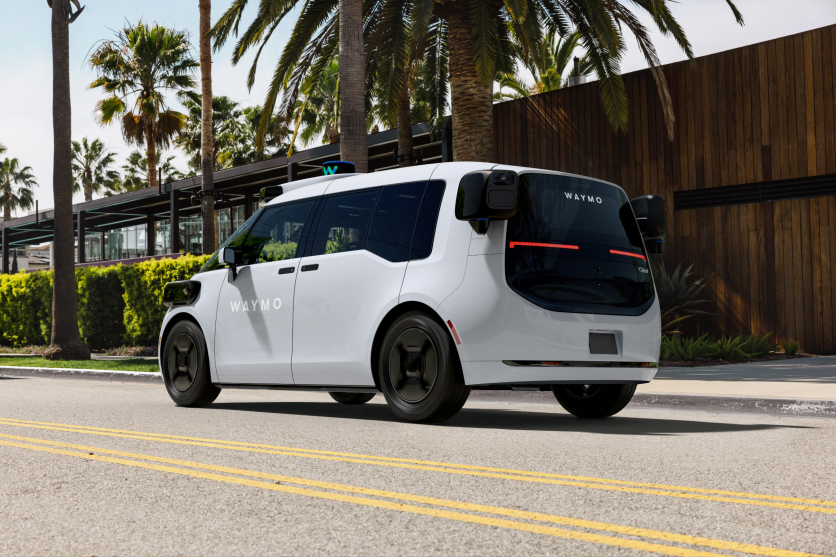
Photographs posted to Reddit on Sunday by user Full_Astern stopped many in the autonomous vehicle community cold: rows upon rows of boxy, baby-blue minivans packed into a lot at the Port of Los Angeles, each conspicuously bare — no LiDAR pods on the roof, no cameras ringing the body, no sensor suite of any kind. The vehicles are unmistakably Waymo Ojai robotaxis. Or rather, they are the shells of what will become Ojai robotaxis. And their stripped-down state is not an accident. It is the whole mechanism — and right now, the pace at which those shells are being filled in Mesa, Arizona is the most important number in Waymo's business.
What a 'Glider' Is — and Why Congress Wants to Ban Them
In automotive manufacturing, a "glider" is a vehicle shell minus the components that define it as a particular type of product. In trucking, a glider is a new chassis fitted with a remanufactured engine. In Waymo's regulatory architecture, a glider is something more specific: a Zeekr-built electric vehicle body — complete with chassis, 93 kWh lithium-ion battery pack, 200 kW (268 hp) rear electric motor, and 800V electrical system — shipped from Ningbo, China with none of the hardware that makes a vehicle "connected" under U.S. law.
The U.S. Commerce Department's Bureau of Industry and Security finalized its connected-vehicle rule on January 16, 2025, effective March 17, 2025. Under that rule, a Vehicle Connectivity System — the set of components that allow a vehicle to communicate externally, including telematics control units, cellular modems, Bluetooth and Wi-Fi modules, GPS receivers, and satellite connections — cannot contain hardware designed, manufactured, or supplied by entities under Chinese or Russian control. A vehicle that arrives without any of those components is not, in Waymo's framing, a connected vehicle at all. It is a glider.
Mayer Brown's BIS rule analysis confirms that the regulation targets Vehicle Connectivity System hardware specifically — not vehicle manufacturers at the ownership level, which is why Waymo argues the glider model clears the existing rule. What the Reddit photos show is industrial-scale glider logistics. The vehicles parked in the port lot are waiting to be trucked approximately 380 km (236 miles) east to Waymo's integration facility in Mesa, Arizona, where Waymo and manufacturing partner Magna International install the complete sixth-generation Waymo Driver system — 13 cameras, four LiDAR sensors, six radar units, external audio receivers, sensor-cleaning systems, and the company's custom 5nm TSMC automotive silicon — before any vehicle enters commercial service.
"Those Chinese vehicles, the Geely vehicles, have no smarts, no connectivity," Waymo Chief Safety Officer Mauricio Peña told Sen. Bernie Moreno (R-OH) at a February 2026 Senate hearing, after Moreno challenged the arrangement directly. "What we do is we install our autonomous driving system right here in America, and we don't share any information whatsoever." In June 2026, Waymo confirmed the same position to Telemetry Agency's Sam Abuelsamid: all connectivity and compute hardware are designed in the U.S. "and produced at plants that comply with the rules."
Read more: Waymo Ojai Now Open to All Riders: Its Zeekr Chassis Faces Same Geely Ban That Expelled Polestar
The structural parallel that no one in the industry has missed: this is essentially the same regulatory arbitrage that trucking companies used for years to fit pre-emissions engines into new chassis, evading EPA emission standards on what the industry called "glider vehicles." Congress eventually moved to close that gap not by banning specific engine components but by targeting the manufacturer-level classification of what counts as a new vehicle. The bill now advancing in the Senate works the same way.
How Many Are Actually Ready — and How Fast Is Conversion?
The port photos capture the earliest stage of Waymo's supply chain. Every month, an aerial tracker known on the r/waymo subreddit as jjricks_ posts an annotated satellite image of the Waymo-Magna integration facility in Mesa and counts the robotaxis visible on the lot. The August update, published August 12, found 953 Ojai units on the lot: 684 of them fully retrofitted with sensors and ready to deploy, and 269 still bare-shell vehicles awaiting conversion — a 72% conversion rate. The same tracker counted roughly 500 Ojai units on the lot in early June, meaning the retrofit line converted approximately 175 to 200 additional vehicles over roughly six weeks.
A separate first: the August count found 12 finished Hyundai IONIQ 5 robotaxis on the lot — the first time Waymo's second purpose-built vehicle platform has appeared as a completed unit at Mesa. That IONIQ 5 development matters because it signals that Waymo is actively building a non-Zeekr fallback, which is the clearest available evidence of how seriously the company takes the legislative risk to its current supply chain.
The import pipeline feeding that conversion line is running at an accelerated pace. According to Bill of Lading data compiled by research firm ImportGenius and first reported by Forbes, Waymo has imported 3,200-plus Zeekr vehicles into the United States through the Port of Los Angeles since 2024, with more than 2,600 of those arriving in 2026 alone. New York-based research firm MoffettNathanson, which tracks Ojai imports by analyzing customs receipts, estimates that roughly 725 Ojai units arrived in July alone and puts Waymo on pace to bring approximately 5,000 units to the United States by year-end.
As of Waymo's announcement on August 19, approximately 300 Ojai in commercial service spanned Los Angeles, Phoenix, and San Francisco — the three markets where the Ojai has been available to all riders since Waymo dropped its waitlist last week. That 300-in-service figure against 684 finished-but-not-deployed units on the Mesa lot is the operative number: Waymo is not converting slowly. It is accumulating finished inventory faster than it is activating it, which suggests deployment — permit sequencing, operations staffing, and market rollout — rather than hardware supply, is currently the limiting step.
Read more: Waymo Discloses First Custom Chip: 5nm TSMC Automotive Silicon in Every Robotaxi
The Economics Behind Importing Under a Tariff Stack
The tariff Waymo pays on each bare-shell Ojai is not trivial. U.S. import declarations place the CM1e chassis ex-factory value at approximately $38,000 to $38,500 per vehicle. The applicable tariff on Chinese-built electric vehicles is approximately 102.5% under the combined Section 301 rate — raised from 25% to 100% in 2024 — plus a standard 2.5% baseline tariff. Some reporting has cited a higher 127.5% figure, which may reflect additional levies applied under subsequent Trump administration Section 232 actions; Waymo has not publicly specified which rate applies to its imports.
At 102.5%, the landed chassis cost rises to approximately $78,000 before a single sensor is installed. At 127.5%, it rises to approximately $86,500. Adding the sixth-generation Waymo Driver hardware — which Waymo has disclosed costs $20,000–$25,000 per unit — brings the pre-integration total to roughly $98,000 to $111,500 before final U.S. assembly costs. That range is still substantially less than the estimated $200,000 all-in cost for a fully equipped Jaguar I-Pace robotaxi — roughly 45% to 51% cheaper depending on the tariff figure used.
The economic logic is straightforward: Zeekr's SEA-M platform — the Sustainable Experience Architecture, Mobile variant, designed originally for Waymo's autonomous ride-hailing program in 2021 and also shared with the consumer Zeekr Mix van — delivers an 800V electrical architecture and redundant drive-by-wire systems at a manufacturing cost that no Western automaker currently matches. Waymo's Gen 6 hardware economics reinforce the advantage: the sixth-generation Driver uses 42% fewer sensors than the fifth-generation system on the Jaguar I-Pace fleet (13 cameras versus 29, four LiDAR units versus five), with a custom 5nm TSMC automotive ASIC — the carTPU — handling raw sensor fusion at 1,000-plus TOPS, enabling the sensor reduction without sacrificing perception capability. Cheaper sensors on a cheaper base vehicle is how Waymo is building a fleet it can actually afford to scale to 1 million weekly rides.
Do Chinese Data Laws Reach a Bare-Shell Chassis Supplier?
The vehicle that arrives at port has no antennas, no telematics, no connectivity hardware of any kind. Waymo's argument — and the reason it believes the glider model satisfies the BIS rule — is that Zeekr's role ends at the chassis. All sensor data, rider data, and vehicle telemetry that flows during commercial operation passes through Alphabet's systems. Zeekr has no access to that data, and Waymo's spokesperson has stated as much directly.
What exists, independently of that claim, is a fixed legal framework that applies to Zeekr's parent company. China's National Intelligence Law, enacted in 2017, requires in Article 7 that all organizations and citizens subject to Chinese jurisdiction must "support, assist, and cooperate with national intelligence work." China's Data Security Law (2021) and Cybersecurity Law (2017) impose additional data localization and government-access obligations on Chinese entities. These obligations apply to Geely as a company regardless of where specific vehicles were completed, where their sensors were installed, or what the company's privacy policy states. Geely owns Zeekr. The legal obligation Article 7 creates follows the company, not the hardware.
The practical question — whether that legal obligation creates a data risk for Ojai riders when Zeekr's connection to the completed vehicle is limited to an aluminum chassis — has not been resolved by any regulator. No independent security audit of the completed Ojai's data transmission practices has been published. BIS has also not issued a formal advisory opinion on whether the glider import strategy satisfies the ownership-nexus standard it applied when it expelled Polestar from U.S. market — another Geely subsidiary — in June 2026.
Congress Is Rewriting the Rule From Components to Manufacturers
The closer legislative threat is not the BIS rule Waymo's glider model is designed to navigate — it is a bill that would make the glider model irrelevant by moving the regulatory trigger upstream.
S.4429, the Connected Vehicle Security Act of 2026, introduced April 29 by Sens. Bernie Moreno (R-OH) and Elissa Slotkin (D-MI), passed the Senate Commerce Committee on July 22 with no dissenting votes and now has 32 co-sponsors. Unlike the existing BIS rule, which targets specific hardware components and allows for advisory opinions, S.4429 would ban the importation, manufacture, sale, resale, or entry into interstate commerce of any connected vehicle "designed or made by" a company tied to China, Russia, Iran, or North Korea — beginning in 2027 for software restrictions and 2030 for hardware restrictions. Zeekr designs and makes the Ojai chassis. The bill would not ask what hardware is in the vehicle. It would ask who built the shell.
The Holland & Knight law firm's analysis noted the legislation "goes further than current BIS rules" — requirements that Waymo's current arrangement does not clearly satisfy. This is precisely the pattern the EPA glider-vehicle regulatory history would predict: a component-level rule creates an arbitrage, industry exploits it at scale, Congress responds by targeting the manufacturer classification rather than the component. The bill has not passed. It must still clear the full Senate, the House in identical form, and receive a presidential signature. But a unanimous committee vote with 32 co-sponsors in a bipartisan bill is not noise.
Sen. Moreno has stated publicly that he expects Waymo to "shift gears, hopefully to a Detroit-based vehicle" as a result of the bill's passage. Waymo has declined to comment on the legislation publicly. The company's IONIQ 5 program — now with 12 completed units confirmed at Mesa — suggests it is not waiting for the bill to pass before building that alternative.
How Does What's Being Completed at Mesa Get Used?
Every Ojai that leaves Mesa fully converted is a vehicle that can be deployed into commercial service in any city where Waymo holds operating permits. Waymo currently delivers approximately 500,000 paid rides per week across roughly a dozen cities — Austin, the San Francisco Bay Area, Phoenix, Atlanta, Los Angeles, and Miami among them — and is targeting one million weekly rides before the end of 2026.
On the permit side, expansion continues even as the legislative risk grows. In 2026, Waymo plans to open service in Dallas, Denver, Detroit, Houston, Las Vegas, Nashville, Orlando, San Antonio, San Diego, and Washington, and has announced plans to expand to London — its first international market. California's Public Utilities Commission recently granted Waymo permission to expand its service area, adding Sacramento and San Diego to its permitted zones.
The hundreds of sensor-bare minivans photographed at the Port of Los Angeles this weekend are not anomalies. They are the first stage of an assembly line that, at its current conversion rate of roughly 175 to 200 vehicles per six weeks at Mesa, gives Waymo significant fleet-building momentum — if the supply chain remains legally available. Whether it does depends on a Senate floor vote, a House companion bill, and a presidential signature that have not happened yet but are moving faster than a typical transportation security bill.
What Are the Real Engineering Constraints a Senate Ban Would Create?
The IONIQ 5 data point at Mesa is significant not just as a hedge but as a window into what a supply-chain transition would actually cost. The sixth-generation Waymo Driver system — the carTPU chip, the 13-camera and four-LiDAR sensor array — is designed to be platform-agnostic. Waymo has stated publicly that the same Driver hardware runs on both the Ojai and the IONIQ 5. The autonomous driving investment is transferable. What is not transferable is the cost economics.
The Zeekr CM1e's ex-factory price of approximately $38,000 to $38,500 reflects Geely's manufacturing cost advantages in EV production — advantages that no Western automaker currently matches at scale. The Hyundai IONIQ 5 that Waymo is testing carries a higher base cost, and Hyundai's manufacturing footprint creates a different tariff and supply-chain profile. If S.4429 passes and the Zeekr supply chain closes, Waymo's per-vehicle economics change in ways that have not been publicly quantified. The company is not disclosing whether the 1-million-rides-per-week target depends on continued access to Zeekr pricing.
What is quantifiable from publicly available data: at the current conversion rate, Waymo will have completed and inventoried roughly 950 to 1,000 additional vehicles by the time S.4429's 2027 software restriction would take effect — if the bill passes and the tariff math holds. That is a meaningful deployment reserve. It is not a permanent solution to a supply chain that Congress appears to be moving to close.
Frequently Asked Questions
Why are there sensorless Waymo vans at the Port of Los Angeles?
Waymo imports the Ojai in what the automotive industry calls "glider" configuration: the vehicle body, battery, and electric drivetrain are built by Zeekr in Ningbo, China, and shipped to the United States without any cameras, LiDAR sensors, radar, or connectivity hardware installed. Under the U.S. Commerce Department's connected-vehicle rule, a vehicle without Vehicle Connectivity System hardware is not treated as a connected vehicle at the point of import. Waymo then installs all sensors and connectivity equipment at a facility in Mesa, Arizona operated with manufacturing partner Magna International. The bare shells are staged at the Port of Los Angeles before being trucked approximately 380 km (236 miles) to Mesa.
Could Congress actually ban Waymo's Zeekr-built robotaxis before they reach scale?
The bipartisan Connected Vehicle Security Act (S.4429) passed the Senate Commerce Committee unanimously in July 2026 and has 32 co-sponsors. It would ban connected vehicles "designed or made by" companies tied to China, Russia, Iran, or North Korea, beginning in 2027 — meaning Zeekr-built chassis could become illegal to import, not because of what hardware is in them, but because of who manufactured the shell. The bill has not passed the full Senate and must also clear the House and receive a presidential signature. Legislative momentum is real; passage is not certain.
What does Waymo do with all the finished Ojai robotaxis sitting at its Mesa facility?
As of the August aerial count, 684 Ojai robotaxis were fully converted and ready to deploy at Mesa, with only about 300 in active commercial service at the time. Waymo is deploying them as operating permits are secured city by city — it needs regulatory approval in each new market before a vehicle can carry paying passengers. The bottleneck is permitting and operations staffing, not hardware production. The reserve of finished vehicles means Waymo can activate new markets quickly once permits arrive.
Does China's National Intelligence Law affect riders who take a Waymo Ojai?
Waymo's position is that it does not: Zeekr supplies only the chassis and drivetrain, all sensor data and rider information flows through Alphabet's systems, and Zeekr has no access to that data. No independent security audit of the completed Ojai's data transmission has been published to confirm or deny this. What is independently verifiable is the legal framework: China's National Intelligence Law (Article 7) requires Geely — Zeekr's parent — to cooperate with Chinese government intelligence requests on demand. That obligation applies to the company regardless of where specific vehicles were assembled. Whether the chassis-only relationship creates a practical risk for riders is an open question that has not been evaluated by any regulator or independent auditor.

-
 C114 Communication Network
 -
 Communication Home
