
 Search

Honor.com
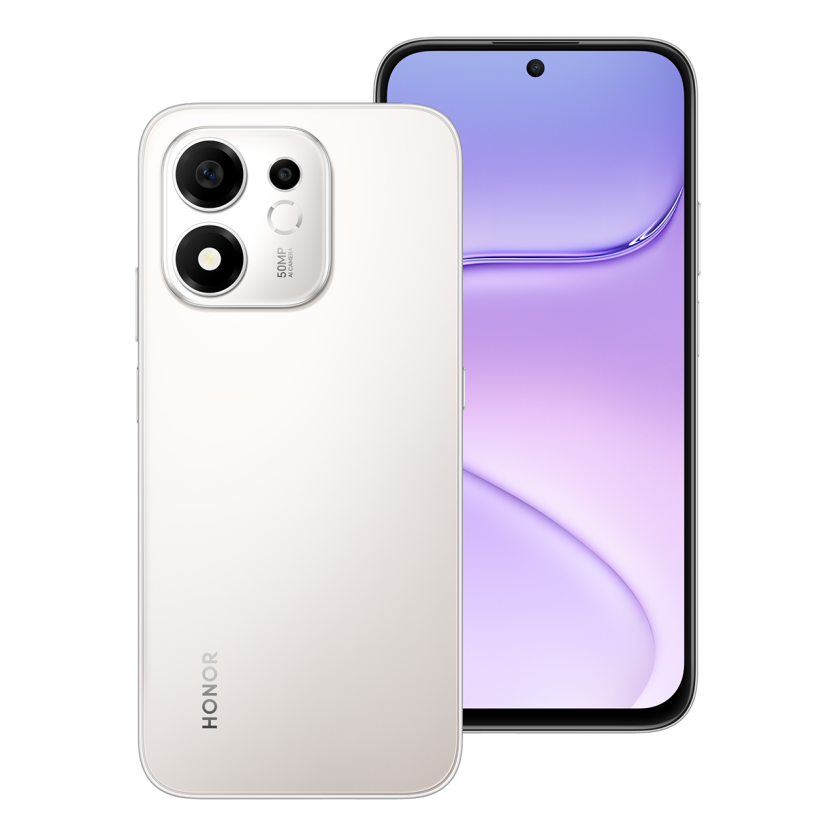
The Honor 600S 5G launched in Hong Kong carrying the kind of water-resistance certification that industrial dishwashers and food-processing equipment earn — not budget smartphones. Priced at HK$1,999 (approximately $255 USD) for an 8 GB/128 GB configuration, the device combines IP68, IP69, and IP69K ingress-protection ratings with an 8,100 mAh battery in a handset that measures 8.3 mm (0.33 in) thick and weighs 216.5 grams (7.6 oz) — a specification pairing that simply did not exist at this price point before this launch.
Honor, formerly a sub-brand of Huawei and now majority-owned by Shenzhen Zhixin New Information Technology, a state-linked entity controlled by Shenzhen's SASAC state authority, sells the 600S through its Hong Kong storefront as the entry-level anchor of its 600 series family. Taiwan is expected to receive the device next, with no wider regional launch announced. The 600S is not available in the United States.
The launch lands at a moment when industrial-grade durability standards have rarely appeared on mainstream consumer hardware at this price tier. Most budget phones in 2026 top out at IP67 or IP68. The Honor 600S 5G carries all three — IP68, IP69, and IP69K — making it an outlier in a segment where ruggedness typically requires either a specialized industrial form factor or a significantly higher price.
Read more: Honor Magic V6 Goes Big with IP69 Rating, Bigger Battery, But Are There Any More Changes?
What IP69K Actually Means: Why It Matters at This Price
Most smartphone water resistance stops at IP68 — the familiar standard that certifies survival during submersion up to 1.5 meters (about 4.9 feet) for 30 minutes in still, calm water. IP68 is the test that protects your phone from a toilet-drop or a rain-soaked commute. The IP68 and IP69K standards test fundamentally different threats.
IP69K is a different test entirely. Defined under ISO 20653, it certifies resistance to high-pressure, high-temperature water jets: water heated to 80°C (176°F), sprayed at pressures of 80 to 100 bar (1,160 to 1,450 PSI) at a flow rate of 14 to 16 liters per minute (about 3.7 to 4.2 gallons per minute), from a nozzle held 10 to 15 centimeters (4 to 6 inches) from the device surface, covering angles of 0°, 30°, 60°, and 90°. IP69K testing at ISO 20653 sets among the most demanding parameters in consumer electronics.
The origin of the "K" suffix traces back to German industrial standards and the word for condensation water, though today the standard addresses pressure-washing environments in food processing, pharmaceutical manufacturing, and automotive cleaning, not condensation.
A phone that passes IP68 can fail the IP69K test. The two standards evaluate different stresses: still-water depth versus directional high-pressure jets. The Honor 600S 5G holds all three certifications — IP68, IP69, and IP69K — meaning it has been tested against both prolonged submersion and industrial-grade pressure spray. Honor's own documentation adds that the device can withstand 24 hours in a high-humidity, high-salinity environment (5% sodium chloride solution at 35°C / 95°F) and is rated for 10,000 water-exposure cycles. Honor's salinity and cycle ratings are documented in the product's official footnotes.
A certification caveat the company states clearly: these ratings are achieved under controlled lab conditions and protective performance decreases with ordinary wear over time. IP ratings are not permanent.
How the Battery Gets This Big Without Getting Thick
The 8,100 mAh figure printed on the Honor 600S 5G's spec sheet represents the typical (nominal) capacity. The rated capacity — the figure used for regulatory and safety certification — is 7,900 mAh, per Honor's official battery footnote. The distinction rarely matters to users but is worth knowing when comparing figures across manufacturers who may report rated versus typical capacity differently.
To contextualize the capacity: the Honor 600 Smart 5G, a closely related sibling device, carries a 7,700 mAh cell. The Honor 600S versus siblings battery comparison shows the 600S as the largest cell in the family. The standard Honor 600 ships with a 7,000 mAh battery. Most 2026 Android flagships arrive between 4,800 and 5,500 mAh.
The physical engineering that makes 8,100 mAh possible at 8.3 mm (0.33 in) thickness is not exotic battery chemistry — no source confirmed the 600S uses silicon-carbon cell technology, despite silicon-carbon being adopted in several Honor sibling devices. Instead, the form factor itself does the work: a 6.87-inch frame (168.3 × 78.54 mm / 6.62 × 3.09 in) provides substantial internal volume, the TFT LCD panel foregoes the thinner-but-costlier AMOLED stack, and the entry-level chipset's smaller power-management footprint leaves room for a larger cell. Honor's engineering produces the capacity through volume management rather than chemistry innovation.
Charging arrives via 45W wired SuperCharge — Honor's proprietary fast-charging standard. There is no wireless charging, a standard trade-off at this price tier. At 45W against a near-8,000 mAh cell, a full charge takes considerably longer than a 5,000 mAh phone at the same wattage; users accustomed to sub-60-minute charges on smaller batteries should calibrate expectations. Honor's lab data claims 12 hours of online video playback at high ambient temperatures and 14 hours at normal conditions. The battery is rated to retain above 80% capacity after five years of use.
The device operates at -30°C to 50°C extremes, a specification relevant for workers in cold-storage facilities, construction sites, or outdoor environments in climates with seasonal extremes.
Where the Snapdragon 4 Gen 4 Lands: And Where It Does Not
The Snapdragon 4 Gen 4 is a credible everyday chipset. Built on TSMC's 4nm (nanometer) process, it combines two Cortex-A78 performance cores clocked at 2.3 GHz with six Cortex-A55 efficiency cores at 2.0 GHz. In benchmark terms, the chip scores in the range of 920 to 950 points single-core and 2,150 to 2,330 points multi-core in Geekbench 6, with an AnTuTu 11 score around 620,000 to 625,000. Snapdragon 4 Gen 4 benchmarks confirm the chip's performance is suited for everyday smartphone tasks.
Those numbers translate to smooth performance for social media, video streaming, navigation, messaging, and productivity apps. Where the chip shows its tier: the integrated Adreno 613 GPU scores approximately 780 points in 3DMark Wild Life — an entry-level result. Adreno 613 gaming performance data confirms that graphically intensive games will require reduced settings and sometimes lower rendering resolution. Users who value gaming performance should look at chipsets from the Snapdragon 6 or 7 families.
What the 4nm node delivers at this tier is power efficiency and thermal stability. Under GPU stress testing, Snapdragon 4 Gen 4 thermal results show approximately 99.6% performance stability — meaning frame consistency holds across extended sessions at moderate graphics loads — and operating temperatures remain in the 36–37°C (97–99°F) range under load. For a device whose primary audience includes outdoor workers and field technicians rather than mobile gamers, this profile is the right trade-off.
RAM stands at 8 GB physical — extended via Honor's RAM Turbo technology to a virtual 16 GB experience. RAM Turbo virtual memory system borrows capacity from the device's UFS 3.1 flash storage to create virtual address space, helping retain background apps and reduce cold-launch frequency. The practical effect is better multitasking feel; the theoretical limitation is that storage-backed virtual RAM is slower than physical DRAM, meaning it improves app retention rather than raw computational throughput.
The display is a 6.87-inch TFT LCD at 1,592 × 720 pixels and 120 Hz. Typical brightness is 860 nits, with a peak of 1,020 nits — adequate for outdoor use in most conditions, though reviewers of sibling devices have noted that Honor's LCD panels at this tier can read slightly cool in white-balance under bright sunlight. The panel supports DC dimming, dynamic dimming, low blue-light mode, dark mode, ultra-low brightness, and a sunlight-display enhancement mode.
The 50 MP rear camera pairs with an auxiliary sensor; the front camera is 5 MP. An underwater shooting mode accompanies the triple IP rating. Photography is a functional element of the 600S's design, not a differentiating one — the device does not position itself as a camera-first product.
Connectivity includes dual-band Wi-Fi 5, Bluetooth 5.1, NFC, and 5G via a dual-SIM Nano-SIM configuration. Honor 600S 5G full spec sheet confirms stereo speakers with a 400% volume boost mode calibrated for outdoor environments — useful for workers who need audio cues in noisy conditions. Security uses a side-mounted fingerprint sensor.
The software stack running MagicOS 10 is built on Android 16, making the 600S one of the first devices at this price to ship on the latest major Android release. An AI button on the side provides one-press access to AI Memory, Circle to Search (Google's visual search integration), AI Image Removal, AI Summary, and AI Image-to-Video 2.0.
A word on that last feature: AI Image-to-Video 2.0 carries usage limits. During the promotional period (through September 30, 2026), buyers receive five free daily uses for the first 30 days, then 10 free uses per 30-day cycle through March 31, 2027. After free allotments run out, additional uses are billed at discounted rates of HK$3.52 (approximately $0.45 USD) for a three-second clip and HK$5.49 (approximately $0.70 USD) for a five-second clip. Standard pricing after December 31, 2026 rises to HK$4.69 (approximately $0.60 USD) and HK$7.29 (approximately $0.93 USD) respectively. AI Image-to-Video 2.0 pricing terms are published in Honor's official product footnotes.
Read more: Honor Robot Phone Sells in China: Motorized Arm Moves Sensor, Not Software
What Buyers Outside the Spec Sheet Should Know
Honor was spun out of Huawei in 2020. Its majority owner today is Shenzhen Zhixin New Information Technology Co., Ltd., a consortium whose controlling shareholder is the Shenzhen arm of China's State-Owned Assets Supervision and Administration Commission — the government body that oversees state-owned assets. Shenzhen SASAC controls Honor's parent, and China Mobile, a state-owned carrier, has also invested in the company.
This ownership structure has a legal consequence that no privacy policy can resolve. China's National Intelligence Law (2017), Article 7, requires that all organizations and citizens operating under Chinese jurisdiction "support, assist, and cooperate with national intelligence work." The Data Security Law (2021) and the Cybersecurity Law (2017) establish additional data-localization and government-access requirements. These laws apply to Honor regardless of where the company's servers are physically located, regardless of its stated privacy commitments, and regardless of any Western incorporation addresses Honor may maintain. Channel News Australia on Honor risks concludes that these legal obligations represent a structural condition — not a theoretical risk.
Honor published a 44-page privacy white paper in 2025 stating that it strictly complies with data transfer regulations in every region where it operates. That compliance with Chinese law is precisely the legal risk that international buyers should understand: compliance with China's intelligence and data security statutes means responding to Chinese government data requests when legally required.
No independent security audit of the Honor 600S 5G was available at time of publication. The data categories on any modern smartphone that could be subject to legal demands include location history, contacts, biometric identifiers (the 600S uses a fingerprint sensor), usage patterns, call records, browsing history, and camera metadata.
For buyers who proceed, practical mitigation options include placing the device on a network-segmented Wi-Fi VLAN (isolating it from primary devices on the same network), using a reputable VPN to encrypt outbound traffic, reviewing and restricting app permissions through MagicOS settings, and limiting the device's access to sensitive accounts or data sources. None of these measures address the structural legal obligation — they can reduce the device's data surface, not the jurisdiction's legal authority.
The device is not sold in the United States and is not marketed to US buyers. Its primary markets at launch are Hong Kong and Taiwan.
Specifications at a Glance
| Feature | Detail |
|---|---|
Chipset | Qualcomm Snapdragon 4 Gen 4 (TSMC 4 nm) |
Display | 6.87-in (17.5 cm) TFT LCD, 1592 × 720, 120 Hz |
Battery (typical/rated) | 8,100 mAh / 7,900 mAh, 45W wired charging |
Operating System | MagicOS 10 / Android 16 |
RAM / Storage | 8 GB physical (16 GB virtual via RAM Turbo) / 128 GB |
Rear Camera | 50 MP + auxiliary sensor |
Front Camera | 5 MP |
Water/Dust Resistance | IP68, IP69, IP69K (ISO 20653) |
Drop Resistance | 2.5 m (8.2 ft) certified, SGS five-star rated |
Dimensions | 168.3 × 78.54 × 8.30 mm (6.62 × 3.09 × 0.33 in) |
Weight | 216.5 g (7.6 oz) |
Wireless | Wi-Fi 5 dual-band, Bluetooth 5.1, NFC |
Audio | Stereo speakers, 400% volume mode |
Security | Side-mounted fingerprint sensor |
Pricing, Colors, and Availability
The Honor 600S 5G is available now in Hong Kong at HK$1,999 (approximately $255 USD; exchange rate as of August 31, 2026) in a single 8 GB/128 GB configuration. Color options are Desert Gold, Misty Purple, and Velvet Black. Taiwan is expected to receive the device next; no date has been announced. No availability outside Hong Kong and Taiwan has been confirmed. Honor 600S pricing and color options are confirmed by independent reporting.
Is This the Right Device?
The Honor 600S 5G makes a coherent case in a specific and underserved niche: the buyer who genuinely needs a phone that can survive an industrial workday — high-pressure cleaning, heat, moisture, repeated drops — and cannot or will not pay the premium that dedicated rugged-device brands charge. Its closest natural audience is trade workers, construction crews, food-service employees, outdoor guides, agricultural workers, and travelers in environments where gear gets wet, dirty, and dropped.
For that buyer, the spec-sheet reality is strong: IP69K water resistance that exceeds what most flagship phones offer, an 8,100 mAh battery that should last through multi-day moderate use, Android 16 out of the box, and a consumer-facing design that does not sacrifice aesthetics for armoring. The Adreno 613 GPU is not a gaming chipset, but a construction worker running navigation, communication apps, and a job-management tool does not need one. The LCD display lacks AMOLED vibrancy, but 1,020-nit peak brightness holds up outdoors.
The full decision, however, requires more than the spec sheet. The ownership structure — state-adjacent, subject to Chinese intelligence law, with no independent security audit of this device on record — is a material fact for buyers in any market where data security and government access are concerns. The device is engineered well for its stated purpose. The jurisdiction it operates under is a fixed condition that engineering cannot change.
Currency conversions in this article are approximate and based on exchange rates as of August 31, 2026.
Frequently Asked Questions
What does IP69K mean on the Honor 600S 5G, and is it better than IP68?
IP69K and IP68 are both high protection ratings, but they test different threats. IP68 certifies survival when submerged in still water up to 1.5 meters (about 4.9 feet) for 30 minutes. IP69K — governed by ISO 20653 — tests resistance to water jets heated to 80°C (176°F) at pressures of 80 to 100 bar (1,160 to 1,450 PSI), aimed from close range at multiple angles. A phone can pass IP68 and fail IP69K, because high-pressure spray is a different physical challenge than static immersion. The Honor 600S 5G carries all three certifications — IP68, IP69, and IP69K — meaning it has been tested against both.
How long does the 8,100 mAh battery actually last in everyday use?
Honor's lab figures — 12 to 14 hours of online video streaming, depending on ambient temperature — are a useful reference point rather than a guarantee. Real-world battery life depends on screen-on time, network conditions (5G is more power-hungry than Wi-Fi), app workload, and ambient temperature. For typical light-to-moderate use (calls, messaging, navigation, occasional video), the 8,100 mAh capacity should extend well beyond a single day between charges for most users. The battery retains above 80% of its rated capacity for an estimated five years of daily use, per Honor's lab data.
Does the Snapdragon 4 Gen 4 handle gaming?
The Snapdragon 4 Gen 4's Adreno 613 GPU scores around 780 points in 3DMark Wild Life — an entry-level result. Simple and casual games run without issue. Graphically demanding titles will require reduced resolution and lower graphics settings. If mobile gaming is a priority, chipsets from the Snapdragon 6 or 7 series deliver significantly more GPU throughput.
What are the data privacy risks of buying a Chinese state-adjacent smartphone?
China's National Intelligence Law (2017) requires all organizations operating under Chinese jurisdiction — including Honor, whose majority owner is a Shenzhen state-controlled entity — to cooperate with Chinese government intelligence requests. This legal obligation cannot be overridden by the company's privacy policy, the location of its servers, or any Western corporate incorporation. The Honor 600S 5G has not been independently audited for security at time of publication. Buyers who handle sensitive professional or personal data should understand this structural condition before purchasing. Practical risk-reduction steps — network segmentation, VPN use, limiting app permissions — can reduce the device's data exposure but do not change the legal jurisdiction it operates within.

-
 C114 Communication Network
 -
 Communication Home
