
 Search

Tesla.com
Tesla quietly crossed two milestones on the same day Monday. The company registered its first seven purpose-built Cybercabs with the Texas Department of Motor Vehicles — the first Cybercabs to appear in Tesla's commercial fleet registry — while continuing to run an expanded Dallas service area that grew by roughly 50 percent on August 29, from approximately 78 square kilometers (48.5 square miles) to 120 square kilometers (46.3 square miles). Both developments share a technical foundation: the Robotaxi fleet is already running early builds of Full Self-Driving version 15, the next-generation driving software Tesla has described for 18 months as its prerequisite for mass deployment.
Everything that happened this week — the Dallas expansion, the fleet registration jump, the Cybercab DMV filings — is now loading onto a software architecture that is, by Tesla's own account, approximately 40 percent complete.
Dallas Service Area Grows to 120 Square Kilometers
On August 29, Tesla's official Robotaxi account posted a before-and-after map showing the Dallas coverage zone had expanded by roughly 50 percent, from approximately 78 square kilometers (48.5 square miles) to 120 square kilometers (46.3 square miles). The update pushed the western boundary further into the city and added more of the downtown core, extending service to neighborhoods that had been just outside the operating boundary since Dallas launched in April with a footprint centered on Highland Park and Oak Lawn.
Dallas has followed the same incremental playbook Tesla used in Austin: launch with a compact zone, add local driving data, and expand the digital boundary in stages. The August 29 update was the largest single Dallas expansion since the April 18 launch, when the service opened with approximately 31 square miles. By contrast, Austin's geofence — after nearly a year of staged expansions — now covers the entire metro area at roughly 245 square miles (634 square kilometers). Dallas has moved from launch to roughly 46 square miles in about four months.
For Dallas riders, the expansion means the Robotaxi app's coverage map is now large enough to include most of central Dallas. For readers tracking the broader program, the size of the zone still needs to be read against the size of the fleet behind it. Community trackers estimate roughly 85 active unsupervised vehicles spread across all six markets. Tesla has not disclosed how many of those are in Dallas specifically, or how wait times inside the expanded zone compare to the original footprint.
Operating Hours Tightened to Guarantee Fully Driverless Rides
Three days before the Dallas expansion, Tesla announced a system-wide standardization of Robotaxi operating hours across all six active cities — Austin, Dallas, Houston, Miami, Orlando, and Tampa. The service now runs from 6 a.m. to 10 p.m., seven days a week, in every market. The announcement also said the unsupervised fleet had grown "a lot bigger" and that upgraded routing intelligence would reduce wait times.
The hours change appears designed to enforce a clean separation between supervised and unsupervised operations. Austin had previously offered service windows that extended later into the night, and those expanded windows allowed supervised vehicles — cars with a human safety monitor in the front seat — to occasionally fill demand. Under the new unified schedule, every ride in every city during operating hours is supposed to be completed by a fully driverless vehicle. The 6 a.m.–10 p.m. window was calibrated around when the system can operate at the confidence level Tesla requires for unsupervised rides; Tesla has said its next stated goal is 24/7 service.
The fleet growth claim is the most significant element of that announcement. On August 27, the Texas DMV registration database showed a 41.4 percent single-day increase in Tesla's registered Robotaxi fleet in Texas — jumping from 191 to 270 registered Model Y vehicles on August 27. Texas requires autonomous vehicle operators to register their fleets, and a registration does not confirm a vehicle is actively carrying passengers — but the jump in filings signals Tesla is preparing to deploy materially more vehicles than it has been running. For comparison, Waymo currently has 736 robotaxis registered in Texas.
Read more: Tesla's 'Zero At-Fault' Robotaxi Record Rests on Unverified Self-Reports
Today: Cybercabs Enter the Texas Registry
Monday's biggest development arrived in the morning. According to Texas DMV registration data tracked by the Whole Mars FSD Database and reported by multiple community trackers, Tesla registered its first seven 2026 Cybercabs with the state's Motor Carrier Credentialing System in Austin. The entries appeared in TxMCCS — the Texas Motor Carrier and Automated Motor Vehicle Operator Lookup — under Tesla Robotaxi, LLC, with VINs carrying the 5YJA prefix, distinct from the 7SAYG prefix on Model Y Robotaxis. This brought Tesla's authorized Texas Robotaxi total to 276 vehicles: 269 Model Ys and the seven Cybercabs.
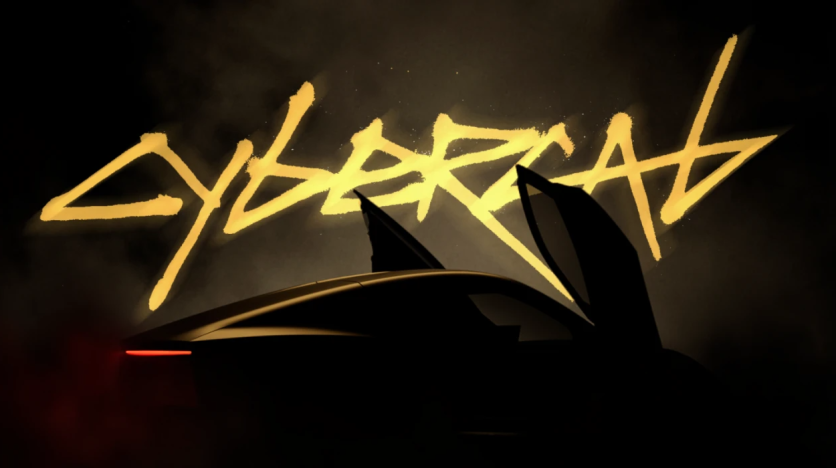
The Cybercab is a materially different vehicle from the Model Y units that currently handle all Robotaxi rides. It is a two-seat coupe with no steering wheel and no pedals — the first vehicle in Tesla's commercial fleet designed exclusively for autonomous operation, with no provision for a human to take manual control from inside the car. It carries a 35-kilowatt-hour battery pack and an estimated range of approximately 200 miles (320 kilometers), runs on Hardware 4 (Tesla's current AI4 compute platform), and has been in production since February 2026 at Gigafactory Texas. Employee test rides in Cybercab began in July 2026.
Tesla has said it has been deliberately holding back the addition of more Model Y vehicles to the Robotaxi fleet because it intends to fold the Cybercab into active commercial service instead. That strategy makes the seven new Texas DMV filings meaningful: they represent the first documented step in that transition from a retrofitted Model Y fleet to a purpose-built autonomous vehicle fleet.
The seven registrations do not confirm how many Cybercabs will carry paying passengers at the September 3 launch event, which is invite-only and limited to selected past Robotaxi riders plus sweepstakes winners. What they confirm is that the vehicles are officially in the system — legally registered autonomous motor vehicles in Texas — three days before the event.
What Is FSD v15 and Why Does Its Deployment Status Matter
Understanding why this week's developments are significant requires understanding what FSD v15 actually is — and what "early builds" means in practice.
Tesla's current production Full Self-Driving software, FSD v14.3.x, runs the consumer vehicles that Tesla owners can activate. The Robotaxi fleet runs a different branch: early builds of FSD v15, the next-generation driving model. Tesla VP of AI Software Ashok Elluswamy confirmed at the company's Q2 2026 earnings call on July 22 that the Robotaxi fleet was already running v15 early builds, adding that "as we continue to complete our work on v15, we will see that the car is going to be ridiculously safe and capable."
The architectural change that makes v15 a distinct generation rather than an incremental update is the scale of the driving model's neural network. FSD v14 runs on a model of approximately one billion parameters — the learnable weights the system uses to interpret camera input and make driving decisions. FSD v15 is being built around a model roughly ten billion parameters in size: a tenfold increase. More parameters allow the neural network to encode more nuanced representations of driving scenarios — the kind of edge cases and unexpected behavior that define the gap between "works most of the time" and the superhuman reliability Elluswamy described.
The critical qualifier is what "early builds" means in quantitative terms. At the Q2 earnings call, Elluswamy said approximately 40 percent of the seven planned improvement tracks for v15 had been merged into the builds running on the fleet. That figure means the 380,000 unsupervised miles the fleet had accumulated by late July were driven on a system that is, by Tesla's own internal accounting, roughly three-fifths unfinished. The safety record being accumulated right now — including in the expanded Dallas zone and across the seven newly registered Cybercabs — is validation data for an incomplete architecture, not the finished product.
Tesla confirmed that v15 runs on Hardware 4 systems, which carry 16 gigabytes of onboard memory — less than engineers initially expected the tenfold-larger model to require. Tesla's explanation is that the company is using "distillation," a machine-learning technique that compresses large models into smaller, more hardware-efficient representations that retain most of the original model's performance. Independent researchers cannot verify whether the early v15 builds represent a fully distilled version of the 10-billion-parameter model or a scaled-down architecture that has not yet reached the target size.
Consumer vehicles are not expected to receive FSD v15 until late 2026 or early 2027, according to Tesla's public timeline. The Robotaxi fleet is receiving it first — and the Dallas expansion, the seven Cybercab filings, and the accumulated miles since April are the dataset that will either validate or stress the architecture before it reaches private owners.
Read more: Tesla Robotaxi Trails Waymo 42 to 577 in Texas:Austin Map Masks 20-Car Fleet Until FSD v15 Rewrite
How Does Tesla's Scale Compare to Waymo?
The scale gap between Tesla and its primary competitor remains significant. Waymo as of August 2026 operates approximately 3,500 vehicles across 11 US metropolitan areas, completing roughly 500,000 paid rides per week and logging approximately four million autonomous miles weekly. Waymo has accumulated more than 220 million rider-only miles across its fleet and reached more than 20 million lifetime paid rides by the end of 2025.
Tesla's registered Texas fleet of 276 vehicles — 269 Model Ys plus the seven new Cybercabs — remains a fraction of Waymo's Texas presence. The 380,000 unsupervised miles the Robotaxi fleet had accumulated by the July 22 earnings call represent less than a week's worth of miles for Waymo.
The two programs are also built around different technical philosophies. Waymo relies on lidar, radar, and cameras in combination, pre-mapping every city in high definition before deploying vehicles. That approach requires months of lead time in each new city but allows Waymo's system to draw on detailed prior knowledge of every intersection. Tesla's camera-only approach — FSD uses eight cameras and no lidar — is designed to generalize to new streets without pre-mapping, learning from the driving data the fleet accumulates in real time. The tenfold increase in v15's parameter count is specifically intended to improve that generalization capability, enabling the system to interpret unfamiliar scenarios that the current model handles poorly.
The architectural bet in that choice is substantial. A larger model trained on Tesla's fleet video is supposed to generalize to streets no pre-mapping system has touched. Whether the early v15 builds now running in Dallas and on the seven registered Cybercabs will demonstrate that generalization at commercial scale is what the September 3 event and the weeks following it will begin to reveal.
What Does September 3 Actually Mean?
The Cybercab launch event on September 3 in Austin is invite-only, limited to selected past Robotaxi riders and sweepstakes winners. Attendees must be at least 21 years old and pass ID verification. Tesla describes the event as a chance to "experience the future of autonomy," with Cybercab rides expected as part of the program.
The seven Cybercabs now registered in Texas will very likely be among the vehicles available at or after that event. Whether the September 3 rides represent the first paying-customer Cybercab trips or remain employee-and-guest demonstrations is not yet confirmed by Tesla.
What the event is not is a regulatory inflection point. Texas's self-certification autonomous vehicle framework does not require independent agency verification of Level 4 claims; Tesla self-certified its Cybercab as Level 4 capable under that framework. That means the Cybercab is legally permitted to carry passengers in Texas without a steering wheel or pedals based on Tesla's own safety determination. Whether the early v15 builds — 40 percent merged, running on an architecture Tesla has publicly described as incomplete — have accumulated enough validation miles to justify that determination is a question the fleet's performance over the coming weeks will begin to answer.
For Dallas riders, the week's changes are concrete: the service area is now 50 percent larger and available from 6 a.m. to 10 p.m. daily, with a fleet that Texas registration data suggests is meaningfully larger than it was a week ago. For readers following the technology story, the key fact is simpler: the software Tesla has been describing for 18 months as the prerequisite for mass-scale driverless operations is not waiting in a lab. It is on the road.
Frequently Asked Questions
What exactly is FSD v15, and how is it different from what Tesla's consumer vehicles currently run?
FSD v15 is the next-generation Full Self-Driving software architecture Tesla is developing for both its Robotaxi fleet and, eventually, consumer vehicles. The central change is the scale of the neural network that drives decision-making: FSD v14, which runs on consumer cars, uses a model of approximately one billion parameters. FSD v15 targets a model of roughly ten billion parameters — a tenfold increase designed to improve the system's ability to handle complex and unfamiliar driving scenarios. The Robotaxi fleet began running early v15 builds before the Q2 2026 earnings call; consumer vehicles are not expected to receive v15 until late 2026 or early 2027. The early builds running today are approximately 40 percent complete across the seven planned improvement tracks Tesla has identified for v15, meaning the architecture currently in the field is not the finished system. For more details on the v15 confirmation, see Tesla's Q2 2026 earnings call coverage.
How is the Cybercab different from the Model Y vehicles currently used for Robotaxi rides?
The Cybercab is a purpose-built two-seat autonomous vehicle with no steering wheel and no pedals, designed exclusively for driverless operation — there is no provision for a human occupant to take manual control from inside the car. The Model Ys currently serving as Robotaxis are standard production vehicles retrofitted with communications hardware and operating under the same FSD software stack. The Cybercab runs on the same Hardware 4 compute platform and the same early FSD v15 software, but was developed specifically for autonomous operation rather than adapted from a human-driven production vehicle. It carries a 35-kilowatt-hour (kWh) battery and has an estimated electric range of approximately 200 miles (320 kilometers). For full specifications, see the Tesla Cybercab Wikipedia entry.
What does the 40 percent completion figure mean for Robotaxi safety right now?
Tesla's VP of AI Software Ashok Elluswamy stated at the Q2 2026 earnings call that approximately 40 percent of the seven planned improvement tracks for FSD v15 have been merged into the early builds the Robotaxi fleet currently runs. This means the 380,000-plus unsupervised miles accumulated through July 2026 were driven on an architecture that Tesla's own development roadmap describes as incomplete. The safety data generated by those rides — including the three incidents logged in June 2026 with zero at-fault results — represents performance benchmarks for a system in mid-maturation, not the finished architecture. Tesla has said the complete v15 system will be "ridiculously safe and capable." Whether the partial builds running today justify full commercial deployment at scale is a determination made under Texas's self-certification framework, without independent agency verification.
How do I access Tesla Robotaxi in Dallas, and has the expanded zone changed what neighborhoods are covered?
Tesla Robotaxi rides are booked through the dedicated Robotaxi app, available on iOS and Android. New users join a waitlist; prior reports have suggested wait times of hours rather than days for app access. The August 29 expansion extended the Dallas service zone to approximately 120 square kilometers (46.3 square miles), pushing the western boundary further into the city and adding more of the downtown core beyond the original coverage area centered on Highland Park and Oak Lawn. Service runs from 6 a.m. to 10 p.m. daily. Tesla has not published a detailed neighborhood-by-neighborhood boundary map, but the official Robotaxi app reflects the current geofence in real time. For coverage of the expansion, see Drive Tesla Canada's Dallas expansion report.

-
 C114 Communication Network
 -
 Communication Home
