
 Search

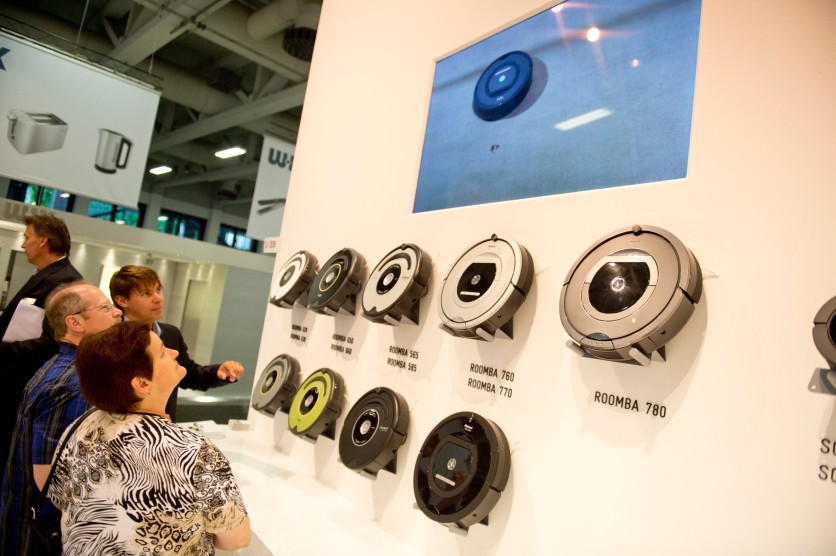
A group of 60+ visitors watch a range of domestic cleaning robots at the irobot booth during the first day of the 52nd edition of the "IFA" (Internationale Funkausstellung) trade fair in Berlin on August 31, 2012. ODD ANDERSEN/AFP/GettyImages
Every smart home buyer who follows product launches needs to understand what is different about IFA 2026 before the show opens: for the first time, Chinese companies are approaching half of all exhibitors at the world's largest consumer electronics trade show, and the reason they are there is partly that the United States has closed its market to their newest devices.
On July 28, 2026, the Federal Communications Commission added foreign-made robots to Covered List, effectively blocking new models from Roborock, Ecovacs, Dreame, Xiaomi, and Narwal from the US market. Those five brands together held 68% of global market share for robot vacuums in 2025, according to IDC data. With American shelves increasingly off-limits for next-generation models, the same brands are deploying in Berlin this week — alongside 927 other Chinese exhibitors — for what the German press has already described as a structural inflection point in IFA's history. 932 Chinese companies at IFA 2026 now approach half of the show's 1,900-plus exhibitors from 49 countries. And inside the Smart Home Hall, a Swiss non-profit called the Open Home Foundation will set up the show's most ideologically specific booth: a locally controlled, cloud-optional smart home platform whose privacy principles are the direct architectural alternative to the data-access obligations that come built into every Chinese-headquartered device by law.
IFA 2026 Media Days run Wednesday, September 2 and Thursday, September 3 at Messe Berlin. The five-day public show follows from September 4 through 8.
Read more: FCC Bans New Chinese Robot Vacuums: bObsweep Maxim at $439 Cleans Without Sending Data
The China Surge: Why 932 Brands Are in Berlin
Chinese companies registered for IFA 2026 total 932 — up roughly 200 from approximately 700 last year, now approaching half of the show's 1,900-plus exhibitors from 49 countries. That growth is not coincidental. The FCC's Covered List action means any new product from a Chinese-headquartered robot vacuum or advanced robotics manufacturer cannot receive the equipment authorization required to be imported, marketed, or sold in the United States. Existing authorized models may continue through at least January 1, 2029, but next-generation flagship devices — the products that would drive premium consumer spending — are blocked new Chinese robotic devices from the American market until manufacturers obtain waivers requiring commitments to shift manufacturing to the United States.
Europe does not have an equivalent restriction. IFA is where global brands set the Q4 retail cycle across the European continent, and Chinese manufacturers are deploying accordingly.
The brands bringing significant smart home hardware to Media Days include Roborock (which claims the title of world's number one robot vacuum brand in 2025, per its IFA 2026 press conference description), Dreame (entering new product categories beyond cleaning for the first time), Xiaomi (formally introducing its Mijia smart home ecosystem to European markets), Hisense and TCL (smart living and display technology), Anker and its eufy brand (smart home security and automation), SwitchBot (home automation hardware), SONOFF (smart switches, sensors, and local-control hubs), and DREO (AI-managed air quality systems). Chinese robotics companies including Unitree, AgiBot, and EngineAI are also present at the wider show.
What European Buyers Should Know About Chinese Smart Home Law
Every company headquartered in mainland China — every single one of the 932 exhibitors — operates under a legal framework that has no equivalent in Europe or the United States. China's National Intelligence Law (2017), Article 7 of China's Intelligence Law states that all Chinese organizations must support, assist, and cooperate with national intelligence efforts in accordance with law. Article 14 of the same law authorizes intelligence agencies to formally demand that assistance. China's Cybersecurity Law (2017) requires network operators to provide technical support to authorities during government inspections, a requirement that explicitly extends to AI system operators under the January 2026 amendments. The Data Security Law (2021) adds data classification obligations and government-access provisions. For an extended analysis of how these laws apply to devices sold in Europe, see TechTimes data law analysis.
These laws mean that a properly constituted request from Chinese intelligence agencies for data held by Roborock, Dreame, Xiaomi, or any other Chinese-incorporated company cannot legally be refused — regardless of where those companies store data physically, how their European subsidiaries are structured, or what their privacy policies say.
Legal scholars have noted an important nuance: Jeremy Daum, writing for China Law Translate, has argued in his Daum's analysis of Article 7 limits that Article 7 lacks a direct enforcement mechanism for proactive data sharing and that the term "intelligence" is undefined in the statute. That debate is genuine. What is not contested is that no Chinese company has the legal authority to refuse a properly constituted government request under these statutes.
For smart home devices specifically, this matters because the product category collects unusually sensitive data: floor plans, presence detection, voice, and daily routine patterns. The DEF CON 2024 security conference produced a demonstration in which researchers remotely activated the camera and microphone of an Ecovacs Deebot X2 without triggering any indicator light — all from within Bluetooth range — and accessed saved floor maps and stored Wi-Fi credentials. Ecovacs patched the vulnerabilities after disclosure. The underlying legal framework that attaches to any Chinese-incorporated manufacturer did not change.
Practical practical risk reduction steps for buyers of Chinese-brand smart home devices include: routing devices through a separate IoT Wi-Fi network isolated from primary household devices (network segmentation); disabling cloud sync and remote access features where possible; and reviewing what data each device's companion app collects and transmits. These measures reduce, but do not eliminate, the structural legal exposure.
Open Home Foundation Makes Its IFA Debut
One of the more symbolically significant moments of IFA 2026 will be the Open Home Foundation's first-ever appearance at the show. The Swiss non-profit — which was created in 2024 and stewards the Home Assistant open-source smart home platform alongside ESPHome, Music Assistant, and other community projects — will exhibit at Stand 153 in the Smart Home Hall (Hall 1.2), directly within the section where the world's largest connected-home brands will compete for European shelf space. The foundation published its Open Home Foundation IFA debut announcement in June 2026, confirming the first-ever IFA appearance.
The Foundation's stated mission is to fight for privacy, choice, and sustainability mission in smart homes. Its architecture embodies those principles: Home Assistant operates with local control by default, and cloud services are optional and opt-in. A connected device running through Home Assistant routes no data to any external server unless the user explicitly chooses to enable a cloud service — and the platform supports Matter and Thread, meaning it can integrate devices from commercial manufacturers while maintaining local control of the data those devices generate. The IFA program confirms the Foundation's presence at its Open Home Foundation IFA exhibitor profile.
The Foundation is running meet-and-greet sessions across all five public show days, with team members from Home Assistant, Nabu Casa, Apollo Automation, and partner organizations present throughout. A community meetup September 6 Berlin is planned for Sunday, September 6, from 7 to 10 PM at Enjoy Rooftop in Berlin. The Smart Home Hall's estimated footfall is 40,000 visitors over the show's run.
Nearby in the same hall, SONOFF (Booth H1.2-143) will showcase a Zigbee plus Thread Sensor Series, a dual-lens security camera series, and its OpenEdge local-control framework — giving each SONOFF device a browser-based local console independent of cloud services.
How Matter and Thread Draw the Technical Dividing Line
The practical technology that makes the Open Home Foundation's position meaningful — and that has become the interoperability baseline all IFA 2026 exhibitors now work against — is the Matter standard, version 1.6 of which the Connectivity Standards Alliance CSA released Matter 1.6 June 2026 on June 17, 2026. TechTimes covered the implications for smart home setup in TechTimes on Matter 1.6 Joint Fabric.
Matter is an application-layer interoperability standard that operates over IP-based networking — Wi-Fi, Ethernet, or Thread — allowing devices from different manufacturers to communicate through a shared protocol rather than requiring separate apps or proprietary hubs. Thread is a companion low-power mesh networking protocol (using the IEEE 802.15.4 radio standard at 2.4 GHz, with IPv6 addressing) specifically designed for battery-powered sensors, locks, and small appliances — the devices that spend most of their lives sleeping and only wake to report a change. A Matter-certified device will work with Apple Home, Google Home, Amazon Alexa, Samsung SmartThings, and Home Assistant simultaneously; the consumer is no longer forced to choose a single ecosystem vendor.
Matter 1.6's Joint Fabric feature takes this further: a single physical device can now be enrolled into multiple ecosystems and shared across them, rather than requiring separate commissioning for each. For manufacturers, this eliminates the need to build ecosystem-specific firmware variations. For consumers, it means a sensor bought today can join both Google Home and Home Assistant without factory resetting. For a deeper look at how Matter 1.6 affects smart home setup, see TechTimes on Matter 1.6 Joint Fabric.
The CSA's Tobin Richardson, president and CEO of the body that governs the Matter standard, is scheduled to appear on the DREO panel with CSA's Richardson at IFA's Dream Stage on September 4 at 12:45 PM local time (6:45 AM ET). His presence alongside a single brand's product launch — DREO's AI-managed indoor air quality system — signals how central interoperability certification has become to product positioning in 2026. A smart home device that isn't Matter-certified is increasingly unmarketable at IFA's price points.
Wednesday, September 2: Day One
IFA Media Days begin Wednesday morning with Bosch Siemens joint IFA press conference at 9:45 AM local time (3:45 AM ET) in Hall 1.1 with a joint press conference on 2026 home appliance innovations. The session is conducted primarily in German with English translation available and requires registration.
At 11:00 AM local time (5:00 AM ET), two press conferences run in parallel: Acer Chairman and CEO Jason Chen takes the Innovation Stage for a 60-minute portfolio presentation covering AI computing, gaming, and professional hardware at the Acer Innovation Stage press conference; and Miele presents under the theme "The end of housework is in sight" in Hall 2.1, outlining how AI is reshaping what domestic appliance products actually do at the Miele IFA 2026 press conference.
The official IFA 2026 Opening Press Conference begins at 1:30 PM local time (7:30 AM ET) on the Innovation Stage, presented by IFA CEO Leif Lindner and GFU Managing Director Carine Chardon. Chardon's organization will present the Insights and Trends 2026 study — a global consumer survey on health technology, wellbeing, and longevity produced with Oliver Wyman.
Wednesday afternoon features four Philips TV workshop sessions Wednesday led by Philips Senior Director Danny Tack on picture quality and gaming performance in Philips TVs, from 2:30 PM through 7:45 PM local time. Separately, at 4:00 PM local time (10:00 AM ET), Sony will hold an invitation-only, NDA-restricted press event at the Sony exclusive NDA press event in Palais Room PAF-125, revealing an exclusive product for Germany and Austria that cannot be publicly disclosed in advance.
Also Wednesday evening, Philips Hue is expected to hold its annual off-site Berlin press event — the brand does not exhibit on the IFA show floor directly. Specialist outlet Hueblog has tracked pre-show leaks suggesting several new products in development, including a Hue Play Gradient Strip Light Pro, a new Hue Play Screen Sync TV camera solution, new outdoor lighting under the "Hue Semeru" name, and updated Festavia string lights. For TechTimes' coverage of pre-show Philips Hue developments, see TechTimes Philips Hue IFA pre-show. If the pattern from prior years holds, formally announced products will appear on the Philips Hue website on September 4 when the public show opens.
Thursday, September 3: Smart Home Day
Thursday brings the most concentrated smart home hardware announcements of Media Days, with Chinese brand press conferences stacked from morning through evening across multiple halls.
Anker Innovations opens the day at 9:30 AM local time (3:30 AM ET) under the "Ultimate, Unified" banner at its Anker IFA 2026 press conference, presenting its portfolio across the Anker, eufy, Soundcore, AnkerWork, and subsidiary brands as an integrated smart home ecosystem play rather than individual product launches.
At 10:30 AM local time (4:30 AM ET), Xiaomi holds its formal European market introduction of the Mijia smart home ecosystem at the Xiaomi Mijia European launch press conference in Hall 6.2. Xiaomi has sold robot vacuums, air fryers, and air purifiers in Europe for years, but the Mijia appliance range in China is substantially larger than what has been available to European buyers. IFA 2026 marks the first time Xiaomi is formally presenting large-format appliances — washer-dryers, refrigerators, and integrated kitchen systems — to the European market, framed within the company's "Human × Car × Home" AI ecosystem strategy. The company previously introduced Mijia washing machines in Germany in July 2026; IFA represents the formal European-wide rollout.
Xiaomi is headquartered in Beijing. Every device it sells connects to the Xiaomi Home app, which communicates with servers Xiaomi operates under Chinese law. Xiaomi's European GDPR compliance audits do not alter the structural requirement that Xiaomi, as a Chinese-incorporated company, must comply with China's National Intelligence Law. For analysis of the specific data obligations attached to Xiaomi's German washing machine launch, see Xiaomi Mijia Germany data law catch.
At noon local time (6:00 AM ET), Roborock holds its Roborock IFA 2026 press conference and keynote in Hall 9 to unveil what it describes as "groundbreaking new products." The company's lineup is expected to span robot vacuums, cordless wet-and-dry vacuums, robotic lawn mowers, and washer-dryers. Roborock has not introduced new models in the United States since the FCC ban took effect.
At 1:00 PM local time (7:00 AM ET), Dreame Technology holds its global launch event under the theme "Redefining Tomorrow's Home" at its Dreame IFA 2026 innovation launch in Hall 7.1a. Pre-show signals from the company indicate this launch goes beyond cleaning robots into new product categories the brand has not previously occupied. LG Electronics has taken a different approach, choosing to front-load its IFA narrative before Media Days open: the company released pre-show details on its LG ThinQ Claw pre-show announcement on August 30 and 31, ahead of its formal IFA exhibition.
At 2:00 PM local time (8:00 AM ET), TCL presents its TCL IFA 2026 Innovation Discovery in Hall 21 covering next-generation display technologies, full-category products, and AI-powered living.
Hisense takes the flagship Innovation Stage at 3:00 PM local time (9:00 AM ET) at its Hisense IFA 2026 press conference, expected to reveal products including the RoamView S6 — a 31.5-inch 4K touchscreen mobile display with a 15,000 milliamp-hour battery offering up to 10 hours of wireless use. Hisense and TCL are the two leading Chinese TV brands in both their home market and Europe, where Hisense has invested in European sports sponsorships to build brand recognition.
The evening capstone is ShowStoppers IFA 2026 media reception, running from 6:00 PM to 9:00 PM local time (noon to 3:00 PM ET) in Hall 5.3 — relocated from its traditional South Entrance Hall venue to accommodate record exhibitor demand, including over 70 Chinese companies.
Also Thursday: AI wearable startup Plaud will present the Plaud One world premiere presentation — an AI conversation recorder and earbuds device that transcribes and converts spoken content into structured actions — in Hall 25 at 10:30 AM local time (4:30 AM ET). Exoskeleton company Hypershell presents its augmented movement vision at 2:15 PM local time (8:15 AM ET) at the Hypershell augmented movement Dream Stage on the Dream Stage. And FRITZ! maker AVM — whose routers and smart home hubs sit at the center of millions of European home networks — holds a dedicated AVM FRITZ! digital sovereignty briefing at 5:00 PM local time on its commitment to digital sovereignty in Europe, a topic with specific resonance at a show where Chinese brand data obligations are a live conversation.
Read more: Xiaomi Launches Mijia Washing Machines in Germany With a Data Law Catch
LG Fires Early: ThinQ Claw and AI Home Ecosystem
LG Electronics front-loaded its IFA narrative on August 30 and 31, releasing pre-show details on ThinQ Claw before Media Days open. ThinQ Claw is a text-chat AI agent that layers conversational interaction onto LG's AI Home ecosystem — using grocery purchase data to suggest recipes via chat, adjusting indoor temperatures, and coordinating the robot vacuum through a natural language interface. LG's IFA 2026 exhibition will span AI Home Zones covering living, kitchen, and rest scenarios.
A notable structural choice: LG's open AI Home ecosystem is now powered by Homey, the smart home platform from Dutch company Athom that LG acquired Athom's Homey platform 2024. The Homey platform provides LG's ecosystem with third-party device interoperability through Matter. IFA 2026 also marks the European debut of LG ThinQ Pro, a version designed for multi-family residential and commercial environments.
What Does AI Mean at the Appliance Layer?
Across all major smart home announcements at IFA 2026, the word "AI" appears as a near-universal modifier — but the specific technical implementations differ significantly.
At the device layer, AI integration generally means one of two things. The first is cloud-assisted inference: the device captures data (images, audio, sensor readings) and transmits it to the manufacturer's cloud servers, where a model processes it and returns a command. This approach enables continuous model improvement but requires a persistent data connection and routes user data through the manufacturer's infrastructure. For Chinese-headquartered manufacturers, that infrastructure is legally subject to Chinese government data-access requests.
The second is on-device inference: the device runs a trained model locally on embedded hardware, making decisions without cloud communication. DREO's DREO Air Intelligence on-device system, for example, integrates air quality sensors with AI decision-making on the device itself to manage indoor air autonomously. Robot vacuums using LiDAR-based SLAM (Simultaneous Localization and Mapping) navigation process their floor mapping on the robot's own processor rather than uploading images to cloud servers; for a technical breakdown of QSLAM on-device navigation processing architecture, see TechTimes' prior coverage. The architectural tradeoff is clear: on-device AI preserves privacy but cannot benefit from model updates without a firmware push; cloud AI improves continuously but requires the user to trust the manufacturer's data handling — and for Chinese-headquartered brands, to trust that Chinese law will not be invoked against their data.
Miele's IFA positioning — "The end of housework is in sight" — reflects where the AI-integrated appliance concept lands when applied to premium European brands, as detailed in the Miele IFA 2026 press conference program entry. Haier Europe is promising a similar direction: its Haier Europe AI home press conference, at 3:00 PM Thursday (9:00 AM ET) in Hall 3.1, will demonstrate how AI coordinates across washing, cooling, cooking, dishwashing, and small appliances to adapt to individual routines without requiring manual scheduling.
Show Logistics
The IFA 2026 Media Days program is searchable at ifa-berlin.com/media-days. Most press conference events require individual registration; many have limited capacity. The IFA 2026 press center accreditation page carries details for accredited press; the Media Center in Hall 6.3 is open from 8:00 AM to 8:00 PM on both Media Days.
The public show opens Friday, September 4, from noon to 6:00 PM for private visitors (9:30 AM to 6:00 PM for trade visitors) and runs through Tuesday, September 8. Details on IFA 2026 visitor tickets and hours are available at the IFA official site. Adult tickets are €21.50 (approximately $25 USD) in advance or €28 (approximately $32 USD) on site; children 15 and under attend free. The venue is Messe Berlin, Messedamm 22, 14055 Berlin.
Currency conversions are approximate, based on exchange rates as of August 31, 2026.
Frequently Asked Questions
Are Chinese smart home brands at IFA 2026 safe to buy for European consumers?
Chinese-brand smart home devices are legal to buy and use in Europe, and many perform well at competitive price points. The specific risk that European buyers should understand is structural rather than hypothetical: every company headquartered in mainland China operates under China's National Intelligence Law, which requires it to cooperate with government intelligence requests on demand. This is not a matter of the company's intentions or its stated privacy policy — it is a fixed legal condition of operating under Chinese law. Practical risk reduction includes routing devices through a separate IoT Wi-Fi network (keeping them isolated from your primary computers and phones), disabling cloud sync features where possible, and choosing devices that process navigation and sensor data locally rather than uploading it to cloud servers. For more detail on these steps, see practical risk reduction steps for buyers in TechTimes' FCC coverage.
What is the Open Home Foundation and why is its IFA debut significant?
The Open Home Foundation is a Swiss non-profit created in 2024 to govern the Home Assistant open-source smart home platform, ESPHome, and related projects. Home Assistant operates with local control by default — devices connect and execute automations without routing data through any external server unless the user explicitly opts in to a cloud service. Its IFA debut at Hall 1.2, Stand 153 places this privacy-first architecture physically inside the Smart Home Hall alongside commercial brands whose devices connect to manufacturer cloud infrastructure. The Foundation explicitly frames its presence as advocacy: showing the industry and consumers what a smart home built around privacy as a design principle — rather than a compliance checkbox — looks like in practice. See the Open Home Foundation IFA exhibitor profile on the IFA website for details.
What is Matter, and do Chinese-brand devices support it?
Matter is an open interoperability standard backed by Apple, Google, Amazon, Samsung, and the Connectivity Standards Alliance. It allows devices from different manufacturers to work together through a shared IP-based protocol, without requiring separate apps or proprietary hubs. Many Chinese-brand devices, including several exhibiting at IFA 2026, support Matter certification. Matter certification does not change the underlying legal framework that attaches to Chinese-headquartered devices — a Matter-certified Xiaomi device still connects to Xiaomi's cloud infrastructure and is still subject to Chinese data-access law. What Matter does change is ecosystem flexibility: a certified device can work with Home Assistant (local control) alongside commercial ecosystems simultaneously, giving buyers a path to local control even with commercial hardware. The CSA released Matter 1.6 June 2026, adding Joint Fabric and other enhancements to the standard.
Why can't Chinese robot vacuum brands sell new models in the United States?
The FCC added foreign-made robots to Covered List on July 28, 2026, which blocks new models from receiving the equipment authorization that every wireless device sold in the US market requires. The five Chinese brands that together held 68% of global market share for robot vacuums in 2025 — Roborock, Ecovacs, Dreame, Xiaomi, and Narwal — are all affected. Existing models that already received FCC authorization before July 28 can continue to be sold from inventory and receive software updates through at least January 1, 2029. New flagship models from those brands cannot enter the US market until their manufacturers obtain waivers requiring commitments to shift manufacturing to the United States. This is the primary structural reason for the surge of Chinese consumer electronics brands into the European market in 2026.

-
 C114 Communication Network
 -
 Communication Home
