
 Search

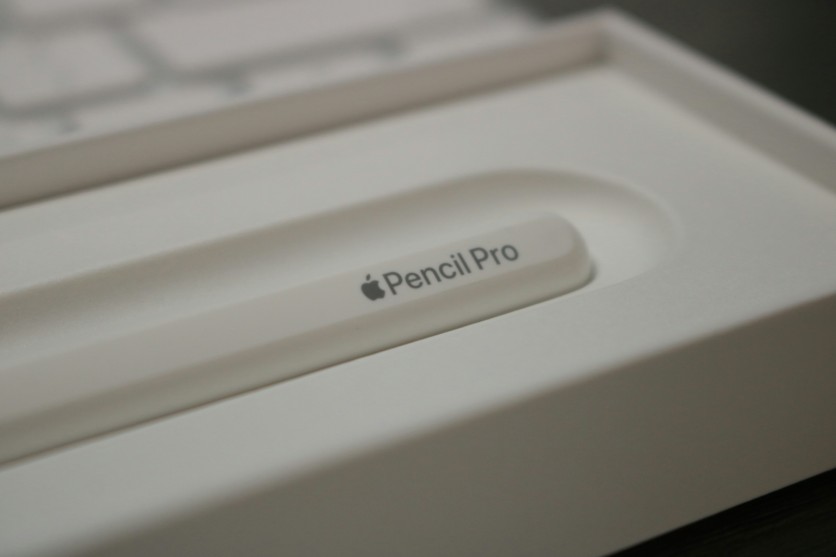
Samuel Angor/unsplash.com
Apple physically built and tested a shorter Apple Pencil for its upcoming foldable iPhone — then shelved it after engineers concluded the device's flexible inner display could not safely withstand stylus pressure, according to Bloomberg's Mark Gurman, who Gurman reports Apple Pencil Ultra prototype in his Power On newsletter Sunday. The decision, reported one week before the iPhone Ultra is expected to be unveiled at Apple's September 9 "Surprise and Shine" event, is not merely a story about a missing accessory. It is a disclosure about the structural fragility of the $1,999-and-up inner screen — and it reflects a documented engineering problem that Samsung confronted first and still has not fully resolved.
The inner display of any foldable phone is made of fundamentally different materials than the hardened glass on a conventional iPhone. Where a standard iPhone uses Corning's Gorilla Glass — which rates roughly 6 to 7 on the Mohs mineral hardness scale — foldable inner displays use ultra-thin glass (UTG) or polymer films thin and flexible enough to fold without cracking. According to UTG foldable display Mohs hardness comparison data, UTG achieves approximately Mohs 5 after chemical strengthening. Colorless polyimide film, the polymer alternative, rates closer to 2 to 3 — the same hardness as a fingernail. A stylus tip, made of metal or hard plastic, exerts its force on a point contact of roughly a millimeter or less. On a material that soft, that concentrated pressure can cause the Z Fold stylus display damage documented by Android Central's Z Fold 3 testing — permanent indentation marks. Apple's engineers confirmed this in testing: Gurman wrote that the prototype Pencil was expected to leave "unsightly marks" on the foldable display.
Apple Built the Stylus, Then Discovered Why It Could Not Ship It
The prototype Pencil, as described by Gurman, was purpose-built rather than a modified iPad version. It was noticeably shorter and narrower than any current Apple Pencil model — scaled to match the iPhone Ultra's "passport-style" folded height, which is considerably shorter than the longer edges of iPad models the existing Pencil line is designed around. Like the iPad Pencil Pro, it was engineered to magnetically attach to the side of the device for both storage and wireless charging. Apple's engineers clearly took the project seriously enough to produce a physical prototype. Testing surfaced two separate deal-breakers.
The first was ergonomics. The iPhone Ultra's folded form factor is wide and short — a horizontal profile that is already a departure from the tall, narrow slabs iPhone users have used for nearly two decades. A Pencil clamped magnetically to the side of that device changes the grip geometry enough to be a nuisance during ordinary use: calls, texting, scrolling. Anyone who has ever tried to operate a Samsung Galaxy Fold with an S Pen case attached to it will recognize the problem immediately. The pen needs to come off before the phone opens; the phone is already wider than a standard smartphone; adding a raised cylindrical accessory to the long edge makes both holding and folding more awkward, as iPhone in Canada's Gurman prototype report details.
The second was the display itself. Gurman was direct about it: the foldable inner screen's top layer is softer than conventional glass, and stylus pressure leaves marks. This is not speculation — Apple tested it and found the result unacceptable for a device positioned as its most premium iPhone.
Samsung Confronted the Same Wall First
Apple did not discover this problem in a vacuum. Samsung spent four generations trying to solve it and ultimately reached the same conclusion.
Samsung first added S Pen support to a foldable device with the Z Fold 3 first stylus support in 2021. To make it work without damaging the inner display, Samsung had to develop two entirely new stylus products — the S Pen Fold Edition and the S Pen Pro — both equipped with a retractable spring-loaded tip that compresses when pressure exceeds a threshold, preventing the point stress that would otherwise mark the flexible display surface. As SamMobile documented, standard S Pen damages Fold display glass — standard S Pens with fixed hard tips were incompatible with the Fold 3 and could cause permanent damage; Samsung's software refused to work with them. The protective film Samsung applied to the Z Fold 3 inner display was rated 80% stronger than the prior generation — and even with that improvement, Android Central Fold screen damage testing confirmed that too much pressure from any rigid object, including the Fold-compatible S Pen or even a fingernail, could still damage the screen.
Samsung iterated on this for three more years: the Z Fold 4, Z Fold 5, and Z Fold 6 all maintained S Pen compatibility, each with progressively stronger display materials. Then, in 2025, Samsung made the same call Apple just made. The Fold 7 drops S Pen support entirely. Samsung was direct about the reason: removing the digitizer layer — the internal electromagnetic grid that active styluses require to function — freed approximately 0.6 mm (0.02 inches) of space inside the chassis, per the FoldifyCase digitizer thickness 0.6mm guide. That space was used to make the ultra-thin glass approximately 50% thicker, producing a measurably more durable inner display and a thinner overall device, according to the Samsung Community UTG 50 percent thicker discussion. The Yanko Design Fold 7 review reported Samsung's statement directly: "S Pen usage on the fold was extremely low, and the things that users value more were the size and weight of this device."
Samsung's executive Kang Min-seok, head of the MX business division, acknowledged that stylus support on foldables might return — but only "when the level of perfection increases and there is consumer demand," per the Samsung executive on S Pen future. That is not a near-term commitment. It is an admission that the engineering problem is unsolved.
Why the Digitizer Removal Matters for Buyers
An active stylus like the Apple Pencil does not work by detecting touch the way a finger does. It works through electromagnetic resonance: a coil inside the Pencil tip communicates with a digitizer panel — a thin electromagnetic grid — embedded beneath the display glass. The Apple Pencil electromagnetic resonance Wikipedia page documents the mechanism: the digitizer reads the coil's signal to determine position with sub-millimeter precision, and measures how the tip compresses to register pressure. Without the digitizer, an active Pencil has nothing to talk to. A passive capacitive stylus — one that simply mimics the electrical signature of a human finger — will still work on the iPhone Ultra's inner display for basic input, but it cannot offer the pressure sensitivity, tilt detection, or precision that makes the Apple Pencil useful for annotation, drawing, or detailed work.
The TechTimes iPhone Ultra 7.8-inch display specs article confirms the iPhone Ultra's inner display measures approximately 7.8 inches (19.8 cm) with a 4:3 aspect ratio — closer in proportion to an iPad mini than to any prior iPhone. That tablet-like footprint is precisely what made stylus support appealing: the device looks like something you would want to draw on. Apple's own engineers apparently thought so too, enough to build a prototype. But the fundamental physics of foldable display materials means that building the stylus and safely deploying it are two different problems, and Apple reached the conclusion it could not solve the second one for this generation.
Read more: iOS 27 Beta Exposes All Six iPhone 18 Models: Foldable Ultra, Split Launch Confirmed
What the Display Research Actually Shows
A June 2025 study in FlexMat, published by Wiley, described the material science challenge directly: the FlexMat Wiley foldable display bottleneck study found that "ultra-thin glass (UTG) and colorless polyimide (CPI) are limited by their inherent brittleness and low hardness, respectively... it has become the bottleneck of large-size flexible display technology." Researchers in that study developed a novel composite material aiming to combine glass-like hardness with polymer-like flexibility — but described it as a potential next-generation solution, not a current production reality.
Apple has reportedly pursued display improvements beyond Samsung's standard UTG approach. According to the AppleInsider iPhone Ultra display layer reports, Apple explored transparent polyimide (PI) film — which has higher surface hardness than the PET film commonly used by Samsung — as the protective top layer, and also considered a dual-layer UTG/ultra-flexible glass (UFG) structure designed to distribute bending stress more evenly across the panel. Even with these improvements, Apple's own testing confirmed the display could not safely absorb the point pressure of a stylus tip. The crease-elimination engineering that Apple has reportedly prioritized for the iPhone Ultra — achieving a crease under approximately 0.15 mm (0.006 inches) deep versus the Galaxy Z Fold 7's approximately 0.7 mm (0.028 inches) — is separate from and does not address the impact-hardness limitation, as the PhoneArena iPhone Ultra crease depth comparison illustrates.
What Buyers Should Know Before Spending on the iPhone Ultra
The display fragility concern is not limited to stylus use. Gurman's disclosure reveals that Apple's own engineers tested stylus pressure on the inner display and found the results unacceptable — a pointed object under sustained pressure marks the surface. That physical property does not change based on what is doing the pressing. Standard hard capacitive styluses, hard protective cases with internal ridges, keys, coins, and other hard-edged objects carried in the same pocket as an open foldable can pose similar risks. Samsung's community guides for Z Fold owners have long addressed this, and the same awareness applies to iPhone Ultra buyers.
At a starting price expected to exceed $1,999, the iPhone Ultra will be Apple's most expensive iPhone by a substantial margin. The inner screen is the device's most distinctive and most expensive component. Buyers who plan to use the inner display extensively — for reading, video, productivity, or creative work — should be aware that it will require more careful handling than any conventional iPhone they have owned previously.
Third-party capacitive styluses will work on the inner display for basic input. They will not provide the pressure sensitivity, palm rejection, or precision of an Apple Pencil-class device. If that level of stylus performance matters to a buyer's daily use case — annotation, sketching, detailed note-taking — this generation of iPhone Ultra is not equipped to deliver it, regardless of how the inner display compares in every other respect.
Gurman noted that future generations of the iPhone Ultra could revisit stylus support as display materials improve. Samsung's executive made a similar statement after dropping S Pen from the Z Fold 7. Whether and when either company delivers on that depends on the material science research moving into production — a timeline that neither company has specified.
Read more: iPhone 18 Pro: 12GB RAM Gates Advanced Apple Intelligence, Mechanical Iris Debuts
Steve Jobs, the Stylus, and What Actually Changed
January 9, 2007, Steve Jobs stood on a stage in San Francisco and made a point about smartphone input that became one of the most quoted lines in tech history. Holding a mockup of a stylus he was about to render obsolete, he said: "Who wants a stylus? Yuck." The finger, Jobs argued, was the best pointing device ever invented, already built in, always available. He was attacking the design philosophy of Windows Mobile and Palm devices that required a stylus to operate their resistive touchscreens accurately — a dependency the iPhone's capacitive multitouch display was built specifically to eliminate.
That argument was about necessity. Apple made its peace with optional stylus use a long time ago: the Apple Pencil history and generations launched in November 2015 for the iPad Pro and has expanded across four generations since. The distinction has always been that the Pencil is a precision creative tool for larger-screen devices with displays hardened enough to withstand it — not a required input mechanism, and not yet engineered for a flexible inner display that the fundamental physics of current material science cannot yet protect from its tip.
The iPhone Ultra will be unveiled at Apple's September 9 event alongside the iPhone 18 Pro and iPhone 18 Pro Max, under the leadership of incoming CEO John Ternus, who will formally assume the Apple CEO role on September 1. The September event will likely address what the iPhone Ultra can do. The question its stylus history answers is what comes next, once the display materials are ready for it.
Frequently Asked Questions
Does the iPhone Ultra support the Apple Pencil?
No. According to Bloomberg's Mark Gurman, Apple internally built and tested a compact Pencil for iPhone Ultra and then decided not to launch it. The primary reason is that the foldable inner display's ultra-thin glass surface can be marked or damaged by stylus tip pressure — a limitation confirmed during internal testing. A passive capacitive stylus (one that mimics a finger's touch) will work on the inner display for basic input, but the Apple Pencil's active electromagnetic resonance technology requires a digitizer panel beneath the display that the iPhone Ultra is not expected to include.
Why did Apple's engineers decide the foldable display couldn't handle a stylus?
The inner display of a foldable phone uses ultra-thin glass (UTG) or flexible polymer materials thin enough to fold without cracking — materials that are measurably softer than the hardened Corning glass on a conventional iPhone. Ultra-thin glass rates approximately Mohs 5 on the hardness scale after chemical strengthening; conventional smartphone glass rates approximately Mohs 6 to 7, as confirmed by the UTG foldable display hardness analysis. A stylus tip exerts concentrated point pressure that can leave permanent indentation marks on UTG-class surfaces. Samsung encountered the same problem with the Galaxy Z Fold series: it developed a special retractable-tip S Pen Fold Edition to reduce the damage risk, and even then confirmed excessive pressure could permanently mark the display. In 2025, Fold 7 drops S Pen support entirely to allow for a thicker, stronger UTG layer. Apple's testing produced the same conclusion.
Can I use any stylus on the iPhone Ultra inner screen?
Basic passive capacitive styluses — the type that simulate a finger by creating a small electrical disturbance on the touchscreen — will work for general tapping and swiping on the inner display. However, there are two important caveats. First, the inner display is softer than conventional glass, and aggressive or repeated pressure from any hard-tipped object, including a capacitive stylus, could cause marking over time. Second, no passive stylus can deliver the pressure sensitivity, palm rejection, or precision of an active Apple Pencil-class tool. Buyers who rely on stylus input for drawing, detailed annotation, or handwriting should treat this generation of the iPhone Ultra's inner screen as a touch target, not a drawing surface, and exercise the same care Samsung Galaxy Fold owners have been advised to take with their inner screens since 2021, as Android Central Fold screen damage reporting documented.
Will Apple ever make a Pencil for iPhone Ultra?
Gurman's reporting does not rule it out for future generations. His language was that a stylus is "unlikely" for the first-generation iPhone Ultra, and Digital Trends noted that "as and when the foldable display technology gets physically stronger, or Apple finds a way to make a new stylus with a softer pointed end, it might want to launch it as an optional accessory." Samsung's executive made a similar statement after dropping S Pen from the Z Fold 7 — that support might return "when the level of perfection increases." The engineering path forward is either significantly harder UTG that can withstand stylus pressure without indentation, or a fundamentally new stylus tip design that distributes pressure over a larger area. Researchers at institutions including Wiley's FlexMat journal are working on next-generation foldable cover window materials per the FlexMat Wiley foldable display bottleneck study, but none are in commercial production as of 2026.

-
 C114 Communication Network
 -
 Communication Home
