
 Search

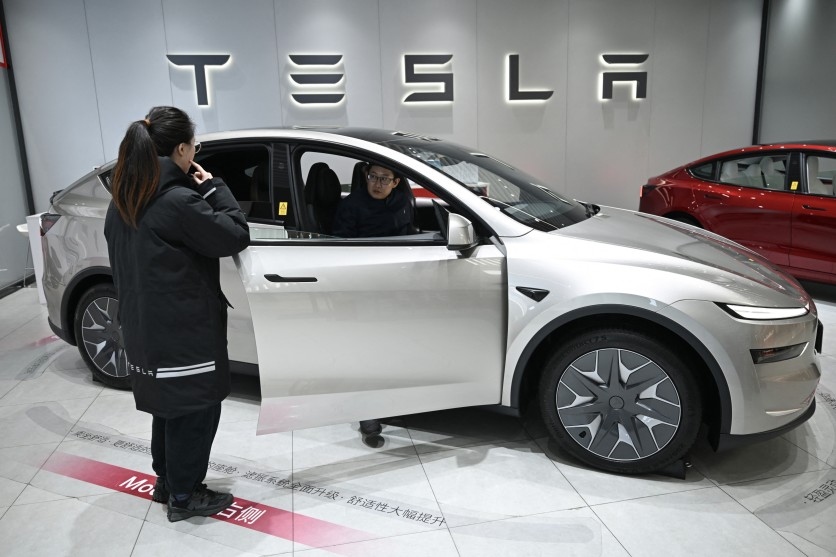
A woman opens the door for a Tesla Model YL electric vehicle as a customer looks inside at a showroom in Beijing on February 3, 2026. China will ban hidden door handles on cars sold in the country from next year, phasing out the minimalist design popularised by Tesla over safety concerns. Pedro Pardo/AFP via Getty Images
Tesla opened US orders for the Model Y L on Thursday at $61,990 — roughly $8,000 above what analysts had predicted — delivering a long-wheelbase, six-seat SUV to American buyers on the same day the company reported its most dominant quarterly delivery result in two years. The Launch Series starts a pricing story that is still unfinished: cheaper trims have not been announced, no federal EV tax credit exists to soften the gap, and rival three-row electric SUVs undercut the opening price by thousands of dollars.
For buyers who have been waiting for a genuinely roomy Tesla family vehicle, that opening bid is the central decision. The standard Model Y's cramped third-row option, offered since January 2026, offers 26.5 inches of legroom and drew consistent criticism from automotive editors. The Model Y L's 6-inch wheelbase extension pushes third-row legroom to 33.2 inches — territory that Edmunds compares to the Ford Explorer, Hyundai Palisade, and Kia Telluride — and does it in a 2+2+2 layout rather than a squeezed bench. That is a meaningful engineering improvement, not a marketing claim. Whether it justifies the $61,990 entry point depends on which alternatives a buyer considers and how they weight the Supercharger network and Tesla's energy ecosystem.
What the Model Y L Actually Is — and What Changed in the Build
The Model Y L is a physically stretched version of Tesla's best-selling SUV. Tesla Model Y L specs and pricing Tesla extended the wheelbase by 150 mm (5.9 inches) to 3,040 mm and added roughly 180 mm (7 inches) to overall length, making the Model Y L the second-longest vehicle in Tesla's current lineup after the Cybertruck.
The US market receives a distinct battery configuration: an 83 kWh pack, smaller than the 88.2 kWh gross capacity in Shanghai-built variants sold in China, Australia, and New Zealand. Despite the smaller pack, Tesla's EPA-estimated range is 325 miles, with 0–60 mph in 4.4 seconds. Opt for the optional 20-inch wheels and range drops by 5 miles to 320. Both figures are competitive in the segment.
The second row gets independent captain's chairs with heating, ventilation, powered armrests, and one-touch fold. The third row offers heated seats with power recline and child-seat anchors, and passengers in that row get their own cupholders, dedicated C-pillar air vents, and two overhead LED lights. Cargo capacity rises to 89.6 cubic feet with both rear rows folded, compared to 73.5 cubic feet in the standard Model Y with its third-row option. The trade-off: second-row passengers give up about 2 inches of legroom versus the standard Model Y, a consequence of making room for an adult-functional third row.
Standard equipment includes adaptive damping, staggered tires, upgraded acoustic glass, a 16-inch front touchscreen, an 8-inch second-row display, a 19-speaker audio system, 50W cooled wireless charging pads, and one year of Full Self-Driving (Supervised) with integrated Grok AI. That last item carries an important qualifier: FSD Supervised is a Level 2 driver-assistance system. The driver must remain attentive and ready to intervene at all times. Tesla FSD Supervised requirements No future software update will make the vehicle operate without supervision on current hardware.
PowerShare Comes to the Model Y — With a Catch
The Model Y L is only the second Tesla vehicle in the US — after the Cybertruck — to support PowerShare, Tesla's bidirectional power technology. This enables vehicle-to-load (V2L) capability, meaning the car can power external devices, camping equipment, tools, or another EV from its own battery.
The implementation differs from the Cybertruck's. Where the Cybertruck has built-in 120V and 240V outlets, the Model Y L requires a PowerShare Outlet Adapter (approximately $200–$400) plugged into the Mobile Connector to enable V2L use at up to 120V/20A. Tesla PowerShare setup Vehicle-to-home (V2H) capability — full whole-home backup during outages — is not available on the Model Y L; that feature remains exclusive to the Cybertruck, which requires a Tesla Universal Wall Connector and Tesla Gateway (typically $1,950 or more, installed). Vehicle-to-grid (V2G) functionality, which lets the car sell stored energy back to the utility, is likewise Cybertruck-only and currently available only in Texas and California.
With the 83 kWh pack and an average US household drawing roughly 30 kWh per day, a Cybertruck connected to a V2H setup could theoretically power a typical home for about 2.7 days before hitting reserve limits — a meaningful capability for weather-disrupted regions, if buyers invest in the supporting infrastructure. The Model Y L's V2L-only PowerShare is still useful for camping, job sites, and powering devices during brief outages, but it does not replace the home backup role the Cybertruck can fill.
Read more: Tesla Q2 2026 Deliveries: Wall Street Sets 406,024 Bar for July 2 Report
Price Landed $8,000 Above Analyst Estimates — and No Tax Credit Softens It
Tesla opened US orders with a Launch Series priced at $61,990, including one year of FSD Supervised, one year of Supercharging, one year of Premium Connectivity, and free choice of exterior paint, interior color, and wheel option. Exclusive Launch Series badging, floor mats, puddle lights, suede dash inserts, and sill plates are also included. Including the mandatory $1,390 destination charge, all-in cost is $63,380.
That price landed well above market expectations. Analysts had anticipated a US price near $54,000, based on the roughly $4,000 premium the L commands over the standard Model Y in China. Instead, Tesla positioned the Launch Series about $4,000 above the $57,990 Model Y Performance and roughly $22,000 above the entry-level rear-wheel-drive Model Y at $39,990.
Buyers should also note that the US federal EV tax credit — which provided up to $7,500 off eligible vehicles — expired September 30, 2025. The Model Y L's full sticker price carries no federal offset. That context matters: Tesla's own all-time delivery record of 497,099 units was set in Q3 2025 when buyers rushed to claim that credit before it expired. Anyone comparing today's price to prices from that era is comparing a subsidized market to an unsubsidized one.
The Kia EV9 starts at $54,900 with up to 304 miles of range. The Hyundai Ioniq 9 starts at $58,955 with up to 335 miles. Both undercut the Model Y L's Launch Series price. Both also run on 800V electrical architecture — a meaningful technical distinction. Tesla's 400V architecture supports DC fast charging at up to 250 kW via the Supercharger network, which is capable and well-distributed. But 800V rivals can accept higher peak charging rates at compatible stations, which may matter on long trips as ultra-fast charging infrastructure expands. Model Y L vs. EV9 vs. Ioniq 9
The Tesla counters with quicker acceleration (4.4 seconds to 60 mph vs. 5.1 seconds for the base EV9), the Supercharger network's density and reliability, and — for buyers already using Tesla energy products — the PowerShare ecosystem.
Launch Series Sweeteners Mask an Unresolved Question
Tesla has used this playbook before: opening a new model variant at a premium "Launch Series" price loaded with bundled subscriptions and cosmetic exclusives, then rolling out cheaper trims later. The central unanswered question is when — and at what price — more affordable Model Y L configurations will arrive.
If a non-Launch Series trim lands near the expected $54,000 market price, the competitive picture changes substantially. At $54,000, the Model Y L would undercut the Ioniq 9 by nearly $5,000 and match the EV9 on price while delivering more range and quicker acceleration. Until that trim is confirmed, the Launch Series is a test of how much Tesla loyalty commands in the market.
The Model Y L is configurable on Tesla's website now. First US customer deliveries are expected to begin in September, with some sources citing September or October. The vehicle will be built at Gigafactory Texas in Austin — China-built units from Gigafactory Shanghai do not supply the US market.
Model Y L Fills Hole Left by Discontinued Model X
With the Model S and Model X removed from Tesla's US lineup to free manufacturing capacity for newer products, the Model Y L becomes Tesla's only vehicle offering more than five seats. As MotorTrend on the Model Y L editorial head Edward Loh noted: "Tesla's current cramped three-row option isn't what customers want... With 6 inches of overall length added to make the [Model Y L], there is a lot more head and legroom."
The context matters strategically. Tesla's two previous attempts to address the three-row market — the cramped standard Model Y third-row option added in January 2026, and the seven-seat European Model Y launched in February 2026 — used the existing wheelbase and drew criticism for unusable rear seating. The Model Y L's 150mm wheelbase extension is the physical solution that earlier variants avoided.
Read more: Tesla Full Self-Driving Hits 4 Million Older Cars: Hardware Limit Kills Autonomy Vow
Tesla's Record Quarter Arrived the Same Morning
The Model Y L launch arrived alongside Tesla's strongest quarterly delivery result in two years. The company delivered 480,126 vehicles in Q2 2026, up 25% from the same quarter a year ago and roughly 74,000 vehicles above Wall Street's consensus estimate of 406,024 — its best-ever second quarter and its strongest year-over-year delivery growth since the demand recovery began. Tesla Q2 2026 8-K delivery report
Of those deliveries, 467,762 — more than 97% — were Model 3 and Model Y vehicles. The recovery was driven by a 57% year-over-year increase in European and UK registrations during the first five months of 2026 and continued strength from Gigafactory Shanghai.
Tesla also deployed 13.5 GWh of energy storage products in the quarter, up more than 40% from the prior year. Full Q2 financial results — including automotive gross margins, which investors have focused on given Tesla's aggressive price cuts — are scheduled for release after market close on July 22, 2026.
Buying Decision: What to Weigh Before Ordering
The Model Y L makes the most sense for buyers who specifically need six adult-functional seats in an EV, already use the Supercharger network, and value the convenience of V2L PowerShare for outdoor use and brief outages. At $63,380 all-in, it outperforms the EV9 on range and acceleration and offers a meaningfully better third row than the standard Model Y could deliver.
The case is less clear against the Ioniq 9 at $58,955, which offers more range (335 miles), 800V fast charging, and a nearly $4,500 price advantage before destination. For buyers who can wait, watching whether a non-Launch Series Model Y L trim arrives near the expected $54,000 mark would be the higher-value decision. There is no federal EV tax credit available to buyers of any configuration.
Frequently Asked Questions
How much does the Tesla Model Y L cost in the US, and what does it include?
The Model Y L is currently available only as the Launch Series at $61,990 — or $63,380 including the mandatory $1,390 destination charge. That price includes one year each of FSD Supervised, Supercharging, and Premium Connectivity, plus free choice of exterior paint, interior color, and wheel option. Special badging, floor mats, puddle lights, suede dashboard inserts, and sill plates are also included. More affordable standard trims have not yet been announced.
Is there a federal EV tax credit available for the Tesla Model Y L?
No. The federal EV purchase tax credit of up to $7,500 expired on September 30, 2025. Buyers pay the full sticker price with no federal offset. State-level EV incentives may apply depending on location, but the federal credit that reduced the effective cost of many Tesla purchases through 2025 is no longer available.
How does the Tesla Model Y L's bidirectional charging (PowerShare) work?
The Model Y L supports vehicle-to-load (V2L) PowerShare, the second Tesla vehicle after the Cybertruck to do so. For V2L use, you will need a PowerShare Outlet Adapter plugged into the Mobile Connector, providing 120V/20A power for devices, tools, or other appliances. Vehicle-to-home (V2H) backup power — which can power your entire home during an outage — is not available on the Model Y L; that capability is exclusive to the Cybertruck and requires a Tesla Universal Wall Connector and Tesla Gateway. V2G capability — selling energy back to the grid — is also Cybertruck-only and currently available only in Texas and California.
How does Model Y L third-row legroom compare to competitors?
The Model Y L offers 33.2 inches of third-row legroom — 6.7 more inches than the cramped third-row option in the standard Model Y. Edmunds compared this to midsize non-electric SUVs including the Ford Explorer, Hyundai Palisade, and Kia Telluride. The Kia EV9 and Hyundai Ioniq 9 also offer usable third rows and undercut the Model Y L's Launch Series price by $3,000 to $7,000, though both have less range and slower acceleration than the Tesla.

-
 C114 Communication Network
 -
 Communication Home
