
 Search

Lenovo.com
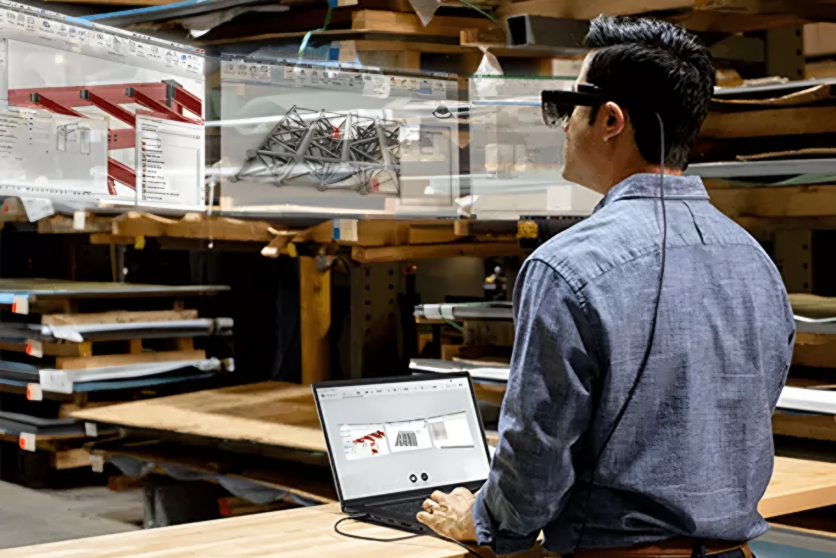
Lenovo quietly confirmed Monday that it has wound down its US extended reality business unit — the division responsible for the ThinkReality enterprise AR and VR hardware line — laying off most of the affected staff and redirecting its spatial computing ambitions toward AI-powered consumer wearables under its Motorola subsidiary. The move ends a decade of investment in enterprise headsets that technically worked but found a market that never materialized at the scale Lenovo needed.
The news, first reported by XR industry outlet The Ghost Howls citing sources familiar with the matter, marks one of the higher-profile exits in a wave of major-OEM departures from enterprise XR that has played out across a 14-month window. Road to VR corroborated the unit closure on the same day. Lenovo confirmed the strategic shift in a statement provided to The Ghost Howls, though did not disclose how many positions were eliminated.
"As the XR market evolves, we see stronger momentum and broader consumer adoption around AI-enabled wearables," the company said in that statement. It added that it is transitioning from its ThinkReality brand to a consumer-focused organization within Motorola "focused on strengthening Lenovo's ecosystem of AI-enabled and AI-native consumer wearable devices."
Read more: Lenovo Unveils Rollable PCs, AI Glasses, and Smart Displays at CES 2026
Enterprise VR Ran Into a Market That Wasn't There
The deeper story behind Lenovo's exit is not that its headsets were bad — the ThinkReality VRX, released in 2023, was technically among the most advanced enterprise headsets of its generation — but that enterprise XR as a category has been trapped in a structural adoption failure. According to research from xpert.digital, 95% of industrial XR projects remain in permanent pilot-phase evaluation, technically functional but never receiving the budget approval needed for company-wide deployment. Companies ran successful proofs of concept, then stalled when the executive champion left, the IT department raised security objections, or the quarterly ROI review came back inconclusive.
Lenovo was not alone in discovering this ceiling. Microsoft cancelled HoloLens hardware production in late 2024. Meta ended Horizon Workrooms in February 2026 and stopped selling enterprise Quest headsets the same month. Apple disbanded its Vision Pro enterprise team earlier this year. The combined message from those three exits, and now Lenovo's, arrived within a 14-month window — and it is not subtle.
What replaced enterprise XR as a growth signal is visible in the same market data that drove those decisions. Smart glasses — lightweight, phone-tethered wearables rather than headsets — shipped approximately 7.25 million units in 2025, accounting for roughly half of all XR device shipments for the year. Meta's Ray-Ban and Oakley smart glasses lines account for the overwhelming majority of that volume. Standalone VR headsets, by contrast, contracted in 2024 for the first time since the category launched.
ThinkReality VRX: A Technical Milestone Without a Sequel
Lenovo's enterprise XR journey began in 2016 with a Windows Mixed Reality headset released alongside HP, Samsung, Dell, and Acer — an early-market bet on Microsoft's spatial computing platform. It continued with the Mirage Solo standalone VR headset in 2018, a manufacturing contract to build the Oculus Rift S for Meta in 2019, a classroom-oriented VR headset developed with Pico in 2020, and the ThinkReality A3 enterprise AR glasses in 2021.
The ThinkReality VRX, released in 2023, was the line's technical high point. It was one of the first enterprise-class mixed reality headsets to use pancake-style optics — a lens architecture that folds the light path multiple times using polarization-selective layers, achieving a profile 40-66% thinner than the Fresnel lenses that dominated the industry from 2015 to 2022.
The tradeoff that comes with pancake optics is significant: each bounce between the polarization layers absorbs light, so only 10-25% of the display's output actually reaches the eye — compared to roughly 80% for a Fresnel lens. This means pancake headsets require dramatically brighter displays to compensate, which raises power draw and heat. For enterprise use cases where workers may wear a headset for 45 minutes or more during training or maintenance tasks, that engineering tradeoff is worth it: a thinner, lighter form factor reduces the neck fatigue and facial pressure that would otherwise make extended sessions impractical. The Apple Vision Pro and Meta Quest 3 — both released after the ThinkReality VRX — also adopted pancake optics, making the VRX an early example of what is now the industry's premium optical standard.
No ThinkReality VRX successor is planned.
Read more: Lenovo Announces ThinkReality A3 Smart Glasses: Availability, Price, Specs, and Etc.
What Killed the HorizonOS Headset
One sunk cost that the Lenovo statement did not address directly: the company had been building a mixed reality headset running Meta's HorizonOS, the operating system that powers Quest devices, targeting productivity, learning, and entertainment use cases under the expanded Meta third-party headset program announced in 2024.
That program was quietly cancelled on December 17, 2025 — or in Meta's phrasing, "paused." Meta told TechCrunch it had "paused the program to focus on building the world-class first-party hardware and software needed to advance the VR market." The practical effect was that Lenovo's HorizonOS headset investment produced no product, no revenue, and no market position. Industry observers believe that loss — arriving on top of a broader enterprise XR rethink — was the proximate trigger for the unit wind-down.
Lenovo had also been an active development partner for Qualcomm's Snapdragon Spaces platform, a developer ecosystem for XR experiences built on Qualcomm silicon. That partnership similarly produced no major commercial product before the strategic pivot.
Where Do Phone-Tethered AI Glasses Actually Go?
The direction Lenovo is now pursuing — AI smart glasses under Motorola — follows an architecture that Meta proved commercially viable and that every major technology company is now entering or preparing to enter.
The core design of current AI glasses is a split-compute model: the glasses themselves contain a microphone array, optional camera, basic display or speaker output, motion sensors, and Bluetooth radio — all lightweight enough to keep total frame weight below 50 grams. The processing that makes the glasses useful happens elsewhere. A Bluetooth link routes captured audio and visual data to a paired smartphone, which runs AI inference models — translation, image recognition, notification triage — and returns the results to the glasses as audio or overlaid text. Even Realities details this split-compute architecture in its technical documentation. The Lenovo AI Glasses Concept shown at CES 2026 used this architecture, running the company's Qira AI platform from a paired smartphone or PC rather than onboard.
This design enables the 8-plus-hour battery life and under-50-gram weight that make daily wear practical, but it creates a hard dependency on having a compatible smartphone nearby and charged. Motorola's existing smartphone ecosystem gives Lenovo a natural paired-device base — the same strategic logic that led Meta to build its Ray-Ban glasses around the Meta app platform, rather than as a standalone computing device.
The broader AI glasses market entering 2026 is more competitive than any point in the category's history. XREAL launched budget AR glasses internationally at $300 this month. Valve is preparing its Steam Frame display device. Google confirmed the first Android XR smart glasses will ship in fall 2026, with hardware from Samsung, eyewear frames from Gentle Monster and Warby Parker, and Gemini AI running on-device and via cloud. Whether Motorola's version of AI glasses — whose commercial launch timeline Lenovo has not confirmed — can find a position in that field is a question the company has not yet answered with hardware.
Is Lenovo Subject to Chinese Data-Sharing Laws?
Lenovo Group Limited is headquartered in Hong Kong with primary operations in Beijing, making it subject to Chinese jurisdiction. China's National Intelligence Law (2017) requires all organizations operating under Chinese law to support, assist, and cooperate with national intelligence work; its Cybersecurity Law (2017) and Data Security Law (2021) impose data localization and government-access provisions. These legal obligations apply to Lenovo Group regardless of where its US subsidiary is incorporated or where its servers are located.
A class action lawsuit filed in February 2026 in U.S. federal court alleges that Lenovo's website tracking infrastructure transferred bulk sensitive personal data from more than 100,000 U.S. users to Lenovo Group entities in Beijing, in violation of the U.S. Department of Justice's Bulk Sensitive Data Transfer Rule (effective April 2025). Lenovo denied the allegations, telling The Register that "any suggestion that Lenovo improperly shares customer data is false."
For enterprise buyers evaluating existing ThinkReality hardware: the legal framework that governs Lenovo Group's data obligations is a fixed condition of its Chinese jurisdiction, not a contested claim. It is one factor — among hardware capability, support continuity, and IT integration — relevant to deployment decisions, particularly in regulated industries and government environments where Lenovo devices have faced periodic restrictions.
Frequently Asked Questions
Why did Lenovo exit the enterprise XR market?
The underlying cause was a structural adoption problem that affected the entire enterprise XR category, not just Lenovo: roughly 95% of industrial XR pilot programs never advance to company-wide deployment. Enterprise customers ran successful proofs of concept but struggled to secure the capital approval required to scale them — particularly given per-unit hardware costs that range from $300 to over $3,500. The collapse of Meta's third-party HorizonOS headset program in December 2025, which stranded Lenovo's in-progress mixed reality headset, accelerated a strategic reassessment that was already underway. Lenovo is not the first major OEM to reach this conclusion: Microsoft cancelled HoloLens hardware production in late 2024, and Meta exited enterprise VR in February 2026.
What happens to ThinkReality VRX and ThinkReality A3 support now?
Lenovo has not publicly disclosed a support or end-of-life timeline for its ThinkReality devices. Enterprise customers with deployed ThinkReality hardware should contact Lenovo's commercial support channels directly to obtain a formal commitment on firmware updates, warranty coverage, and accessory availability. The unit closure means no successor device is planned under the ThinkReality brand, which increases platform risk for organizations considering new ThinkReality deployments.
What are Lenovo AI glasses, and how are they different from a VR headset?
The Lenovo AI Glasses Concept shown at CES 2026 weighs 45 grams and looks more like a pair of sunglasses than a headset. Rather than generating a fully virtual environment around the wearer, the glasses overlay contextual information — call notifications, translations, summaries — through a small display element, while all AI processing runs on a paired smartphone or PC using Lenovo's Qira AI platform. A VR headset like the ThinkReality VRX, by contrast, covers the full field of view and runs its own onboard compute — enabling full immersive environments but at a much higher weight, cost, and power draw. The AI glasses approach trades immersion for wearability and battery life.
Should enterprise buyers be concerned about data privacy when using Lenovo products?
Enterprise and government buyers should be aware that Lenovo Group — the Chinese parent company — is legally required under China's National Intelligence Law (2017) to cooperate with Chinese government intelligence requests. This obligation is structural and applies regardless of Lenovo's stated privacy policies, its US subsidiary structure, or the physical location of its servers. A class action lawsuit filed in 2026 specifically alleged that website tracking data was transferred from US users to Lenovo Group in Beijing; Lenovo denied those allegations. Organizations in regulated or sensitive environments — government, defense, healthcare with strict data residency rules — should verify their specific deployment's data handling architecture with Lenovo's enterprise security team before proceeding.

-
 C114 Communication Network
 -
 Communication Home
