
 Search

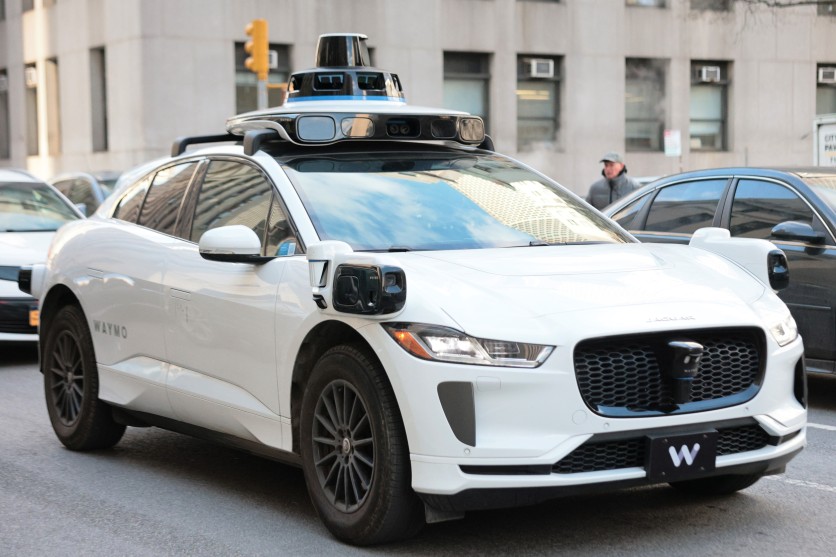
Waymo robotaxi is seen on Centre Street on April 09, 2026 in New York City. Michael M. Santiago/Getty Images
Waymo added four US cities to its driverless network on July 8 — Las Vegas, San Diego, Tampa, and Denver — and the company's own numbers make the competitive landscape difficult to misread: where Tesla has 42 registered driverless vehicles in Texas, Waymo has 577 in the same state, and its total US service area already exceeds 1,400 square miles. If you live in one of the new cities, you can download the Waymo app right now and join the waitlist. If you live somewhere else, the map just got meaningfully harder to ignore.
The fleet comparison is not incidental. It traces directly to an architectural difference that a federal investigation is now treating as a safety question — and that Denver's coming winter will put to a live test.
Waymo's Four-City Blitz, City by City
Las Vegas went fully driverless on announcement day. Waymo confirmed in its July 8 announcement that its vehicles are running without a human specialist behind the wheel in the greater Las Vegas area — including the Strip — as of July 8, with rides currently limited to Alphabet employees before opening to the public in the coming months. The Strip's combination of dense pedestrian traffic, hotel drop-off zones, and near-continuous special events make it among the most operationally demanding drop-off environments in the country.
San Diego, Tampa, and Denver will follow in the coming weeks with the same employee-first rollout pattern. San Diego extends Waymo's Southern California footprint south toward the US-Mexico border. Tampa fills in Florida's west coast, giving the company three Florida markets alongside Miami (live since January 2026) and Orlando (live since February 2026). Denver is the most technically ambitious addition — the first cold-climate market in Waymo's network, and a deliberate demonstration that the system can operate in winter conditions that have previously defined the outer boundary of what autonomous vehicles could commercially handle.
In each city, residents can download the Waymo app now to be notified when public access opens. Waymo has confirmed all four cities are expected to open to the public before the end of 2026.
How Sensor Fusion Explains the Fleet Gap
The 14-to-1 fleet disparity between Waymo and Tesla in Texas is not primarily a function of different business ambitions. It is a function of different sensor architectures, and those architectures are now generating real regulatory consequences.
Waymo's sixth-generation Waymo Driver uses 13 cameras, four lidar units, six radar units, and external audio receivers (EARs) in a unified multi-modal sensing system. The sixth-generation system consolidates hardware from the fifth-generation's 29 cameras and five lidar units — a 42% reduction in total sensors — while improving performance across all conditions. The 17-megapixel automotive imager at the core of the camera system delivers resolution and dynamic range that Waymo says is "a generation ahead" of other automotive cameras. When camera visibility degrades due to rain, road grime, or ice, the lidar and radar systems maintain full environmental awareness independently. Self-cleaning mechanisms — heat, small wipers, and fluid systems — keep sensors clear in precipitation. In cold climates like Denver, the system's cleaning configuration can be adjusted specifically for snow and ice conditions.
The architecture's fundamental principle: no single sensor failure can blind the system. Lidar emits its own laser pulses and generates three-dimensional point clouds regardless of ambient light or glare. Radar uses radio waves that penetrate fog and rain that blind cameras entirely. When sensors disagree, the system fuses all available data rather than switching between them. The sixth-generation Driver also incorporates custom Waymo-designed silicon chips that push more processing complexity into hardware rather than requiring more physical sensors — the mechanism that enables a 42% sensor-count reduction while maintaining and improving performance.
The sixth-generation Driver hardware is estimated to cost under $20,000 per unit (down from estimates of $180,000 or more for earlier systems), a reduction that makes the current fleet-scaling pace economically viable in a way that earlier hardware could not support.
Tesla's system operates exclusively on cameras and a neural network — no lidar, no radar. In March 2026, NHTSA elevated its investigation into Tesla's Full Self-Driving software to an Engineering Analysis covering an estimated 3.2 million vehicles, and the agency's own language was specific: NHTSA found the FSD system "failed to detect and/or warn the driver appropriately under degraded visibility conditions such as glare and airborne obscurants."
In the nine crashes NHTSA reviewed, the system either lost track of or never detected a leading vehicle in its path. NHTSA described conditions that include sun glare, fog, and airborne dust — not exotic edge cases, but common driving scenarios. The investigation, still ongoing, is the regulatory documentation of a gap that Waymo's multi-sensor architecture was designed to eliminate. Miami's tropical rain and Denver's winter are now providing simultaneous live tests of both approaches.
Read more: Tesla Robotaxi Arrives in Miami: Florida's Rain Is the Hardest Test Yet for Camera-Only FSD
Read more: New Jersey Bill Would Bar Tesla Cybercab as Cameras Fail Federal Safety Tests
Denver: Why the Cold Is the Real Test
Denver is the linchpin of Waymo's announcement. Autonomous vehicle systems have historically been tested and deployed in mild, dry climates — Phoenix, San Francisco, Los Angeles. Snow and ice are not just challenging weather conditions; they are the engineering gap that has kept every major US AV operator out of Chicago, Boston, Minneapolis, and any other northern market where winter is an annual certainty.
Waymo's sixth-generation Driver addresses this gap through multiple mechanisms. The sensor cleaning system is modular, allowing adjustment for cold-climate deployments. The lidar system was redesigned to better penetrate weather and avoid point cloud distortion near highly reflective snow-covered signs. The imaging radar uses new in-house algorithms specifically improved for performance in rain and snow. Training data for the winter-driving software was collected across multiple US states during winter conditions.
Denver's average annual snowfall exceeds 50 inches. A successful, sustained deployment there would effectively open the door to the northern markets that represent some of the largest ride-hailing opportunity in the country.
Waymo also disclosed on July 8 that it is beginning autonomous testing of the Hyundai IONIQ 5 — with a specialist present — as a second vehicle platform running the sixth-generation Driver. This development signals that Waymo is actively diversifying its vehicle supply chain beyond the Ojai (built on the Zeekr RT platform manufactured by Chinese automaker Geely; Waymo's data and autonomous systems remain under Alphabet's control) and the outgoing Jaguar I-Pace.
Waymo's Fleet Versus Tesla's
The raw fleet comparison, confirmed in publicly available filings and reports, frames the competitive landscape more accurately than any headline could. In Texas, where both companies operate:
Waymo: 577 registered driverless vehicles
Tesla: 42 registered driverless vehicles in Texas as of most recent DMV filings; Bloomberg has estimated roughly 59 total across the US
In coverage area:
Waymo: more than 1,400 square miles across 11 US cities as of May 2026 Tesla Miami: roughly 10 to 14 square miles in western Miami-Dade, excluding downtown and Miami Beach
In fleet utilization:
Waymo: approximately 500,000 paid rides per week across its US markets, targeting 1 million by year-end Tesla Austin: city officials estimate roughly 50 total vehicles, with the unsupervised subset (no human inside) having contracted from a peak of roughly 25 to approximately 14 active cars; wait times have regularly exceeded 15 minutes
Tesla's Miami launch on July 3 was genuine in one sense — the vehicles ran without a safety driver from day one, confirmed by Tesla VP of AI Ashok Elluswamy on X. But field reports and license plate tracking found roughly two to three unsupervised vehicles operating in the launch zone on launch day. A nearby staging lot held additional vehicles, including Cybercabs still in pre-deployment preparation.
Elon Musk has said publicly that safety validation, not mapping, is the binding constraint on Tesla's expansion pace. Tesla has tied any major fleet ramp to the release of Full Self-Driving v15, targeted for late 2026 or early 2027.
Amazon-owned Zoox is also active in Las Vegas at a smaller scale, and is preparing pilot launches for the public in Austin and Miami. Its purpose-built, steering-wheel-free vehicle architecture differs from both Waymo and Tesla, but its market footprint remains far narrower.
What Waymo's Safety Numbers Say
In June 2026, Waymo released safety data covering more than 220 million fully autonomous miles through the end of March 2026 — equivalent to more than 250 human lifetimes of driving experience. Compared to human drivers in the same areas over the same period, the Waymo Driver was involved in 94% fewer crashes causing serious or fatal injuries, 82% fewer crashes in which an airbag deployed, and 82% fewer crashes involving any reported injury. For pedestrians specifically, the figure was 93% fewer injury-causing crashes.
University of Michigan Transportation Research Institute Professor Carol Flannagan, who reviewed the methodology, said Waymo has reached the point where it is "driving enough miles to make direct comparisons to human drivers on crash rates" and that the consistency of results across locations supports the strength of the conclusions.
Waymo's record is strong, and it is also incomplete. The company's fifth-generation Jaguar I-Pace fleet was involved in a voluntary recall in May 2026 after vehicles drove into flooded roadways in Texas following extreme weather. A separate issue affecting 3,871 fifth-generation vehicles was patched via over-the-air update after those vehicles failed to recognize lane closure signs in active highway construction zones — driving through cones and flashing lights because the hazard-response software prioritized oncoming traffic over the boundaries of a closed lane. During the July 4 weekend, a number of Waymo vehicles in San Francisco became stuck in traffic long enough that their batteries depleted; another drove into a fireworks display. These incidents did not involve the sixth-generation system and were addressed with software updates, but they represent the operational reality of running a large fleet across complex, unpredictable environments.
Read more: Waymo Freeway Recall Grounds 3,871 Robotaxis: Hazard Software Missed Work Zones
Read more: Waymo Rolls Out Ojai Robotaxis, Offers Free Rides in Three Cities for a Limited Time
Waymo's Ambitions and the Economics Behind Them
The July 8 announcement arrives with real financial backing. In February 2026, Waymo raised $16 billion from Alphabet and other investors at a $126 billion post-money valuation — the largest funding round ever in autonomous vehicle history — specifically earmarked for this city-by-city scaling phase. The company's production facility in Mesa, Arizona is ramping toward capacity for tens of thousands of sixth-generation Driver units per year.
Beyond the four new cities, Waymo has already gone fully driverless in Nashville (opened to all public riders July 7, 2026, through a Lyft partnership) and has announced planned launches in Washington D.C., Detroit, and London — its first international market — before the end of 2026. The Waymo Premier membership program, launched in June at $29.99 per month, offers priority pickups and fare credits in San Francisco, Los Angeles, and Phoenix — the first time any robotaxi operator has introduced a loyalty tier, a sign that Waymo views repeat riders as a segment worth competing for.
The honest economic picture is not yet a clean narrative. Robotaxi services industry-wide operate at a financial loss. McKinsey has estimated that per-mile costs need to fall to under $2 before robotaxis can compete economically with personal vehicle ownership; current industry costs run $7 to $9 per mile. Alphabet's Other Bets segment, which includes Waymo, reported an operating loss of $2.1 billion in Q1 2026. Alphabet CEO Sundar Pichai has indicated potential profitability by around 2027. The sixth-generation Driver's sub-$20,000 hardware target — compared to early system estimates of $180,000 or more — is the engineering mechanism that makes the path to profitability plausible. Eliminating driver labor (historically 60-80% of traditional ride-hailing operating costs) is the structural revenue advantage robotaxi services are betting on.
How to Get Access in Las Vegas, San Diego, Tampa, or Denver
Residents of all four cities can download the Waymo app now and sign up to receive a notification when public service opens in their city. Waymo has confirmed each city is on its own timeline, with Las Vegas furthest along (employee rides underway), and the other three expecting public access before year-end.
For those in markets not yet covered: Detroit, Nashville (now fully open), Washington D.C., and London are the next announced markets in Waymo's 2026 pipeline. The question this expansion answers is not whether driverless cars can work in a controlled environment — that was settled years ago in Phoenix. The question it answers is whether they can work simultaneously in four different driving environments: mountain snowfall, desert tourism corridors, subtropical humidity, and dense coastal urban traffic. Waymo is running that test in real time.
Frequently Asked Questions
How many cities does Waymo operate in as of July 2026, and which are new?
Waymo now provides fully driverless rides (without a human specialist in the vehicle) in more than 15 US metropolitan markets, including San Francisco, Los Angeles, Phoenix, Atlanta, Austin, Dallas, Houston, San Antonio, Orlando, Miami, Nashville, and the four newly announced cities: Las Vegas, San Diego, Tampa, and Denver. Las Vegas went fully driverless for employee riders on July 8, 2026; the other three cities are expected to follow in the coming weeks, with public access in all four before year-end.
Why does Waymo's fleet so massively outnumber Tesla's in markets where both operate?
The gap traces to a fundamental sensor architecture difference. Waymo's sixth-generation Driver combines 13 cameras, four lidar units, and six radar units in a multi-modal fusion system, so that if any one sensor type is impaired by weather or glare, the others maintain full environmental awareness. Tesla's system uses cameras only. NHTSA opened an Engineering Analysis in March 2026 specifically finding that Tesla's FSD system "failed to detect and/or warn the driver appropriately under degraded visibility conditions such as glare and airborne obscurants" — the conditions that NHTSA's investigation identified as the exact circumstances where the system's detection failed. Sensor fusion allows Waymo to operate at scale in diverse conditions. The camera-only architecture has a federally documented failure mode in exactly those conditions, per NHTSA's active investigation.
What is the Ojai, and is it the only new vehicle Waymo is deploying?
The Ojai is Waymo's purpose-built robotaxi, based on the Zeekr RT platform manufactured by Chinese automaker Geely, and fitted with Waymo's proprietary sixth-generation Driver sensor suite. Waymo operates all data collection and autonomous systems through its own technology stack, which is controlled by Alphabet. The vehicle features a removable steering wheel, elevator-style doors, and costs significantly less to produce than the Jaguar I-Pace it is replacing. However, the Ojai is not Waymo's only new vehicle. Waymo's July 8, 2026 announcement confirmed it is also beginning autonomous testing — with a specialist present — of the Hyundai IONIQ 5, which runs the same sixth-generation Driver hardware. The Hyundai partnership is reportedly targeting an eventual supply of 50,000 IONIQ 5 units for the robotaxi fleet, which would represent the largest single vehicle order in autonomous driving history.
What does Denver's winter mean for the future of autonomous vehicles in northern cities?
Denver is Waymo's most technically significant new market because it is the first cold-climate deployment in any major US robotaxi operator's commercial network. If the sixth-generation Driver performs at commercial standards through Denver's annual snowfall — which exceeds 50 inches per year — it would validate a path into northern cities that have remained inaccessible: Chicago, Boston, Minneapolis, and other large transit markets where winter conditions have historically put autonomous vehicles out of operational range. The sixth-generation Driver was specifically engineered for this test, with modular sensor cleaning configurations, improved lidar weather penetration, and radar algorithms tuned for rain and snow. Denver is both a new market and a proof-of-concept for half the country.

-
 C114 Communication Network
 -
 Communication Home
