
 Search

Lg.com
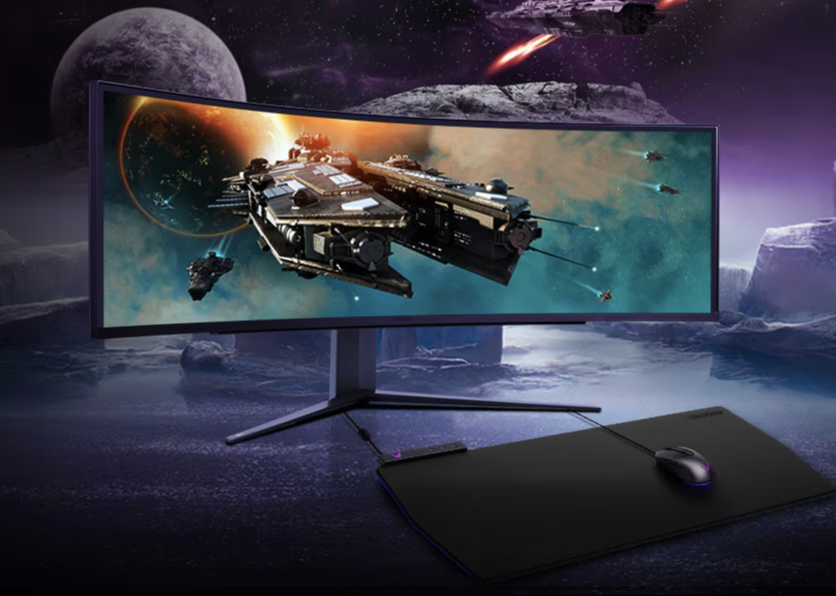
European gamers can now pre-order the LG UltraGear Evo 27GM950B — the world's first gaming monitor to pair 5K resolution with a Hyper Mini LED backlight — starting today, July 13, across most EU countries. Germany is confirmed at a suggested retail price of approximately €999, and the UK listing on Amazon has been live at £1,199.99 ahead of today's broader European rollout. The purchase decision, however, hinges on more than price: buyers need a GPU with DisplayPort 2.1 support to run the monitor's primary 5K mode without relying on compression.
The 27GM950B opened US pre-orders on April 6, 2026, at $1,199.99, with shipments starting the week of May 4. Spain received EU pre-order access slightly earlier, on June 29. Today's opening across most of the continent completes the monitor's primary global rollout, roughly three months after American buyers got first access.
Read more: Gaming OLED Monitor Market: LG Display Targets 20% Share as Chinese Rivals Lag on Yield
Why This Launch Lands in a Market Already Tilted Toward OLED
For the past two years, the premium gaming monitor market has moved sharply toward OLED panels. Per-pixel emissive technology delivers perfect blacks and zero blooming — qualities that zone-based backlights cannot fully replicate. LG itself has led that OLED push: its own UltraGear Evo lineup includes the 39-inch GX9, the world's first 39-inch 5K2K curved OLED gaming monitor at $1,799.99, and LG Display publicly targets roughly 20% of its total large-OLED shipments from gaming panels in 2026.
The 27GM950B is LG's argument that a meaningful segment of buyers should choose Mini LED instead — and that the right architecture can close the gap with OLED more than previous generations managed. Whether that argument lands comes down to specific engineering choices and the tradeoffs they impose.
What Hyper Mini LED Actually Does Differently
LG's prior Mini LED gaming monitor, the 27GR95UM, launched in early 2024 with documented local dimming problems that required a firmware fix to resolve. The 27GM950B represents a meaningful architectural step beyond that model, not just a spec sheet refresh.
The Hyper Mini LED system uses 9,216 individual LEDs — 5.9 times as many as LG's prior conventional Mini LED reference design — divided into 2,304 independently controlled local dimming zones, 1.5 times more zones than the earlier architecture. The increase in zone density matters because each zone covers a smaller slice of the screen's area, giving the backlight controller more granular control over which regions brighten and which dim in any given frame.
Alongside the zone count increase, LG redesigned the optical stack between the LED backlight layer and the LCD panel above it. The company calls this Zero Optical Distance technology: by minimizing the physical gap between those two layers to near-zero, lateral light spread — the optical phenomenon that causes bright objects to bleed a halo into surrounding dark areas — is mechanically reduced before the dimming algorithm even begins its work. LG has earned TUV Rheinland's Anti-Blooming certification for the result, a credential that did not appear on any earlier LG Mini LED gaming monitor.
The 5K (5,120×2,880) IPS panel at 27 inches produces a pixel density of 218 pixels per inch, meaning individual pixels are approximately 116 microns across. At normal viewing distances, this essentially eliminates the ability to distinguish individual pixels, keeping UI elements, HUD overlays, and fine environmental detail exceptionally sharp. Peak brightness reaches 1,250 nits under LG's internal test conditions, with VESA DisplayHDR 1000 certification. Sustained brightness in typical use will be lower — the 1,250 nit figure reflects small-window HDR peaks, not whole-screen output. Color volume is rated at 99% DCI-P3.
The GPU Constraint That the Spec Sheet Doesn't Headline
Here is what matters before placing a pre-order: running the 27GM950B at its native 5K 165Hz mode requires a GPU with DisplayPort 2.1 (UHBR20) connectivity. LG's own product page states this explicitly: "Requires graphics card that supports DisplayPort 2.1 to achieve up to 330Hz refresh rate support," and the monitor's DP 2.1 UHBR20 input is specifically designed for "high-performance GPUs."
DisplayPort 2.1 UHBR20 provides up to 80 Gbps of raw bandwidth — roughly four times what DisplayPort 1.4 can carry — using a more efficient 128b/132b signal encoding scheme. At 5K resolution and 165Hz with 10-bit HDR color, the uncompressed data requirement approaches the mid-40 Gbps range; with Display Stream Compression (DSC), the signal can pass through lower-bandwidth connections, but DSC introduces handshake delays during desktop transitions and mode switches that enthusiasts may notice.
The practical result is a purchase consideration that the €999 price alone doesn't capture: buyers with GPUs predating the current generation — anything without DP 2.1 UHBR20 output — cannot access the monitor's native 5K mode uncompressed. Those buyers can still use the 27GM950B, but they are partly paying for a specification their current hardware cannot fully exploit.
LG includes an on-device AI upscaling processor to bridge this gap for content consumption. The built-in processor, separate from the GPU, analyzes input signals and enhances them toward 5K resolution — the first gaming monitor to offer this capability, per published specifications as of March 2026. The upscaler requires at minimum a Full HD source signal and operates without any GPU overhead. This is a genuine convenience feature for mixed-use setups; it does not replace native 5K input for gaming.
Dual Mode: Two Monitors in One Housing
One of the 27GM950B's most commercially useful features is VESA-certified Dual Mode, which lets users toggle between two distinct panel operating profiles without rebooting the system.
In 5K mode, the panel runs at 165Hz — suitable for visually demanding AAA titles and creative work where resolution fidelity matters more than raw frame rate. In QHD (2,560×1,440) mode, the refresh rate unlocks to 330Hz — suited to competitive multiplayer titles where response latency and frame rate constrain performance more than pixel density does. A hotkey or on-screen display toggle switches between the two modes on the fly.
Both modes run at a 1 ms gray-to-gray response time, with NVIDIA G-SYNC compatibility and AMD FreeSync Premium support for adaptive sync across the major GPU platforms. The QHD 330Hz mode is less bandwidth-demanding and can run over standard connections, making it accessible even on older GPU hardware; the 5K 165Hz mode is where the DP 2.1 UHBR20 requirement applies most directly.
The same Dual Mode architecture appears on the 39-inch GX9 OLED sibling in the 2026 UltraGear Evo lineup, though with different resolution and refresh rate pairings appropriate to its panel.
Mini LED vs. OLED: What the 27GM950B Cannot Do
Honest framing of the 27GM950B requires naming what it gives up to OLED rather than only what it gains. Three differences remain fundamental regardless of zone count or optical engineering.
First, blooming is not eliminated — it is reduced. Because every zone-based backlight system controls groups of pixels rather than individual ones, a small bright object against a dark background will always activate a larger area of the backlight than the object alone requires. At 2,304 zones controlling 14.7 million pixels, each zone governs roughly 6,400 pixels on average. That is a substantial improvement over predecessor designs, and the ZOD optical stack further minimizes lateral spread — but independent technical analysis confirms that some level of haloing around small bright objects remains visible in demanding dark-room scenarios. OLED panels, which emit from individual pixels, produce zero blooming under any conditions.
Second, OLED panels now reach competitive peak brightness levels in their 2026 generation. Fourth-generation Primary RGB Tandem OLED technology, which appears in LG's own GX7 (27GX790B) at £899.98 in the UK, achieves up to 1,500 nits peak brightness with VESA DisplayHDR True Black 500 certification — a specification that directly challenges the sustained brightness advantage Mini LED has historically held.
Third, where Mini LED maintains a clear structural advantage is burn-in immunity. The 27GM950B's inorganic gallium nitride LEDs face no meaningful degradation from static images, sustained high brightness, or persistent UI elements like taskbars, health bars, or desktop widgets. OLED's organic emitters degrade at different rates depending on usage pattern — a consideration that remains relevant for users who display persistent static content across long daily sessions, even as 2026 OLED panels have significantly extended longevity versus earlier generations.
Who Should Pre-Order, and Who Should Wait
The 27GM950B makes strongest sense for a specific user profile: someone who games in a well-lit room or with significant ambient light, runs long mixed-use sessions with static UI elements on screen, owns or is planning to acquire a DP 2.1-capable GPU, and prefers the certainty of zero long-term panel degradation risk over OLED's superior dark-room contrast.
It is a harder argument for a user who games primarily in a controlled, dimly lit environment and prioritizes absolute contrast and motion clarity — OLED's per-pixel black levels and instantaneous pixel response remain superior for that use case. At €999, the 27GM950B lands well below LG's own GX9 OLED ($1,799.99 / approximately €1,600+ in EU markets) and the 52-inch G9 ($1,999.99), making it the accessible entry point into LG's 2026 high-resolution gaming display family — but only if the buyer's GPU can take full advantage of what it offers.
European availability continues through LG's regional retail channels. Buyers in Germany can pre-order now at approximately €999 through LG's European retail partners.
Read more: LG UltraGear 25G590B Gaming Monitor Breaks Limits With 1000Hz Refresh Rate
Frequently Asked Questions
Does Hyper Mini LED eliminate blooming on the LG 27GM950B?
It reduces blooming significantly but does not eliminate it. The combination of 2,304 local dimming zones and Zero Optical Distance optical stack — which minimizes the physical gap between the LED layer and the LCD panel — shrinks the halo effect considerably compared to conventional Mini LED designs. TUV Rheinland's Anti-Blooming certification confirms the improvement over prior LG gaming monitors. However, because any zone-based backlight system controls groups of pixels rather than individual ones, some degree of light bleed around small bright objects on dark backgrounds remains a physical property of the architecture. OLED, which emits from individual pixels, produces zero blooming under any conditions.
What GPU do I need to run the 27GM950B at full 5K 165Hz?
LG specifies that the 27GM950B's DisplayPort 2.1 (UHBR20) input is designed for "high-performance GPUs" that support DP 2.1. In practice, this means graphics cards in the current generation — NVIDIA RTX 50-series or AMD RX 9000-series class — that output UHBR20 (80 Gbps) bandwidth. Older GPUs with only DisplayPort 1.4 connectivity can still drive the monitor using Display Stream Compression, but DSC introduces brief handshake delays during application switching and mode changes, and does not provide the full uncompressed native signal path. The monitor's 5K AI Upscaling feature, by contrast, runs on the monitor's own on-device processor and requires no specific GPU.
Mini LED or OLED: which is the right choice for gaming in 2026?
The choice is environment- and use-pattern-dependent rather than absolute. Mini LED — specifically the 27GM950B at 1,250 nits peak and zero burn-in risk — suits gamers with significant ambient light, mixed-use desks with persistent static UI elements, or long daily sessions where panel longevity is a priority. OLED, including LG's own GX9 and GX7 models, suits gamers who control room lighting, prioritize perfect black levels and instantaneous pixel response for dark-scene immersion, and are comfortable managing panel care practices. The 2026 generation of Tandem OLED panels, now reaching up to 1,500 nits peak brightness, has substantially narrowed the traditional brightness gap Mini LED held over OLED, making the burn-in consideration the more decisive practical differentiator for most buyers.
Is the 27GM950B suitable for creative work as well as gaming?
Yes, with caveats. The 5K (5,120×2,880) resolution at 218 PPI, 99% DCI-P3 color volume, and VESA DisplayHDR 1000 certification make it a credible monitor for image editing and video work. The AI upscaling processor enhances lower-resolution content toward native 5K without GPU overhead, which is useful in a mixed gaming-and-production workflow. The main professional caveat is the same as the gaming one: native 5K output at full color depth requires a DP 2.1-capable GPU, and the monitor's local dimming behavior — optimal for HDR gaming — may require toggling settings for color-critical SDR work where precise uniform brightness is more important than zone-based contrast enhancement.

-
 C114 Communication Network
 -
 Communication Home
