
 Search

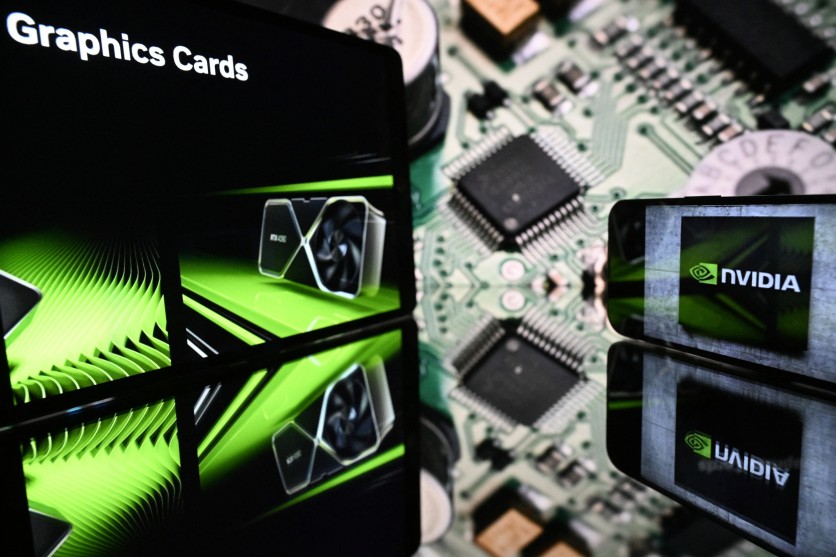
This illustration picture, taken in Toulouse on February 18, 2026, shows screens displaying the Nvidia company's logoa nd a graphic board. Lionel BONAVENTURE/Getty Images
On July 9, Nvidia announced something PC gamers had not asked for: collectible paper trading cards. Fourteen designs, free to claim at gaming conventions or through social media giveaways, celebrating a GeForce history that stretches from 1995 to the RTX era. The internet named them instantly: "Fourteen cards, zero silicon." If you need a graphics card in 2026, understanding why that joke landed so hard is the most useful thing you can read today — because the same market forces that made the trading cards feel tone-deaf are the forces controlling what you will pay and what you will find on the shelf.
The RTX 5090, which launched at $1,999 earlier in 2025, now lists for $4,329 on Amazon as of this week, with premium configurations from some board partners exceeding $5,000. No new consumer GPU generation is coming from Nvidia this year. AMD's next generation has been pushed to late 2027 or 2028. And the companies that manufacture the memory that makes any graphics card possible have just been sued for allegedly engineering the supply crisis that is pricing gamers out of the market — by some of the same firms that faced criminal prosecution for doing exactly that two decades ago.
Nvidia's Paper Cards and What They Actually Represent
GeForce Trading Cards Series 1 arrived on July 9 as a free collectible set distributed through its "Summer of RTX" giveaways on social media and at select gaming events, including Bilibili World 2026, QuakeCon 2026, and gamescom 2026. To receive a pack, fans are asked to share their first GeForce gaming experience. Calling the set "Series 1" signals planned sequels.
The 14 designs trace a genuine history. The NV1 card commemorates Nvidia's first mainstream multimedia processor from 1995, which combined audio, joystick support, and 3D into a single chip before becoming a commercial flop. The GeForce 256 card marks the 1999 chip widely credited as the first true GPU, which brought transform, lighting, and rendering onto a single piece of silicon and shifted graphics work from the CPU to dedicated hardware. Other designs honor the GeForce 3 — the first GPU with programmable shaders — the GeForce 7800 GTX from 2005's PC gaming peak, the GTX 1080 from 2016, classic real-time tech demos (Bubble, Chameleon, Medusa), two games from Nvidia's long-running gaming certification program (Unreal Tournament 2004 and Borderlands), and a special-edition RTX 2080 Ti Cyberpunk 2077 design. A checklist card rounds out the set, a nod to collector culture.
As Engadget observed, the launch was "pretty badly timed." That is not quite right, though. The timing is not accidental — it is a symptom. These cards are nostalgic because the thing they commemorate, a reliable cadence of consumer GPU launches, has stopped.
Read more: NVIDIA RTX 50 GPU Shortage: Supply Cut 20%, Prices Climbing, No Desktop Refresh Confirmed
No New GPU Generation: First Gap in Three Decades
No new consumer GPU generation is coming from Nvidia in 2026. That is not a leak or a rumor — it is confirmed by the absence of any product announcement, by production cuts that have reduced RTX 50-series supply to AIC partners by 20 to 40 percent across various reports, and by Nvidia's own CFO guidance that supply constraints would be "a headwind to Gaming in the first quarter of fiscal 2027 and beyond."
Analysts and supply-chain insiders have described 2026 as the first year in roughly three decades in which Nvidia has not launched a new consumer GPU architecture. The RTX 50 Super refresh — the mid-cycle update intended to address the loudest criticism of the Blackwell generation, its VRAM limitations — has been indefinitely delayed. BenchLife, a Taiwanese publication with a documented track record on Nvidia supply-chain news, reported in June 2026 that CES 2027, held in early January, represents the earliest realistic launch window, as covered by TechTimes. Other leaks have suggested a possible late-2026 release, but no board partner or manufacturer has confirmed either timeline.
AMD is not coming to the rescue. The company's next-generation RDNA 5 architecture has been delayed from earlier projections and is now broadly expected from board partners in the second half of 2027, with some Computex sources indicating the schedule could slip into early 2028.
Why VRAM Now Costs More Than the GPU Itself
The reason graphics cards cost so much in 2026 is not the silicon. It is the memory wrapped around it.
Every modern graphics card ships with several gigabytes of high-speed video RAM soldered directly to the board. Nvidia's RTX 50 series uses GDDR7; AMD's Radeon RX 9000 series uses GDDR6. Both memory types are manufactured by the same three companies that also make the memory going into AI data center accelerators: Samsung, SK Hynix, and Micron. Those three firms control roughly 90 to 95 percent of global DRAM output.
The engineering reason for the crisis lives one level upstream from the cards themselves. AI accelerators like Nvidia's data center GPUs use a different memory type called HBM (High Bandwidth Memory), which stacks multiple DRAM dies vertically and connects them with through-silicon vias. HBM delivers far higher bandwidth than GDDR7 — and it is far more wafer-intensive: according to industry analysis, producing one gigabyte of HBM consumes roughly four gigabytes' worth of standard DRAM wafer area. When AI infrastructure demand for HBM is measured in exabytes and growing, the math becomes brutal for everything else.
The result: IDC projects that AI data centers will absorb roughly 70 percent of the world's memory output in 2026, up from 20 to 30 percent in 2022. Consumer devices, including gaming GPUs, are left competing for whatever remains. IDC further projects that 2026 DRAM supply growth will be 16 percent year over year, and NAND flash 17 percent — both below historical norms. When demand accelerates while supply grows slower than trend, price is the only release valve.
The effect on GPU pricing is now documented in the bill of materials. Industry trackers report that VRAM now accounts for more than 80 percent of the total bill of materials for some high-end graphics cards. The cost of 16GB of GDDR7 reportedly climbed from roughly $65 to $80 per card in mid-2025 to more than $200 by year-end, driven by spot-market sourcing after long-term supply contracts expired at the end of 2025. VRAM alone accounts for approximately $820 of the RTX 5090's current street price.
Nvidia has responded to this environment the way a company does when it has a more profitable business to run. On Nvidia's most recent earnings call (Q1 fiscal year 2027, reported May 20, 2026), data center revenue reached $75.2 billion — up 92 percent year over year — out of $81.6 billion in total company revenue. Gaming is now embedded in Nvidia's Edge Computing segment alongside workstations; the segment brought in $6.4 billion last quarter. Gigabyte, one of Nvidia's largest add-in card partners, summarized Nvidia's strategy in terms that were not intended as criticism: the company's approach has become "revenue per gigabyte."
RTX 50 Super: What the VRAM Refresh Required — and Why It Disappeared
The RTX 50 Super lineup was designed specifically to address VRAM constraints. The planned refresh included an RTX 5070 Super with 18GB, an RTX 5070 Ti Super with 24GB, and an RTX 5080 Super with 24GB — all configurations requiring 3GB-per-chip GDDR7 memory modules, a higher-density variant of the same memory class already in shortest supply. In other words, the product that would have eased the shortage required the exact component the shortage made unavailable.
Reports through early 2026 described Nvidia cutting RTX 50-series production at its add-in card partners by figures ranging from 20 percent — per supply-chain reporting in January 2026 — up to 30 to 40 percent in the first half of 2026. The RTX 5070 Ti has been in effective end-of-life status at major partners, including ASUS, for much of the year. The RTX 5060 Ti 16GB, which launched at $429, was selling for $489 to $530 or more within weeks of launch.
The RTX 5090 trajectory is the starkest illustration. It reached its $1,999 MSRP briefly in late 2025, climbed past $3,000 by February 2026 as post-holiday supply tightened, and stands at $4,329 on Amazon as of this week, with some listings from premium AIB partners above $5,000. A card that launched at a high-but-defensible flagship price now costs more than three custom gaming PCs from 2020.
Read more: RTX 50 Super Reportedly Slipping to 2027:Should Gamers Buy a GPU Now or Wait?
Memory Cartel or Market Economics? A Lawsuit With Historical Precedent
On June 25, 2026, seventeen plaintiffs filed a class-action antitrust lawsuit in federal court in California against Samsung, SK Hynix, and Micron under the Sherman Act. The complaint alleges that the three firms coordinated to restrict DRAM supply and inflate conventional memory prices, citing increases of roughly 700 percent over four years.
Those are unproven allegations. Any legal outcome is years away.
But the historical context the complaint invokes is worth noting. Samsung and SK Hynix (then Hynix Semiconductor) each pled guilty to criminal prosecution in the early 2000s for colluding to fix DRAM prices between 1999 and 2002. Samsung paid a $300 million fine; Hynix paid $185 million. Infineon Technologies (a German semiconductor firm, part of whose DRAM operations later evolved into Qimonda, not Micron) paid $160 million. Micron cooperated with DOJ investigators as a leniency applicant and avoided criminal fines in that proceeding. Whether Samsung and SK Hynix's history of actual convictions lends credibility to the current allegations against all three companies, or whether Micron's past cooperation distinguishes its position, is now among the questions for federal courts to weigh. What is not a question is that a market this concentrated — three firms controlling 90 to 95 percent of global DRAM output — creates structural conditions in which consumer prices can rise faster and further than any individual competitive market would allow.
Practical Buying Guide: What Makes Sense Right Now
The honest answer for most buyers in July 2026 is that this is not a good time to spend on a premium GPU — but it may also not get better in the near term.
AMD's Radeon RX 9000 series has held up better on pricing than Nvidia's lineup, primarily because it uses GDDR6 rather than GDDR7. While GDDR6 costs have also risen sharply, the magnitude of the increase has been smaller. The RX 9070 XT, with 16GB of GDDR6, offers competitive rasterization performance against the RTX 5070 Ti at a meaningfully lower price point — as of July 2026, in the $630 to $700 range from major retailers, compared to $820 to $900 for the 5070 Ti. AMD has stated it is working to keep MSRP models available despite memory pressure.
For buyers willing to shop the used market, last-generation cards built with older memory — the RTX 4070 or the RX 7800 XT — are experiencing far less pricing pressure because they do not compete with AI infrastructure buyers for the same memory. They are not new-generation hardware, but they deliver meaningful gaming performance without the GDDR7 premium.
The cards most available near launch MSRP in Nvidia's lineup — the RTX 5060 8GB and RTX 5060 Ti 8GB — use lower memory capacities that are less affected by the HBM reallocation dynamic. However, 8GB of VRAM is becoming a real constraint in demanding titles and is increasingly insufficient for users who want to run local AI inference workloads on the same card.
New memory fabrication capacity from Micron and SK Hynix is not expected to reach volume production until 2027 at the earliest. IDC and Intel have both pointed to 2027 or 2028 before conditions normalize. If your current card is still handling your games, holding is the most financially defensible position.
What the Trading Cards Actually Mean
There is something almost perfectly calibrated about the GeForce Trading Cards arriving in July 2026. Nvidia is asking gamers to remember hardware they can no longer easily buy — the GeForce 256, the GTX 1080, an era when consumer GPU releases were annual events and prices tracked technology cycles rather than commodity markets.
The 14 designs in Series 1 trace a company that built its reputation by getting faster, more affordable silicon into gaming PCs every 18 months. The GeForce 256 in 1999. The 7800 GTX in 2005. The GTX 1080 in 2016. The RTX 5090 at $1,999 in January 2025. The relationship between Nvidia and its gaming customers was, for decades, one of a technology company that needed enthusiast adoption to build the CUDA ecosystem that eventually enabled the AI revenue that now dwarfs gaming.
That relationship has not ended, but it has been definitively repriced. AI economics have redrawn what Nvidia is and who its primary customer is. Gaming is still on the roadmap — it will come back when the memory market normalizes or when a new architecture makes the economics work again. But in July 2026, gamers who cannot afford a $4,329 graphics card are being offered something else entirely: nostalgia, in 14 paper designs, distributed at gaming conventions Nvidia is also attending to promote its AI chips.
Frequently Asked Questions
Why are GPU prices so high in 2026?
AI data centers are consuming the majority of the world's memory manufacturing capacity. The three companies that control roughly 90 percent of global DRAM production — Samsung, SK Hynix, and Micron — have shifted their factories toward High Bandwidth Memory (HBM), the specialized stacked-chip memory that AI accelerators require. HBM takes roughly four times as much wafer area to produce per gigabyte as standard DRAM, so even moderate AI demand claims a disproportionate share of total memory output. The GDDR7 memory that powers Nvidia's RTX 50 series cards is the direct casualty: it is now the most constrained consumer memory type on the market, and VRAM now accounts for more than 80 percent of the cost to build a high-end graphics card. Long-term supply contracts that had protected GPU pricing expired at the end of 2025; since then, card prices have been subject to spot-market memory costs that have risen sharply.
What is the antitrust lawsuit about — and should I care?
On June 25, 2026, seventeen plaintiffs filed a class-action lawsuit in California federal court against Samsung, SK Hynix, and Micron, alleging that the three firms coordinated to restrict DRAM supply and inflate prices — citing conventional-memory price increases of approximately 700 percent over four years. The lawsuit is significant partly because Samsung and SK Hynix (then Hynix Semiconductor) pled guilty to substantially similar DRAM price-fixing conduct covering the years 1999 to 2002, paying hundreds of millions in criminal fines to the US Department of Justice; Micron cooperated with that investigation and avoided criminal prosecution under a leniency program. Whether the current behavior constitutes illegal coordination or rational behavior in a highly concentrated market is now before the courts. The outcome is years away and the allegations are unproven, but if the suit succeeds, it could result in consumer restitution and structural changes to how memory is priced and allocated — which would directly affect GPU prices.
Should I buy a GPU now or wait for the RTX 50 Super?
Waiting for the RTX 50 Super means accepting at minimum six more months of the current price environment, with no guarantee the Super cards will launch at accessible prices. BenchLife's most credible timeline puts the refresh at CES 2027 in January, at the earliest — and the Super cards were designed around the same 3GB GDDR7 modules that are most constrained right now. If you need a GPU for a current build, the RTX 5060 Ti 8GB and RTX 5060 8GB are available near MSRP, as is the AMD RX 9070 XT for buyers who do not need Nvidia-exclusive features like DLSS 4.5 Multi-Frame Generation. If 16GB or more of VRAM is a priority, the RTX 5070 offers the best available combination of capacity and supply, though at a price above its original MSRP.
What GPU alternatives exist if I cannot afford current Nvidia prices?
Three categories make sense right now. First, AMD's Radeon RX 9000 series uses GDDR6, which has experienced less severe price increases than GDDR7 — the RX 9070 XT offers strong 1440p and capable 4K performance at $630 to $700, compared to $820 or more for the closest Nvidia equivalent. Second, the used market for last-generation cards — the RTX 4070, RTX 4070 Ti Super, and RX 7800 XT in particular — does not compete for the same AI-priority memory, and prices have remained relatively stable. Third, Nvidia itself relaunched the RTX 3060 (12GB) on Samsung's older manufacturing node, where it sells for $329 to $360; this is a 2021-era card but one with more VRAM than Nvidia's current entry-level RTX 5060.

-
 C114 Communication Network
 -
 Communication Home
