
 Search

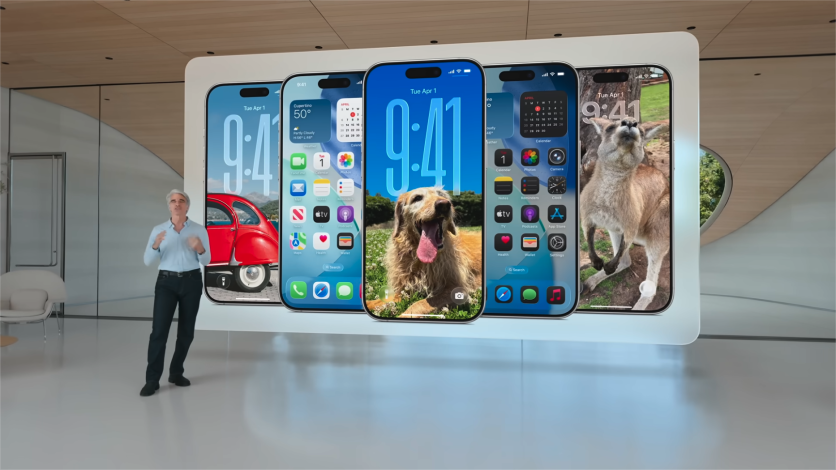
Apple introduces Liquid Glass for iOS in WWDC 2025 Apple.com
Bloomberg's Mark Gurman confirmed Sunday that the first public betas of iOS 27, macOS Golden Gate, and Apple's companion operating systems will drop this week — and Apple's own beta.apple.com is already showing a "coming soon" notice as of Monday morning. If the third-developer-beta pattern holds, as it did in 2022, 2023, and 2024, July 13 or 14 is the likeliest landing zone. What the public beta also quietly confirms: Apple's software cadence is on track, which means the full September hardware calendar — iPhone 18 Pro, iPhone 18 Pro Max, the first foldable iPhone, and a completely rebuilt Siri — is now predictable down to the day.
One thing to understand before you install: Siri AI, the feature headlining iOS 27, requires hardware that most current iPhones do not have. The on-device AI model needs at least 8GB of unified memory, and the most capable voice-customization features require a 12GB configuration found only in the iPhone Air, iPhone 17 Pro, and iPhone 17 Pro Max. If your device is an iPhone 15 or earlier — or even an iPhone 15 Plus — iOS 27 will install, but Siri AI will not run on it. That is an architectural limit, not a software toggle.
Read more: iOS 27 Beta 3 Turns On Siri Voice Sliders, Confirms $10 iCloud+ AI Gate
Public Beta Arrives on Schedule — Here Is What That Means
Apple has released three iOS 27 developer betas — June 8, June 22, and July 6 — each two weeks apart with metronomic regularity. In the three years before last year's outlier, the public beta followed the third developer beta by five to seven days. Apple's own promise was a July public beta, and Gurman's Sunday newsletter is the triggering confirmation.
Last year was the exception: iOS 26's new Liquid Glass design caused enough instability that Apple waited until after a fourth developer beta, pushing the public release to July 24, 2025. This year's developer betas have drawn comparisons to the most stable early builds Apple has shipped in recent memory. The delay scenario is unlikely, not impossible.
How to enroll:
- Go to beta.apple.com and sign in with your Apple ID — enrollment is free
- On your iPhone, open Settings → General → Software Update → Beta Updates
- Select iOS 27 Public Beta (if the option does not appear, restart your iPhone and check again)
- Download and install as you would any over-the-air update
Any iPhone running iOS 26 can install iOS 27 — that means the iPhone 11 and every model released since. Siri AI and the full Apple Intelligence suite have stricter requirements; see below.
Install Now or Wait Until September — the Honest Breakdown
Install if:
You own a spare iPhone. A public beta is more stable than a developer build, but it is still pre-release software. App crashes, battery drain, and features that vanish between builds are documented beta stability risks. On a secondary device — an older handset sitting unused in a drawer — those disruptions are tolerable. On the iPhone you rely on for alarms, authentication, navigation, and work email, they are not.
You own an iPhone 15 Pro or newer and want early access to Siri AI. iOS 27's centerpiece is a from-scratch rebuild of Siri into a conversational assistant with persistent conversation history synced via iCloud, awareness of what is on your screen, the ability to take cross-app actions, and access to your personal data across Mail, Messages, Photos, and more. Siri also ships as a standalone app for the first time. Apple's Siri AI announcement confirms all of these capabilities are coming with iOS 27. For compatible devices, the public beta is the only path to this experience before September.
Wait if:
This is your primary iPhone. Beta software introduces regressions that are unpredictable until they appear on your specific combination of apps and usage patterns. Macworld's beta coverage notes that battery life impacts in current iOS 27 builds are an expected beta phenomenon. The final release, expected September 14, is two months away.
You own an iPhone 15 or earlier without Pro designation. The distinction matters more than Apple's marketing implies. iPhone 15 and iPhone 15 Plus have 6GB of RAM — the same as the iPhone 14 series. Apple's on-device language model for Siri AI runs on approximately 3 billion parameters, optimized through 2-bit quantization-aware training and a memory-bandwidth technique called KV-cache sharing — and even in that compressed form, it requires 8GB of unified memory to run locally on a device's Neural Engine. The iPhone 15 Pro, with its A17 Pro chip and 8GB of RAM, meets the floor for base Siri AI. The iPhone 15 does not. The most advanced features — voice pace and expressivity controls — require 12GB of RAM (A19 Pro chip), available only in the iPhone Air, iPhone 17 Pro, and iPhone 17 Pro Max. If you are on anything older than an iPhone 15 Pro, the features driving most of the beta's excitement are architecturally unavailable. The September release will be identical to what you would install today.
How Siri AI Actually Works — the Architecture Behind the Waitlist
Siri AI is not a single model running on your iPhone. It is a three-tier routing system that determines, per request, where your query is processed. The system uses Apple's Private Cloud Compute expansion to Google Cloud. Simple tasks — setting a timer, reading a message — run entirely on the device using Apple's on-device Foundation Models. More complex requests go to Apple's Private Cloud Compute (PCC) servers, which run on Apple-designed chips and are cryptographically sealed so that even Apple staff cannot access the data being processed. The heaviest reasoning tasks — complex multi-step queries requiring broad world knowledge — route to Google Cloud, running on Nvidia Blackwell B200 GPUs.
Apple expanded PCC to Google Cloud's infrastructure specifically for iOS 27, and the company states that the cryptographic design prevents Google from accessing any user data in transit. Independent researchers are permitted to verify Apple's security research program for this architecture.
The Siri AI waitlist — which can take days to weeks to clear even after enrolling — exists because PCC capacity is being managed during rollout, not because the feature is unfinished. Users who joined the Siri AI waitlist early in the developer beta reported waits ranging from hours to over a week. Apple is controlling the rate at which users gain access to the cloud inference tier. Users in the beta can join the waitlist in Settings → Siri, and access is granted in batches.
One audit tool most coverage omits: once Siri AI is active, users can navigate to Settings → Privacy & Security → Apple Intelligence Report to see a log of which of their requests were processed on-device versus on Apple's cloud infrastructure.
Siri AI Is Unavailable at Launch in Europe and China
This is not a beta limitation. Siri AI will not be available to iPhone or iPad users in the European Union when iOS 27 ships in September, because Apple and EU regulators failed to reach an agreement under the Digital Markets Act. Mac and Apple Vision Pro users in the EU will have access when using a supported language; iPhone, iPad, and Apple Watch will not.
In China, Siri AI is unavailable pending separate Chinese regulatory approval. Both exclusions are confirmed in Apple's official press materials and are not expected to resolve before the September general release.
The September Timeline iOS 27's Cadence Just Confirmed
Apple's software release calendar is among the most reliable in consumer technology. The moment Developer Beta 3 shipped July 6 — exactly on pattern — analysts could back-calculate the fall with confidence.
Forbes analyst David Phelan has written that he is "convinced" the keynote date is Wednesday, September 9, pushing back against Bloomberg's Gurman, who pegged Tuesday, September 8 as the most likely date. Phelan's argument: Labor Day falls on September 7 this year — the latest it can fall under the U.S. calendar — and Apple has not held a keynote on the day immediately following a national holiday in over a decade, because flying press and guests from around the world requires that Labor Day buffer.
Either September 8 or September 9 is the keynote. What does not change regardless of which day Apple chooses:
| Date | Event |
|---|---|
July 13–14, 2026 | iOS 27 Public Beta 1 expected to drop |
Sept. 8 or 9, 2026 | Apple special event — iPhone 18 Pro, Pro Max, and foldable iPhone expected to be unveiled |
Sept. 11, 2026 | Pre-orders expected to open (5 a.m. Pacific / 8 a.m. ET) |
Sept. 14, 2026 | iOS 27 general release expected (Monday after keynote) |
Sept. 18, 2026 | iPhone 18 Pro and iPhone 18 Pro Max expected on sale (Friday) |
Date TBD | iPhone Ultra (foldable) — announced in September, ship date expected later |
The iOS 27 general release is expected on Monday, September 14 — the Monday following the keynote, a pattern Apple has maintained for years. Some analysts cite September 15 as an alternative. The iPhone 18 Pro and Pro Max are expected to go on sale Friday, September 18.
The iPhone Ultra: Announced in September, Shipping Later
The wildcard in this fall's lineup is Apple's first foldable iPhone. The device — widely referred to as the iPhone Ultra, though Apple has not officially confirmed the name — is expected to be announced alongside the iPhone 18 Pro at the September keynote. Whether it ships that same day is a separate question.
Analyst Ming-Chi Kuo's latest supply chain survey projects Apple will ship roughly 7–8 million foldable iPhones in the second half of 2026, with only 500,000 to 1 million units ready in Q3. By comparison, Apple is on track for 20–22 million iPhone 18 Pro and Pro Max units in Q3 — comfortably meeting launch inventory requirements. The Ultra is not on that footing.
Kuo's read is that Apple will announce all three devices at the same September event but open pre-orders and begin sales of the Ultra on a separate, later date — a repeat of the iPhone X strategy from 2017, when Apple announced the X alongside the iPhone 8 in September but held back pre-orders until late October and sales until November.
As of July 8, 2026, supply chain sources at Cailian Press confirmed that foldable production has entered peak production and that September delivery remains the target, pushing back against earlier speculation of a delay. Supply chain confidence in the September announcement appears high; confidence in a September retail date is lower.
Kuo's surveys of carriers and resellers found demand remains strong at prices between $2,300 and $2,500. At launch, Kuo projects delivery times of four to six weeks or longer, with resale premiums of 50–100% above Apple's retail price on secondary markets. If you intend to buy an iPhone Ultra, pre-ordering as quickly as possible after the September event opens is more likely to determine how long you wait than any other variable.
The foldable's expected specifications, sourced from supply chain and teardown analysts: a 5.5-inch outer display, a 7.8-inch inner display when fully unfolded, under 5mm thick when open, a Touch ID power button, and Apple's A20 chip.
Read more: Apple WWDC 2026: Siri Rebuilt on Gemini, homeOS Previewed in Cook Farewell Keynote
What iOS 27 Actually Adds — the Full Feature List
For readers encountering iOS 27 fresh, Apple announced the following at WWDC on June 8, 2026:
Siri AI is the flagship upgrade — a complete rebuild of Siri into a conversational assistant that can take multi-step actions across apps, understands your personal context from Mail, Messages, Photos, and Calendar, sees what is on your screen, and can hand queries off to third-party AI services (Claude, ChatGPT, and others) when installed. Siri now ships as a standalone app on the Home Screen — the first time in Siri's history. Conversation history syncs across all Apple devices via iCloud.
Hardware gating for Siri AI features:
- Base Siri AI (conversational, personal context, cross-app actions): iPhone 15 Pro and newer, plus iPhone Air
- Most powerful on-device model, enabling voice pace and expressivity controls: iPhone Air, iPhone 17 Pro, iPhone 17 Pro Max (12GB unified memory required)
Apple Intelligence throughout apps: AI-powered photo editing (Spatial Reframing, Extend, upgraded Clean Up), smart receipt-to-split in Wallet, automatic tab grouping in Safari, a "Notify Me" page-monitoring feature in Safari, plain-English Shortcuts creation, proactive breach detection in Passwords, and one-tap contextual suggestions in Messages and Mail.
Child safety overhaul: A redesigned Screen Time interface with Time Allowances across app categories, per-app scheduling with age-based recommendations, Ask to Browse (parental approval required before children visit new websites), and Communication Safety expansions in Messages, FaceTime, and Phone.
iCloud+ requirement for Home AI: Apple Intelligence features in the Home app — AI-generated camera summaries, multi-camera activity grouping, natural-language clip search — require a 2TB iCloud+ subscription ($9.99 per month). Users on lower tiers will not have access.
Performance improvements apply across supported devices including older models. Apple's own testing documented faster app launches on the iPhone 11 family, iPhone 15, and iPhone 16 Plus, along with improved AirDrop speeds and better Photos responsiveness on large libraries.
Frequently Asked Questions
When does the iOS 27 public beta come out?
Apple has not announced a specific date, but Bloomberg's Mark Gurman confirmed on Sunday, July 12, that the public betas will drop this week. Based on the five-to-seven-day gap between Apple's third developer beta (July 6) and the historical public beta date, July 13 or 14 is the most likely window. Apple's own beta.apple.com portal shows a "coming soon" notice as of this morning. Enrollment is free at beta.apple.com; any iPhone 11 or newer is eligible.
Does my iPhone support Siri AI in iOS 27?
iOS 27 installs on any iPhone running iOS 26 (iPhone 11 and newer). Siri AI is a different matter. Running the Siri AI assistant requires Apple Intelligence-capable hardware — generally iPhone 15 Pro or newer. Even within that group, the most advanced features require 12GB of unified memory, which only the iPhone Air, iPhone 17 Pro, and iPhone 17 Pro Max currently possess. The engineering reason is that Apple's on-device AI model cannot run locally on less memory without routing to cloud servers for every task. If you own an iPhone 15, iPhone 14, or earlier, you will receive iOS 27 — but not Siri AI.
When will the iPhone Ultra foldable go on sale?
Analyst Ming-Chi Kuo projects Apple will announce the foldable iPhone at the expected September keynote alongside the iPhone 18 Pro, but that supply constraints mean fewer than one million units will be ready in Q3. Kuo's projection places the bulk of foldable supply in Q4 2026, and he draws a direct parallel to the iPhone X in 2017, which was announced in September but did not go on sale until November. Pre-ordering immediately after Apple opens sales — whenever that occurs — is currently the best way to minimize your wait time. Supply chain sources as of July 8 confirm production is underway and a September announcement date remains the target.
Should I install the iOS 27 beta on my main iPhone?
Unless you are comfortable troubleshooting battery drain, app incompatibilities, and features that change between builds, the September general release is the safer choice. Apple's own guidance is consistent: use a secondary device. If this is your only phone — your authenticator, alarm, work email, and navigation all in one — the documented stability risks of beta software make waiting two months the straightforward decision.

-
 C114 Communication Network
 -
 Communication Home
