
 Search

Mi.com
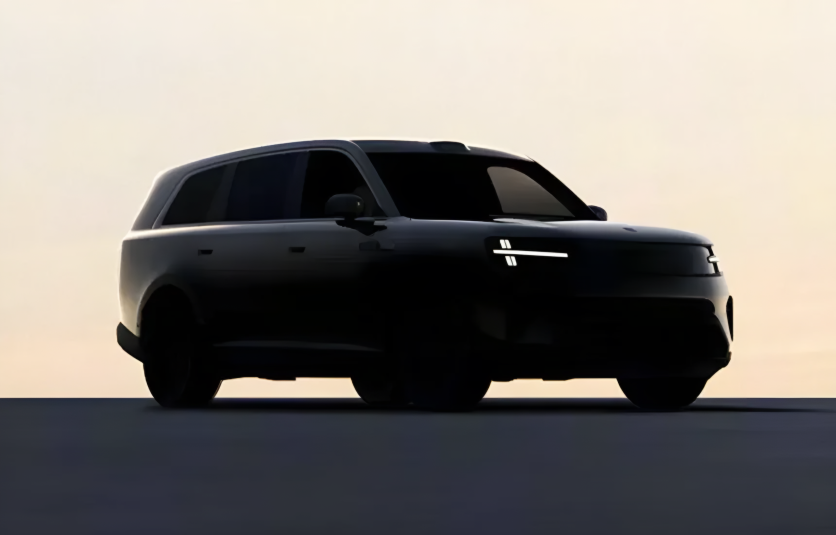
Xiaomi CEO Lei Jun posted the first official exterior images of the SkyNomad N90 on July 10, launching a three-row family SUV that pairs a gas generator with a 70+ kWh battery to claim 1,500 km (932 miles) of combined range on China's CLTC test cycle — and a starting price of approximately 200,000 yuan (~$29,000) that undercuts its two primary rivals by more than $7,000. The vehicle arrives at a complicated moment: extended-range electric vehicle sales in China fell roughly 25–28% year-on-year in May 2026, with the segment's share of the NEV market dropping to 7%, as BEV batteries with 600–700 km CLTC ranges have narrowed the core advantage EREVs held.
A simultaneous filing in China's Ministry of Industry and Information Technology (MIIT) 409th vehicle approval catalog confirmed hard specifications for four SkyNomad models: the flagship N90 Max, the N90 Max Camping Edition, the smaller N70, and the N70 Max. The SkyNomad line is Xiaomi Auto's second vehicle series, alongside the SU7 sedan and YU7 SUV. CEO Lei Jun confirmed on the same day that it is not a standalone sub-brand, as earlier reports had suggested, but a second line under Xiaomi EV.
How the Powertrain Actually Works: Series Hybrid, Not Traditional Hybrid
The SkyNomad N90 uses a series hybrid architecture — a technically distinct configuration from the plug-in hybrid found in most Western family cars. In a series hybrid, the internal combustion engine has no mechanical connection to the drivetrain whatsoever. The wheels are driven exclusively by the electric motors. The engine's sole function is to spin a generator and produce electricity, which then flows to the battery or directly to the motors. This means the engine can operate at or near its most thermally efficient rotational speed regardless of how fast the vehicle is moving or what the driver demands — a fundamental engineering advantage that Xiaomi says allows it to achieve a range-extender thermal efficiency exceeding 44%, compared to the 41% claimed by Harbin Dongan's other client, AITO's M9.
The specific hardware: a Harbin Dongan 1,499 cc turbocharged four-cylinder producing 112 kW of net power acts as the generator. It never drives the wheels. Dual electric motors — 210 kW front, 100 kW rear — provide all traction. A CALB ternary lithium-ion (NMC chemistry) battery rated at over 70 kWh powers both motors and stores energy from the generator and from regenerative braking. The MIIT filing confirms top speed at 190 km/h, and Xiaomi's battery supply is split between Sunwoda (approximately 60%) and CALB (approximately 40%) — a dual-sourcing strategy that diverges from the single CATL/FinDreams arrangement used for the SU7 and YU7, and likely contributes to the vehicle's aggressive pricing.
The claimed 400–500 km of pure-electric CLTC range is meaningfully above the Li Auto L9's approximately 240 km — which means the N90 behaves functionally like a battery-electric vehicle for most urban and suburban driving. The generator would engage primarily on long road trips. Real-world range on the 1,500 km combined figure will likely land between 900 and 1,100 km, based on the typical gap between CLTC test-cycle results and real-world conditions documented across Chinese EV and EREV models.
One structural consequence of the 70+ kWh battery: the N90 Max's curb weight of 2,800 kg. That is substantially heavier than the Li Auto L9 (approximately 2,450 kg) and carries its own efficiency penalty — the energy required to move 2,800 kg at highway speed raises the fuel and electricity consumption floors.
Read more: China EV Sales Slide 13% in H1 2026: Only 3 Brands Profitable as Export Push Soars
Why a Flat Floor: The Structural Logic of the Kunlun Architecture
The flat floor of the N90's Kunlun platform is not a design choice — it is an engineering consequence of the series hybrid topology. In a conventional parallel hybrid, the combustion engine must be mechanically coupled to the drivetrain, which typically means a transmission tunnel, driveshafts, and structural intrusions into the cabin floor. In the N90's series configuration, none of that mechanical coupling exists: the engine sits up front generating electricity, the rear motor sits at the rear axle, and no mechanical shaft connects them. The result is a completely flat floor that Xiaomi designed specifically to accommodate a long-track seating rail system running the full length of the cabin, enabling the seat reconfiguration that is central to the vehicle's marketing pitch.
Living Room Mode and the Cabin Reconfiguration System
The interior is where the SkyNomad N90 most visibly separates itself from direct competitors. The standard N90 uses a 2+2+3 seven-seat layout in a two-tone cabin. The front seats rotate 180 degrees to face the second row, creating what Xiaomi calls "living room mode" — available only when the vehicle is in Park. The center armrest slides on rails to transform into a freestanding island or bar counter. Second-row passengers get zero-gravity seats with extended leg rests. Third-row seats feature a wrap-around design with integrated armrests and cup holders. The cabin also includes a built-in refrigerator, overhead speakers, and a split panoramic sunroof.
Xiaomi describes the parked cabin as capable of becoming "a studio for one, a café for two, a living room for three, or a playground for the whole family." The company positioned that tagline around the observation that many Chinese urban professionals spend two hours daily commuting, use their cars during lunch breaks, and want a vehicle that doubles as a functional space off the clock.
The N90 Max Camping Edition, classified in the MIIT filing as a "cultural life service vehicle," adds a pop-up roof, a rooftop bed platform, side cabinets, and a side-tent interface, with optional in-car projection and a detachable table. When the roof is raised, the vehicle's height increases from 1,825 mm to 1,925 mm and curb weight rises to 2,840 kg. Xiaomi specifies that the pop-up roof can only be deployed while parked on non-public roads.
Why This Bet Is Harder Than It Looks: EREV Sales Are Falling
The EREV category's original commercial logic was compelling: Li Auto's Li One, launched in 2019, demonstrated that a large battery providing substantial urban electric-only range, supplemented by a small engine acting solely as a generator for longer trips, could build a profitable business serving Chinese families who wanted the electric-car experience without range anxiety on road trips. The format scaled rapidly — EREV sales reached 1.18 million units in China in 2024.
The conditions that made that case no longer hold in the same way. From mid-2025, year-on-year EREV sales began declining in China as competing battery-electric vehicles reached CLTC ranges of 600–700 km and China's charging network expanded to 12.82 million charging units — a 49% increase in a single year. In May 2026, EREV retail sales fell approximately 25–28% year-on-year, with the segment's NEV market share dropping to 7%. The Li Auto L9 — the flagship that defined the premium EREV SUV category — saw deliveries decline 74% year-on-year in the first four months of 2026.
Approximately 54 EREV models are expected to launch in China in 2026 alone, nearly three times the number from 2024. Xiaomi is entering a market that is simultaneously contracting in volume and expanding in competitive intensity.
The company's counter-argument is that the N90 serves a use case that pure BEVs still cannot match cleanly: multi-day camping trips and long road trips where charging infrastructure is sparse, and where 932 miles of combined range provides genuine peace of mind in a way that a 700 km BEV does not, even accounting for CLTC-to-real-world discounts. Xiaomi's own camping-focused product positioning is consistent with this framing. Whether that niche is large enough to sustain a model line is an open question.
Pricing Against Li Auto and AITO
Chinese media report the SkyNomad range will start at approximately 200,000 yuan (~$29,000), rising to as high as 450,000 yuan for the highest-trim N90 variants. Li Auto L9 and the Huawei-backed AITO M9 are both priced above 250,000 yuan, meaning the N90 Max enters below both at a standard configuration.
Harbin Dongan, the N90's range-extender supplier, is the same manufacturer that supplies range extenders to Li Auto and Leapmotor — meaning Xiaomi sourced from the same commodity supply chain rather than developing a proprietary generator, which contributes to cost containment. Combined with Sunwoda battery sourcing and existing manufacturing infrastructure at Xiaomi's Beijing plant (also used for the SU7 and YU7), the price undercut is credible as a manufacturing economics matter, not purely as a below-cost launch subsidy.
Read more: China Chip Independence: Xiaomi, BYD, Nio Deploy 3nm Silicon US Controls Targeted
Xiaomi's Delivery Math and the N90's Strategic Role
Xiaomi delivered 185,055 vehicles in the first half of 2026, a 17% year-on-year increase. Against a stated full-year target of 550,000 units, that H1 result is approximately 34% of the goal, leaving roughly 365,000 deliveries — or about 61,000 per month — required in the second half. Xiaomi's current monthly pace stands around 34,000–35,000 units.
The SU7, the car that launched Xiaomi's automotive ambitions in 2024, has been recording year-on-year delivery declines. The YU7 SUV has become the current sales pillar. Xiaomi has confirmed a planned N90 launch in the second half of 2026, with deliveries expected to begin in August or later in Q3. The N90 is one of the primary mechanisms by which Xiaomi intends to close the gap toward its 550,000-unit target.
At least one major investment bank recently cut its Xiaomi price target, citing rising semiconductor costs and short-term margin pressure in the auto division.
What Chinese Law Requires Xiaomi to Do With Your Vehicle's Data
Any prospective buyer of a Xiaomi vehicle — including the SkyNomad N90 — should understand a legal condition that no stated privacy policy can remove.
Xiaomi is a Beijing-headquartered company subject to Chinese law. Three overlapping statutes establish the framework:
China's National Intelligence Law (2017), Article 7 requires that all organizations and citizens support, assist, and cooperate with national intelligence work. This applies to Xiaomi regardless of where the vehicle is sold, regardless of the company's stated privacy policies, and regardless of where its servers are located.
China's Data Security Law (2021) classifies data by strategic importance and mandates data localization and government access for designated categories. China's Cybersecurity Law (2017) similarly establishes data localization requirements and security review authority for the government.
More specifically for vehicles, China's Automotive Data Security Provisions (effective January 1, 2025) and the Guidance for Secure Cross-Border Transfer of Automotive Data (February 2026) establish requirements that automotive data controllers — including manufacturers — must designate personnel responsible for government data requests and must comply with data-transfer frameworks that prioritize government access.
The SkyNomad N90, like all modern connected vehicles, collects: continuous GPS location while driving, driving behavior (speed, acceleration, braking patterns), voice commands if an AI assistant is active, data from smartphones connected to the vehicle's system, and potentially audio or video from cabin cameras used for driver monitoring and ADAS. Under the National Intelligence Law, the Chinese government can request any or all of this data on demand, and Xiaomi is legally required to comply.
No mitigation fully removes this structural legal condition. Practical steps that reduce data exposure include: not connecting personal smartphones to the vehicle's connectivity system, minimizing voice-assistant use, reviewing in-vehicle privacy settings to disable optional analytics, and network-segmenting the vehicle on home Wi-Fi so it cannot access other devices on the network. These reduce the volume of data collected but do not alter Xiaomi's legal obligations under Chinese law.
No independent security audit of the Xiaomi SkyNomad N90 — or of Xiaomi's prior SU7 or YU7 vehicles — has been published as of this writing. That gap is itself relevant information for buyers who require independent confirmation before evaluating the risk.
Autonomous Driving and Sensing Hardware
The MIIT filing and exterior images confirm the N90 carries a LiDAR unit mounted on the roof, cameras integrated into both A-pillars, and additional sensing hardware in the front fenders. This configuration is consistent with Xiaomi's autonomous driving architecture on the SU7 and YU7, which uses Nvidia chips and Xiaomi's self-developed Hyper Autonomous Driving (HAD) system. The HAD system was trained on 10 million real-driver video clips; as of late 2025 TechTimes coverage, over 90% of Xiaomi EV owners were actively using driving-assistance features.
SkyNomad's European Opening
One factor separating the N90 from the domestic EREV competition may ultimately be export potential. US regulation has already moved to restrict Chinese connected vehicles: a bipartisan Senate bill — the Connected Vehicle Security Act of 2026 — proposes banning Chinese vehicles from the US market beginning January 1, 2027. The US Bureau of Industry and Security implemented a separate rule in January 2025 restricting Chinese connected-vehicle software and hardware.
Europe presents a different picture. The EU's countervailing tariffs on Chinese imports target battery-electric vehicles specifically, leaving PHEVs and EREVs like the N90 outside their scope. European PHEV sales rose 33% year-on-year in Q1 2026, and hybrids grew 10.4%. If Xiaomi were to export the SkyNomad N90 to European markets, it would face no comparable tariff barrier and would enter a market with demonstrated appetite for partially electrified vehicles. No export timeline has been confirmed.
Frequently Asked Questions
What is an extended-range electric vehicle, and how is the SkyNomad N90 different from a regular hybrid?
In a standard hybrid or plug-in hybrid, the combustion engine can drive the wheels directly. The SkyNomad N90 uses a series hybrid — also called an EREV — in which the gasoline engine has no mechanical connection to the wheels at all. Its only function is to spin a generator and produce electricity. The wheels are powered entirely by the electric motors. This allows the engine to run at its most efficient speed regardless of vehicle demand, but it also means every unit of energy passes through a combustion-to-electrical conversion before reaching the wheels, which carries efficiency losses at sustained highway speeds.
How does the SkyNomad N90's claimed 932-mile range translate to real-world driving?
The 1,500 km (932-mile) figure is measured on China's CLTC test cycle, which produces systematically higher results than real-world conditions. Based on the gap between CLTC and real-world figures documented across Chinese EVs, a reasonable estimate for real-world combined range on the N90 is approximately 900–1,100 km (560–680 miles). The pure-electric 400–500 km CLTC range likely translates to roughly 300–400 km in typical driving. Final real-world figures will depend on vehicle weight (2,800 kg is substantial), driving conditions, and charging behavior.
What does Chinese law mean for buyers who want to keep their vehicle's location and data private?
Every connected Xiaomi vehicle is subject to China's National Intelligence Law (2017), Article 7, which requires Xiaomi to assist and cooperate with Chinese government intelligence requests on demand. This obligation applies regardless of Xiaomi's stated privacy policy, where the vehicle is sold, or where its servers are located. The vehicle collects GPS location, driving behavior, voice commands, and data from connected smartphones. No stated privacy policy can override this legal requirement. Buyers who consider GPS location data sensitive should be aware that no currently available mitigation — network segmentation, VPN, or privacy settings — removes Xiaomi's legal obligation to comply with Chinese government data requests.
Is the SkyNomad N90 entering a growing or declining segment in China?
Declining, as of mid-2026. EREV sales in China fell approximately 25–28% year-on-year in May 2026, with the segment's share of new-energy vehicle sales dropping to 7%. The decline reflects improving battery-electric vehicle range — new BEV models now commonly exceed 600 km CLTC — and rapid expansion of China's charging network. Xiaomi is entering the EREV segment at the moment of its greatest recent weakness, betting that a camping-and-road-trip use case can sustain demand even as the general range-anxiety rationale for EREVs weakens. The outcome of that bet will not be visible until the N90 reaches buyers in the second half of 2026.

-
 C114 Communication Network
 -
 Communication Home
