
 Search

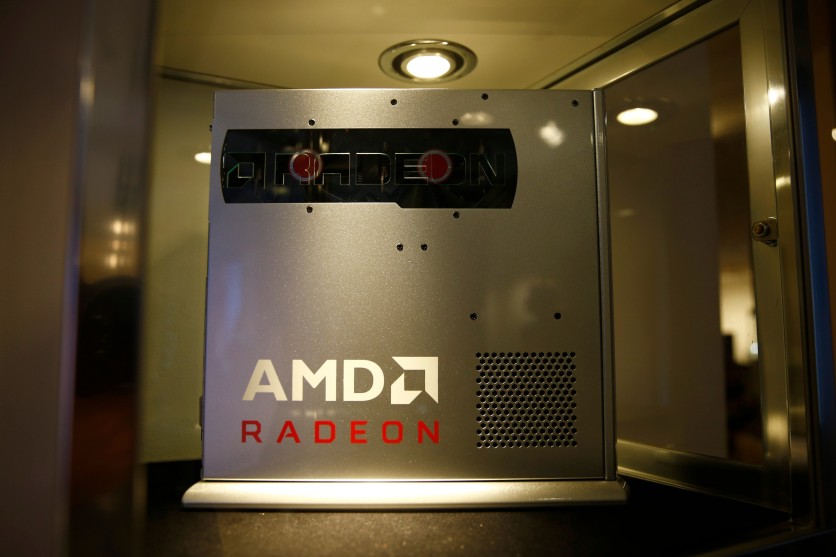
NEW YORK, NY - JUNE 22: AMD Radeon during day one of The Art of VR at Sotheby's on June 22, 2017 in New York City. Brian Ach/Getty Images for Advanced Imaging Society
A third-party utility cracked open AMD's latest Radeon driver package this week and found hidden entries pointing to multi-frame generation ratios as high as 8×, the most concrete public evidence yet of how aggressively AMD is targeting NVIDIA's AI frame-multiplication pipeline. The strings are dormant, the feature does not yet work, and AMD has said nothing — but the driver does not lie about where the ceiling is set.
What the Driver Strings Found
The discovery came from RadeonTuner, a lightweight open-source alternative to AMD's Adrenalin software suite that can expose driver-level settings the standard interface never surfaces. A user on the Chiphell Forums ran the tool against AMD's Adrenalin 26.6.2 WHQL driver — the same release that, on June 22, 2026, delivered FSR 4.1 upscaling to every Radeon RX 7000 series card — and found a cluster of previously unseen experimental controls buried behind the "Show Experimental Settings" toggle.
Two new entries stood out immediately: MfgOverride to enable the feature, and MfgRatio, a selector that cycles through application-controlled mode before stepping through discrete options: 1×, 2×, 3×, 4×, 5×, 6×, 7×, and 8×. RadeonTuner labels the feature "FSR Multi Frame Generation" and restricts its experimental controls to RDNA 4 or newer hardware — the Radeon RX 9000 series. The same driver build also surfaced override controls for FSR Ray Regeneration and FSR Neural Radiance Caching, both currently restricted to a small list of officially supported titles, suggesting AMD may be planning a broader driver-level approach to enabling those technologies — similar to how NVIDIA's App lets users override upscaling and frame generation settings across unsupported games.
Read more: AMD FSR 4.1 Now Live for Radeon RX 7000: INT8 Workaround Delivers ML Upscaling to Millions
Non-Functional for Now, but Deliberate
Community testing established quickly that the new entries do nothing. Testing on both an RX 9070 XT and an RX 9060 XT across Forza Horizon 6, Pragmata, Resident Evil 9, Crimson Desert, and Death Stranding 2 produced no active multi-frame generation output at any ratio. The required AI model files and FSR software components are not bundled with the current driver package.
RadeonTuner developer "Dumbie" noted that AMD routinely inserts dormant driver options months before a feature ships publicly, using the approach to allow the application's interface to be prepared in advance. That pattern has precedent: AMD's ADLX 1.5 FidelityFX SDK update, released quietly in April 2026, already documented API methods for reading and setting custom MFG ratios — establishing the software scaffolding before any driver-level controls were visible to end users.
The Arithmetic: One Real Frame, Seven AI-Generated Frames
An 8× multi-frame generation ratio means that one natively rendered frame feeds into the AI pipeline, and the model generates seven intermediate frames around it, producing a total output of eight frames per render cycle. AMD's GPUOpen documentation for FSR Frame Generation describes the underlying process: the neural model uses optical flow estimation and motion vector data from the game engine to predict per-pixel motion and appearance, then blends that prediction with motion-vector reprojection to synthesize a new in-between frame — a frame that maintains color, temporal context, and motion consistency with the frames on either side of it.
Apply that math to a native 60 fps output and the theoretical result is 480 fps — a number that becomes genuinely meaningful on the 480 Hz and 540 Hz gaming panels that began reaching the consumer market in 2025 and 2026. At that ratio, only 12.5 percent of what the display receives is actually rendered by the GPU's rasterization or ray tracing pipeline. The remaining 87.5 percent is AI inference output.
Why Frame Pacing Is the Real Engineering Problem
Raw ratio numbers are the easy part. The hard engineering problem at aggressive frame generation multipliers is frame pacing — delivering each of those AI-generated frames to the display at consistent timing intervals without allowing the variation between rendered and generated frames to produce stutter, tearing, or perceptible latency spikes.
NVIDIA solved this for its DLSS 4 suite by introducing hardware flip metering in the Blackwell RTX 50-series display controller. According to NVIDIA's DLSS 4 technical announcement, hardware flip metering shifts the frame pacing logic from software on the CPU to the display engine hardware itself, allowing the GPU to manage delivery timing with far greater precision. NVIDIA's Blackwell display controller also carries twice the pixel processing capability of its predecessor to support this at high resolutions and refresh rates. DLSS 4 Multi Frame Generation — which launched at CES in January 2025 alongside the RTX 50-series — generates up to three additional frames per rendered frame at 4× total output. DLSS 4.5 pushed that to 6× with Dynamic MFG, generating up to five AI frames per rendered frame; it shipped in late March 2026 and remains exclusive to RTX 50-series hardware for the same reason: hardware flip metering is only available on Blackwell.
AMD's RDNA 4 architecture uses software-based frame pacing instead. That distinction mattered even at single-frame generation: independent reviewers documented spiky frame time graphs, screen tearing, and noticeable input lag when testing FSR Redstone's ML Frame Generation in January 2026, and AMD addressed core swap chain frame pacing problems with a FidelityFX SDK 2.3 update and the driver 26.6.4 release in early July 2026. The open question is whether software-based frame pacing can scale credibly to 8× without a hardware equivalent to flip metering, or whether AMD needs to introduce dedicated display pipeline hardware in a future architecture to make the highest ratios competitive with NVIDIA's approach.
Read more: DLSS vs FSR in 2026: Which GPU Upscaling Tech Delivers Better FPS and Image Quality?
AMD vs. NVIDIA vs. Intel: Where the Ceiling Now Stands
The landscape of multi-frame generation ratios has moved quickly. At DLSS 4's January 2025 launch, NVIDIA held the only commercially shipping multi-frame implementation at 4×. In late March 2026, DLSS 4.5 extended that to 6× Dynamic MFG on RTX 50-series hardware, capable of generating up to five AI frames per rendered frame. Intel's XeSS 3 supports up to 4× MFG. AMD, as of today, still ships only single-frame generation — 2× total output, one AI frame per rendered frame — through FSR Redstone on RDNA 4 hardware.
The 8× driver strings, if they ship, would arithmetically surpass NVIDIA's current 6× ceiling. NVIDIA has publicly signaled an eventual higher target — up to 16× was referenced in the RTX 50-series Blackwell technical presentation — but has not shipped beyond 6×. Raw ratio comparison alone does not capture the full picture of image quality, artifact management, or latency behavior. A 2026 ComputerBase blind test involving close to 7,000 gamers found DLSS 4.5 outperforming FSR 4 by roughly a factor of two in preference votes — a gap FSR Diamond is explicitly designed to close.
What the Open-Source Architecture Means in Practice
FSR is open source. Unlike DLSS, which runs only on NVIDIA Tensor Cores and is hardware-exclusive to the RTX product line, AMD's FSR suite is hardware-agnostic by design — it can run on any GPU from any manufacturer that provides the necessary motion vector and depth data to the API. That structural choice has been central to FSR's adoption story since its introduction.
The driver strings change that picture in one specific way. The MfgRatio and MfgOverride entries in the Adrenalin 26.6.2 driver are restricted to RDNA 4 or newer hardware — a restriction that RadeonTuner enforces and that AMD has already coded into the driver profile. Whether AMD ships 8× MFG as a driver-level Radeon-exclusive feature or eventually publishes the underlying AI model through the GPUOpen FSR SDK for cross-vendor use is a decision AMD has not made public. The distinction matters: an RDNA 4-exclusive driver implementation means the 8× ceiling is a competitive Radeon advantage. An open FSR SDK implementation means it could eventually benefit NVIDIA and Intel GPU owners as well, following the precedent of FSR 3.1's single-frame generation.
Where AMD Goes From Here: FSR Diamond and RDNA 5
The longer development roadmap already has a name. At GDC 2026 in March, AMD SVP and GM of Computing & Graphics Jack Huynh announced FSR Diamond — expected to become FSR 5 — tying it explicitly to Microsoft's next-generation Xbox platform, codenamed Project Helix. Huynh described FSR Diamond as built for next-generation neural rendering, ML-based upscaling, a new ML-based multi-frame generation path, and next-generation ray regeneration for both ray tracing and path tracing. The technology was framed as the product of a "multi-year deep co-engineering partnership" with Xbox, deeply integrated into the Xbox Game Development Kit, with Microsoft indicating that Project Helix alpha developer kits are expected to reach studios in 2027.
Hardware leaker Kepler_L2, who has been accurate on AMD console and PC roadmap details, stated that FSR Diamond will be exclusive to AMD's forthcoming RDNA 5 architecture. The technical reason offered by Kepler_L2 is that FSR Diamond requires AI and ML acceleration features that RDNA 5 will introduce — specifically, a significant expansion of the neural shader data window. Current architectures across all GPU manufacturers, including RDNA 4 and NVIDIA's Blackwell, can process neural shader workloads within a data window below 100 kilobytes per workload. RDNA 5 is expected to expand that to roughly 25 megabytes or more, enabling AI models to process much larger tiles of a frame in a single pass rather than subdividing the frame into small tiles and computing them sequentially, which introduces quality losses at tile boundaries.
That architectural distinction is why AMD's roadmap has always required two separate tracks: what RDNA 4 can do now with software-based frame pacing, and what RDNA 5 will do with purpose-built neural rendering hardware. The 8× driver stub sits somewhere in the middle of those two tracks, restricted to RDNA 4+ hardware but pointing at capabilities that may ultimately need RDNA 5 to deliver on their full promise.
Reading AMD's Signal
AMD's practice of pre-populating driver profiles well ahead of feature availability is well-documented by RadeonTuner's developer and consistent with the evidence here. The ADLX 1.5 SDK groundwork in April, the RDNA 4 hardware restriction already coded into the driver, and FSR Diamond's explicit inclusion of ML-based multi-frame generation as a headline capability all converge on the same destination.
What remains genuinely uncertain is the timeline. The 8× MFG capability visible in Adrenalin 26.6.2 could reach RDNA 4 owners as a driver update later in 2026 — limited by what software-based frame pacing can practically sustain — or it could land only with FSR Diamond on RDNA 5 hardware in 2027. AMD has drawn its ceiling at 8×. Whether it plans to reach that ceiling with current hardware, future hardware, or a combination of both, the answer is now embedded in the driver itself.
Frequently Asked Questions
How does AMD's planned 8× multi-frame generation compare to NVIDIA DLSS 4.5?
NVIDIA's current DLSS 4.5 tops out at 6× multi-frame generation, producing five AI-generated frames per rendered frame on RTX 50-series Blackwell GPUs. AMD's driver strings set a ceiling of 8×, which would produce seven AI-generated frames per rendered frame. The arithmetic favors AMD by ratio, but NVIDIA delivers its MFG using hardware flip metering — a dedicated display-engine feature on Blackwell that manages frame timing precision. AMD's RDNA 4 relies on software-based frame pacing instead, and whether that approach can sustain eight-frame pipelines without visible stutter or latency artifacts is the central unanswered engineering question.
Will RDNA 4 owners — people with an RX 9070 XT or RX 9060 XT — actually get 8× multi-frame generation?
Possibly, but it is not confirmed. The driver strings in Adrenalin 26.6.2 already restrict the experimental MFG entries to RDNA 4 or newer hardware, which suggests AMD has tested compatibility with current RX 9000 series cards at some level. However, AMD has also indicated that FSR Diamond — which explicitly includes ML-based multi-frame generation — is targeted at the next-generation RDNA 5 architecture and will be deeply integrated with Project Helix for a 2027 launch. It is possible AMD ships a working but limited MFG implementation for RDNA 4 first, and reserves the full 8× ceiling for RDNA 5 hardware where the expanded neural shader data window can support it without compromises.
Does FSR's open-source design mean the 8× multi-frame generation would work on NVIDIA and Intel GPUs too?
Not automatically. FSR's SDK is hardware-agnostic and runs on any GPU with compatible motion vector and depth data — including NVIDIA and Intel cards. Single-frame generation in FSR 3.1 was made available cross-vendor on that basis. However, the 8× MFG entries discovered this week are in AMD's Radeon driver profile, and they are currently coded with an RDNA 4+ hardware restriction. Whether AMD publishes the underlying AI model through the open GPUOpen FSR SDK for cross-vendor use — or keeps it as a Radeon driver-exclusive feature — is a decision the company has not publicly made. The history of FSR suggests openness; the driver's current hardware restriction suggests caution.
What is FSR Diamond, and how does it fit into this roadmap?
FSR Diamond is AMD's codename for its next-generation upscaling and rendering suite, expected to succeed FSR Redstone and likely to carry the FSR 5 designation when it ships. Jack Huynh announced it at GDC 2026 as part of a multi-year co-engineering partnership with Microsoft for Project Helix, the next-generation Xbox. FSR Diamond is designed around ML-based multi-frame generation, next-generation neural rendering, updated ray regeneration, and radiance caching for path tracing. Leaks from hardware insider Kepler_L2 indicate it will be exclusive to RDNA 5, which is the GPU architecture AMD plans to launch in 2027 alongside Project Helix's developer kit rollout. The driver strings found this week may be early scaffolding for FSR Diamond's MFG path, or they may represent a separate near-term RDNA 4 implementation — AMD has not clarified which.

-
 C114 Communication Network
 -
 Communication Home
