
 Search

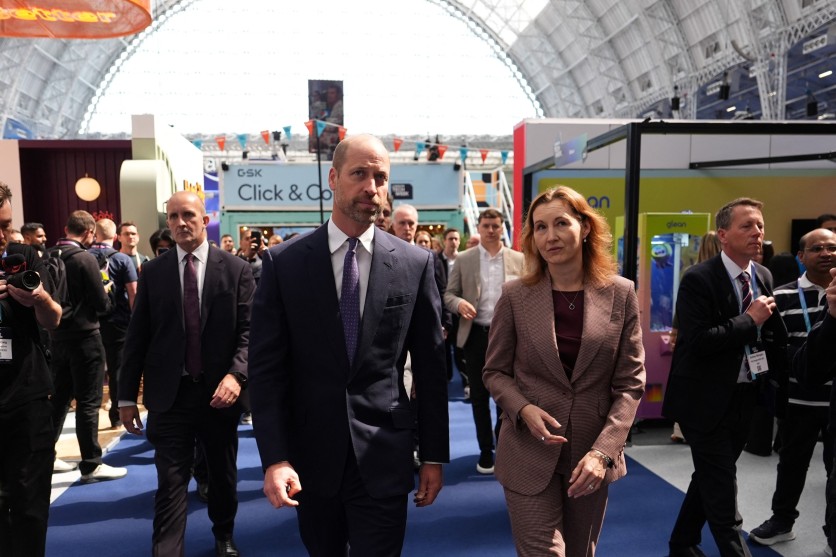
Britain's Prince William, Prince of Wales (C) arrives to attend London Tech Week in London on June 10, 2026, to highlight the role of data and technology in preventing homelessness. Aaron Chown/POOL / AFP via Getty Images
London Tech Week 2026 closed its five-day run on Friday after a week that moved Britain's AI conversation from demonstration to deployment — and from corporate ambition to a specific, timestamped national bet. By the time fringe events wound down across the capital, the week had produced a £400 million government commitment to sovereign chip procurement, a $30 billion Microsoft infrastructure pledge, and the single largest AI rollout in NHS history: 505,000 clinicians and support staff queued to receive Microsoft 365 Copilot access by October.
That last figure is not a roadmap item. NHS England confirmed on June 7 that licenses will be distributed starting in July, with full deployment across 505,000 staff expected by October 2026. The decision followed the largest AI trial of its kind ever conducted in a healthcare system: more than 30,000 NHS workers across 90 organizations spent months using the tool, saving an average of 43 minutes of administrative time per staff member per day — equivalent to five weeks per person annually, according to NHS England's own assessment.
The week's 13th edition drew delegates from 130 countries to Olympia London and fringe venues across the capital, with AI dominating roughly half of all sessions according to the event's own programme analysis. What separated this year from predecessors was the texture of the conversation: less product demonstration, more implementation architecture.
Starmer's Sovereign Compute Gamble
Prime Minister Sir Keir Starmer opened the festival on Monday with a keynote that connected Britain's industrial past to its AI present. He invoked the closure of a former Unilever soap factory in Warrington — since converted into an AI data centre — as a parable for communities that transformation can either leave behind or regenerate.
The headline policy announcement was a £400 million commitment to purchase specialist AI chips for domestic use, framed explicitly as a sovereign compute strategy: the argument that AI leadership cannot be sustained indefinitely by renting capacity from foreign-owned cloud infrastructure. Starmer outlined a three-pillar industrial strategy for tech — innovation, sovereign capability, and inclusive growth — and issued a pointed warning to social media companies to implement child safety controls or face legislation.
The sovereign compute framing carried weight beyond industrial policy. As Tech Nation's The Next Wave of UK AI report released during the week documented, UK AI startups raised more than £8.2 billion in venture capital in the first half of 2026 — representing close to half of all European technology investment. The UK technology sector's value reached £1.2 trillion this year. The concentration of that value in foreign-hosted cloud infrastructure is precisely the dependency the chip fund is designed to reduce.
Alongside the government announcement, AMD committed £2 billion to UK AI infrastructure over five years, with ties to the University of Cambridge, while cloud infrastructure firm Nebius pledged approximately £1.7 billion to expand its UK presence. AWS reaffirmed an £8 billion investment commitment to UK data centre infrastructure through 2028, reinforcing the scale of capital now committed across the public and private sectors. Mayor of London Sir Sadiq Khan announced a £12 million programme to help London's small and medium-sized businesses adopt AI, citing £12 billion in tech investment into the capital during 2026 and the emergence of 12 new unicorns.
Read more: Microsoft Copilot Adoption Surges as Enterprise AI Usage Reaches New Highs Across Microsoft 365 Apps
Microsoft's $30 Billion Commitment: What the Architecture Actually Means
Darren Hardman, CEO of Microsoft UK and Ireland, delivered what many attendees described as the week's defining enterprise keynote, arguing that Britain has moved from an "information work" economy to an "intelligence work" economy and that the next 18 months will determine how successfully the UK competes in AI over the next decade.
The anchor figure was Microsoft's $30 billion (approximately £23 billion) UK commitment — the largest the company has ever made in the country — split between roughly £11.5 billion of capital expenditure on cloud and AI infrastructure and £11.5 billion in operating expenditure. New data centres in Acton and Newport are nearing completion. The UK's largest AI supercomputer — housing 23,040 NVIDIA GB300 Grace Blackwell Ultra GPUs at a 50-megawatt facility in Loughton, Essex, built in partnership with UK firm Nscale — is scheduled for delivery in the first quarter of 2027. That facility is scalable to 90 megawatts, making it a significant node in Microsoft's European Azure capacity.
Microsoft also announced a sovereign AI compute zone in Staffordshire, specifically designed to support domestic enterprise and public sector workloads with enhanced data residency guarantees. Understanding what "sovereign" means architecturally matters for anyone making infrastructure decisions on its basis.
What Sovereign Compute Actually Does: TEEs, Azure Local, and the CLOUD Act Problem
Standard Azure — like any hyperscale public cloud — routes data across Microsoft's global infrastructure, which is subject to US legal jurisdiction under the CLOUD Act of 2018. That law allows US authorities to compel technology companies to produce data stored anywhere in the world, including in UK data centres. The Snowden revelations of 2013 and subsequent court cases — including a 2018 ruling that granted the US government access to Microsoft's cloud storage in Ireland — demonstrated that data residency alone does not guarantee legal sovereignty.
Microsoft's sovereign cloud architecture addresses this through a product called Azure Local, which allows organizations to run large language model (LLM) inference, data processing, and analytics entirely within a sovereign physical boundary, without the cross-border data flows that would expose workloads to external legal demands. The key enabling technology is Confidential Computing through Trusted Execution Environments (TEEs) — secure enclaves within the CPU that encrypt data while it is actively being processed, not just at rest or in transit. This is the architectural mechanism that satisfies UK data residency requirements for sensitive NHS and public sector workloads.
Microsoft 365 Copilot, by contrast, runs as a shared service within Microsoft's standard cloud boundary and uses a Retrieval-Augmented Generation (RAG) architecture: when a user submits a prompt, the Copilot orchestrator calls Microsoft Graph — Microsoft's unified API for organizational data — to retrieve user-permissioned content from SharePoint, Outlook, and OneDrive. That retrieved content grounds the prompt before it is passed to Azure-hosted GPT models for response generation. Data access is scoped strictly to the signed-in user's existing permissions; NHS England has negotiated contractual protections ensuring NHS data is not used to train foundation models.
The Staffordshire sovereign zone represents a harder architectural commitment than standard Copilot deployment: workloads in that zone would run on Microsoft's Azure Local platform inside UK legal jurisdiction, with confidential computing guarantees that extend to active computation, not merely storage. The zone is scheduled to open in early 2028. For regulated industries and public sector bodies deciding today whether to commit sensitive workloads to cloud AI, the distinction between standard Copilot's shared cloud model and the Staffordshire zone's sovereign boundary is the difference between a product choice and an infrastructure architecture decision.
How the NHS Copilot Rollout Works in Practice
The NHS announcement — described by NHS England as the largest single software rollout in the health service since the introduction of the electronic patient record — will distribute Copilot licenses to trusts based on organizational headcount, typically starting at around 2,000 licenses per trust. Full deployment is expected by October 2026, with 200,000 users to be onboarded within the first six months.
Hardman highlighted Dragon Copilot alongside the core Microsoft 365 tool: an AI-powered clinical assistant that transcribes consultations and drafts notes for clinicians to review. The combined deployment targets administrative burden specifically — drafting letters, handling patient discharge documentation, managing meeting minutes, and supporting finance and human resources workflows. If even 60 percent of the observed time savings from the trial materialize at scale, NHS England's internal projections estimate a recovery of approximately 1.5 million working hours per month — equivalent to roughly 750,000 additional outpatient appointments every four weeks.
Critics: Piecemeal Pledges Fall Short of a National Reskilling Strategy
Not every voice in the room was uncritical. A roundtable of manufacturing IT directors raised concerns that Copilot's value remains uneven across departments, with some seeing dramatic productivity gains and others reporting negligible improvement. Professor Sir Peter Knight, a former government science adviser, was pointed in his assessment: "We need a national reskilling strategy equivalent in scale to the Open University's founding in 1969. Piecemeal corporate pledges won't cut it."
The data supports that skepticism. Research published by the LSE Business Review in March 2026 found that AI's biggest impact on UK firms so far has been restructuring tasks within jobs rather than replacing them entirely — but warning signs are accumulating. Around 5 percent of UK businesses already using AI reported reducing headcount as a direct result; 17 percent expected workforce reductions during 2026. A Euronews-cited report published in April 2026 estimated that nearly half of London jobs face AI disruption risk, with women disproportionately affected.
Hardman cited free AI training delivered to more than 1.5 million people in the UK over the past year through government-backed initiatives including TechFirst and AI Skills Boost. A new Copilot Coach feature — providing real-time guidance on prompting within Word, Excel, and Teams — enters preview for Microsoft 365 E5 subscribers this year, with an early adopter programme involving Barclays, the NHS, and the Department for Education beginning in September 2026, targeting 100,000 employees. The University of Cambridge announced a new MPhil in Responsible AI Engineering, co-funded by Microsoft.
Quantum Gets Its Own Billion-Pound Line Item
The Office for Quantum confirmed a £2 billion package during the week, more than doubling the UK's annual quantum investment. A dedicated Quantum Showcase on the Core Stage explored the UK's national quantum strategy, software development for quantum systems, and public sector applications. The fringe programme included sessions on trustworthy agentic AI governance, responsible enterprise AI adoption, and UK–APAC digital regulation dialogues. An unconference-format "Agent Craft" day on Thursday brought together builders working across agentic automation, AI reliability, and security.
"This is the most important London Tech Week we've ever hosted," said Carolyn Dawson OBE, CEO of Founders Forum Group and lead for the event. "Our focus for the week is clear: how AI is transforming industries and outcomes, building resilience through tech sovereignty, and the next frontier of deep tech, amid what is undoubtedly Europe's decisive decade."
What the 18-Month Clock Actually Measures
Hardman's "18 months" framing — the window in which he argued the UK's AI positioning over the next decade will be set — corresponds to a specific set of delivery milestones, not a rhetorical device. The window covers the period during which the NHS rollout will either validate or qualify the productivity data from the 30,000-person trial; during which the Loughton supercomputer comes online; during which the early adopter skills programmes will produce measurable outcomes; and during which the £400 million chip procurement will need to translate from announcement to operational hardware. Commitments made this week — spanning sovereign compute, workforce upskilling, SME adoption, quantum infrastructure, and enterprise deployment — represent substantial political and corporate intent. City AM's founder-community coverage noted a persistent gap between the scale of these announcements and the practical realities facing companies outside the headline-sponsor tier.
Whether this week's intent translates into durable national advantage will depend, as more than one speaker acknowledged, on execution at a speed the UK has not always demonstrated. The 18-month window opens Monday.
Frequently Asked Questions
What was announced at London Tech Week 2026?
London Tech Week 2026 closed on June 12 after producing a cluster of major AI infrastructure commitments: Microsoft pledged $30 billion (approximately £23 billion) to UK AI infrastructure and skills, NHS England announced it would roll out Microsoft 365 Copilot to 505,000 clinicians and support staff by October 2026, and the UK government committed £400 million to sovereign chip procurement. Additional commitments came from AMD (£2 billion), Nebius (£1.7 billion), and AWS (£8 billion reaffirmed).
How does UK sovereign compute keep NHS data inside UK law?
Microsoft's sovereign cloud architecture uses Azure Local — a platform that runs AI inference and data processing entirely within a physical boundary in the UK, without cross-border data flows that would otherwise trigger US CLOUD Act jurisdiction over Microsoft's infrastructure. The key technology is Confidential Computing through Trusted Execution Environments (TEEs), which encrypt data even while it is actively being processed. NHS England has also negotiated contractual protections preventing NHS data from being used to train Microsoft's foundation models.
How much time will NHS Copilot actually save?
A trial covering more than 30,000 NHS workers across 90 organizations found an average saving of 43 minutes of administrative time per staff member per day — equivalent to five weeks per person per year, according to NHS England. If 60 percent of those savings materialize across the full 505,000-person deployment, NHS England projects recovery of approximately 1.5 million working hours per month, equivalent to roughly 750,000 additional outpatient appointments every four weeks.
Will AI at the NHS and elsewhere cut UK jobs?
The evidence so far suggests AI is restructuring tasks within jobs more than replacing them outright, but warning signals are building. Around 5 percent of UK businesses using AI reported reducing headcount in 2026, and 17 percent said cutting roles is part of their strategy. A report released in April 2026 estimated that nearly half of London jobs face some level of AI disruption risk, with administrative and data roles most affected so far.

-
 C114 Communication Network
 -
 Communication Home
