
 Search

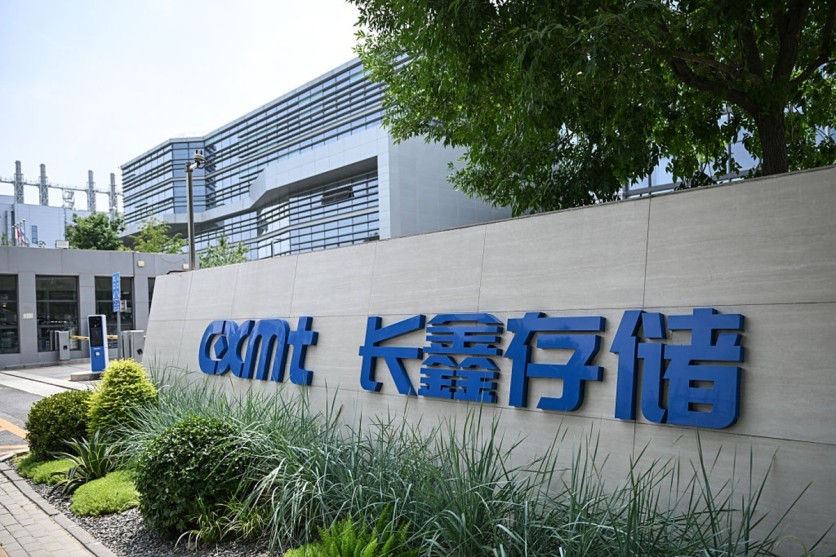
gettyimages.com
China's ChangXin Memory Technologies captured 10% of global DRAM revenue in Q2 2026 — the first time any Chinese chipmaker has crossed the double-digit threshold in a market that three companies controlled for three decades — but the quarter that made the milestone possible grew 385% year-over-year, and the structural cost gap that limits CXMT's ability to repeat it in a normal market remains intact.
New data from Counterpoint Research's Q2 2026 Global Memory Tracker, released today, shows CXMT rising from 4% to 10% — from 4% in Q2 2025 to 8% in Q1 2026 and now to 10% — a trajectory that arrived roughly two years ahead of what both Counterpoint and UBS had projected. Samsung led the global market with 38% revenue share, followed by SK hynix at 25%, and Micron at approximately 24% — a ranking in which Micron's revenue grew fivefold compared with Q2 2025 as AI-driven demand reshaped competitive positioning.
Whether those gains reflect durable competitive displacement or a supercycle windfall is the central question the 10% figure leaves open. The answer depends substantially on the thing the headline number does not show: manufacturing cost.
Read more: CXMT Ships HBM3E AI Memory to Alibaba and Cambricon: US Export Controls Failed to Stop It
What the 10% Number Actually Means
The DRAM market did not behave normally in Q2 2026. Total global DRAM revenue surged 57% quarter-over-quarter and 385% year-over-year — a boom driven by Samsung, SK hynix, and Micron redirecting advanced manufacturing capacity toward high-bandwidth memory (HBM) for AI accelerators, which compressed commodity DRAM supply and sent prices sharply higher. Micron noted publicly that its HBM ramp required a 3-to-1 conversion ratio of wafer capacity — meaning every wafer redirected to HBM production removed three DDR5 wafers from the commodity market.
CXMT stepped into that vacancy. The company's revenue surged 716% year-over-year in Q2 2026, not primarily because it took share from Samsung or SK hynix in a head-to-head competition, but because its larger rivals deliberately exited portions of the commodity DRAM market to chase higher-margin AI memory products. CXMT's products are reportedly priced only 5% to 10% below comparable Korean and American alternatives — not the deep discounting typically associated with a market entrant — which means its revenue gains reflect genuine volume growth in a constrained market, not a race to the bottom.
Whether those gains reflect durable competitive displacement or a supercycle windfall is the central question the 10% figure leaves open. The answer depends substantially on the thing the headline number does not show: manufacturing cost.
How Deep-Ultraviolet Lithography Creates a Structural Cost Ceiling
CXMT's entire manufacturing roadmap runs on deep-ultraviolet (DUV) lithography — 193-nanometer-wavelength machines that have been available to Chinese fabs, while the extreme-ultraviolet (EUV) tools produced exclusively by Dutch manufacturer ASML have been blocked from export to China since 2019 under Dutch export law enforced under US pressure. Where EUV exposes each circuit layer in a single precise pass, DUV requires two to four sequential exposures per layer — a technique called self-aligned double or quadruple patterning (SADP/SAQP) — to achieve equivalent feature sizes. Each additional pass introduces positional errors that accumulate and reduce the fraction of chips on any given wafer that meet specification.
The result is a structural cost-per-bit disadvantage of more than 30% compared to Samsung, SK hynix, and Micron, according to SemiAnalysis modeling and Morningstar analyst Wei Jingjie's independent cost analysis. Practically: CXMT requires roughly 30% more wafer starts than an EUV-equipped competitor to produce the same quantity of usable DRAM. In Q2 2026, with commodity DDR5 prices elevated by AI-driven capacity scarcity, CXMT achieved operating margins of approximately 70% despite this disadvantage — comparable to the margins its incumbents posted when the AI cycle was at its most distorting. In a normalized market, that arithmetic changes substantially.
For high-bandwidth memory, the cost challenge is compounded by a manufacturing complexity challenge. CXMT achieved risk production of HBM3E in September 2026 — small quantities now in the hands of Alibaba's T-Head division and Cambricon Technologies for qualification testing — but SemiAnalysis modeled CXMT's HBM3 eight-high stack yield at roughly 25% on a combined basis: 35% on the front end, 70% on the back end. Three of every four HBM stacks produced at that yield fail quality testing. HBM3E figures have not been publicly disclosed.
Is There a Way Around the Equipment Ceiling?
CXMT is pursuing a potential architectural workaround called bonded DRAM, in which the memory cell array and the peripheral control circuitry are fabricated on two separate wafers — each patterned at its best individually achievable DUV node — and then fused together using wafer-to-wafer hybrid bonding. Because the array and logic sit on separate substrates, the combined device achieves density equivalent to a more advanced single-wafer node without requiring EUV. Samsung is pursuing a similar architecture under its internal "B1b" project, and Korean industry assessments have suggested CXMT may be developing bonded DRAM faster than its Korean competitors expected. Bonded DRAM remains years from mass production at CXMT.
Domestically, China has made its first serious progress toward an indigenous immersion DUV lithography machine: Shanghai Aishengna shipped roughly five units in 2026, with roughly 20 scheduled for 2027 delivery to SMIC, Hua Hong Semiconductor, and CXMT. The scale of this achievement and its limits must be held together. Five units represents roughly 4% of the comparable immersion DUV units that ASML expects to ship this year. A Reuters source familiar with the program described Aishengna's machine as requiring further testing and "far from matching" ASML's competing models. The tool is not yet a competitive substitute for Western DUV equipment.
Why 15% Is Existential, Not Aspirational
The market share figure that matters most for understanding CXMT's strategic position is not 10%. It is 15%.
Hwang Min-sung, a research director at Counterpoint Research who spent more than 30 years at Samsung Electronics and in semiconductor sell-side research at Goldman Sachs and Credit Suisse before joining Counterpoint, offered the sharpest framing in today's report: Hwang set the 15% threshold in plain terms: "Fifteen percent is a threshold CXMT must cross to secure investment funds. All of its current investments are a race to reach that goal first." The historical basis for that number is not theoretical. Taiwanese DRAM manufacturers — Nanya, Inotera, ProMOS — lost their competitive viability when their global market share fell below 15% in 2008. Hwang's Taiwan 2008 collapse comparison laid out the stakes: "DRAM makers slipped under 15%, couldn't fund the next fab and collapsed to around 3% share into niche status. That's the line CXMT has to cross and everything they're building now is a race to get there first."
The path to 15% runs through a commodity DRAM market that may not stay as favorable as Q2 2026. When Samsung, SK hynix, and Micron complete their HBM capacity expansions — analysts point to roughly 2028 as the inflection — excess capacity will be redirected toward commodity DRAM, prices will normalize, and CXMT's 30%+ cost disadvantage will become the determining margin factor rather than a cost hidden by elevated prices. Nomura analyst Donnie Teng projects CXMT's share will reach 18% by end-2028, which would cross the 15% threshold with room to spare. Investor Dan Niles has offered an even more aggressive view, suggesting China could capture 30% of the global DRAM market by 2030.
Counterpoint Research's own baseline projection, published at the time of CXMT's IPO, called for approximately 11% bit share by 2028, reaching the 15% revenue threshold by 2035 — a far more conservative scenario that reflects the engineering gap CXMT must close while the commodity cycle is less favorable.
Tom's Hardware has reported that CXMT is targeting 30% global DRAM market share by 2030 through a planned sixth mega-fab in Beijing's Yizhuang district, which would bring total projected capacity to approximately 600,000 or more wafer starts per month — more than double its current trajectory.
From Commodity DRAM to HBM: Why the Revenue Mix Still Matters
Nearly 98% of CXMT's revenue still comes from commodity DRAM — DDR5, LPDDR5X, and now early LPDDR6 products in mass production — with high-bandwidth memory effectively absent from its commercial product mix. This concentration creates both a vulnerability and an opportunity. The vulnerability: CXMT is fully exposed to commodity DRAM pricing cycles. The opportunity: its competitors have deliberately vacated this space to chase HBM margins.
Server DRAM products grew from 8.4% of CXMT's revenue in 2024 to 26.5% in 2025, reflecting a deliberate push up the value stack. Signed long-term agreements with ByteDance, Tencent, and Baidu indicate that domestic Chinese cloud infrastructure has become CXMT's most stable and highest-value customer segment — a supply chain shift driven in part by US export controls limiting Chinese hyperscalers' access to Western memory. ByteDance signed a five-year server DRAM deal worth more than $7 billion in July 2026. Alibaba Group holds approximately a 5% stake in CXMT and serves as an anchor customer.
Read more: Goldman Sees China Chip Gap Narrowing to 34% by 2035, Lithography Still Binding Limit
What Buyers and Competitors Must Now Plan For
The 10% milestone, viewed against the context of today's Counterpoint data, tells a more specific story than any headline number conveys. CXMT is demonstrating that the three-company oligopoly that controlled the global DRAM market for three decades is no longer enforcing itself. It captured 10% of the market in a quarter where the market grew nearly 400%, which means its actual competitive displacement of the incumbents is smaller than the revenue share implies — but it exists, and it will grow as CXMT's wafer capacity approaches Micron's by year-end. Citrini Research projects CXMT will exit 2026 with approximately 350,000 wafer starts per month, roughly 25,000 below Micron's estimated year-end capacity.
For enterprise procurement teams with US government contracts: the Department of Defense's direct procurement ban on CXMT-listed entities has been in effect since June 30, 2026. An indirect ban covering products with embedded CXMT components takes effect June 30, 2027. A federal agency-wide ban under Section 5949 of the FY2023 National Defense Authorization Act takes effect December 23, 2027. Organizations with DoD contracts or federal procurement certifications should begin supply-chain audits before those deadlines — a commodity DRAM chip in a laptop, server, or network device may have originated at CXMT's Hefei fab regardless of what brand name appears on the finished product. Consumer-grade DDR5 from CXMT is now validated by every major motherboard maker for desktop use; LPDDR5X from CXMT is in HP, Asus, and Acer laptops sold outside the United States; and LPDDR6 from CXMT debuted in the Xiaomi 18 Fold announced August 29.
For Samsung, SK hynix, and Micron: the 10% milestone confirms that the implicit assumption embedded in the HBM pivot — that ceding commodity DRAM to a domestic Chinese challenger carries manageable risk — has now produced a challenger with double-digit share, a landmark IPO war chest, and domestic anchor customers with multi-year signed agreements. Counterpoint's Neil Shah stated that the question is "not about 'how' but 'when' CXMT will be able to break into the Big Three Memory Club."
For CXMT itself: the capital it deployed — ¥57.92 billion (approximately $8.6 billion) in IPO proceeds — is being directed toward DRAM technology upgrades (¥13 billion/approximately $1.9 billion), next-generation DRAM research (¥9 billion/approximately $1.3 billion), and manufacturing line upgrades (¥7.5 billion/approximately $1.1 billion). None of those named expenditures address the EUV ceiling directly — that constraint requires either bonded DRAM architecture to mature enough for mass production or a domestic DUV tool capable of matching Western equipment at scale, neither of which is imminent.
What Chinese Law Means for Any Buyer, Regardless of Price
The legal framework under which CXMT operates does not change with its market share. China's National Intelligence Law Article 7 requires all organizations and citizens under its jurisdiction to support, assist, and cooperate with national intelligence work — with no corporate opt-out mechanism under Article 14. China's Data Security Law (2021) and Cybersecurity Law (2016, with amendments effective January 1, 2026) impose additional data-handling and government-access obligations. State-linked shareholders held approximately 36% of CXMT's equity before its IPO.
For ordinary DRAM modules — passive components that store data at the direction of a processor — the practical exposure for end users is limited. A CXMT DDR5 stick in a desktop does not independently transmit data anywhere. The legal exposure falls on CXMT's own corporate operations, manufacturing records, and supply chain information: what chips it produces, for whom, on what specifications, at what yields, and with what vulnerabilities. For enterprise buyers, the concern is not primarily the passive hardware but the disclosure pipeline from CXMT's corporate and manufacturing systems to Beijing.
Chinese law also requires any company operating in China that discovers a security vulnerability in a network product to report vulnerabilities within 48 hours — before the OEM or device owner is informed. In the event of a discovered flaw in CXMT DRAM that has reached HP, Asus, or Acer laptop production lines, Beijing would learn of it before the laptop maker. This is not a theoretical risk; it is a structural condition of the legal framework that applies to CXMT's products in the field today.
How Independent Benchmarks Characterize the Technology Gap
CXMT's consumer DDR5 products performed essentially equivalently to Samsung and SK hynix kits in gaming benchmarks tested by Hardware Unboxed in February 2026, as documented in independent DDR5 benchmark analysis. Enterprise-grade independent audits at production-scale server workloads are substantially more limited. CXMT does not publicly disclose yield rates for its leading-node DRAM. Benchmark claims from the company itself should be treated as unverified until confirmed by named independent sources, per standard practice for technology originating in authoritarian jurisdictions.
The technology gap to the leading-edge producers is real and multidimensional. CXMT's cost-per-bit disadvantage exceeds 30% versus Samsung and SK hynix (confirmed by SemiAnalysis, corroborated by Morningstar). Its manufacturing node is estimated at roughly two to three generations behind Samsung and SK hynix's leading-edge production (TechInsights/Seoul Economic Daily). In HBM — the segment where the real AI memory margins reside — SK hynix entered HBM3E mass production in 2024 and is now shipping HBM4 in volume; Samsung has delivered HBM4E customer evaluation samples. CXMT has risk-production quantities of HBM3E in customer hands for testing, at yields not publicly confirmed.
The milestone of reaching 10% is not in question. Whether that milestone reflects structural competitive strength or a favorable market coincidence — and whether CXMT can reach the 15% threshold that has historically determined whether a DRAM maker funds its next generation or fades into niche irrelevance — is the question the Q2 2026 data opens rather than resolves.
Frequently Asked Questions
What does CXMT's 10% DRAM market share milestone actually mean for buyers and investors?
The 10% figure reflects two things simultaneously: genuine volume growth at CXMT, and an extraordinary market expansion in which total global DRAM revenue grew 385% year-over-year in Q2 2026. CXMT's 716% revenue growth in the same period outpaced the market expansion — which means some real competitive displacement occurred — but the gap in manufacturing cost (30%+ per bit) remains intact. For buyers, the practical significance is that a fourth significant DRAM supplier now exists, with double-digit share, domestic Chinese anchor customers, and expanding product range from DDR5 to LPDDR6 to early HBM3E samples. For US government procurement teams, the compliance deadlines (June 2026, June 2027, December 2027) are already running. For investors in Micron, Samsung, and SK hynix, the 10% milestone confirms that the HBM pivot strategy implicitly ceded commodity DRAM territory and that CXMT has converted that vacancy into a durable position with long-term supply agreements.
Why is 15% market share considered a survival threshold, not just a growth target?
The 15% threshold reflects the capital requirements of DRAM manufacturing: building and upgrading fabs requires tens of billions of dollars, and below roughly 15% global share, a DRAM maker cannot generate enough revenue to fund the next generation of process technology at competitive cost. Counterpoint Research's Hwang Min-sung — who spent decades at Samsung and Goldman Sachs before specializing in memory research — points to the collapse of Taiwan's DRAM industry in 2008 as the reference case: makers including Nanya and Inotera slipped below 15% share, could not fund their next fabs, and contracted to niche status at roughly 3% share. CXMT is explicitly racing to avoid repeating that trajectory. At 10%, it is past the midpoint of the climb — but the path from 10% to 15% runs through a commodity DRAM market that may be more competitive in 2027-2028 as incumbent HBM capacity comes online and prices normalize.
Is CXMT DRAM safe for enterprise or government use?
The compliance answer and the security answer are distinct. On compliance: the Department of Defense's direct procurement ban on CXMT-listed entities has been in force since June 30, 2026; an indirect ban covering embedded CXMT components takes effect June 30, 2027; and all federal agencies face a procurement prohibition starting December 23, 2027 under Section 5949 of the FY2023 NDAA. Organizations with federal contracts or DoD relationships should conduct supply-chain audits before those deadlines regardless of whether they have knowingly purchased CXMT products. On security: DRAM is a passive component that does not independently transmit data. The security risk from CXMT memory falls on CXMT's own corporate and manufacturing systems — which are subject to China's National Intelligence Law (2017) Article 7, requiring mandatory cooperation with state intelligence demands, with no corporate opt-out. Additionally, Chinese law requires CXMT to report any discovered chip vulnerability to Beijing within 48 hours before notifying affected OEMs or device owners — a structural information asymmetry that enterprise buyers should weigh in their sourcing decisions.
Does CXMT's performance prove that US export controls on DRAM technology have failed?
Not straightforwardly. Export controls delayed CXMT's progress — the company's HBM3E production is arriving roughly one year ahead of earlier forecasts, not a decade early, which means controls imposed real costs on the program's timeline. On commodity DRAM, controls blocked EUV access and imposed the 30%+ cost-per-bit disadvantage that currently limits CXMT's ability to compete on price. What controls did not prevent is CXMT reaching 10% share in a market that expanded 385% in a single quarter, partly because the structure of the commodity DRAM vacancy created by the incumbents' HBM pivot was not something export controls could address. The more consequential test of export control effectiveness will come when commodity prices normalize and CXMT must grow share against competitors who are actively defending it, rather than by filling a vacancy they left open.

-
 C114 Communication Network
 -
 Communication Home
