
 Search

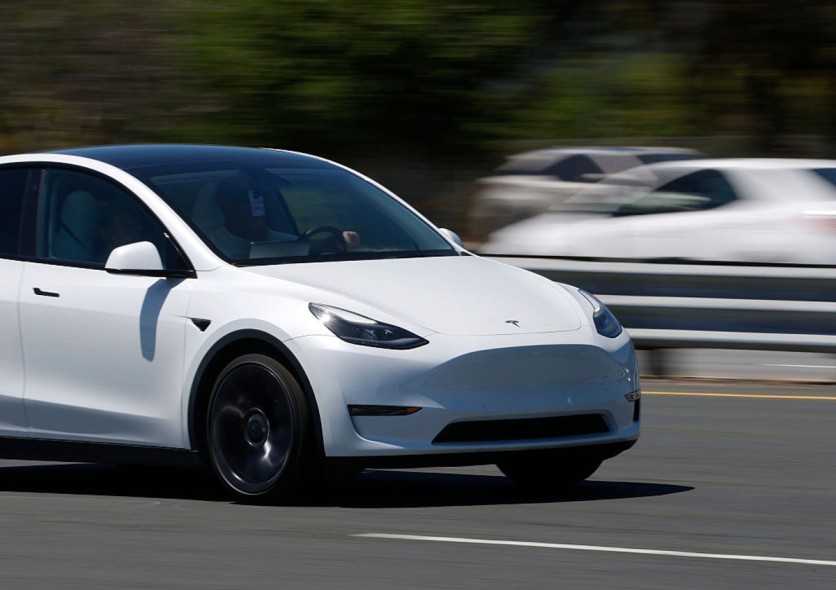
Justin Sullivan/Getty Images
Slovenia's transport authority authorized Tesla's Full Self-Driving (Supervised) system Monday, making the small Central European country the sixth EU member state to clear the camera-only driver-assistance system for public roads — and setting up a defining 28-day stretch before a vote that could either extend that approval to all 27 EU nations or leave the patchwork in place indefinitely.
The authorization is the latest domino in a cascade that began on April 10, when the Dutch vehicle authority RDW granted first EU approval for FSD Supervised after more than 18 months of independent testing. But the cascade faces a structural obstacle: the countries that have approved FSD so far represent less than 9% of the EU's population, far below the 65% population threshold requirement for the Technical Committee on Motor Vehicles (TCMV) to grant EU-wide authorization. France has declined to issue national authorization and is conducting road tests of two Tesla FSD vehicles before deciding its TCMV vote position. Sweden has told the committee in writing that it will vote against EU-wide approval unless Tesla removes its speed-offset feature, via Sweden's speed-limit objection letter to the TCMV dated April 30.
How the Cascade Mechanism Works
The sequence of national approvals is not coincidence — it is an engineered pathway built into EU vehicle-type approval law. When the RDW issued its authorization under UN Regulation 171 (the framework governing Driver Control Assistance Systems) alongside an Article 39 exemption legal pathway under EU Regulation 2018/858, it created a legal foundation that other member states can accept without repeating the full testing process. Each subsequent country still conducts its own assessment, but that assessment can be built on the Dutch test data rather than starting from scratch.
The Dutch approval was itself the product of an unusually rigorous process. Tesla submitted documentation covering 4,500 test scenarios on European roads and accumulated more than 1.6 million kilometers of FSD driving on European public roads, across more than 400 compliance requirements, before the RDW signed off. The regulator stressed that FSD Supervised is not an autonomous system — the driver remains legally responsible and must be prepared to take over at any moment — but concluded that its continuous driver-monitoring requirements made it safer than comparable driver-assistance systems already on the market.
Lithuania followed on May 20, and Lithuania recognized Dutch FSD assessment under EU Regulation 2018/858 to formally do so. Estonia recognized it on May 29, and Denmark's provisional June 9 authorization was followed a day later when Belgium's Flemish minister signed approval on June 10. Slovenia's authorization Monday extends that corridor to six countries.
The practical implication for drivers is concrete: a Tesla owner can now use FSD Supervised continuously across the Netherlands, Lithuania, Estonia, Denmark, Belgium, and Slovenia without disengaging at national borders. The system will disengage automatically — with advance warning — only when entering an EU country that has not yet recognized the approval.
What the Safety Data Shows — and What It Does Not
Each new authorization has been underpinned by a growing body of real-world performance data that Tesla publishes under Tesla's Dutch safety reporting obligation tied to its Dutch approval. The first European dataset, covering April 10 through June 5 in the Netherlands, showed that vehicles using FSD Supervised recorded 3.5 times fewer crash rate than manually driven Teslas on Dutch roads, across a combined 23.6 million kilometers (14.7 million miles) of driving. On highways specifically, the Dutch data recorded zero FSD-related collisions across 16.6 million kilometers (10.3 million miles).
An updated dataset released in late July, reflecting data from five approved countries and a cumulative 65 million kilometers (40.4 million miles) of EU FSD driving, showed the collision-rate advantage rising to 5.2x safety advantage across Europe across all road types. On highways specifically, Tesla reported zero highway collisions across 41.9M km, against 88 collisions in 429.3 million kilometers (266.8 million miles) of manual driving over the same period, a claimed 8.5-times safety margin. The data also showed 13.4x fewer emergency braking events and 7.1 times less harsh braking compared to the manual fleet.
On September 1, Tesla released its most comprehensive EU dataset to date, covering a 100 million km EU safety dataset driven by more than 70,000 European customers. That dataset reported FSD Supervised to be 4.1 times less likely to result in a crash than manual Tesla driving, with major crash reductions of 69% on arterial roads, 50% in city environments, and 45% on highways. Automatic emergency braking activations were reported to be up to 84% lower.
These figures carry more institutional weight than typical manufacturer safety claims, because the RDW required Tesla to commit to mandatory annual performance reporting as a condition of type approval. The Dutch minister's parliamentary FSD defense in June stated explicitly that the approval was based on the regulator's own independent testing — not Tesla's marketing materials.
Critics have noted that researchers challenge FSD safety methodology, arguing the comparison overstates safety benefits by using different baseline populations and that some underlying measurement data predates the EU approval period by as much as nine months. Three non-highway collisions were recorded in the Netherlands dataset across 7 million non-highway kilometers (4.35 million miles), a figure that has not been widely contextualized against local collision reporting standards.
A System That Can Legally Speed — and Why Sweden Objects
FSD Supervised in EU markets includes a Speed Offset feature that allows the vehicle to exceed posted speed limits by a driver-defined margin. In practice, this means the system can match surrounding traffic flow even when that flow exceeds the posted limit. France's Transport Minister speed concern — data cited in Philippe Tabarot's July 22 statement — acknowledged instances of FSD traveling at speeds up to 70 kilometers per hour (43 miles per hour) in 50 km/h (31 mph) zones when traffic conditions warranted it.
In an April 30 letter to the TCMV — obtained through a freedom of information request and reported by Reuters — the Swedish Transport Administration stated that "allowing automated systems to systematically exceed legal speed limits ... risks undermining both the legal framework and the expected safety benefits of vehicle automation," per Sweden's formal TCMV written objection. Its conclusion was unambiguous: remove the feature, or the committee should reject the technology. A Swedish Transport Administration spokesperson confirmed in June that the position had not changed and that Sweden's representative would "only vote in favour if Tesla's speeding functionality is removed," as reported in sources citing Sweden's unchanged speed-offset position.
Norway raised similar concerns. Finland's transport agency Traficom described itself as broadly positive on FSD but said it was awaiting Tesla's answers on driver handover times and system behavior on high-speed curves in poor weather before signing off — a question directly touching camera-only performance limitations in Nordic driving conditions, as documented in Finland's conditional Traficom FSD assessment.
Tesla relies exclusively on cameras and end-to-end neural networks trained on billions of kilometers of real-world driving data, with no LiDAR or radar. Most competing supervised autonomy systems from Mercedes, BMW, and Ford use multi-sensor approaches that combine cameras with LiDAR or radar — architectures critics argue are more robust in adverse weather, precisely the conditions Finland and Sweden raised as concerns. The "Full Self-Driving" name itself prompted Nordic regulators' FSD branding concern in the TCMV's May session, reflecting a broader expert consensus that the SAE Level 2 classification (where the driver remains legally responsible at all times) conflicts with how most consumers interpret the word "autonomous."
France Evaluates — and the Population Math Is Brutal
France's stance has been the most consequential obstacle to the October 6 vote. On July 22, Transport Minister Philippe Tabarot stated that France's Transport Minister speed concern made the safety trade-offs of FSD Supervised "not yet sufficient to authorize it as it currently stands." He cited two specific concerns: the speed-ceiling issue, and insufficient driver attention monitoring in urban environments — particularly at intersections and on roundabouts. France's vehicle approval authority adopted an "EU-first" stance, declining to issue national authorization until the TCMV votes.
That position has since moved. Following a September 2 videoconference between Tabarot and Elon Musk, France began road-testing two Tesla FSD vehicles on public roads ahead of the October vote. French transport ministry officials confirmed no blocking issues had been identified as of the start of September, though France has not publicly committed to supporting the TCMV vote. Musk stated on social media on July 22 that Musk's France delay death claim would result in lives being lost — a framing reflecting Tesla's broader argument that any system demonstrably safer than human drivers imposes a mortality cost with every day it remains unauthorized.
The population arithmetic nonetheless makes France's position significant beyond its own market. For the TCMV to extend the Dutch approval bloc-wide, at least 15 of the EU's 27 member states must vote in favor, and those member states must together meet the TCMV's 65% population vote threshold. The six countries that have now approved FSD — the Netherlands, Lithuania, Estonia, Denmark, Belgium, and Slovenia — account for roughly 8.9% of the EU's population. France alone accounts for approximately 15%. Germany, Italy, and Spain — the three other large EU economies — have not approved FSD nationally and have not publicly committed to a TCMV yes vote.
That gap is not closing quickly. Tesla has said that Spain, which ran a limited authorized test program, has indicated it will support EU-wide approval once the TCMV vote occurs. Finland's Traficom has signaled Finland's conditional EU vote support. Italy has indicated it is reviewing the Dutch test data and is open to national authorization but has not committed.
Whether Tesla has addressed the speed-offset issue by October 6 — or whether it has agreed to remove the feature in EU markets — is the single most concrete test of whether the vote has any chance of clearing 65%.
Why the Cascade Could Be a Feature or a Flaw
The cascade mechanism has been remarkable for its speed: six national approvals in fewer than five months, each built on the foundation of a single rigorous Dutch assessment. But the same structural efficiency that makes the cascade fast also concentrates risk.
When Lithuania, Estonia, Denmark, Belgium, and now Slovenia all accepted the Dutch RDW's assessment under EU's mutual recognition vehicle approval, none of them independently verified one specific dimension that Nordic regulators have since flagged: how the system's camera-only architecture performs on high-speed curves in poor weather. The RDW's assessment was conducted on Dutch roads in Dutch conditions. If that assessment missed a performance limitation — or if that limitation emerges only in the specific weather and road conditions of, say, Slovenia's winter mountain passes — the error does not stay confined to the Netherlands. It propagates simultaneously through every country that accepted the mutual recognition. That is the structural trade-off embedded in a cascade-approval architecture: regulatory efficiency and systemic concentration risk are the same mechanism, seen from two different angles.
What an October Yes or No Means for Drivers
If the TCMV votes yes with qualified majority on October 6, an EU-wide type approval would enter into force. Existing vehicle regulations would still need to be revised through a legislative process expected to take approximately two years. In the interim, the approval creates a clear legal foundation for all 27 member states to authorize FSD nationally without requiring individual national assessments — and for Tesla to pursue regulatory approval for driverless robotaxis in Europe, which Elon Musk has identified as the next step after FSD Supervised clears the bloc.
If the vote fails or is delayed — because Sweden, and potentially enough other large states, withhold support — the cascade of national approvals continues to be valid in countries that have already issued them. New member states can still join the approved group individually, using the Dutch assessment as their foundation. But the pressure on the October 6 vote would not disappear: Tesla's argument that a demonstrably safer system is being denied to European drivers carries more political weight with every additional month of safety data from the approved markets.
For the approximately 70,000 European Tesla owners currently using FSD Supervised — logging over one million kilometers per day across the approved corridor — the immediate question is whether October delivers the clear, continent-wide framework that both Tesla and regulators have described as the eventual destination. Slovenia's Monday authorization is the latest evidence that patience for the patchwork is thinning. Whether the October 6 vote resolves it or extends it depends, more than anything else, on whether Tesla's speed-offset feature survives contact with European regulatory politics.
Frequently Asked Questions
Which EU countries have authorized Tesla Full Self-Driving, and can I use it across borders?
As of September 8, 2026, six EU member states have authorized FSD Supervised for public roads: the Netherlands (April 10), Lithuania (May 20), Estonia (May 29), Denmark (June 9), Belgium (June 10), and Slovenia (September 8). Tesla has confirmed that FSD stays active continuously when crossing between approved countries, with no manual takeover required at national borders. If you cross from an approved country into a non-approved one, the system disengages automatically and in advance — you receive a warning before the border, not at it. All authorized Teslas must have Hardware 4 (vehicles produced since early 2023), and drivers must complete a mandatory tutorial and quiz before activating FSD for the first time in EU markets.
What is the TCMV vote on October 6, and why does it matter?
The Technical Committee on Motor Vehicles — the EU body responsible for vehicle type approval — is expected to hold a formal vote on October 6 TCMV vote date on whether to extend the Dutch RDW's approval of FSD Supervised to all 27 EU member states. For the vote to pass, at least 15 member states must vote in favor, and those states must together represent at least 65% of the EU's population. The six approved countries currently cover only about 9% of that threshold. If the vote passes, Tesla gains a clear legal foundation for EU-wide FSD deployment — and the right to pursue regulatory approval for fully driverless robotaxis in Europe. If it fails, national approvals remain valid but the bloc-wide harmonization that regulators and Tesla have both described as the ultimate goal is delayed.
Why is France cautious about Tesla FSD, and what exactly does Sweden want changed?
France's Transport Minister stated in July that FSD's safety trade-offs were "not yet sufficient" to authorize, citing the system's ability to match traffic flow above posted speed limits, and insufficient driver attention monitoring at intersections and in urban environments. France has since moved toward active evaluation: following a September 2 videoconference between Minister Tabarot and Elon Musk, France began road-testing two Tesla FSD vehicles, with French officials reporting no blocking issues identified as of early September. France has not yet committed to a TCMV yes vote. Sweden's objection is more precisely targeted — its Transport Administration sent the TCMV a formal written recommendation that the vote should fail unless Tesla removes the Speed Offset feature, which allows FSD to be set to exceed legal speed limits by a driver-defined margin. Sweden's position has not changed since April. Norway raised similar concerns. Whether Tesla modifies or removes the feature before October 6 is the most concrete variable in the vote's outcome.
If all the approved countries accepted the same Dutch assessment, what happens if that assessment missed something?
This is the structural risk embedded in the cascade-approval mechanism. Each of the five countries that accepted the Dutch RDW's assessment via mutual recognition did so without independently testing the camera-only system's performance in their own road and weather conditions. Finland explicitly asked about high-speed curves in poor weather before its own evaluation — a question that points directly at what the Dutch assessment may not have fully addressed. If a limitation of Tesla's camera-only architecture emerges in conditions specific to, say, Slovenia's winter roads, it is not a problem isolated to the Netherlands — it is a problem for every country that accepted the mutual recognition. This concentration of assessment authority in a single foundational approval is the reason Nordic regulators raised the questions they did before either signing on or staying neutral.

-
 C114 Communication Network
 -
 Communication Home
