
 Search

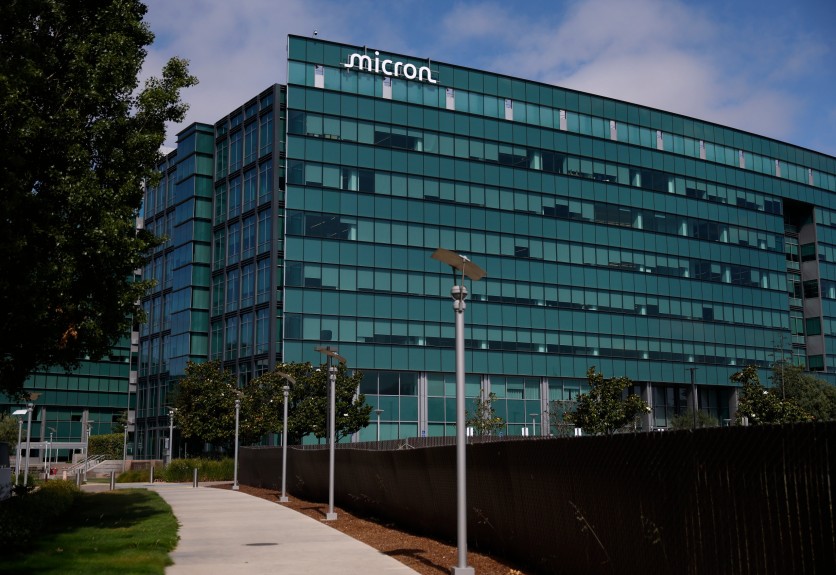
The logo for Micron Technology is posted at their headquarters on June 25, 2025 in San Jose, California. Semiconductor maker Micron Technology will report third-quarter earnings today after the closing bell. Justin Sullivan/GettyImages.com
The global DRAM industry generated $154.73 billion in total revenue between April and June 2026 — a 59.5% sequential surge that few market observers would have predicted even two years ago. But buried inside that aggregate milestone is a competitive story that a single headline number obscures: for the first time in the current supercycle, Micron Technology posted a higher quarterly revenue growth rate than either Samsung Electronics or SK Hynix — growing 65.5% quarter-on-quarter while its larger rivals grew 63.4% and 37.9% respectively, according to TrendForce's Q2 revenue report. Combined with Micron's completed $1.8 billion acquisition of a 300,000 square-foot (27,871 sq m) Taiwan cleanroom facility, the quarter marks the clearest signal yet that the Big Three's revenue hierarchy — stable for most of a decade — is entering a period of genuine competitive flux.
What Samsung's Fastest Bit Shipment Growth Actually Means
Samsung Electronics led the field by revenue, posting $60.98 billion in Q2 2026 for a 39.4% market share — a result TrendForce attributed directly to Samsung having posted the strongest bit shipment growth among the three major suppliers. Samsung's early move into HBM4 mass production, which began in February 2026, contributed to that growth; the sixth-generation standard doubles the memory interface width from 1,024 to 2,048 bits and carries a manufacturing premium over conventional DDR5.
In HBM specifically — the 3D-stacked memory architecture that powers every AI accelerator deployed at scale today — Samsung surged from a 21% revenue share in Q1 2026 to 33% in Q2, cutting SK Hynix's lead from 37 percentage points to 17, according to Counterpoint's global HBM tracker. Samsung's HBM4 reliability has improved materially since mass production began: yield climbed from below 60% at launch in February to approximately 80% by August, according to Seoul Economic Daily reporting.
Read more: Memory Runs Dry: Samsung and SK Hynix Drop Below 10-Day Supply as HBM4 Devours Capacity
Why SK Hynix's HBM Leadership Became a Q2 Liability
SK Hynix ranked second in Q2 revenue with $38.59 billion and a 24.9% market share — down sharply from 28.8% in Q1. The decline was not a sign of competitive weakness in the conventional sense. SK Hynix holds approximately 50% of the global HBM market by revenue in Q2 2026, and its record 76% operating margin on total revenue of ₩79.3 trillion (approximately $59.0 billion) reflects genuine pricing power. The problem was timing.
SK Hynix locked in AI customer agreements — primarily with Nvidia — earlier than its competitors. Those agreements locked in pricing before the dramatic surge in conventional DRAM contract prices that defined Q2. When server DDR5 and other conventional memory products surged 58–63% quarter-on-quarter in Q2, SK Hynix's HBM revenue recognized only the contracted price, not the spot market rate. The company's share erosion was, in effect, the arithmetic cost of having negotiated its supply agreements too early.
Counterpoint Research Director MS Hwang characterized the dynamic explicitly: "Although SK Hynix registered record earnings sequentially and annually, it grew slower than the competition as its market share declined with Samsung and Micron squeezing from both ends," he wrote in Counterpoint's Q2 2026 analysis. In HBM specifically, SK Hynix's revenue share fell from 58% in Q1 to 50% in Q2 as Samsung's HBM4 ramp took hold.
How Micron Grew Faster Than Both Rivals — and Why That's Structurally Significant
Micron posted Q2 revenue of $36.0 billion, up 65.5% quarter-on-quarter, lifting its share to 23.3%. That growth rate surpassed Samsung's 63.4% and more than doubled SK Hynix's 37.9%.
The mechanism behind Micron's outperformance is precise: the company deliberately prioritized conventional server DRAM — DDR5 RDIMMs and high-capacity server modules — in its product mix while operating under capacity constraints. Because conventional server DRAM prices are set on shorter contract cycles than HBM supply agreements, Micron captured more of the Q2 price surge than SK Hynix, whose HBM contracts delayed price recognition. Counterpoint Research data confirms that Micron's HBM share fell from 21% to 18% in Q2, meaning the growth came entirely from conventional server memory rather than the highest-margin product.
The revenue gap between SK Hynix and Micron narrowed to roughly $2.59 billion, down from a much wider margin in prior quarters. By Counterpoint Research's separate methodology, which uses slightly different revenue allocation conventions, the gap shrank further still — approximately 1 percentage point of market share, or roughly $259 million. Citrini analyst Jukan noted on August 4 that "SK Hynix leads Micron by only about 1 percentage point in terms of revenue" according to Counterpoint data.
"Samsung and Micron are squeezing from both ends," Hwang noted, and the VP of research at Counterpoint, Neil Shah, said Micron "is now a real contender for the number two position, provided it has the capacity to back up the demand," per Counterpoint's Q2 DRAM analysis.
Micron's $1.8 Billion Fab Acquisition: The Capacity That Changes the Math
The capacity question Shah raised has a specific answer: the former Powerchip Semiconductor Manufacturing Corp. (PSMC) P5 fabrication site in Tongluo, Taiwan.
Micron completed the acquisition of the Tongluo site on March 15, 2026, for $1.8 billion — taking ownership of 300,000 square feet of existing cleanroom (27,871 sq m) of 300mm space. The site sits approximately 15 miles (24 km) from Micron's existing vertically integrated mega-campus in Taichung, enabling operational synergies across both facilities. Micron began installing equipment at the site on March 26, 2026.
Manish Bhatia, Micron's executive vice president of global operations, said at the Tongluo acquisition closing: "Memory is a strategic asset that dictates AI product performance, and the acquisition and phased ramp of this site strengthens our ability to capitalize on these significant opportunities."
TrendForce projects that Phase 1 of the Tongluo ramp will add over 10% to Micron's capacity — measured against Q4 2026 levels — beginning in the second half of 2027. Micron is also constructing a second cleanroom at Tongluo of comparable scale — approximately 270,000 square feet (25,084 sq m) — with groundbreaking targeted for the end of Micron's fiscal year 2026.
For SK Hynix, the competitive implication is direct. Its Q2 revenue lead over Micron sat at approximately $2.59 billion under TrendForce's methodology — roughly a 7.2% margin. If Micron adds more than 10% of its current capacity from Tongluo alone, while continuing to prioritize higher-ASP server DRAM, the revenue gap with SK Hynix becomes a live competitive question by late 2027.
Read more: Micron Q3 2026 Earnings: $100B in Contracts Signals AI Memory Cycle Break
What PSMC's 167.8% Surge Reveals About the Mature-Node Supply Chain
The competitive movement among the Big Three has created an unexpected beneficiary at the bottom of the market hierarchy: PSMC itself. The Taiwanese chipmaker posted DRAM revenue of $115 million in Q2 2026, up 167.8% quarter-on-quarter — the highest growth rate of any major DRAM supplier in the quarter.
PSMC's gains reflect a structural void. As Samsung, SK Hynix, and Micron migrate production to advanced processes and concentrate wafer starts on server and HBM applications, mature-node DRAM — the DDR4 and DDR3 used in mid-range consumer devices — has become structurally undersupplied. Nanya Technology posted revenue growth of 68.3% to $2.612 billion in Q2 for the same reason; Winbond posted comparable gains. Buyers who cannot secure allocations from the Big Three are turning to Taiwanese specialty suppliers, giving those suppliers pricing leverage that would have been unimaginable in a normal market cycle.
PSMC's position is set to evolve further under the terms of its deal with Micron. TrendForce confirmed that PSMC is expected to receive a 1Y nanometer process license from Micron — a significant upgrade from PSMC's current 25nm and 38nm capabilities. The 1Ynm license would enable PSMC to produce denser DDR4 modules at higher margins, strengthening its competitive position in the consumer DRAM segment without placing it in direct competition with Micron's advanced DDR5 and HBM product lines.
The HBM Architecture That Drives It All — and What It Costs the Market
Understanding the competitive dynamics of Q2 2026 requires understanding one engineering constraint: producing a single HBM4 module consumes roughly triple the wafer capacity of producing an equivalent amount of conventional DDR5 DRAM.
The reason is structural. HBM4 stacks 16 individual DRAM dies vertically in a single package — up from 12 dies in the HBM3E generation currently dominant in deployed AI accelerators. Each die is ground down to approximately 30 microns during manufacturing, then drilled with thousands of through-silicon vias (TSVs): microscopic vertical electrical channels that carry signals between stacked dies. The grinding, TSV drilling, and thermal-compression bonding required to align each die to micron-level tolerances all introduce yield losses that do not exist in the manufacture of flat DDR5. HBM4's 2,048-bit interface — double the 1,024 bits of HBM3E — delivers about 2 terabytes bandwidth per second per stack, which is why every major AI accelerator is designed around it.
TrendForce projects that HBM wafer input as a share of total DRAM wafer starts among the Big Three will reach roughly 22% by late 2026, rising to roughly 30% by the end of 2027. Every step of that progression mechanically removes three conventional DDR5 wafers' worth of manufacturing capacity from the market for each HBM wafer added. This crowding-out effect is visible at the Q2 supplier level: Samsung, SK Hynix, and Micron have all reduced wafer allocations to DDR4 and other mature-node products, forcing buyers of consumer DRAM to absorb the resulting price increases or turn to Taiwanese alternatives.
TrendForce forecasts that from 2026 to 2027, the three major suppliers will primarily ramp advanced process nodes rather than adding raw wafer starts through greenfield capacity. New fab construction at scale (Samsung's P5 facility, SK Hynix's Yongin Y2, Micron's Idaho ID1 campus) will not reach meaningful output until 2028 at the earliest.
Q3 Outlook: Moderating Prices, Persistent Structural Tightness
TrendForce projects that the blistering pace of contract price increases will moderate in Q3 2026, with conventional DRAM prices forecast to rise 13–18% quarterly — a meaningful step down from the extraordinary gains of Q1 (when prices rose approximately 90–95%) and Q2 (58–63%). The moderation reflects two forces: weakening demand in PC and smartphone applications as higher prices push up device bills-of-materials, and the increasingly dominant role of long-term supply agreements in governing server DRAM pricing.
The consumer and PC segments will remain severely undersupplied. Dell, Lenovo, and Asus have each confirmed retail price increases of 15–20% for H2 2026, driven by memory's rising share of total device costs. Samsung's own Galaxy smartphone division posted its first quarterly loss in Q2 2026 — ₩700 billion (approximately $521 million) — even as the same company's semiconductor division set all-time profit records.
KB Securities analyst Kim Dong-won projects that DRAM and NAND demand growth will exceed supply growth by more than 10 percentage points in 2027, a scenario that would represent the tightest supply conditions in the industry's history. Meritz Securities analyst Kim Sunwoo has estimated that suppliers are meeting only 75–80% of DRAM demand in the second half of 2026, a fulfillment rate that could fall to approximately 60% in 2027.
An Unresolved Legal Dimension
One dimension of the current supply structure remains contested in court. A class-action lawsuit filed June 25, 2026 in the U.S. District Court for the Northern District of California — Garciaguirre v. Samsung Electronics, Case No. 5:26-cv-06345 — alleges that Samsung, SK Hynix, and Micron coordinated the shift toward HBM production as a pretext for artificially restricting commodity DRAM supply, driving prices up approximately 700% since 2022. The case, assigned to Judge Noel Wise, invokes Section 1 of the Sherman Act and seeks treble damages and injunctive relief.
All three companies have denied the allegations. Micron stated it competes fairly and lawfully "in compliance with all applicable laws wherever we do business." The complaint is notable for citing prior conduct: Samsung and Hynix (now SK Hynix) pleaded guilty in 2005 to criminal DRAM price-fixing between 1998 and 2002, paying $300 million and $185 million respectively. Micron avoided penalties in that case by cooperating with the investigation. The allegations in the current case remain unproven and the defendants have not yet responded in court.
Whether the supply tightness that underpins Micron's Q2 outperformance reflects independent competitive strategy or something more coordinated is ultimately a question for the court. What the data confirms is that Micron, whatever its competitive strategy, entered Q3 2026 with the fastest Q2 growth rate among the three companies that control approximately 90% of global DRAM revenue, a newly owned cleanroom facility in Taiwan, and a second-place gap with SK Hynix that has narrowed to a fraction of its prior level.
Korean won conversions in this article are approximate, based on a rate of ₩1,344 per USD, as of September 7, 2026.
Frequently Asked Questions
How did Micron outgrow Samsung and SK Hynix in Q2 2026 if it is the smallest of the three by revenue?
Micron's 65.5% quarter-on-quarter revenue growth in Q2 2026 outpaced Samsung's 63.4% and SK Hynix's 37.9% primarily because of how each company positioned its product mix relative to the quarter's pricing dynamics. SK Hynix had signed long-term supply agreements with AI customers — locking in HBM prices before the dramatic surge in conventional server DRAM contract prices that defined the quarter. Because SK Hynix receives contracted HBM prices rather than spot rates, its revenue growth was constrained even as underlying demand for its chips remained strong. Micron, with a higher proportion of conventional server DRAM in its mix and shorter-cycle pricing contracts, captured more of the Q2 price surge. Micron's HBM market share actually fell from 21% to 18% in Q2 — meaning its growth came entirely from conventional server memory, not from the highest-margin product category.
What is the PSMC Tongluo fab, and why does it matter for Micron's competitive position?
The Tongluo fab is a former Powerchip Semiconductor Manufacturing Corp. (PSMC) P5 facility in Miaoli County, Taiwan, that Micron acquired for $1.8 billion and took ownership of on March 15, 2026. It comprises approximately 300,000 square feet (27,871 sq m) of existing 300mm cleanroom space — the standard wafer size for advanced DRAM production. Micron began equipping the site in late March and is constructing a second comparably sized cleanroom. TrendForce projects that the Tongluo site's Phase 1 ramp will contribute more than 10% of Micron's total global capacity by the second half of 2027. For competitive context: Micron's Q2 revenue trailed SK Hynix by approximately $2.59 billion under TrendForce's methodology. Adding more than 10% capacity to a company already growing at the fastest rate among the Big Three makes the second-place revenue position a live competitive question by late 2027.
Will DRAM prices drop once new fab capacity comes online in 2027?
Probably not enough to matter for buyers planning 2027 procurement. The major new capacity investments — Micron's Tongluo Taiwan site (meaningful output starting H2 2027), SK Hynix's M15X Cheongju EUV fab, Samsung's Pyeongtaek P4 HBM ramp, and Micron's Idaho ID1 expansion (not significant until 2028) — are all arriving at a time when TrendForce projects the supply-demand imbalance will actually worsen, not improve. KB Securities projects that bit-demand growth for DRAM will exceed supply growth by more than 10 percentage points in 2027. TrendForce does not project meaningful price normalization for conventional DRAM before Q4 2027 at the earliest, and analyst consensus puts the earliest potential for genuine supply balance in 2028. Buyers without secured supply agreements for 2027 should treat that as an immediate procurement priority — enterprise lead times for large DRAM orders have stretched beyond 40 weeks, and distributor quote validity windows have narrowed to as few as 48 hours.
How does producing HBM4 make the overall DRAM shortage worse?
Because HBM4 and conventional DRAM share the same manufacturing equipment and wafer-start capacity. Producing one wafer's worth of HBM4 removes approximately three wafers' worth of capacity from conventional DDR5 or DDR4 production — a conversion ratio Micron has publicly confirmed. HBM4's 16-die vertical stack (each die thinned to approximately 30 microns and drilled with thousands of microscopic through-silicon vias) introduces yield losses and process complexity that do not exist for flat DDR5 wafers, which is why HBM consumes so much more manufacturing capacity per bit produced. TrendForce projects that HBM wafer inputs will account for roughly 22% of total DRAM wafer starts by the end of 2026 and approximately 30% by the end of 2027 — meaning roughly a third of the industry's manufacturing capacity will produce memory that can only be used in AI accelerators, permanently removing that capacity from the consumer market regardless of what consumer demand does.

-
 C114 Communication Network
 -
 Communication Home
