
 Search

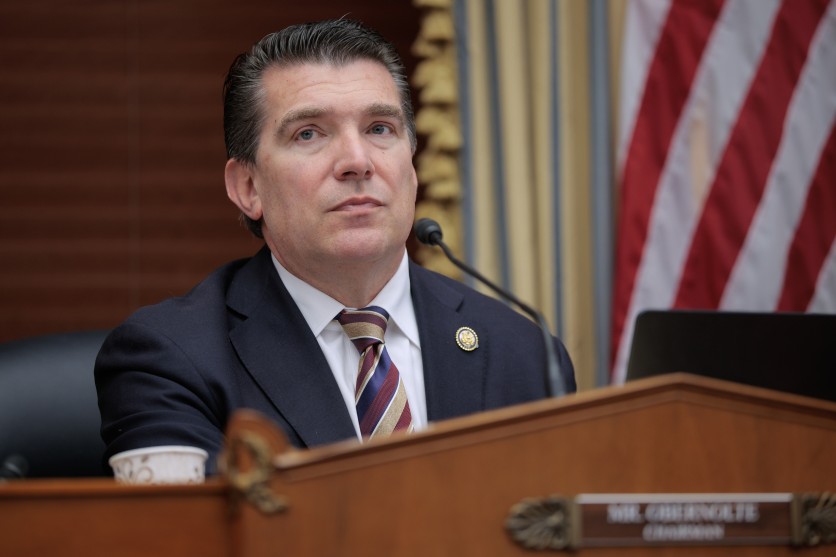
House Research and Technology Subcommittee Chairman Jay Obernolte (R-CA) presided during a hearing in the Rayburn House Office Building on Capitol Hill on January 14, 2026 in Washington, DC. Chip Somodevilla/Getty Images
Federal AI regulation reached its most ambitious congressional moment Thursday when a bipartisan pair of House lawmakers released a 269-page proposal that would bar states from enacting new laws governing how AI systems are built — for at least three years — while requiring the country's most powerful AI developers to submit to semi-annual third-party audits. The bill, formally titled the Great American Artificial Intelligence Act of 2026, landed within hours to near-universal rejection from labor unions, consumer advocates, and even a formal House Democratic commission — the latest flashpoint in a three-year standoff over who gets to govern artificial intelligence in the United States.
Reps. Jay Obernolte (R-CA) and Lori Trahan (D-MA), both members of the House Energy and Commerce Committee's Subcommittee on Commerce, Manufacturing, and Trade, unveiled the discussion draft alongside four additional co-sponsors: Reps. Suhas Subramanyam (D-VA), Scott Franklin (R-FL), Scott Peters (D-CA), and Erin Houchin (R-IN). The draft is open for public stakeholder comment before formal introduction, with feedback directed to GAAIA@mail.house.gov.
"Artificial intelligence is advancing rapidly, which is why Congress must take a thoughtful and bipartisan approach to regulating this critical technology," Obernolte said in his statement. Trahan described the threats AI poses to national security, safety, and the workforce as "here and growing by the day."
Federal AI Regulation Bill Would Freeze State AI Development Laws for Three Years
The bill's most contested provision imposes a three-year preemption of state laws that specifically regulate the development of AI models — meaning how systems are trained, built, and weighted. State laws governing the deployment or use of AI systems are explicitly excluded from the preemption, a distinction the sponsors describe as a deliberate compromise. The preemption would sunset after three years.
Under the draft, states would retain authority to enforce civil rights law, labor protections, copyright, child sexual abuse material prohibitions, and consumer privacy. What they would lose is the ability to pass new laws about how AI systems are constructed. An official FAQ document from Trahan's office identified specific California laws as casualties: AB 2013, which requires model developers to publicly post training-data summaries, and portions of SB 942, the California AI Transparency Act requiring AI content watermarking. Frontier safety laws in California, New York, and Illinois would be "federalized" under the bill — a characterization critics noted does not meaningfully distinguish between federalization and outright elimination.
The preemption arrives as the third congressional attempt to establish federal primacy over state AI law. The Senate voted 99-1 in July 2025 to strip a 10-year state AI moratorium from the "One Big Beautiful Bill Act" before President Trump signed it. A second attempt attached to the fiscal year 2026 National Defense Authorization Act also failed.
Frontier AI Model Audits: Strongest Provision Targets Labs Above $500M Revenue
For the country's largest AI developers — those with more than $500 million in annual revenue — the bill would impose a new compliance architecture. Covered companies, a group that would include Anthropic, OpenAI, xAI, and Google DeepMind, would be required to publish and implement frameworks for managing catastrophic risks, including identifying thresholds at which a model could pose existential or large-scale harms. Covered labs must also report critical safety incidents to federal and state regulators within 15 days, or within 24 hours if an incident poses an imminent risk of death or serious injury.
The bill's most technically novel mechanism is a mandatory semi-annual audit regime conducted by licensed "independent verification organizations," or IVOs — private-sector entities that the Center for AI Standards and Innovation (CAISI) would certify. Under the draft, IVOs would assess whether a developer's framework achieves acceptable levels of risk mitigation across four categories: cybersecurity, biosecurity, chemical and biological radiological and nuclear (CBRN) uplift, and loss-of-control scenarios. IVOs would be granted access to non-public company materials and required to report audit results directly to CAISI. To prevent industry capture, the draft bars IVOs from having ties to the companies they monitor.
Developers who fail to comply, or who make material misrepresentations to auditors, would face civil penalties of up to $1 million per day for the duration of the violation. Whistleblowers at covered companies would be protected from retaliation for reporting violations of federal AI law.
The bill would formally codify CAISI within the Commerce Department and authorize $100 million per year from fiscal years 2027 through 2029 — roughly seven times the office's current appropriation of approximately $15 million annually. Commerce Secretary Howard Lutnick rebranded the office, originally established during the Biden administration as the U.S. AI Safety Institute, as CAISI in June 2025. Despite operating for more than a year, the agency currently lacks formal Congressional authorization.
The International Association of Privacy Professionals noted the bill builds on Illinois's recently passed SB 315 by expanding its core concept of independent third-party audits — but raises the stakes considerably. While existing state laws cap total liability for AI safety incidents at between $1 million and $3 million per incident, the federal bill would authorize $1 million in penalties per day per violation for ongoing non-compliance.
"Generational Mistake": What Would Disappear Under State AI Preemption
State legislatures had introduced at least 1,561 AI-related bills across 45 states as of March 2026, according to legislative tracking service MultiState — already surpassing the total for all of 2024. They address documented harms that Congress has not acted on: algorithmic discrimination in hiring and lending decisions, automated pricing manipulation, worker surveillance through AI monitoring tools, and AI chatbot safety for minors.
Brad Carson, president of Americans for Responsible Innovation and a former Democratic representative from Oklahoma, called the preemption provision a "generational mistake." "This bill takes the current floor on state AI legislation and turns it into a federal ceiling, preventing state lawmakers from addressing emerging AI harms," Carson said. Americans for Responsible Innovation ran advertising campaigns in Massachusetts before the bill's release urging Trahan herself to oppose a ban on state AI legislation.
Brendan Steinhauser, CEO of the safety-focused Alliance for Secure AI, praised the bill's bipartisan focus on catastrophic risk but joined the opposition to its preemption provision. "The Great American AI Act falls short of the framework necessary to keep Americans safe from the dangers of advanced AI," Steinhauser said. "A national AI standard should protect at least as much as it preempts."
Read more: Trump AI Executive Order Signed: Musk and Zuckerberg Lobbied Review Down to 30 Days
Labor Unions, Consumer Advocates, House Commission All Register Hard Opposition
Opposition was swift and came from multiple directions simultaneously.
The AFL-CIO, representing 15 million workers across 63 affiliates, described its position as a "hard no." AFT President Randi Weingarten and Association of Flight Attendants-CWA President Sara Nelson issued a joint statement characterizing the bill as "a giveaway to the AI industry and a handful of trillion-dollar companies, at the expense of American workers." The federation's letter specifically identified harms state laws were protecting workers from that the federal bill would remove: algorithmic firing decisions, automated wage manipulation, and AI-enabled surveillance systems.
Public Citizen's AI governance counsel J.B. Branch called it "a disastrous proposal that Big Tech is celebrating," arguing the bill leaves "oversight largely to a federal government that has repeatedly failed to pass meaningful AI protections" while doing nothing to address algorithmic discrimination, consumer fraud, deepfakes, youth harms, or market concentration.
Consumer Federation of America's Director of AI and Data Privacy, Ben Winters, called the bill a framework that "would instead create a weak and convoluted regulatory state that lets AI companies continue to do whatever they want with impunity."
The most politically pointed opposition came from inside the House itself. The House Commission on AI and the Innovation Economy — a Democratic body co-chaired by Reps. Ted Lieu (D-CA), Valerie Foushee (D-NC), and Josh Gottheimer (D-NJ) — issued a formal joint statement on the day of the bill's release declaring: "We do not support the discussion draft as it currently stands." The commission, established by Democratic Leader Hakeem Jeffries in December 2025 specifically to develop AI policy expertise, said the draft "cannot serve as the basis for productive dialogue."
Industry Backs Bill as Tech Groups Call for National Standard
Not all responses were negative. The Information Technology Industry Council, representing major technology companies including Google and Microsoft, backed the bill and called on Congress to establish a national standard for AI development and deployment. Co-sponsor Rep. Erin Houchin framed the bill's urgency in competitive terms: "America should lead the world in artificial intelligence, not regulate ourselves into falling behind China through a patchwork of fifty different state laws."
The Center for Data Innovation, a research arm of the Information Technology and Innovation Foundation, called the bill's core architecture "a step in the right direction" — specifically praising transparency requirements for frontier systems and independent auditing through licensed verifiers — while urging sponsors to sharpen the IVO accountability structure and establish a dynamic compute threshold mechanism that keeps pace with evolving model capabilities.
NetChoice, whose member companies include major online platforms, offered mixed support, backing the bill's educational and workforce provisions but flagging concerns about its audit regime and data-sharing requirements, which it said could expose entrepreneurs' trade secrets and private records.
What This AI Bill Covers Beyond Preemption and Audits
Beyond the preemption and IVO audit regime, the Great American AI Act encompasses a wide array of additional provisions. The bill would increase penalties for mail, wire, and bank fraud when committed with AI assistance, and heighten penalties for the algorithmic impersonation of federal officials. It would direct the Energy Department, the National Institute of Standards and Technology, and the National Science Foundation to establish a joint testbed program for public and private sector evaluation of AI systems. NIST and the Energy Department would jointly lead international AI standards development, with an explicit mandate to exclude Chinese government participation. The National Artificial Intelligence Research Resource — a Biden-era program housed at NSF — would be formally codified. CISA would be authorized to award grants to maintainers of widely used open-source software for security improvements. The Government Accountability Office would evaluate security protocols for AI model weights and the open-source software ecosystem.
The bill also mandates a comprehensive study of "jawboning" — the informal pressure federal agencies exert on AI platforms regarding content moderation and output generation — reflecting a major conservative legislative priority. Notably absent from the bill: provisions addressing copyright infringement in AI training data, algorithmic discrimination or bias, and youth safety protections beyond provisions already advancing separately in the Energy and Commerce Committee.
What Comes Next for Federal AI Regulation
The legislative path for the Great American AI Act is uncertain. As a discussion draft, the bill has not been formally introduced and carries no floor vote timeline. Stakeholders are invited to submit comments to GAAIA@mail.house.gov.
The bill arrived against a backdrop of aggressive executive action. In December 2025, President Trump signed an executive order directing the DOJ to create an AI Litigation Task Force to challenge state AI laws on constitutional grounds — action the DOJ put into practice in April 2026 when it filed to block Colorado's algorithmic discrimination statute, the first federal challenge to a state AI law in US history. That Colorado law, which had been set to take effect June 30, 2026, was replaced by the state legislature with a narrower substitute before it ever took effect.
The Information Technology Industry Council described the bill as "an important step toward building a clear federal framework." The House Commission on AI and the Innovation Economy described it as inadequate. Between those two positions lies the question the Great American AI Act will spend the summer trying to answer: whether a federal standard that freezes state protections for three years is a foundation worth building on, or a ceiling that forecloses the accountability that states have already started to build.
Frequently Asked Questions
What is the Great American AI Act?
The Great American AI Act is a 269-page bipartisan discussion draft released June 4, 2026, by Reps. Jay Obernolte (R-CA) and Lori Trahan (D-MA). It proposes the first comprehensive federal framework for governing artificial intelligence in the United States, requiring large AI developers to undergo semi-annual third-party audits while simultaneously barring states from enacting new AI development regulations for three years.
What is state AI preemption, and how does this bill affect it?
State AI preemption refers to a federal law overriding state-level AI regulations. Under this bill, states could no longer pass new laws specifically governing how AI models are developed for a three-year period — but states would retain authority over how AI systems are deployed and used. Existing consumer protection, civil rights, and privacy laws would remain intact, but specific AI development transparency laws in California, New York, and Illinois would effectively be frozen or superseded.
Who would be required to undergo frontier AI model audits under this bill?
Under the bill, companies with more than $500 million in annual revenue that develop frontier AI models would be required to retain CAISI-licensed independent verification organizations for semi-annual compliance audits. That threshold would currently apply to Anthropic, OpenAI, Google DeepMind, and xAI, among others. Companies that fail to comply, or that make material misrepresentations to auditors, could face penalties of up to $1 million per day while the violation continues.
Does this bill have enough support to pass Congress?
The bill faces significant opposition. The House Commission on AI and the Innovation Economy rejected it as inadequate on the day of its release. The AFL-CIO and major labor unions issued a hard no. The Senate voted 99-1 to reject a similar preemption provision in July 2025. As a discussion draft, the bill has not been formally introduced, and sponsors have not announced a floor vote timeline. Its path to passage faces substantial legislative obstacles.

-
 C114 Communication Network
 -
 Communication Home
