
 Search

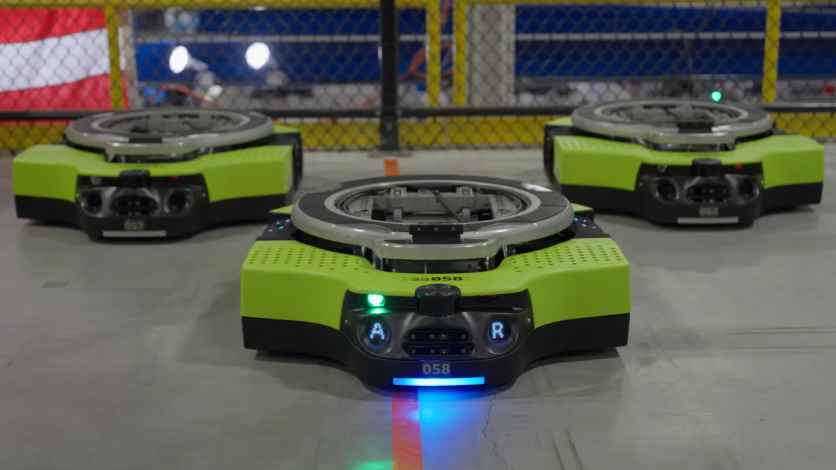
Amazon Proteus is transforming fulfillment centers with AI-powered human-robot collaboration, natural language communication, and smarter warehouse automation. Amazon News/YTScreenshot
Warehouse automation is entering a new phase with the arrival of Amazon Proteus, an advanced AI warehouse robot designed to work directly alongside employees. As fulfillment centers handle growing order volumes and increasingly complex logistics demands, companies are investing in technologies that can improve efficiency while supporting human workers.
Amazon Proteus stands out because it is not limited to moving inventory from one location to another. The latest version incorporates artificial intelligence that allows employees to communicate with the robot using natural language, creating a more practical form of human robot collaboration inside modern warehouses.
What Is Amazon Proteus?
Amazon Proteus is an autonomous mobile robot developed by Amazon robotics to transport carts, containers, and inventory throughout fulfillment center facilities. The robot was originally introduced in 2022 and quickly attracted attention because it could safely navigate around workers without requiring isolated robotic zones.
The development reflects a broader trend in logistics where automation is becoming more intelligent, adaptable, and integrated into daily operations. Reports from The Verge recently highlighted Amazon's latest Proteus advancements, while Reuters has covered the company's wider investment in robotics and AI technologies. Together, these developments point to a future where people and machines work more closely than ever before.
The newest version builds upon these capabilities by adding more advanced artificial intelligence, allowing the AI warehouse robot to understand instructions, make decisions, and adapt to changing warehouse conditions.
Some of its primary responsibilities include:
- Moving inventory between warehouse stations
- Transporting carts and containers
- Supporting order fulfillment operations
- Reducing repetitive transportation tasks
- Improving workflow efficiency throughout facilities
These functions make Amazon Proteus an important component of the company's growing automation ecosystem.
How the New AI Warehouse Robot Works
The latest Proteus model introduces several AI-driven features that expand its role inside fulfillment centers.
One of the most significant upgrades is natural language communication. Employees can provide instructions using everyday language rather than relying on specialized software or complex controls.
The robot then uses artificial intelligence to interpret requests and determine the best way to complete the assigned task.
Key technologies powering Amazon Proteus include:
Natural Language Processing
The AI warehouse robot can understand conversational instructions from workers, making interactions more intuitive.
Autonomous Decision-Making
Proteus evaluates tasks independently, determining priorities and selecting efficient routes.
Real-Time Navigation
Advanced sensors help the robot monitor warehouse environments and avoid obstacles while moving through shared workspaces.
Continuous Adaptation
The system can adjust to changing conditions, helping maintain efficient operations even during busy periods.
These capabilities allow the robot to function as more than a transportation tool. Instead, it becomes an active participant in warehouse workflows.
Why Human Robot Collaboration Is Becoming More Important
The rise of automation has sparked ongoing discussions about the relationship between workers and machines. Many logistics companies are now focusing on human robot collaboration rather than full automation.
This approach recognizes that people and robots often excel at different tasks.
Employees provide:
- Judgment and decision-making
- Problem-solving skills
- Quality control oversight
- Customer-focused thinking
Robots contribute:
- Consistent transportation capabilities
- Repetitive task execution
- Continuous operation
- Data-driven optimization
By combining these strengths, fulfillment centers can improve productivity while maintaining flexibility.
Human robot collaboration also helps reduce physical strain on workers by assigning repetitive transportation duties to automated systems.
How Amazon Robotics Is Transforming Fulfillment Centers
Amazon robotics has played a major role in modernizing warehouse operations over the past decade. The company continues to invest heavily in automation technologies that streamline inventory management and logistics processes.
Amazon Proteus contributes to several important operational improvements.
Faster Inventory Movement
Automated transportation systems can move goods quickly between storage areas, packing stations, and shipping zones.
Improved Workplace Safety
Robots can handle repetitive movements and heavy loads that may contribute to workplace fatigue.
Better Workflow Efficiency
AI-driven systems help coordinate warehouse activities and reduce bottlenecks.
More Effective Resource Allocation
Employees can focus on tasks requiring human judgment while robots manage routine transportation activities.
As fulfillment centers continue to expand, these efficiencies become increasingly valuable.
Key Features of Amazon Proteus
Several features distinguish Amazon Proteus from previous generations of warehouse automation systems.
Natural Language Communication
Workers can communicate with the robot using conversational language, reducing the need for specialized training.
Autonomous Navigation
Proteus independently navigates warehouse environments while avoiding obstacles and adapting to changes.
Shared Workspace Operation
The robot safely operates alongside employees without requiring isolated zones.
Intelligent Task Prioritization
Artificial intelligence helps determine which tasks should be completed first based on operational needs.
Integration With Amazon Robotics Systems
Proteus works alongside other warehouse technologies to support coordinated operations.
These capabilities help create a more flexible and efficient fulfillment center environment.
How Amazon Proteus Compares to Traditional Warehouse Robots
The latest Proteus system introduces several improvements over conventional warehouse automation tools. While traditional robots are often designed for specific repetitive tasks, Amazon Proteus offers greater flexibility and collaboration capabilities.
Amazon Proteus
- Supports natural language communication with workers
- Uses advanced AI for decision-making and task prioritization
- Operates safely alongside employees in shared workspaces
- Navigates dynamically and adapts to changing warehouse conditions
- Provides greater flexibility across fulfillment center operations
- Encourages stronger human robot collaboration through intuitive interactions
Traditional Warehouse Robots
- Depend on predefined commands and limited controls
- Focus primarily on repetitive automation tasks
- Often require restricted or separated operating areas
- Follow fixed routes with limited adaptability
- Offer less flexibility when warehouse conditions change
- Provide fewer opportunities for direct interaction with workers
These differences highlight how Amazon Proteus represents a more advanced AI warehouse robot designed for modern fulfillment center environments.
Other Amazon Robotics Technologies Supporting Proteus
Amazon Proteus is only one part of a broader automation strategy.
Vulcan
Vulcan is designed with a sense of touch that helps robots handle products with greater precision. This capability allows automation systems to interact with inventory in more sophisticated ways.
DeepFleet
DeepFleet uses artificial intelligence to coordinate fleets of warehouse robots. The system helps reduce traffic congestion and improve operational efficiency.
STARK
STARK automates tote and container handling, helping streamline inventory movement throughout facilities.
Coverage from industry publications such as GeekWire has highlighted how these technologies work together to create increasingly connected warehouse ecosystems.
What the Future Holds for AI Warehouse Robots
The evolution of Amazon Proteus offers insight into where warehouse technology may be headed next.
Future AI warehouse robot systems are expected to include:
- More advanced natural language communication
- Improved navigation capabilities
- Better collaboration between robots and employees
- Greater operational flexibility
- Enhanced coordination across entire warehouse networks
As artificial intelligence continues to improve, automation systems will likely become more responsive to changing operational demands.
Why Amazon Proteus Signals a New Era for Fulfillment Center Automation
Amazon Proteus demonstrates how warehouse technology is evolving beyond basic automation toward intelligent collaboration. By combining autonomous mobility, natural language communication, and AI-driven decision-making, the system introduces new possibilities for fulfillment center operations.
As Amazon robotics continues to expand its automation portfolio, technologies like Proteus may help shape a future where human robot collaboration becomes a standard part of modern logistics and supply chain management.
Frequently Asked Questions
1. What is Amazon Proteus?
Amazon Proteus is an autonomous AI warehouse robot developed by Amazon robotics to transport inventory and materials throughout fulfillment center facilities while safely operating around employees.
2. How does Amazon Proteus communicate with workers?
The latest version uses artificial intelligence and natural language processing, allowing workers to provide instructions using everyday language instead of specialized control systems.
3. What makes Amazon Proteus different from traditional warehouse robots?
Proteus can work directly alongside employees, communicate using natural language, make autonomous decisions, and adapt dynamically to changing warehouse environments.
Read more: Genetically Engineered Super Soldiers in Onslaught: DARPA Already Funds the Same Research

-
 C114 Communication Network
 -
 Communication Home
