
 Search

KIM JAE-HWAN/AFP via Getty Images/AFP via Getty Images
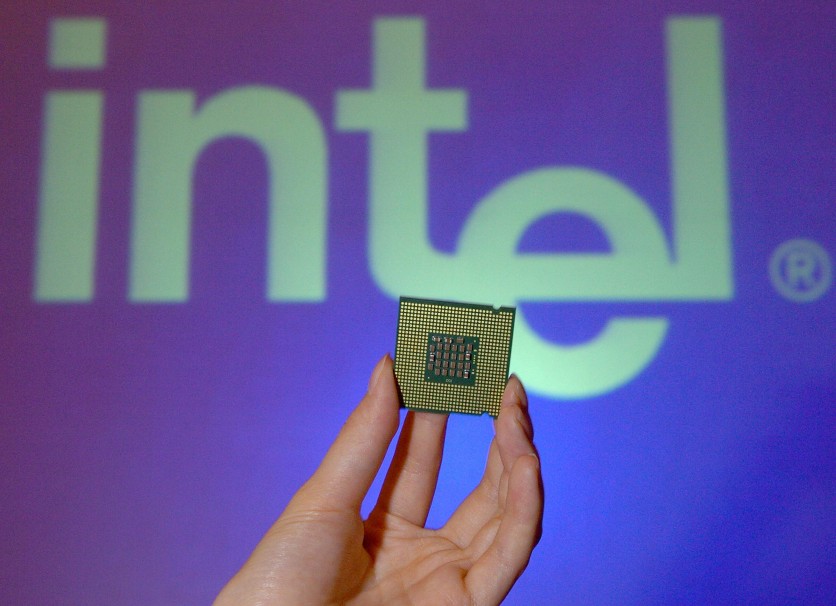
Fortinet has publicly committed its next-generation Security Processor 6 — the custom silicon powering the company's entire FortiGate firewall lineup — to Intel's foundry for design, fabrication, and advanced packaging on the Intel 4 process node. The announcement, made July 21, makes Fortinet the first company Intel has been willing to name as an external Intel 4 customer, roughly three years after the node entered high-volume production exclusively for Intel's own chips. It is also the first foundry win CEO Lip-Bu Tan has put a named customer on since taking the helm in March 2025. Exchange rate for EUR figures: approximately $1.14 USD per euro as of July 23, 2026; conversions are approximate.
Intel stock climbed 8.6% on July 21, the day of the announcement, closing at $105.45 and extending a run that has already added more than 300% over the prior twelve months. The market reaction reflected what the deal represents in context: a foundry that has never lacked for announcements had finally produced a named, committed company with a next-generation product going into an Intel fab. Whether it signals a full pipeline or a well-timed single win is exactly what investors will ask when Intel reports Q2 2026 results after market close today, July 23, on a conference call scheduled to begin at 5:00 PM ET.
Intel 4: What the Node Is, and What It Isn't
Intel 4 is a 7nm-class process that uses extreme ultraviolet (EUV) lithography — a manufacturing technology that employs 13.5-nanometer-wavelength light to etch transistor patterns at densities impossible with the older deep ultraviolet tools Intel used through its "10nm" era. It was Intel's first node to use EUV in production, entering high-volume manufacturing at Fab 34 in Leixlip, Ireland, in September 2023 — primarily to produce the compute tile inside Intel's Meteor Lake-based Core Ultra PC processors.
What Intel 4 is not: it is not Intel's most advanced process. That distinction belongs to 18A — the gate-all-around RibbonFET node with backside power delivery that Intel describes as its most competitive technology against TSMC. Intel 4 predates 18A by a full generation and lacks the transistor architecture improvements that give 18A its performance-per-watt advantage. The Fortinet deal belongs entirely to Intel 4, not 18A — a distinction analysts have been quick to name.
Intel's own public record adds complexity to how Intel describes this win. The company's FY2024 annual report listed the processes available for external foundry customers as 18A, Intel 3, Intel 7, Intel 16, and a 12nm process co-developed with UMC. Intel 4 did not appear on that list. An April 2026 regulatory filing disclosed that Intel had not yet secured a "significant" customer for its most advanced manufacturing processes. Intel told Tom's Hardware the Fortinet deal "reflects the strategy Intel outlined for Intel 4 several years ago," including planned support for custom networking ASIC workloads — though the company's 2021 roadmap announcements did not publicly enumerate external foundry use as a goal for Intel 4 at the time.
For a TechTimes reader evaluating whether this deal validates Intel Foundry or merely advances it: the answer depends on whether Fortinet is the first of many or an anchor surrounded by uncertainty. Intel 4 is real, its yields are mature, and Fortinet is a credible name — but the deal does not demonstrate what Intel's recovery narrative actually requires, which is named customers on 18A and 14A.
Read more: Intel Foundry Hits 85% Yield, Winning Chip Orders as ASML Validates High NA EUV
Why Fortinet Chose Intel Over Its Existing TSMC-Linked Supply Chain
Fortinet builds its competitive advantage around custom silicon. The SP-series Security Processors — now in their sixth generation with SP6 — enable the company's FortiGate firewalls to inspect encrypted traffic and run simultaneous Layer 7 security functions at wire speed without the performance penalties that afflict software-based competitors. Fortinet has been running this ASIC program for more than two decades, and the SP-series is central to why the company claims the largest unit share — approximately 55% — in enterprise firewall appliances, with around six million FortiGate devices deployed globally.
The current SP5 is a monolithic 7nm Arm-based system-on-chip launched in 2023. Fortinet's 2025 annual report names Renesas and Toshiba America as the contract manufacturers for its ASICs, utilizing foundries in Taiwan and Japan operated either by TSMC or by those contract manufacturers directly. Moving SP6 to Intel 4 at Fab 34 in Ireland pulls Fortinet's next flagship security chip out of that TSMC-linked flow and into a U.S.-company-owned fab on EU soil.
The supply chain argument carries weight specifically in Fortinet's end markets. Federal agencies, critical-infrastructure operators, and defense-adjacent buyers have increasingly demanded supply chain provenance for security equipment — scrutinizing where components are manufactured and whether that manufacturing is exposed to geopolitical risk in the Taiwan Strait. Fortinet re-engineered three FortiGate models in 2022 to accept alternative components during the pandemic chip shortage, and CEO Ken Xie has since made supply chain resilience a stated strategic priority. The SP6 announcement uses the phrase "resilient and diversified" supply chain — language that traces directly to those disruption-era decisions.
Intel's press language around the SP6 deal also refers explicitly to "disaggregated semiconductor design and advanced packaging tailored for both AI-enabled and cost-sensitive applications." That phrasing strongly points toward a chiplet-based architecture — a meaningful departure from the SP5's monolithic design. In a chiplet approach, different functions are built on separate silicon dies and interconnected through advanced packaging, allowing Fortinet to mix performance tiers, manage die costs, and potentially source tiles from different process nodes for future SP generations. Neither company confirmed the chiplet inference, but the language is specific enough that analysts at Tom's Hardware and The Register both read it the same way.
What Intel Gets: A Fill for Fab 34 After Meteor Lake
The customer-validation story is one dimension of this deal. The other is economics.
Intel 4 runs in Fab 34 — the single largest chipmaking facility Intel controls in Europe, and the only EUV-capable fab in Ireland. In June 2024, Intel sold a 49% stake in Fab 34 to funds managed by Apollo for $11.2 billion, then bought that stake back in April 2026 for $14.2 billion — a roughly 27% premium over the sale price. The logic behind the buyback was straightforward: Intel needed full control of Fab 34's wafer economics to capture the full revenue benefit of any external customer running on that node.
That buyback only pays off if Fab 34's EUV capacity stays loaded. As Meteor Lake ages out of Intel's own product lineup — replaced by 18A-based Panther Lake ramping through 2026 — Fab 34's Intel 4 capacity faces a utilization gap. A multi-generation firewall ASIC program is an economically sensible answer: mature yields, a customer that values supply stability and domestic provenance over leading-edge density, and parts Intel itself described as "cost-sensitive."
Intel separately announced on July 13 a €5 billion (approximately $5.7 billion) expansion of its Leixlip campus — the largest single foundry commitment the company has made in Europe — explicitly to support AI server processor demand. The Fortinet deal does not directly serve that AI expansion, but it demonstrates that Fab 34 is attracting external work, which strengthens the business case for the broader investment.
Read more: AI Demand Drives Intel's €5 Billion Expansion at Europe's Sole EUV Chip Fab
What the Revenue Numbers Actually Say
Analysts have been clear-eyed about what the Fortinet deal does and does not move in the near term.
Intel Foundry reported $307 million in total external revenue for all of fiscal year 2025, up from $159 million in 2024, against total foundry revenue of $17.8 billion and an operating loss of $10.3 billion. External revenue in Q1 2026 reached $174 million.
Fortinet's hardware business accounts for roughly 30% of its annual revenue, which flows from a hardware stream of approximately $2 billion per year. SP6 is one chip within that hardware segment — not the whole of it, and not a volume comparable to hyperscaler AI chip orders. The deal will not shift Intel's foundry revenue line materially in 2026 or early 2027. What it provides is something more durable: a credible, named company publicly committing a next-generation product to Intel manufacturing — the kind of social proof that makes the next foundry customer conversation easier to have.
Fortinet also brings genuine unit volume even if each unit is not high-value. IDC ranked Fortinet first in firewall appliances shipped as of early 2023, with a 48% unit share. SP6 will power entry-level and mid-range FortiGate devices across the company's product tiers — a sustained production run, not a one-time engagement. Neither company committed to work beyond SP6, though the release described the collaboration as a starting point for additional opportunities.
Is SP6 the Template or the Exception?
The question Tan will face at the Q2 earnings call scheduled for this afternoon (2:00 PM Pacific Time, 5:00 PM ET) is whether Fortinet represents the beginning of a pattern or a one-off.
In May, Tan told CNBC's Jim Cramer that multiple customers were engaged with Intel Foundry but declined to name any, citing it as his personal policy. Intel CFO David Zinsner said in March that foundry signals would become "more concrete" in the second half of 2026 and into early 2027. The Fortinet deal is the first delivery inside that window. Whether additional networking or security ASIC vendors follow Fortinet onto Intel 4 over the next 12 to 18 months would transform Intel 4 from a capacity-fill story into a genuine commercial category — networking silicon on a domestic U.S.-company-owned EUV node with supply provenance advantages for regulated-market customers.
The template analogy is worth naming explicitly. Fortinet is a security ASIC vendor with a multi-generation chip program, federal and critical-infrastructure customers who value supply chain assurance, and a specific reason to move away from TSMC-linked flows. That profile describes several other companies in networking and security — companies building custom silicon for firewalls, switches, routers, and related infrastructure where performance-per-dollar and supply assurance matter more than bleeding-edge transistor density. If Intel can convert two or three such engagements from Intel 4 evaluation to production commitment over the next year, the node transitions from a Fab 34 utilization play to a commercial market. If Fortinet remains singular, it is a meaningful proof point on mature EUV manufacturing quality — but not yet evidence of a pipeline.
Investors will not have to wait long for the next data point. Intel's Q2 2026 earnings call, scheduled to begin at 5:00 PM ET today, is expected to include direct management commentary on the pipeline beyond Fortinet — whether any Intel 4 customers are in evaluation stages, what the 18A and 18A-P inbound interest looks like, and whether the foundry's external revenue trajectory has shifted from the $174 million reported in Q1.
Does Intel 4 Without 18A Count as Proof?
For a technically literate reader, the most important analytical distinction in the Fortinet deal is the node gap.
Intel 18A — now confirmed at approximately 85% yield by a KeyBanc analysis backed by ASML's validation — is the node that would demonstrate Intel can compete with TSMC's N2 at the leading edge. It uses RibbonFET gate-all-around transistors and PowerVia backside power delivery: two architectural advances that TSMC's current N2 does not have (TSMC's A16 will add a backside power implementation, but not until late 2026 at the earliest). A named commitment on 18A from a major AI chip designer would be the headline that Intel's foundry bulls have been waiting for.
The Fortinet deal is on Intel 4. Intel 4 is a 2023 production node with well-understood yields and no novel transistor architecture. It is appropriate for cost-sensitive networking ASICs — exactly the application Fortinet requires — but it does not prove Intel's leading-edge manufacturing capability in competition with TSMC's most advanced offerings. An April 2026 Intel regulatory filing noted explicitly that the company had not yet secured a "significant" customer for its most advanced manufacturing processes. The Fortinet deal, on Intel 4, does not change that filing's core finding.
That is not a dismissal of the deal's value. Intel 4 at mature yields, inside a U.S.-company-owned European fab, with disaggregated packaging capability, is a genuinely useful manufacturing option for the networking and security ASIC market — a category TSMC serves but does not center its roadmap around. The argument Intel is implicitly building is that it can serve a tier of customers for whom supply resilience and cost sensitivity matter more than maximum transistor density. If that tier is large enough, it becomes a business. Intel's foundry operating loss of $10.3 billion in FY2025 indicates how far the revenue needs to grow before the business works financially.
Frequently Asked Questions
What is Intel 4, and how is it different from Intel's most advanced chip-making process?
Intel 4 is a 7nm-class manufacturing process that uses extreme ultraviolet (EUV) lithography — the same type used at leading-edge fabs worldwide. It entered production in September 2023 at Intel's Fab 34 facility in Leixlip, Ireland, primarily for Meteor Lake PC processors. Intel's most advanced process is 18A, which adds gate-all-around RibbonFET transistors and PowerVia backside power delivery — architectural improvements that offer better performance per watt and are designed to compete directly with TSMC's leading 2nm-class offerings. The Fortinet deal is on Intel 4, not 18A. Intel 4 has mature, proven yields well-suited to cost-sensitive networking ASICs like Fortinet's security processors; 18A is the node Intel needs named external customers on to validate its competitive position against TSMC.
What does the Fortinet deal actually mean for Intel Foundry's business?
In the near term, the revenue impact is limited. Intel Foundry reported $174 million in external revenue in Q1 2026 and $307 million for all of FY2025, against an operating loss exceeding $10 billion. Fortinet's hardware business is roughly $2 billion per year, and the SP6 chip represents only a portion of that. The deal does not move the revenue line materially in the near term. What it provides is a named, publicly committed external customer on Intel 4 — the first in that node's three-year production history — which makes the next customer conversation easier and validates Intel's process quality for networking ASIC workloads. Whether that validation converts into a pipeline of similar customers is the question Intel's management will be asked on its Q2 2026 earnings call today.
What is a security ASIC, and why would Fortinet want a custom chip rather than an off-the-shelf processor?
An ASIC (Application-Specific Integrated Circuit) is a chip designed to do one thing extremely well — in Fortinet's case, accelerating the inspection of encrypted network traffic, enforcing firewall rules at Layer 7, and running multiple security functions simultaneously without loading down general-purpose CPUs. Software-based firewalls running on standard server processors can perform the same functions in principle, but at lower throughput and higher power consumption per unit of performance. Fortinet's SP-series ASICs are the hardware basis for its claim to deliver better security throughput per dollar and per watt than software-based competitors. SP6 is the sixth generation of that program.
What should enterprise IT and procurement teams understand about Fortinet's move to Intel's fab?
The manufacturing shift has no immediate impact on the FortiGate appliances currently deployed or being purchased — those run SP5 chips from the existing TSMC-linked supply chain. SP6-based FortiGate models are a future product with no announced release date. The strategic significance for enterprise buyers is primarily supply chain: SP6 will be manufactured in a U.S.-company-owned European fab rather than through TSMC-linked foundries in Taiwan and Japan. For organizations with procurement rules requiring supply chain documentation, domestic provenance requirements, or concern about Taiwan Strait geopolitical risk, SP6-based appliances may carry certifications or supply chain assurances that SP5-based products cannot. No pricing, performance specifications, or release timeline for SP6 has been disclosed.

-
 C114 Communication Network
 -
 Communication Home
