
 Search

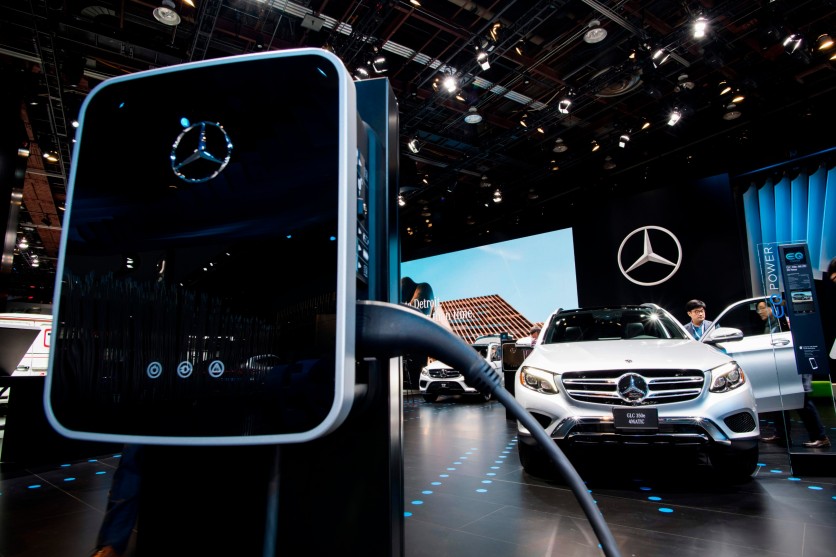
An electric charging station is pictured at the Mercedes-Benz booth during the 2018 North American International Auto Show (NAIAS) in Detroit, Michigan, on January 15, 2018. credit should read JEWEL SAMAD/AFP via Getty Images
Mercedes-Benz delivered its sharpest electric vehicle sales jump in years on July 8, 2026, reporting that battery-electric vehicle sales across its Cars and Vans divisions rose 50% year-over-year in the second quarter — and that more than one in four Mercedes vehicles sold in Europe during the quarter carried an all-electric drivetrain. For European car buyers considering a premium electric vehicle, that number matters: the models driving this surge are backordered into 2027, subsidies in Germany are now active, and elevated oil prices have pushed annual fuel savings for EV drivers to levels not seen before.
The headline figure from Q2 is 63,000 battery-electric vehicles sold across Mercedes-Benz Cars and Vans worldwide, a 50% increase from Q2 2025 and a 25% sequential jump from Q1 2026. For the passenger car brand alone, the number reached 52,900 units — up 51% year-over-year. Through the first half of 2026, the Mercedes brand has sold 97,100 BEVs, a 28% increase from the same period last year.
The numbers carry a clear geographic signature. Europe accounted for roughly 43,500 of those 52,900 electric passenger cars — approximately 82% of global Mercedes BEV passenger car volume for the quarter. European BEV sales rose 87% year-over-year, and Mercedes' BEV share on the continent climbed to 26%, nearly doubling from a year earlier.
Read more: Mercedes-Benz Unveils Groundbreaking Concept CLA Class EV with 466-Mile Range, Rapid Charging
Three New Models Built on an 800-Volt Platform Explain the Surge
The technical story behind the numbers runs through a single platform. Mercedes' newest EVs — the electric CLA, electric GLC, and electric GLB — are all built on the Mercedes Modular Architecture (MMA), the company's first ground-up electric platform derived from its record-setting VISION EQXX research car. The defining feature of MMA is an 800-volt electrical architecture that enables charging rates most current EVs cannot match.
In a conventional 400-volt EV, adding power to the battery at very high rates generates substantial heat, requiring thicker cables and additional thermal management. An 800-volt system delivers the same power at half the current, which is why the electric CLA can accept up to 320 kilowatts at a compatible DC fast-charging station — enough to add 300 kilometers of range in roughly 10 minutes. The electric GLC goes further: 330 kilowatts peak, with a 10-to-80% charge in under 24 minutes from a 94 kilowh battery. The electric GLB offers 320-kilowatt charging from an 85 kilowh pack. For context, this brings charging stops on European highway routes into the time range of a coffee break.
The other significant engineering choice on MMA is battery chemistry differentiation. Entry models use lithium iron phosphate cells — cheaper, heavier, and more thermally stable. Higher-specification variants use a silicon-oxide anode formulation for greater energy density. The combination allows Mercedes to target both efficiency-focused buyers and those prioritizing maximum range from the same platform.
Sitting on top of that hardware is MB.OS — the Mercedes-Benz Operating System — a purpose-built chip-to-cloud software platform that runs across four vehicle domains simultaneously: multimedia, driver assistance, body and comfort, and driving and charging. The electric CLA and GLB were the first models to run MB.OS across all four domains simultaneously in the United States, and the system enables over-the-air updates for functions including driver assistance, which represents a meaningful change from prior-generation EQ models where software updates were primarily limited to infotainment. MB.OS integrates NVIDIA's Orin system-on-chip for autonomous driving processing and uses generative AI voice assistants from Google and Microsoft natively.
The shift from the EQ sub-brand to unified naming — electric GLC, electric CLA, not EQC or EQA — is itself a signal. Mercedes has stopped treating electric vehicles as a separate product category and is presenting them as the mainstream future of its core lineup.
What Is Driving European Demand — and Why It Is Not Just Product
The product explanation accounts for a significant portion of the 87% European volume jump. But three other forces are doing structural work beneath the surface that buyers and investors watching the market should understand.
The first is regulatory pressure. Under EU Regulation 2019/631, European automakers face financial penalties of €95 per gram of carbon dioxide per vehicle sold above their fleet-wide target. For the full industry, those penalties were estimated at roughly €16 billion if widely missed in 2025 — a number large enough that the EU granted flexibility (a three-year averaging window for 2025–2027) in response to automotive industry lobbying. Even with that flexibility, the economic logic of the regulation pushes automakers to sell more BEVs: each electric vehicle delivered directly reduces a manufacturer's fleet average emissions. An important nuance from the International Council on Clean Transportation's European car market monitor for April 2026: the Mercedes-Benz brand individually sits about 20 grams of CO₂ per kilometer above its projected target, meeting compliance through pooling with Volvo rather than through its own fleet performance. That gap — and the financial exposure attached to it — is a direct incentive for the kind of aggressive model launch program now underway.
The second force is subsidy timing. Germany's EV incentive program, which relaunched for 2026 after being abruptly cancelled in late 2023, provides income-tiered grants of €1,500 to €6,000 per vehicle for private buyers and lessees. Applications opened in May 2026 and apply retroactively to vehicles registered from January 1, 2026. With €3 billion allocated to support around 800,000 vehicles through 2029, the program represents a direct, near-term reduction in the out-of-pocket cost of switching to electric for a substantial share of German car buyers. Germany's BEV share hit 28.4% of all new car registrations in June 2026, and Mercedes' BEV sales in Germany more than doubled year-over-year in Q2 — suggesting the subsidy is having its intended effect.
The third force is oil prices. The International Energy Agency's Global EV Outlook 2026, published in May, found that annual fuel cost savings for EU EV drivers grew 35% compared to 2025 — the result of elevated oil prices following supply disruptions connected to the ongoing conflict in the Middle East. According to the IEA, a European driver covering 30,000 kilometers per year can now save roughly $1,900 annually by driving electric instead of gasoline — $700 more than at 2025 oil price levels. For buyers who previously found the economics marginal, the calculation has shifted.
Germany Leads, Europe Follows
Germany was the strongest individual market within Europe's broader surge. Mercedes' BEV sales in Germany more than doubled in Q2, and the country's overall EV market share reached 28.4% in June alone — a figure that marks a significant recovery from the slump that followed the December 2023 subsidy cancellation. The electric CLA, which was named Car of the Year 2026 by European automotive journalists and recognized by one of Germany's leading automotive publications as the best-tested vehicle in its history, has a confirmed order backlog that extends well into the second half of 2026. The electric GLC, which entered European markets in mid-2026 following its world premiere at IAA Munich in September 2025, reportedly filled its order books into 2027 in European markets. The electric GLB, which added a seven-seat option to the brand's entry-level electric lineup, has followed the same trajectory.
Order books for the electric GLC, CLA, and GLB already extend into 2027 in Europe, according to Mercedes' official Q2 communication. The electric C-Class went on sale in Europe in May 2026. Mercedes is scheduled to unveil the electric GLA at the end of July 2026.
The van division also contributed. Electric vans totaled 10,100 units globally in Q2 — up 46% year-over-year and 64% above Q1 2026 — pushing the global electric share of Mercedes-Benz Vans to 11%, compared to 7% a year earlier.
At the group level, global BEV penetration in the passenger car segment rose from 7.7% in Q2 2025 to 13%, meaning roughly one in eight new Mercedes passenger cars sold worldwide in the last three months carried an electric drivetrain. In Europe, the combined BEV and plug-in hybrid share reached 43%.
China Drags the Overall Number
The geographic story diverges sharply outside Europe. Passenger car sales in China fell 30% year-over-year to under 100,000 units in Q2, and are down 28% for the full first half of 2026. Mercedes attributes the decline to "intense competition, cautious consumer sentiment, ongoing model transitions and active sales steering" — a description that captures the structural challenge facing legacy Western automakers in a market where domestic Chinese brands have built software-defined, electric-first vehicles with aggressive pricing, longer wheelbases, and AI-powered cockpits that Chinese consumers have found compelling.
Mercedes says several China-specific models are scheduled for the second half of 2026, including a long-wheelbase electric GLC L SUV designed for Chinese buyer preferences. The company has characterized 2026 as a "transitional year" in the market as it phases out older models ahead of a more tailored EV offensive.
The divergence between Europe and China illustrates a broader pattern in the premium EV market: where EU CO₂ regulations, active government subsidies, and high fuel prices converge, legacy luxury automakers appear to be finding genuine consumer pull for well-executed new electric models. Where those conditions are absent or where domestic competitors have leapfrogged on software and price, the Western playbook faces a harder test.
What It Means for Buyers Watching the H2 2026 Pipeline
For European buyers considering one of the new MMA-platform models, the practical takeaway from the Q2 data is that demand is not being pushed through incentives alone — it is consuming available supply. The production line for the electric GLC in Bremen has been running three shifts plus additional Saturday production to meet demand. Backordered models extend into 2027, which matters for anyone trying to time a purchase around Germany's subsidy program or the end of a current lease.
The second half of 2026 brings two more model introductions: the electric GLA world premiere is scheduled for the end of July, and the electric C-Class market introduction in Europe is planned later in the year. Both will run on MB.OS and support 800-volt fast charging.
One safety note for existing Mercedes EV owners: an ongoing recall (NHTSA 26V073, issued February 2026) covers approximately 11,900 EQB electric SUVs built between December 2021 and May 2024 for a potential high-voltage battery fire risk, traced to production process variations at battery supplier Farasis Energy. The fix is a full high-voltage battery replacement at no cost. Affected owners should park outdoors and limit charging to 80% until the replacement is completed. This recall is limited to the prior-generation EQ-platform EQB and does not affect any of the new MMA-platform vehicles — the CLA, GLC, or GLB — whose batteries use a different supply chain and production process.
Mercedes-Benz released its Q2 2026 sales figures on July 8, 2026.
Frequently Asked Questions
Why did Mercedes-Benz EV sales jump 50% in Europe in Q2 2026?
Three forces converged. First, three new models — the electric CLA, electric GLC, and electric GLB — built on Mercedes' 800-volt MMA platform began reaching buyers in volume, with the CLA earning a Car of the Year 2026 win from European automotive journalists and drawing an order backlog that stretches into 2027. Second, Germany's reinstated EV purchase subsidy (€1,500–€6,000 per vehicle, applications open since May 2026) lowered the out-of-pocket cost of switching, and German BEV sales more than doubled in Q2 as a result. Third, elevated oil prices from the Strait of Hormuz situation increased annual EV fuel savings for EU drivers by 35% compared to 2025, strengthening the economic case for going electric right now.
What makes the 800-volt architecture in the new Mercedes EVs different?
Most current electric vehicles run on 400-volt electrical systems. The 800-volt architecture in the MMA platform allows the same power to reach the battery at half the electrical current. Lower current means less heat, thinner cables, and dramatically faster charging without the thermal management complications that slow down lower-voltage systems. The practical result: the electric CLA can add 300 kilometers of range in about 10 minutes at a compatible DC fast-charger; the electric GLC can go from 10% to 80% charged in under 24 minutes at up to 330 kilowatts. The technology was developed from engineering lessons learned in Mercedes' VISION EQXX range record research car, which covered 746 miles on a single charge in 2022.
What is MB.OS and why does it matter for the new electric Mercedes models?
MB.OS is Mercedes-Benz's proprietary chip-to-cloud vehicle operating system, built around an NVIDIA Orin system-on-chip and connected to the Mercedes-Benz Intelligent Cloud. Unlike previous infotainment-only update systems, the Mercedes-Benz MB.OS overview confirms it manages four vehicle domains simultaneously — multimedia, driver assistance, body comfort, and driving/charging — and supports over-the-air software updates for all of them, including safety-relevant driver assistance functions. The electric CLA and GLB were the first production models to run MB.OS across all four domains. It also integrates multiple AI voice systems natively: Google Maps for navigation, ChatGPT-4o and Microsoft Bing for conversational queries, and Google Gemini. The practical implication is that a buyer's car can receive meaningful functional improvements without a dealer visit, in the same way a smartphone does.
Are the new Mercedes EVs available in the United States?
The electric CLA and electric GLB are now available in the United States, running on MB.OS. Both use the 800-volt MMA platform and support 320-kilowatt DC fast charging — though buyers should note that early CLA units produced before spring 2026 lacked the 400-volt converter needed for Tesla Supercharger compatibility (via NACS port) and most other public DC fast-chargers in the U.S. That converter is included on units produced from spring 2026 onward, and cannot be retrofitted to earlier cars, as confirmed by Mercedes-Benz's electric CLA US specs and availability page. The electric GLC and electric C-Class U.S. launches are expected later in 2026 and early 2027 respectively.

-
 C114 Communication Network
 -
 Communication Home
