
 Search

bmw.co.uk
BMW Opens Order Books Early as Demand Outpaces Fall Timeline
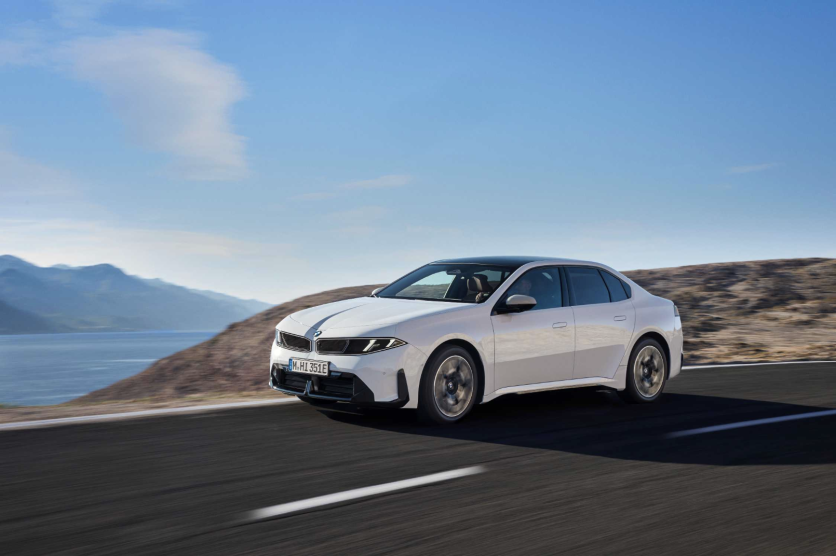
BMW opened European order books for the i3 50 xDrive First Edition on June 18, 2026 — months ahead of the car's planned autumn market launch — after demand for its first Neue Klasse model, the iX3 SUV, surpassed 50,000 European pre-orders and the automaker reported high early interest in the sedan from Germany, the United Kingdom, and China. In the United Kingdom, the First Edition starts at £57,905.
For buyers considering an electric sedan in Europe right now, the timing matters: the order window is live, Munich production begins in August, and autumn deliveries are a realistic expectation for early configurers. A standard i3 50 xDrive, priced from £53,005 in the UK, will follow when the full model range officially launches that same season.
The i3 arrives with a provisional WLTP range claim of up to 563 miles — a figure that places it among the longest-range electric sedans certified in Europe. But that number carries a structural caveat every buyer needs to understand before signing.
What Does 563 Miles Actually Mean on a Real Road?
WLTP figures are derived from a controlled laboratory test run at 23°C, with climate control off and at speeds that do not reflect sustained motorway driving. Independent range studies and aggregate owner data published through 2026 consistently show that most EVs deliver between 75 and 85 percent of their WLTP rating in mixed real-world driving, and as little as 70 to 80 percent at sustained highway speeds above 110 km/h.
Applied to the i3's 563-mile WLTP figure, a buyer driving mixed routes in typical UK conditions should plan on approximately 395 to 478 real-world miles per charge — still a genuinely impressive figure, but materially different from the headline number. In a British winter at temperatures below -5°C, even with a heat pump, independent data suggests the reduction could reach 20 to 30 percent from the mixed-driving baseline, placing realistic cold-weather range closer to 275 to 380 miles.
BMW has designated all i3 WLTP figures as provisional pending final European type approval, which will follow once production begins in August.
Read more: BMW i3 Electric Sedan Orders Open Today With 440-Mile Range Lead Over Tesla
The Engineering Behind the Range: Gen6 eDrive, Cylindrical Cells, and 800V Architecture
The i3's range lead over most premium electric sedans is not primarily a function of battery size alone. It is the product of three engineering decisions BMW locked into the Neue Klasse platform when it began development: a shift to an 800-volt electrical architecture, a move from prismatic to cylindrical battery cells in a cell-to-pack configuration, and a sedan body tuned to a drag coefficient of 0.21.
800V architecture and the physics of fast charging. BMW's sixth-generation eDrive (Gen6) system operates at 800 volts, versus the 400V architecture found in the majority of current EVs. Using the fundamental power relationship P = V × I, doubling voltage to 800V halves the current required to deliver the same charging power. At the i3's peak charging rate of 400 kW, the 800V system draws approximately 500 amperes — the equivalent 400V system would need 1,000 amperes, generating dramatically more heat in cables and connectors. The result: BMW can offer 400 kW peak DC charging — adding approximately 263 miles of WLTP-rated range in 10 minutes — without requiring the heavier thermal management infrastructure a 400V system would need. A 10-to-80 percent charge takes around 21 minutes. Bidirectional charging (Vehicle-to-Load, or V2L) is standard, enabling the i3 to function as a mobile power source for external devices.
Cylindrical cells and cell-to-pack construction. Gen6 replaces the prismatic battery cells used in earlier BMW eDrive systems with cylindrical cells in 46-format dimensions. BMW's cylindrical cells offer 20 percent greater energy density than the Gen5 prismatic predecessor. The cells are integrated directly into the battery housing using a cell-to-pack approach — eliminating the intermediate module layer that earlier pack designs required. This increases usable volume, reduces electrical and thermal resistance between cells and cooling surfaces, and lowers manufacturing costs. The battery housing itself is a structural chassis element under the pack-to-open-body principle, meaning the 108.7 kWh battery pack doubles as part of the vehicle's body structure. BMW states this combination is one of the primary drivers of the platform's 20 percent overall efficiency improvement over its prior electric vehicle generation.
Aerodynamics and the sedan advantage. The i3's Cd of 0.21 is a direct consequence of its sedan body form and the compact frontal section permitted by the Neue Klasse architecture's low-slung front end. The BMW iX3 SUV — which shares the same Gen6 drivetrain and 108.7 kWh battery — achieves a Cd of 0.24. That three-point drag difference translates directly into the 101 km (63-mile) WLTP range gap between the two models, both carrying the same energy storage.
Motor architecture. The i3 50 xDrive uses a dual-motor all-wheel-drive system. The rear axle carries an electrically excited synchronous motor (EESM): rather than using permanent rare-earth magnets, the rotor field is generated by direct-current windings, allowing BMW to optimize field strength dynamically across load conditions. The front axle uses an asynchronous motor (ASM) for traction when needed, drawing less parasitic energy when not engaged. BMW states the combination reduces energy losses and lowers manufacturing costs compared with the previous generation's motor setup.
The powertrain delivers a combined 463 horsepower and 645 Nm of torque, with a 0–62 mph time of 4.7 seconds and an electronically limited top speed of 124 mph. Curb weight for the First Edition is 2,205 kilograms.
First Edition Specification and What It Costs Extra
The i3 50 xDrive First Edition is based on the M Sport trim and carries a £4,900 premium over the standard model's £53,005 starting price in the UK — a difference that primarily buys the M Sport package (aerodynamic body elements, M-branded brakes, front projection mirrors), BMW Iconic Glow illuminated kidney grille, AC Charging Professional (which doubles onboard AC charging rate from 11 kW to 22 kW), BMW 3D Head-Up Display, Harman Kardon audio system, electrically adjustable multifunction front seats, three-zone automatic climate control, solar control glazing, heated steering wheel, and an electric tailgate.
Optional extras include heated rear seats, a fixed panoramic glass roof, a deployable tow bar with swiveling ball head, and extended interior upholstery choices including a white steering wheel exclusive to the Digital White interior design.
Six exterior paint finishes are available for the First Edition, including the exclusive M Le Castellet Blue metallic, with 19- and 20-inch aerodynamic alloy wheel options.
In Germany, the First Edition starts at €75,340, a €9,440 premium over the standard model's €65,900.
BMW Panoramic iDrive and Over-the-Air Updates
Inside, the i3 debuts BMW Panoramic iDrive, the cockpit architecture developed specifically for the Neue Klasse generation. The system centers on BMW Panoramic Vision — a display that projects key driving information across the full width of the windshield from A-pillar to A-pillar — paired with a 17.9-inch free-standing central infotainment display angled toward the driver. An optional BMW 3D Head-Up Display adds a second layer of depth-perception-enhanced information in the driver's forward sightline.
The i3 runs on BMW Operating System X, which supports over-the-air (OTA) software updates — meaning the car's features, maps, driver assistance calibrations, and, where applicable, performance parameters can be updated remotely after purchase. BMW has confirmed an Alexa integration via the BMW Intelligent Personal Assistant. BMW Operating System X is being rolled out across the Neue Klasse range from the second half of 2026.
Driver Assistance: Symbiotic Drive and SAE Level 2 Motorway Function
The i3 50 xDrive introduces BMW Symbiotic Drive, which allows drivers to accelerate, steer, or brake without deactivating the active assistance system — a meaningful usability improvement over conventional systems that disengage when the driver takes manual input. The optional Motorway Assistant enables hands-free assisted driving at speeds up to 81 mph, with automated lane changes confirmed by an eye-tracking signal.
BMW classifies the system as SAE Level 2 automation. Motorway Assistant availability is planned for most European countries, the United States, and Canada by the end of 2026.
The Heart of Joy central computing unit manages drive, brakes, some steering functions, and recuperation simultaneously, reacting ten times faster than BMW's previous generation of driving dynamics systems.
Production, Delivery, and US Availability
BMW will begin manufacturing the i3 at its Munich plant in August 2026. The Munich facility is simultaneously transitioning to become a dedicated battery-electric-vehicle production site from 2027, with approximately €650 million invested in the conversion. First Edition deliveries in Europe are scheduled to begin in autumn 2026.
US buyers face a longer wait. The i3 Sedan is confirmed for the American market as a 2027 model year vehicle, with delivery dates yet to be announced. US-market vehicles will include a native NACS charging port. BMW has not released official US pricing; the iX3 50 xDrive currently starts at $61,500, and analyst estimates suggest the i3 may open below $60,000, though no official figure has been released.
Beyond the i3 sedan, BMW has confirmed an i3 Touring wagon variant for 2027, a rear-wheel-drive lower-output single-motor model, a long-wheelbase i3 for the Chinese market, and eventual M Performance and full M versions. The Neue Klasse platform will underpin models across BMW, MINI, and Rolls-Royce by the end of 2027.
Frequently Asked Questions
What is the real-world range of the BMW i3 50 xDrive?
BMW claims a provisional WLTP range of up to 563 miles for the First Edition and up to 567 miles for the standard i3 50 xDrive. WLTP figures are measured under controlled laboratory conditions — 23°C ambient temperature, climate control off, moderate speed cycles. Real-world range studies consistently show EVs deliver 75 to 85 percent of WLTP ratings in mixed driving conditions. Applied to the i3, buyers should realistically plan on approximately 395 to 478 miles per charge under typical mixed conditions. Cold winter driving can reduce that further, to approximately 275 to 380 miles at temperatures below -5°C.
What is BMW Neue Klasse and why does it matter for the i3?
Neue Klasse is BMW's clean-sheet electric vehicle platform, introduced with the iX3 SUV and now underpinning the i3 sedan. It introduces sixth-generation eDrive technology: cylindrical battery cells in a cell-to-pack configuration (eliminating intermediate module layers for greater energy density and lower manufacturing cost), an 800V electrical architecture enabling peak DC charging of 400 kW, and a pack-to-open-body battery structure in which the battery housing forms part of the vehicle's chassis. BMW states the platform delivers a 20 percent overall efficiency improvement over its prior electric vehicle generation.
What is 800V EV charging and how does it benefit the BMW i3?
At 800V, the i3's charging system halves the current required compared with a 400V system delivering the same power — reducing heat generation in cables and electronics. This is what enables 400 kW peak DC fast charging, sufficient to add approximately 263 miles of WLTP-rated range in 10 minutes. The same electrical architecture also allows thinner, lighter cables throughout the vehicle, contributing to overall efficiency.
When will the BMW i3 be available in the United States?
BMW has confirmed US availability for the 2027 model year. Production in Munich begins in August 2026, with European deliveries starting in autumn 2026. US pricing has not been officially announced; the comparable iX3 50 xDrive currently starts at $61,500 in the United States.
Note: All WLTP figures cited are provisional, as designated by BMW AG, pending final European type approval.

-
 C114 Communication Network
 -
 Communication Home
