
 Search

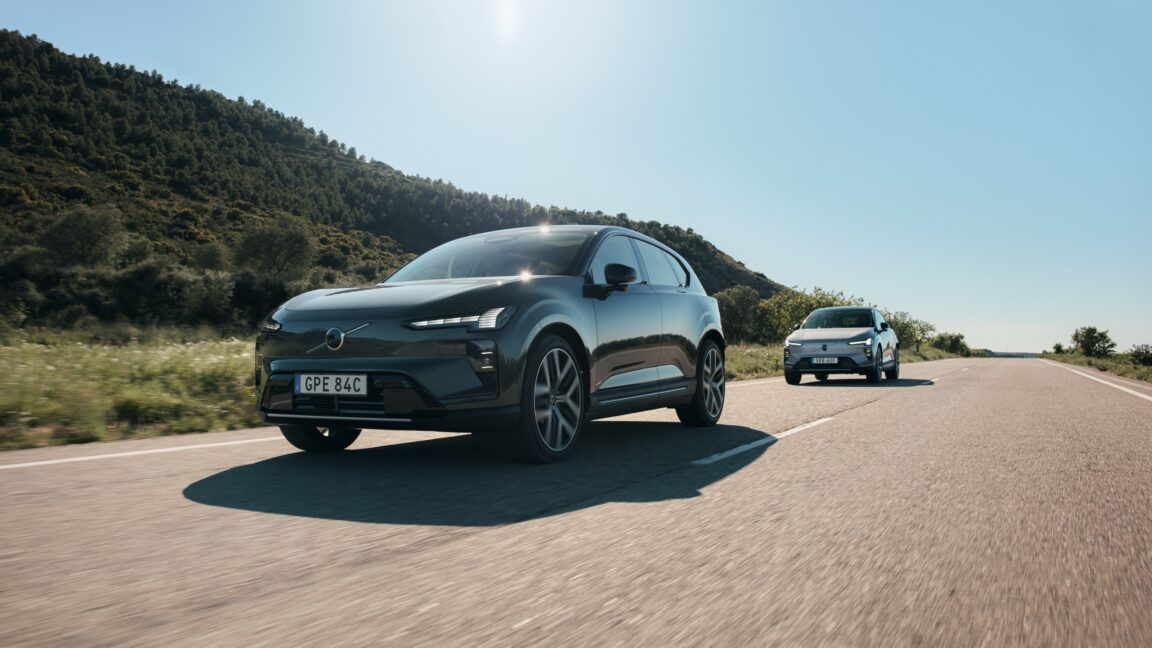
Credit: Volvo
Volvo Cars got some welcome news from the US Department of Commerce yesterday. The government has told the Swedish automaker, which is partly owned by China’s Zhejiang Geely Holding, that it may import connected cars into the US, despite a ban on such vehicle software with Chinese links from model year 2027 onward.
Protectionism is nothing new to the US automotive segment; the absence of foreign-built pickup trucks on US roads is still a consequence of 1964’s “chicken tax,” for example. More recently, in a rare example of bipartisanship, the focus has been on keeping China out. In 2024, then-President Biden first levied a 100 percent tariff on Chinese imports, followed by a new Commerce rule that prohibited imports of any connected vehicles built by companies owned by or with links to China.
The following year, the Trump administration entered office with very different overall priorities, but there was little daylight between the two on the topic of Chinese cars; the ban would go into effect for software from model year 2027 as planned, with connected vehicle hardware forbidden from model year 2030 onward. Automakers can petition the government for an exemption, though, and it seems they will be granted.
“Volvo Cars has been granted a specific authorization from the Office of Information and Communications Technology and Services under the ‘Securing the Information and Communications Technology and Services Supply Chain: Connected Vehicles’ rule in the United States,” the company said in a statement.
“Under the rule, Volvo Car USA was required to follow a process with the US Department of Commerce to obtain a specific authorization for the continued import and sale of connected cars in the US,” Volvo said. “The process is carried out on a case-by-case basis, and the issuance of a specific authorization follows constructive discussions with the US Department of Commerce and other US officials regarding Volvo Cars’ governance, technology, and data security.”
Polestar, which is part-owned by Volvo and is also affected by the Commerce rule, told Ars that it “continue[s] to work with US authorities to meet the requirements of the announced regulations.”
Now that Volvo has shown it’s possible for an OEM to successfully convince the Commerce Department that it complies with the new connected car rule, it raises the likelihood that other Chinese EVs, which are of growing interest to US car buyers, may still yet enter the US market in the coming years.

-
 C114 Communication Network
 -
 Communication Home
