
 Search

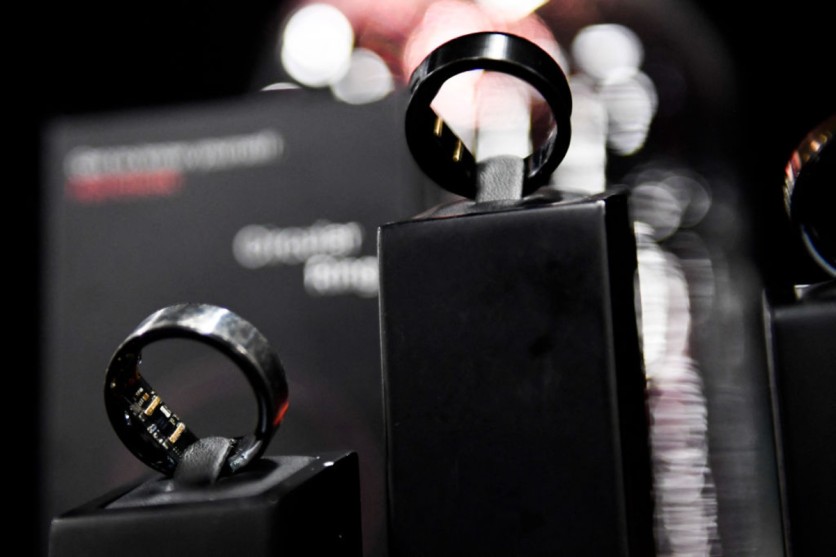
PATRICK T. FALLON/AFP via Getty Images
Oura Inc. publicly filed its Form S-1 registration statement with the U.S. Securities and Exchange Commission on September 3, 2026, revealing for the first time the financial details behind one of the most watched wearable health debuts in years — and disclosing the specific engineering argument at the center of its $16 billion valuation: that a sensor worn on the finger captures a fundamentally stronger biological signal than any device worn on the wrist. The company filed its S-1 with the SEC after confidentially submitting a registration in May 2026.
The company, which plans to list on Nasdaq under the ticker "OURA" and is targeting a raise of up to $3 billion, reported $1.214 billion in total revenue for the nine months ended June 30, 2026 — a 74% year-over-year increase. It posted a gross margin of 55%, net income of $60.8 million, and Adjusted EBITDA of $106.7 million across that period. All figures are drawn from Oura's public S-1 filing, and were independently reported by Bloomberg, which first disclosed the valuation target and raise size in August 2026.
Those numbers mark a company that has found a durable business model — and the engineering reason for that durability is less obvious than the subscription economics suggest.
Why the Finger Beats the Wrist: The Physics of Oura's Advantage
Oura Ring's technical differentiation starts with a physiological fact that wrist-based wearables cannot engineer their way around: the finger is more densely vascularized than the wrist, and that difference in blood vessel density produces a dramatically stronger optical signal.
The technology Oura uses is called photoplethysmography, or PPG — an optical method that shines LED light into the skin and measures how much is absorbed by passing red blood cells with each heartbeat. Oura's research documents the physiological basis for finger-based PPG accuracy, explaining why the finger's dense capillary network and multiple digital arteries sit close to the skin surface. At the wrist, the radial and ulnar arteries sit deeper beneath subcutaneous tissue, and more hair and motion artifacts degrade the reading.
According to Oura's S-1 filing, the finger's PPG signal can be up to 100 times stronger than what wrist sensors produce. That advantage translates directly into Oura's claimed accuracy figures: approximately 99% for resting heart rate, 98% for heart rate variability (HRV), 96% for ovulation tracking, and 96% for sleep staging accuracy versus polysomnography — the gold-standard clinical sleep lab test. An independent study published in 2025 and supported by the Air Force Research Laboratory confirmed that Oura Ring 4 delivered leading PPG accuracy for resting heart rate and HRV among consumer wearables.
A 2022 peer-reviewed paper in the Journal of Medical Internet Research by Cao and colleagues — affiliated with UC Irvine and the University of Turku — validated Oura Ring against clinical electrocardiography, finding the ring performed reliably for sleep-time measurements. A 2024 clinical study found Oura Ring was the only wearable tested that matched polysomnography readings across all four sleep stages — Awake, REM, Light, and Deep — while tested smartwatches over- or underestimated stages.
Oura Ring 4, launched in October 2024 at $349, introduced an 18-path multi-wavelength PPG subsystem that uses green, red, and infrared LEDs simultaneously to track different biometrics across different use cases. Its successor, Oura Ring 5, launched on June 4, 2026. A patented algorithm Oura calls Smart Sensing dynamically adapts which of those 18 sensor paths are active and at what LED brightness, adjusting in real time to each user's skin tone, BMI, age, and movement pattern. According to the company, that adaptation produced a 120% improvement in blood-oxygen signal quality compared to the prior generation, along with a 31% reduction in nighttime heart rate measurement gaps.
That stronger raw signal is not just a marketing claim — it is the engineering explanation for why Oura can offer features that wrist-based wearables struggle to replicate at comparable accuracy: ovulation cycle prediction, respiratory pattern monitoring during sleep, cardiovascular age estimation, and blood pressure trend signals from purely passive overnight wear.
There is an important caveat: Oura's accuracy advantage is most pronounced during sleep, when the body is still and signal-to-noise ratios are highest. The ring's workout heart rate accuracy — when the wearer is moving — has historically required a tight fit to maintain sensor contact and has been rated less favorably than dedicated heart rate chest monitors by independent reviewers.
Financials: $1.2 Billion in Nine Months and a Model That Recovers Its Cost on Day One
The engineering advantage matters to investors because it directly enables the business model disclosed in the S-1 filing.
Oura sells its rings at $299 to $499, depending on model and finish. Hardware revenue totaled $974 million in the nine-month period — the company's largest revenue stream. But the structural logic of the model is that hardware sale economics recover customer acquisition costs at the point of purchase, after which every subscriber enters a recurring-revenue layer: Oura Membership at $5.99 per month. Membership revenue reached $240.5 million in the same nine-month period, up from $108.8 million in the comparable prior-year stretch.
The subscription is not a skin — it powers the AI platform. Members who opt out lose access to personalized health scores, trend analysis, Oura Advisor (the company's conversational AI health companion), women's health insights, and the deeper metrics that differentiate Oura from a raw activity tracker. The longer a member stays subscribed, the more their personal physiological baseline deepens, which in turn improves the accuracy of Oura's AI-generated recommendations. This creates a structural switching cost in the form of historical data lock-in, not just subscription inertia.
As of June 30, 2026, Oura reported 5.0 million paid members across 56 markets — up from 2.9 million at the end of fiscal 2025 and 1.3 million in fiscal 2024. Weighted-average 12-month paid member retention was approximately 85%, and the company's daily-active-to-monthly-active user ratio sat at approximately 65%. Members opened the Oura app more than 3.5 times per day on average during the first three fiscal quarters of 2026. These engagement figures are disclosed in full in the S-1.
For fiscal year 2025 (ended September 30, 2025), full-year revenue was $907.9 million, nearly double fiscal 2024's $406.8 million. CEO Tom Hale had telegraphed in September 2025 that the company was on track for approximately $1.5 billion in annual revenue for 2026 — triple its 2024 figure, consistent with prior reporting on Oura's growth.
5 Million Members, 42 Billion Hours, and the Data Flywheel Behind the Valuation
The S-1 describes Oura's most significant competitive asset not as the ring hardware but as the longitudinal biometric dataset it has accumulated over more than a decade: nearly 42 billion hours of physiological data spanning diverse genotypes, phenotypes, ages, genders, and health conditions. These figures are detailed in the company's S-1.
That dataset trains Oura's Health Foundation Models — proprietary pre-trained neural networks that power the platform's AI layer. The models operate in three tiers: broad health foundation models for general physiology, domain-specific models for targeted features such as fertility tracking and cardiovascular monitoring, and custom large language models powering Oura Advisor — including an Oura Women's Health Expert LLM introduced in February 2026, developed specifically for women's health from menarche through menopause.
The company deploys edge AI on both the ring and the smartphone app, meaning much inference occurs locally rather than on remote servers. This reduces latency, preserves battery life, and supports Oura's privacy-first framing. The S-1 notes that infrastructure is aligned with both HIPAA and GDPR standards.
As of June 30, 2026, approximately 72% of Oura's paid members were women — a statistic the company attributes to its deep integration of women's health features — with female membership growing at a compound annual rate of approximately 143% since fiscal 2024. The company has enrolled more than 350,000 participants in an investigational blood pressure profiling study, signaling its ambitions to move from general wellness into clinically validated territory. Both figures are disclosed in the S-1.
How Smart Ring Competes: Oura vs. Samsung Galaxy Ring and Apple
Oura created the commercial smart ring category when it launched via Kickstarter in 2015, but the competitive landscape has changed. Samsung launched the Galaxy Ring in July 2024 at $399 — without a mandatory subscription fee, making it cheaper in the long run for cost-conscious buyers. Samsung's ring integrates tightly with the Samsung Health ecosystem but is compatible only with Android devices, while Oura supports both iOS and Android.
In response to Samsung's entry, Oura CEO Tom Hale said Samsung targeted where Oura stood two years prior. The Ring 4 launched with signal pathways more than doubled over the prior generation, and the company commissioned a 60-participant external study showing a 30% improvement in blood oxygen accuracy and a 31% reduction in nighttime heart rate data gaps compared to Ring 3.
Other competitors include Ultrahuman Ring Air (approximately $399, no subscription), Circular, and RingConn — all of which compete on price by eliminating the subscription layer, though at the cost of Oura's deeper AI-powered health analysis and longitudinal personalization. Apple Watch and Fitbit-class wrist trackers occupy a broader market but trade the stronger PPG signal of the finger for screen-based convenience. Apple is reportedly developing ring-form wearables of its own, which would represent the most significant competitive threat to Oura's category leadership.
What Risk Factors the S-1 Actually Discloses
Every IPO S-1 contains a ritual catalog of risks. Oura's includes several that are specifically worth noting for potential subscribers and investors.
The company disclosed that certain cohorts of Oura Ring 4 exhibited battery performance issues, resulting in elevated warranty claims and free replacements. Oura says it continues to monitor Ring 5 performance closely, with no assurance that similar issues won't recur.
Oura currently markets Oura Ring as a "general wellness" product — deliberately positioned outside of FDA medical device regulation. That classification enables faster feature launches but carries its own risk: the S-1 explicitly flags that if the FDA were to reclassify Oura Ring as a medical device, compliance costs would rise significantly. This tension is visible in the company's blood pressure study (350,000+ participants) — Oura is building toward clinical validation while currently operating as a wellness product, walking a regulatory boundary that could shift.
The company has only recently achieved profitability — net income was just $0.01 million for full fiscal 2025 before rising to $60.8 million for the nine months ended June 30, 2026 — and it cautions that its rapid historical growth rate "may not be sustainable." Post-IPO operating expenses are expected to rise with public company compliance costs, expanded R&D, and international market entry. All risk factor disclosures are sourced directly from the S-1 filing.
Less than 20% of hardware revenue currently comes from outside the United States — a figure Oura frames as a growth opportunity, but which also reflects the execution risk of international scaling in markets where Samsung and other wrist-based competitors already have strong retail presence.
From Finland to Delaware: Oura's Corporate Road to Nasdaq
Oura was originally incorporated on April 24, 2013 as JouZen Oy in Oulu, Finland. The company changed its name to Oura Health Oy in March 2017 and launched its first commercial ring at the Slush tech conference the same year. Its operational headquarters are split between San Francisco and Oulu, with research and engineering teams in Finland.
On March 31, 2026, Oura completed a corporate reorganization that transferred the parent entity to Oura Inc., a Delaware corporation, while retaining Oura Health Oy as a wholly owned subsidiary. The reorganization was structured to preserve existing shareholder economics identically. Full details of the reorganization are described in the S-1 filing.
The offering is led by Goldman Sachs, Morgan Stanley, J.P. Morgan, Allen & Company, and Jefferies, with additional underwriters including BofA Securities, Barclays, Wells Fargo Securities, and Robinhood Markets — the last signaling deliberate retail investor access. The auditor is Ernst & Young LLP, which signed its consent on September 3, 2026.
If the IPO proceeds at its targeted valuation, it will be the largest consumer-wearables public debut since Peloton's October 2019 listing, which valued the connected-fitness company at $8.1 billion, and will significantly exceed Fitbit's 2015 IPO at approximately $4.1 billion. Oura's September 2025 Series E round raised $875 million at an $11 billion valuation — meaning the proposed $16 billion target represents a jump of more than 45% in under twelve months.
The company's partner ecosystem includes over 1,200 integrations: Strava for activity, Natural Cycles for women's health, Dexcom's Stello glucose biosensor, and LillyDirect — Eli Lilly's digital health platform — for medication and treatment monitoring. A SAFE instrument Eli Lilly holds will convert to common stock as part of the IPO mechanics. These partnership details are disclosed fully in the S-1.
The roadshow and pricing have not been announced. Subject to SEC review and market conditions, Oura plans to begin trading on Nasdaq in September 2026.
Frequently Asked Questions
How does Oura Ring track health differently from a smartwatch?
Oura Ring uses photoplethysmography (PPG) sensors — LED lights that measure blood volume changes through the skin — positioned on the finger rather than the wrist. The key difference is physiological: the finger's dense network of digital arteries sits very close to the skin surface, producing a PPG signal that Oura says can be up to 100 times stronger than what wrist-worn sensors capture. That stronger signal enables more precise heart rate, heart rate variability, sleep staging, and ovulation tracking, particularly during sleep when the body is still. Wrist-based wearables like the Apple Watch and Fitbit-class trackers use the same underlying optical technology but work with a weaker signal from deeper-seated arteries. The tradeoff: Oura's ring has no screen and requires a companion app to view data.
Does Oura's IPO change what happens to member health data?
Oura's S-1 states that the company does not sell member health data and maintains a "privacy-first" policy. It is GDPR-compliant and has aligned its infrastructure with HIPAA standards. However, going public introduces quarterly earnings pressure that did not exist as a private company. Oura's 42 billion hours of longitudinal biometric data is described explicitly in the S-1 as a competitive "data moat" and the company already has data-partnership agreements with Eli Lilly (LillyDirect) and Dexcom, meaning member data informs those integrations. The key distinction for members to understand: Oura's privacy commitments are policy promises, not structural limitations — and the commercial incentives that come with being a public company will only grow over time. Existing and prospective members should read Oura's privacy policy carefully, particularly sections covering how data is shared with partners and what consent mechanisms apply.
Is Oura Ring worth the subscription cost over Samsung Galaxy Ring?
The choice comes down to what depth of health analysis you need and which ecosystem you live in. Samsung Galaxy Ring costs approximately $399 with no subscription required and integrates seamlessly with Samsung Health for Android users. Oura Ring 4 costs $349 plus $5.99 per month for the full Membership — adding up to about $430 annually. The subscription unlocks AI-powered health scores, women's health features including ovulation and cycle tracking, trend analysis, and the Oura Advisor conversational health interface. For users who want passive, accurate sleep and recovery data without ongoing fees, Samsung is the stronger value. For users who want deeper longitudinal health analysis — particularly women's health — and who will use the platform daily over years, Oura's subscription model delivers features Samsung cannot currently match, particularly in clinical-grade sleep staging accuracy and its growing integration with healthcare partners.
What would have to go wrong for Oura's $16B IPO to stumble?
Several scenarios: First, if post-IPO quarterly earnings pressure leads Oura to raise subscription prices — $5.99 has faced criticism since its 2021 introduction — member churn could rise and retention metrics could soften. Second, Apple entering the smart ring category with comparable PPG accuracy and existing ecosystem integration would directly threaten Oura's category-defining position. Third, if the FDA moves to reclassify Oura Ring as a medical device — particularly as Oura expands blood pressure monitoring and glucose integrations — compliance costs would rise substantially and feature velocity could slow. Fourth, Oura's profitability is recent and thin: the company generated just $0.01 million in net income for all of fiscal 2025 before the jump to $60.8 million in the nine months ended June 30, 2026. Any reversal in membership growth rates would quickly compress those margins.

-
 C114 Communication Network
 -
 Communication Home
