
 Search

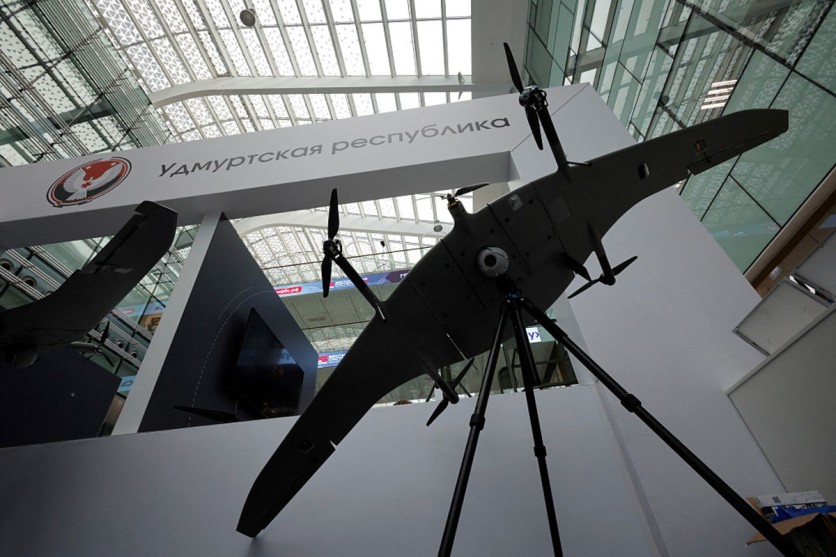
Russian made drones are on display during a forum involving developers, manufacturers, and operators of unmanned and robotic systems 'Unmanned Systems: Technologies of the Future' in Skolkovo Innovation Center outside Moscow on August 14, 2025. (Photo by TATYANA MAKEYEVA / AFP) TATYANA MAKEYEVA/AFP via Getty Images
Ukraine's air defenses destroyed 135 of 163 Russian aerial targets launched overnight September 2–3, 2026 — an 83 percent interception rate that would have been unthinkable two years ago — but the strategic headline buried inside the raw numbers is harder to absorb. Roughly half of Russia's targets that night were jet-powered, flying at speeds of 400 to 650 km/h (249 to 404 miles per hour), well above the velocity range that Ukraine's cheapest and most scalable defensive weapon was designed to kill. The attack killed at least five people, injured 67, and left damage across 13 oblasts.
Zelensky's statement on September 3 framed the salvo as escalation rather than anomaly. "The enemy did not go on vacation," he said. "We need a stronger response and countermeasures, and faster European production of defensive systems, primarily air defense — both anti-missile and anti-drone." That framing is accurate. According to reporting by BBC Ukraine and Nashaniva, the night of August 4–5, 2026 was the first time jet-powered variants exceeded half of any single Russian nightly drone salvo — the following night, a majority-jet salvo achieved only a 65 percent shoot-down rate, compared with the 83 percent recorded on September 2–3. What happened overnight September 2–3 was not a first. It was confirmation that roughly half a salvo at jet speeds has become the operational baseline.
What Russia Launched: Mixed Payload, One Strategic Goal
The September 2–3 attack was not a simple Shahed barrage. Ukraine's Air Force confirmed Russia launched from four directions — Millerovo, Oryol, occupied Donetsk city, and Hvardiyske in occupied Crimea — using a deliberately heterogeneous arsenal:
- Shahed-type strike drones, approximately half of them jet-powered (Geran-3, Geran-4, and Geran-5 variants)
- S8000 Banderol loitering munitions — a cruise-missile-class weapon traveling at roughly 400 to 500 km/h (249 to 311 mph), with a harder interception profile than the propeller-driven Shaheds it accompanies
- Gerbera drones — low-cost Russian-built decoys and reconnaissance platforms with small warheads
- Parodiya-type decoys — foam constructions engineered to mimic Shahed radar signatures and force Ukrainian air defenses to expend interceptors on non-threats
The deliberate mixing of real strike drones, cruise-class weapons, and decoys is designed to fragment Ukraine's defensive response. Every contact in Ukrainian airspace must be treated as a potential live threat, which means Ukraine burns interceptor munitions against decoys — contributing to the attrition math whether the decoy is destroyed or not.
Ukraine's Air Force reported that the attack was repelled through all five defensive layers: aviation units, anti-aircraft missile forces, electronic warfare teams, unmanned aerial vehicle units, and mobile fire groups. Hits were recorded at 15 locations; debris from downed drones fell at four additional sites.
The Human Toll: Five Dead, 13 Oblasts
Despite the 83 percent interception rate, the residual 17 percent sufficed to kill and injure across a wide geographic sweep.
The deadliest strikes hit Dnipropetrovsk Oblast, where four people were killed and 13 injured across six districts targeted by drones, artillery, and a glide bomb. Educational facilities, apartment buildings, and a food warehouse were among the structures damaged.
In Odesa Oblast, at least 17 people — including three children — were injured when a Russian drone struck a residential high-rise, damaging 20 apartments on the 10th through 17th floors and 12 nearby vehicles, according to Governor Oleh Kiper.
Kherson Oblast reported one person killed and 16 injured. Sumy Oblast recorded eight civilian injuries across nearly 40 Russian attacks on 24 settlements. Vinnytsia and Khmelnytskyi oblasts — deep in western Ukraine, far from the eastern and southern fronts — were also struck, underscoring Russia's continued effort to extend the drone campaign geographically. In Kyiv Oblast, warehouses, an administrative building, a shop, and kiosks were damaged in Boryspil district; one person was hospitalized after suffering shrapnel wounds.
How Russia's Jet Drones Were Built to Beat Ukraine's Cheapest Weapon
To understand why the September 2–3 proportions matter, start with the economic arithmetic that Ukraine has spent three years constructing.
The original Shahed-136 — Iran's loitering munition franchised to Russia in a reported $1.75 billion deal and now produced domestically under the Geran-2 designation — cruises at approximately 185 km/h (115 mph). That speed made it vulnerable to a category of weapon Ukraine improvised into industrial production: the FPV interceptor drone. Produced by Ukrainian companies including Skyfall, which manufactures the P1-Sun model, these interceptors cost an average of $3,000 each. A single air defense interceptor missile costs $20,000 to $30,000. The Shahed itself costs somewhere between $20,000 and $70,000 per unit.
The math was transformative. In January 2026, Ukrainian interceptor drones destroyed a record 1,704 Shahed-type drones, with roughly 70 percent of those kills attributed to FPV interceptors rather than to missiles or guns. Ukraine had scaled production to approximately 1,500 interceptor units per day and flown around 6,300 missions in a single month. Hanna Hvozdiar, an adviser to Defense Minister Mykhailo Fedorov, told the European Business Summit that the Skyfall P1-Sun fleet alone had destroyed more than 3,000 Russian Shaheds in 2026.
Russia's answer was engineering.
Ukraine's Defense Intelligence directorate (GUR) published a full technical teardown of the Geran-4 on May 25, 2026, complete with an interactive 3D model and a component-level breakdown. The GUR stated explicitly that Russia developed the Geran-4 "as a countermeasure against the effectiveness" of Ukrainian interceptor systems. The new drone swaps the Shahed's propeller for a Chinese-made turbojet: the Telefly TF-TJ2000A, rated at approximately 200 kgf (1,960 N) of thrust. The result is a drone that can maneuver at 300 to 400 km/h (186 to 249 mph) and accelerate to 500 km/h (311 mph), at altitudes up to 5,000 m (16,400 ft), with a range of 450 km (280 miles) and a warhead of either 50 kg (110 lbs) high-explosive or thermobaric, with an enlarged 90 kg (198 lbs) thermobaric option. The Geran-5 extends the envelope further — up to 600 km/h (373 mph), 6,000 m (19,685 ft) altitude, and 950+ km (590+ miles) range — approaching the capabilities of a low-cost cruise missile.
The P1-Sun interceptor travels at approximately 350 km/h (217 mph). At the Geran-4's top speed of 500 km/h, the pursuit geometry fails. In response, Skyfall introduced the P1-SUN JetKiller, a higher-speed variant specifically designed for jet-powered Shaheds, which was undergoing combat trials in July 2026 with serial production expected to begin in August 2026. Defense Minister Fedorov also confirmed in May 2026 that Ukraine was testing dedicated low-cost interceptor missiles against faster jet-powered drones, with production scaling targeted ahead of the anticipated autumn-winter surge.
How China's Engine Supply Chain Fuels Russia's Jet Drone Fleet
The Geran-4's Chinese turbojet is not incidental to the story — it is the story's largest structural fact.
Ukraine's Defense Intelligence confirmed in its May 2026 Geran-4 teardown that the drone's engines are manufactured by China's Telefly, including the TF-TJ2000A previously observed on the Geran-5. Ukrainian intelligence had earlier identified 45 foreign-made components inside the Geran-3 jet-powered drone, approximately half produced by US manufacturers, in a September 2025 teardown. Russia's jet-drone fleet is structurally dependent on a supply chain that runs through China.
Beijing maintains formal positions of neutrality and has imposed export controls on commercial drone hardware since September 2023. But reporting by the Washington Post, Nikkei Asia, and others has documented that component-level exports — fiber-optic cables, batteries, navigation modules, and engines — have continued and in some categories accelerated. Kateryna Bondar, a research fellow at the Center for Strategic and International Studies, characterized China's role as "critical, extremely important" in Russian drone manufacturing.
The US has sanctioned some Chinese companies for dual-use technology transfers to Russia. But the Telefly engine specifically — the mechanism powering the drones that now constitute roughly half of every Russian nightly salvo — has not been the subject of targeted action that has meaningfully constrained its supply. An under-exercised lever is not an absent one.
Ukraine's Layered Response: Five Layers Against a Shifting Threat
Ukraine's air defense architecture is itself a product of wartime improvisation at industrial scale, organized across five interacting layers: aviation units, surface-to-air missile (SAM) batteries, electronic warfare (EW) teams, unmanned aerial vehicle (UAV) interceptor units, and mobile fire groups.
Anti-aircraft missile batteries — including Western-supplied IRIS-T and NASAMS systems — remain the backbone of defense against faster and higher-flying threats, including the Banderol and cruise-missile-class variants. These systems are expensive to operate and expensive to resupply.
Electronic warfare provides a second layer: Ukraine's EW units can jam or suppress Shahed guidance systems, causing drones to crash or veer off course without an interceptor or missile ever being fired. The Air Force's reported tallies include both "downed" and "suppressed" targets — the 135 figure on September 2–3 includes both categories.
Mobile fire groups — light infantry armed with heavy machine guns, small arms, and short-range munitions that deploy across the countryside — provide a third practical layer, particularly effective against the extremely low-altitude flight paths Russia has adopted to reduce radar visibility.
And at the base of the pyramid: the FPV interceptor drone, the $3,000 weapon that reshaped the economics of the drone war at the propeller-Shahed tier. Its structural vulnerability to jet-powered Gerens is precisely the gap Russia is exploiting as it scales its jet fleet.
What Russia Is Producing — and at What Pace
The scale of the September 2–3 attack reflects a production and logistics apparatus Russia has spent three years building.
Russia began domestic production of Shahed-136 drones in 2023 at the Alabuga Special Economic Zone in Tatarstan, initially under license from Iran. The Center for Strategic and International Studies (CSIS) documented that weekly Shahed launches grew from approximately 200 per week in September 2024 to more than 1,000 per week by March 2025. By April 2026, Russia was launching an average of more than 219 Geran-type drones per day. Ukraine's Defense Intelligence has put current manufacturing capacity at up to 2,700 Shahed-type drones per month.
Satellite imagery analyzed by Radio Liberty and published in May 2026 confirmed that Alabuga's footprint grew by 340 hectares (840 acres) between May 2025 and May 2026. Additional construction on a 450-hectare (1,112-acre) site south of the M-12 highway began in April 2026. David Albright, a former UN weapons inspector who heads the Institute for Science and International Security, noted that the Kremlin appears committed to long-term production contracts — effectively buying whatever the facility can produce. Aviation analyst Bohdan Dolintse estimated the expansion could push monthly output to 3,500 to 4,000 units by autumn 2026.
Russia has also leveraged the Alabuga expansion for geopolitical reach: the facility is now reportedly re-exporting refined Geran designs to Iran for use in the Middle East.
What Is Russia Actually Trying to Achieve?
An 83 percent interception rate sounds like a strong defensive success. Strategically, it is not sufficient.
Russia's drone campaign is an instrument of attrition in the Clausewitzian sense: the goal is not to achieve a single decisive strike but to gradually exhaust Ukraine's material capacity, morale, and infrastructure through continuous accumulation of damage. The logic does not require individual attacks to succeed at high rates — it requires the aggregate to exceed Ukraine's reconstruction capacity.
At 163 drones launched in a single night, 83 percent interception leaves roughly 28 drones reaching their targets. At Russia's documented April 2026 pace of 219 per day, that residual hit rate translates to roughly 37 strikes reaching targets daily — every day. Across weeks and months, residential floors are destroyed, warehouse supply chains disrupted, power grid components degraded. The interception rate that sounds like success produces, over time, precisely the infrastructure erosion Russia is seeking.
The jet-powered proportion complicates this calculus further. When half the incoming salvo flies at speeds that stress or defeat the $3,000 FPV interceptors, Ukraine's air defense is forced up the cost ladder: EW suppression (resource-intensive), mobile fire groups (limited against fast-moving targets at altitude), and SAM batteries ($20,000 to $30,000 per missile). Russia is not simply launching more drones. It is engineering the force composition to maximize the economic cost of interception, one salvo at a time.
What Allies Are Building — and What They Aren't Building Fast Enough
At a NATO summit in Ankara, Turkey on July 8, 2026, President Donald Trump announced the US would grant Ukraine a production license for Patriot interceptor missiles, giving Kyiv the right to manufacture the systems domestically. At a White House meeting on July 28, Zelensky confirmed Trump "accepted that he will give us licenses" and described follow-on meetings with Lockheed Martin and Raytheon on co-production arrangements. As of September 3, the formal license had not been finalized — negotiations and co-production planning were ongoing.
Patriot licenses address Ukraine's ballistic missile and high-altitude threat gap, which is structurally different from the drone saturation problem. The alliance's counter-drone gap remains at the cheap, scalable end — precisely where the jet-powered Geran transition is applying pressure. Zelensky's September 3 call for "faster European production of defensive systems" pointed to this gap directly.
Ukraine's own answer — the P1-SUN JetKiller — was still in combat trials as of late July 2026, with serial production expected to begin in August. Whether that production has scaled to meaningful volume in time to affect the autumn-winter intensification remains the central open question.
What Readers Following This Conflict Need to Know
The September 2–3 salvo is being reported as a large overnight drone attack. In the context of this war, it was a routine night — and that is precisely the point.
What is not routine is the composition: roughly 82 of 163 targets flying at jet speeds that systematically outpace Ukraine's most cost-effective defensive layer. What is not routine is that this proportion has now been established as a baseline — not a spike — sustained across multiple salvos since August. And what is not routine is the engineering logic behind it: a Chinese turbojet engine on a $20,000 to $70,000 Russian drone, produced in a facility expanding at 340 hectares per year, designed specifically to outrun a $3,000 Ukrainian interceptor that had briefly shifted the cost arithmetic of the drone war in Kyiv's favor.
The arms race is real, it is measurable, and the current score on the jet-drone tier is: Russia adapting faster than Ukraine's cheapest counter-weapon can respond.
Frequently Asked Questions
What is a jet-powered Shahed drone and why does speed matter for Ukraine's defenses?
Russia's standard Shahed-136/Geran-2 drone uses a propeller engine and travels at approximately 185 km/h (115 mph). Ukraine countered it effectively with low-cost FPV interceptor drones, such as the Skyfall P1-Sun, which cost around $3,000 each and travel at roughly 350 km/h (217 mph). Russia's newer Geran-4 uses a Chinese Telefly turbojet engine and reaches up to 500 km/h (311 mph); the Geran-5 reaches up to 600 km/h (373 mph). At those speeds, the FPV interceptor's pursuit geometry breaks down — the defender can no longer close the gap reliably. Ukraine has developed a higher-speed JetKiller variant and is testing dedicated interceptor missiles, but neither was yet in serial production as of September 3, 2026. Speed matters because it determines which tier of the air defense pyramid must engage the threat — and higher tiers use dramatically more expensive munitions per kill.
How does Russia's production capacity compare to Ukraine's ability to intercept?
Ukraine intercepted 83 percent of September 2–3's 163-drone salvo — a higher rate than was possible earlier in the war. But Russia's Alabuga production facility has grown by 340 hectares (840 acres) in the past year and is on track to produce 3,500 to 4,000 Geran-type drones per month by late 2026, with an average of more than 219 launches per day documented in April 2026. Even at 83 percent interception, Russia's documented launch pace means dozens of drones reach their targets every night. The attrition campaign does not require each individual attack to succeed — it requires the cumulative residual damage to exceed Ukraine's reconstruction capacity over time.
What role does China play in Russia's drone program, and is anything being done about it?
Ukrainian Defense Intelligence confirmed in a May 2026 technical teardown that the Geran-4 uses a Chinese Telefly TF-TJ2000A turbojet engine rated at approximately 200 kgf (1,960 N) of thrust. China has imposed export controls on complete commercial drones since September 2023, but investigators at the Washington Post, Nikkei Asia, and others have documented continued exports of drone components — including engines, fiber-optic cables, batteries, and navigation modules — to Russia. The US has sanctioned some Chinese companies for dual-use technology transfers. The Telefly engine that powers the jet drones now comprising roughly half of Russia's nightly salvos has not been subject to targeted sanctions that appear to have meaningfully constrained supply. China's component supply is a structural enabler of Russia's jet-drone fleet and represents a lever whose full exercise would require coordinated action the US and its allies have not yet taken.
What is Ukraine asking allies to provide, and what is the status as of September 3, 2026?
Ukraine's most immediate air defense need for high-altitude and ballistic threats is additional Patriot interceptor capacity. President Trump announced a production license for Ukraine at the NATO summit in Ankara on July 8, 2026, and Zelensky confirmed at a July 28 White House meeting that Trump "accepted that he will give us licenses" — with follow-on co-production discussions with Lockheed Martin and Raytheon underway. As of September 3, formal finalization of the license was ongoing. For the drone saturation problem specifically, Zelensky called on September 3 for faster European production of anti-drone systems. Ukraine's own answer — the P1-SUN JetKiller interceptor and low-cost interceptor missiles — was in development and trial stages as of late July 2026.

-
 C114 Communication Network
 -
 Communication Home
