
 Search

Lenovo.com
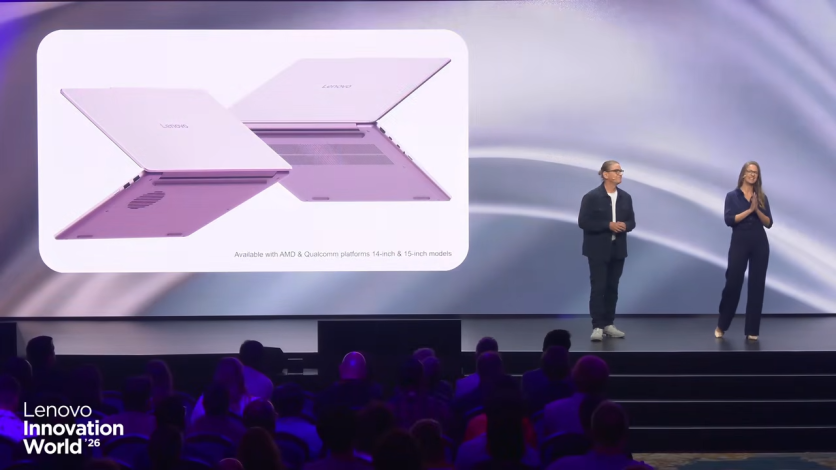
Lenovo unveiled the IdeaPad Vibe at IFA 2026 in Berlin on September 3, and it is the most differentiated Windows challenger to Apple's MacBook Neo that any PC maker has produced this year — seven color options, a consumer-first swappable keycap system, and a six-port layout that trounces what the MacBook Neo offers. Starting at $699, it will arrive in October for AMD models and November for Snapdragon variants. But here is the decision-shaping detail no other coverage has named clearly: the IdeaPad Vibe's $699 entry configuration will almost certainly ship with 8GB of RAM, and Microsoft's Copilot+ certification — the Windows AI-PC standard that unlocks Recall, Live Captions, and Studio Effects — requires a minimum of 16GB. Buyers who choose the Vibe specifically for its NPU-powered AI laptop credentials, and pick the cheapest model to get there, will find the headline AI features locked out.
Before purchasing any Lenovo device, readers should also know that Lenovo is a Chinese-incorporated company subject to China's National Intelligence Law (2017), Data Security Law (2021), and Cybersecurity Law (2017) — legal obligations that require cooperation with Chinese government intelligence requests, regardless of what the company's privacy policy states or where your data is stored. A dedicated section below covers what that means in practice for IdeaPad Vibe buyers.
Design First: Seven Colors and a Keycap System No Consumer Laptop Has Tried Before
Lenovo's IdeaPad Vibe arrives in seven Pantone-developed color options — including Dreamy Violet, Spicy Gold, Zen Green, Chill Blue, Radiant Coral, Moody Blue, and Lowkey Grey — each with a color-matched Lenovo logo on the lid. Apple's MacBook Neo launched in March with four color options — silver, indigo, blush, and citrus — and its colorful palette was widely credited with reinvigorating buyer interest in an otherwise monotone consumer laptop market. Lenovo has responded by nearly doubling the palette.
The Vibe's signature feature is its swappable keycap system — a first for a consumer laptop. On a standard laptop, the scissor-switch mechanism beneath each keycap is fragile enough that replacement risks breaking the mechanism; what Lenovo has engineered here is a more robust swap system designed for buyer-friendly color changes. Keycap sets can match the laptop's body color or deliberately contrast with it. Lenovo has not yet disclosed the price of replacement keycap sets or detailed the exact mechanism, so the promise remains confirmed-but-untested until units ship.
Chassis construction varies by configuration: higher-end models offer an all-metal build, while others use a metal lid and keyboard deck with a plastic bottom panel — a cost-reducing engineering tradeoff that keeps the premium feel where it matters most (the surfaces you touch) while shaving weight and material cost from the underside. The lineup starts at 1.3 kg (approximately 2.87 lbs).
What the NPU Actually Does — and Where the Copilot+ Catch Lives
Both processor options in the IdeaPad Vibe — AMD's Ryzen AI 400 (codenamed Gorgon Point) and Qualcomm's Snapdragon X — include dedicated Neural Processing Units. An NPU is a specialized chip built specifically for AI and machine learning inference: unlike a CPU, which handles general sequential tasks, or a GPU, which handles parallel floating-point math, an NPU is optimized for matrix operations that power neural network workloads — speech recognition, real-time translation, background blur, on-device image generation. Running these tasks on the NPU keeps the CPU and GPU free for other work and dramatically reduces power draw for always-on AI features.
AMD's Ryzen AI 400 NPU uses the XDNA 2 architecture, rated at 50 to 60 TOPS (trillion operations per second) depending on the model tier — the flagship Ryzen AI 9 HX 475 reaches 60 TOPS. Qualcomm's Snapdragon X NPU (the Hexagon) is rated at 45 TOPS. Both exceed Microsoft's 40 TOPS minimum for Copilot+ PC certification — which unlocks Windows 11's Recall (searchable AI history of your screen activity), Live Captions with real-time translation, Cocreator in Paint, and Windows Studio Effects for webcam enhancement.
Here is where the catch lives: Copilot+ certification requires 40+ TOPS AND a minimum of 16GB of RAM. The IdeaPad Vibe's $699 entry-level configuration will almost certainly ship with 8GB of RAM, consistent with standard industry practice at this price tier — which Lenovo's own Tom's Hardware briefing acknowledged. An 8GB configuration fails the 16GB RAM requirement and does not qualify as a Copilot+ PC, regardless of its NPU TOPS rating. Buyers who want Copilot+ features will need to configure up to 16GB or higher — which adds cost above the $699 entry price.
It is also worth noting that the Ryzen AI 400 is primarily a refresh of AMD's Ryzen AI 300 (Strix Point) generation, retaining the same Zen 5/5c CPU cores, RDNA 3.5 integrated graphics, and XDNA 2 NPU architecture with modestly higher clock speeds and NPU TOPS ratings. This is not a criticism of the chip's real-world performance — independent testing finds Ryzen AI 400 laptops well-suited to everyday workloads and capable AI inferencing — but buyers evaluating the marketing language around a "new generation" chip should understand the architectural lineage.
Port Parity: Where Lenovo Wins Clearly
The IdeaPad Vibe's port layout is its most unambiguous competitive advantage: two USB-A ports, two USB-C ports, HDMI, a 3.5mm headphone jack, and a microSD card slot — six ports total. The MacBook Neo offers just two USB-C ports and a headphone jack. Dell's new XPS 13, another MacBook Neo competitor announced at Computex 2026 at a $699 price point, also offers only two USB-C ports — and no USB-A, HDMI, or microSD slot — making the Vibe the clear winner on physical connectivity among this group of competitors.
One limitation to name: all four USB ports on the IdeaPad Vibe are capped at 5 Gbps (USB 3.2 Gen 1 speed). This is the same USB speed ceiling as the MacBook Neo's USB-C ports, so it is not a disadvantage relative to Apple's laptop specifically — but buyers who rely on fast external NVMe drives, high-bandwidth docking stations, or dual 4K monitor setups via USB-C should note the absence of Thunderbolt 4 or USB4 support. For students, remote workers, and everyday users, the six-port layout is a practical win; for power users with high-bandwidth I/O needs, the 5 Gbps ceiling is a real constraint.
AMD vs. Snapdragon: A Compatibility Fork Every Buyer Should Understand
Lenovo's decision to offer both AMD Ryzen AI 400 and Qualcomm Snapdragon X variants creates a meaningful architectural choice that goes beyond processor performance numbers. The AMD models run on x86 architecture, meaning full native compatibility with every piece of Windows software ever compiled for Intel or AMD hardware — including legacy applications, specialized professional tools, and gaming titles that have not been recompiled for ARM.
The Qualcomm Snapdragon X is ARM-based. ARM-native Windows applications — a rapidly growing category in 2026 — run at full speed. Legacy x86 applications run through Microsoft's Prism emulation layer, which works well for most consumer applications but adds latency and reduces performance for compute-intensive x86 titles, particularly games and some professional software.
For buyers whose software ecosystem is primarily ARM-native (Office, browsers, mainstream productivity apps), Snapdragon offers competitive performance and strong battery efficiency. For buyers with specialized x86 tools — certain security software, legacy enterprise applications, games without ARM-native builds — the AMD variant is the more reliable choice.
RAM caps differ by platform: AMD variants support up to 32GB; Snapdragon variants top out at 24GB. AMD models also get the optional 65 WHr battery upgrade (the standard across both platforms is 50 WHr). Both variants include two M.2 SSD slots, giving buyers a meaningful storage upgrade path after purchase.
Display Tradeoff: OLED Arrives, But Only in the Quieter Colors
Display options split between 120 Hz IPS panels as the standard across most SKUs, with OLED upgrades available — but with a notable restriction. OLED configurations will only be offered in the most subdued colorways: Lowkey Grey and Moody Blue. Buyers who want the vivid yellows, pinks, or greens must accept an IPS display. This is a real tradeoff: OLED delivers superior contrast, deeper blacks, and more accurate colors than IPS, but the business decision to limit OLED to low-contrast chassis colors means the buyers most drawn to visual personality are the ones who cannot get the best screen.
Qira AI: What the Assistant Does, and What Data It Touches
Lenovo is launching the IdeaPad Vibe alongside Qira, its cross-platform AI assistant — the same platform found in Motorola phones. Lenovo describes Qira as helping users "move from intent to action through natural-language requests with less app switching," with connections for email, calendar, and collaboration services powered by Workato integrations.
Qira will not ship on every IdeaPad Vibe — Lenovo has confirmed it will only be available on select, higher-end configurations with sufficient RAM headroom for AI tasks. For the privacy implications of Qira specifically, see the data disclosure section below.
What Lenovo's Chinese Legal Obligations Mean for Buyers
Lenovo Group Limited is headquartered in Beijing and publicly traded on the Hong Kong Stock Exchange. Its largest shareholder is Legend Holdings, which is partially owned by the Chinese Academy of Sciences — a Chinese government institution. Under Chinese law, Lenovo is subject to three statutes whose obligations are fixed and apply regardless of where the device is used, where data is stored, or what Lenovo's privacy policy states:
China's National Intelligence Law (2017), Article 7: Requires all Chinese organizations and citizens to support, assist, and cooperate with national intelligence work in accordance with the law. This is a mandatory cooperation obligation — not a voluntary disclosure arrangement.
Data Security Law (2021): Classifies data by security level, restricts cross-border data transfers, and mandates cooperation with government data access requests.
Cybersecurity Law (2017): Requires data localization and government access to data on demand.
Lenovo has consistently denied improper data sharing. In response to a 2026 proposed class action lawsuit (Christy v. Lenovo, Case 3:26-cv-01133, U.S. District Court, N.D. Cal., filed February 5, 2026), which alleges that Lenovo's website tracking transfers bulk behavioral data to Chinese-linked entities in violation of DOJ Data Security Program rules, Lenovo stated: "Any suggestion that Lenovo improperly shares customer data is false. We take data privacy and security seriously and comply with all applicable data protection laws and regulations globally." The lawsuit is reported by The Register and remains pending.
Lenovo also carries a documented enforcement history: in 2017, the company settled Federal Trade Commission charges over Superfish — pre-installed software that intercepted users' HTTPS traffic using a man-in-the-middle root certificate — paying $3.5 million across 32 states and agreeing to a 20-year software security audit program. The 20-year audit requirement applies to preloaded consumer laptop software and remains active.
What data the IdeaPad Vibe collects that could be subject to these legal obligations:
If Qira AI is enabled and connected to email, calendar, and collaboration services via Workato, the content of those integrations — emails, calendar appointments, document context — passes through Lenovo's software environment and potentially through Workato's systems. Location data, device usage patterns, and behavioral browsing data may also be collected depending on Lenovo Vantage settings.
Practical steps to limit exposure:
If you work with sensitive professional data — legal, medical, financial, government — the safest configuration is to decline Qira AI integration entirely and avoid connecting work accounts to Lenovo-controlled software environments. For general consumer use, reviewers of prior Lenovo laptops have found no evidence of active data exfiltration in ordinary configurations; the risk is structural and legal, not necessarily active in any given unit. Additional mitigations: configure the device on a separate network VLAN from sensitive internal systems; keep firmware up to date to minimize known vulnerability exposure; review and minimize sharing permissions in Lenovo Vantage. Network segmentation and disabling Qira reduce but do not eliminate the structural legal risk created by China's mandatory intelligence cooperation laws.
Availability and Pricing
The IdeaPad Vibe is available in 14-inch and 15-inch screen sizes. AMD Ryzen AI 400 models will arrive in October 2026, starting at $699. Qualcomm Snapdragon X models will follow in November 2026. Intel-based configurations are planned, with no announced availability date.
For buyers drawn to the Vibe's color aesthetic but who do not need portability, Lenovo will also introduce the IdeaCentre AIO i — a 27-inch all-in-one desktop with Intel Core Series 3 processors, offered in coordinating colors with a matching keyboard and mouse — starting at $939, with availability planned for November.
Does the IdeaPad Vibe Beat the MacBook Neo?
The IdeaPad Vibe beats the MacBook Neo on ports, color variety, display upgrade path (OLED, even if restricted by colorway), storage expandability (two M.2 slots), and raw memory ceiling (up to 32GB on AMD vs. 8GB on the MacBook Neo). It runs Windows 11, which means access to the full Windows software ecosystem, including the Copilot+ features that Microsoft has been building out across 2026.
The MacBook Neo holds advantages on battery life (16 hours claimed on Apple A18 Pro vs. unspecified for the Vibe), software optimization (macOS Tahoe with Apple Intelligence runs more efficiently on the A18 Pro than Windows AI features run on AMD or Snapdragon), build quality consistency (Apple's aluminum body vs. Lenovo's mixed-material options at the base), and the ecosystem value of an iPhone-compatible device.
The decision is not "which is better" but "which fits your software, ecosystem, and workflow." For Windows users, the IdeaPad Vibe makes the strongest personality-first case any PC maker has made against the MacBook Neo this cycle — but only at 16GB RAM and above will it deliver the full AI-PC experience its NPU hardware promises.
Frequently Asked Questions
Does the Lenovo IdeaPad Vibe qualify as a Copilot+ PC?
It depends on the configuration. The AMD Ryzen AI 400 NPU is rated at 50 to 60 TOPS, and the Snapdragon X NPU at 45 TOPS — both clear Microsoft's 40 TOPS threshold. But Copilot+ certification also requires a minimum of 16GB of RAM and 256GB of storage. The IdeaPad Vibe's $699 entry model will almost certainly ship with 8GB of RAM, which fails the RAM requirement and disqualifies it from Copilot+ features — including Recall, Live Captions, and AI image generation in Paint. Buyers who specifically want Copilot+ features need to configure to 16GB or above, which adds cost above the base price.
Can you actually swap keycaps on the Lenovo IdeaPad Vibe, and how does it work?
Lenovo confirmed the swappable keycap feature at IFA 2026 — it is a genuine product commitment, not a concept. The company says buyers can choose keycaps that match their laptop's body color or contrast with it for a personalized look. What Lenovo has not yet disclosed is the precise mechanism (how the keycaps attach and detach), the price of replacement keycap sets, or whether sets will be sold at retail or exclusively through Lenovo's own channels. Given that standard laptop keycaps use fragile scissor mechanisms not designed for consumer removal, Lenovo has presumably engineered a sturdier interface — but the specifics will become clear only when review units and retail accessories are available.
What are the privacy risks of using a Lenovo laptop, and do they apply to the IdeaPad Vibe?
Yes. Lenovo is a Chinese-incorporated company subject to China's National Intelligence Law (2017), which legally requires all Chinese organizations to assist government intelligence requests on demand. This obligation is structural and applies regardless of where the device is used or where Lenovo stores data. In 2017, Lenovo settled FTC charges worth $3.5 million after shipping laptops with software that intercepted users' HTTPS traffic. An active 2026 proposed class action (Christy v. Lenovo) alleges Lenovo's website tracking transfers bulk personal data to Chinese-linked entities in violation of DOJ rules. The Register's coverage of the Lenovo class action lawsuit details these allegations. Lenovo denies these allegations. For most general consumer users, independent security reviewers have not documented active data exfiltration from Lenovo hardware in ordinary configurations. The risk is most significant for users whose work involves sensitive professional, medical, legal, or government data — and for those users, the safest mitigation is to disable Qira AI and avoid connecting sensitive accounts to Lenovo-managed software.
When will the Lenovo IdeaPad Vibe be available, and what should I consider before choosing AMD or Snapdragon?
AMD Ryzen AI 400 models will ship first, arriving in October 2026 starting at $699. Snapdragon X models follow in November 2026; Intel variants have no announced date. The AMD choice offers full x86 Windows software compatibility — including legacy applications and games that require x86 — and a higher maximum RAM ceiling (32GB vs. 24GB). The Snapdragon variant runs ARM-native Windows applications at full speed but relies on Microsoft's Prism emulation for legacy x86 software, which can reduce performance for non-optimized apps. Both platforms offer Copilot+-eligible NPUs, but only in configurations with 16GB or more RAM.

-
 C114 Communication Network
 -
 Communication Home
