
 Search

Nvidia.com
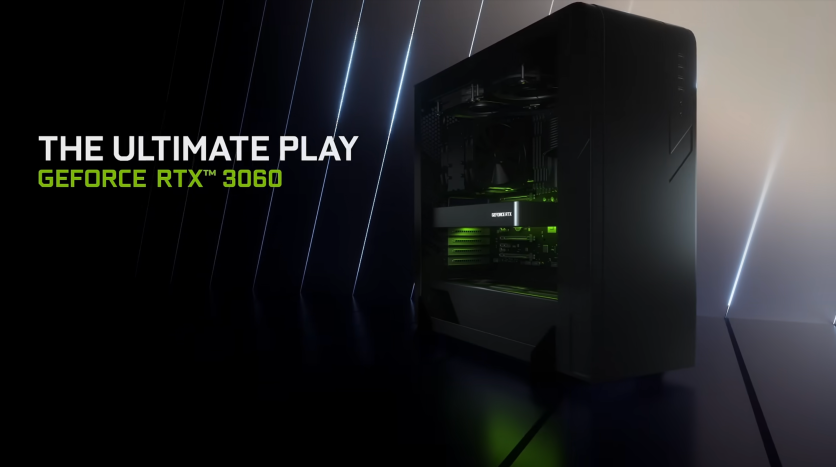
A German benchmark analysis has confirmed what a growing number of PC builders had suspected: the GeForce RTX 3060 12GB, a graphics card that first shipped in February 2021, now outperforms both the RTX 4060 and the Radeon RX 7600 at 4K resolution — cards that launched two years later and cost the same or more. The three-year performance update was published by VideoCardz on July 24, 2026, reporting on data from 3DCenter.
3DCenter cross-referenced the RTX 4060's 2023 launch review data with PC Games Hardware's updated 2026 raster benchmark suite, using the RTX 3060 12GB as the 100% baseline in both data sets. At 1080p, the RTX 4060's performance advantage has narrowed from 23.5% in 2023 to 18.8% today. The Radeon RX 7600's lead fell from 20.7% to 11.8% over the same period. Those are meaningful shifts — but the results at higher resolutions are more striking.
At 1440p, the gap nearly disappeared. The RTX 4060's lead collapsed from 19.4% to 8.5%, and the RX 7600's advantage fell from 17.3% to 5.0%. At 4K, both 8GB cards fell behind the five-year-old Ampere GPU outright: the RTX 4060 reached only 97.2% of the RTX 3060's output, and the RX 7600 reached 94.9%.
3DCenter was careful to control for a possible alternative explanation. The RTX 4070 — also an Ampere-era card when compared against Ada equivalents — moved further ahead of the RTX 3060 in the updated tests, ruling out a broad Ampere driver improvement as the cause. The reversal is specific to 8GB cards. It is a VRAM story.
The analysis arrives alongside a separate report that NVIDIA has raised GPU kit prices for add-in card partners across its entire GeForce lineup, covering products built on both GDDR7 and GDDR6 memory — a development that makes the RTX 3060's five-year-old $329.99 price point look increasingly time-limited. VideoCardz reported the kit price increases on July 23, 2026, citing BenchLife.
RTX 4060 Lost to a 2021 Card at 4K — Here Is Why
The mechanism behind these results has been well understood for several years but is now hitting in ways benchmark scores at launch entirely failed to predict.
VRAM is the dedicated memory pool on a graphics card. When a game's texture load, geometry data, and render buffers fit within that pool, the GPU operates at full speed. When those assets exceed the available memory, the GPU must page data to system RAM across the PCIe bus. That matters because 8GB of VRAM is increasingly insufficient for modern gaming. The critical detail is the speed differential: GDDR6 memory on the RTX 3060's 192-bit bus delivers roughly 360 gigabytes per second of bandwidth. The PCIe 4.0 connection between GPU and system RAM delivers approximately 32 gigabytes per second — about one-eleventh as fast. As NewBottleneckCalc's 2026 VRAM guide explains, when a game exceeds 8GB of VRAM, the affected card does not simply perform a little worse. Its frame-time consistency collapses, producing the characteristic signature: average FPS looks acceptable in monitoring software, but 1% lows crater and the game produces visible stutters and texture pop-in.
Unreal Engine 5 — now the underlying engine for a growing share of major releases — applies pressure through two specific features: Nanite, which streams micropolygon geometry on demand, and Lumen, which uses screen-space and ray-tracing data for global illumination. Both systems maintain large working sets in VRAM. The games making 8GB feel insufficient in 2026 include Black Myth: Wukong, Clair Obscur: Expedition 33, and Alan Wake 2 — not stress-test edge cases but mainstream releases. Multiple independent analysts, including LoadedRig and BuildRanked, confirmed 12GB as the practical minimum for high-settings 1440p gaming in 2026.
The RTX 3060's 12GB capacity is not the result of a deliberate product decision at NVIDIA. It is a consequence of the GA106 die's 192-bit memory bus architecture: six 2GB GDDR6 modules fill a 192-bit bus without requiring exotic memory configurations. When the card shipped in 2021, that capacity was widely described as overkill for a mainstream 1080p GPU. In 2026, it is the card's primary competitive differentiator.
The same principle, applied to a more recent card, illustrates the stakes in the most direct way possible. Hardware reviewer Daniel Owen benchmarked the RTX 4060 Ti 16GB against the RTX 4060 Ti 8GB — identical chips on identical boards, differentiated only by memory capacity — and found the 16GB version was up to 85% faster in VRAM-sensitive titles at 4K. Same silicon, same architecture, same clock speeds. The entire performance gap is VRAM.
Should I Buy the RTX 3060 Now? The Complete Buying Case
The RTX 3060 12GB's resurgence exists within a specific and well-defined scope. It does not make the card the best GPU in its price range in every situation — and anyone buying one should understand both what they are getting and what they are giving up.
The case for the RTX 3060 12GB in 2026 is clearest at 1440p, where the 3DCenter data shows the performance gap against the RTX 4060 has narrowed to 8.5% and the gap against the RX 7600 to 5.0% — while the RTX 3060's VRAM buffer avoids the texture-streaming degradation that increasingly affects 8GB cards in newer titles. Independent analysis identified 12GB as the 2026 floor for comfortable 1440p gaming at high-to-ultra settings.
The case against is also clear. The RTX 4060 and RTX 5060 both support DLSS 3 Frame Generation, which uses AI to insert synthetic frames between rendered frames — a feature that can roughly double effective frame rates in supported titles at the cost of some additional latency. Per Tom's Hardware's RTX 4060 vs RTX 3060 comparison, the RTX 3060 supports DLSS 2 upscaling but not frame generation. Both newer cards also include a newer encoder with AV1 support, which is relevant for streaming or recording gameplay at lower bitrates. The RTX 4060 draws only 115W versus the RTX 3060's 170W — a 55W difference that is a practical consideration for smaller builds with tighter power budgets.
The RTX 3060's revival also has a direct structural cause: NVIDIA's entry-level Blackwell roadmap is in disarray. The RTX 5050 9GB, which would have served as the budget Blackwell desktop option, was reportedly canceled or permanently delayed, with AIB partners receiving no updated launch information as of late June 2026. NVIDIA CEO Jensen Huang stated at CES 2026 that reintroducing older GeForce GPUs "is a good idea," explicitly endorsing the revival strategy. NVIDIA and Samsung restarted GA106 production on Samsung's 8nm deep-ultraviolet manufacturing node — a separate process from the TSMC 4N node used for Ada Lovelace and Blackwell chips, allowing production without displacing current-generation output, per Notebookcheck's reporting on the production restart.
NVIDIA's Memory Crisis Is Now Hitting GDDR6, Not Just GDDR7
The VRAM story and the production restart story share a common cause, and that cause deepened this week.
NVIDIA has reportedly notified its add-in card partners of higher prices for GPU kits — the bundled packages of GPU die and VRAM — covering products that use both GDDR7 and GDDR6 memory. Per VideoCardz's reporting, the previous round of adjustments in May 2026 was limited to the RTX 5090. This one is broader.
The underlying pressure comes from GDDR7 module pricing. The RTX 50 SUPER series — a mid-cycle refresh expected to address the Blackwell lineup's most loudly criticized limitation, its 8GB VRAM ceiling — remains on hold because 3GB GDDR7 modules reportedly cost $60 to $70 each, compared to approximately $20 for a standard 2GB module. VideoCardz reported the GDDR7 module cost differential in July 2026. That roughly threefold cost differential makes the math on a higher-VRAM SUPER variant difficult at any price consumers would accept.
GPU prices have already risen 20 to 30% across the market compared to where they stood a year ago, according to TechPowerUp's reporting on the kit price increases. The new round of kit price increases suggests further retail price pressure is ahead. Board partners also face higher costs for cooling systems, PCBs, and packaging, though those increases are smaller than the memory-related ones. VideoCardz confirmed this broader component cost picture.
The strategic logic that made the RTX 3060 revival economically viable — GDDR6 memory was less affected by the shortage than GDDR7 — now faces pressure from the same supply chain that squeezed Blackwell. A card that is currently available at $329.99 may not remain at that price point indefinitely.
Read more: GPU Memory Crisis Prices RTX 5090 Above $4,300 as Nvidia Offers Paper Cards
What the Benchmark Data Means for Anyone Buying Now
The 3DCenter analysis is not a recommendation to buy a five-year-old GPU. It is a data-backed answer to a specific question that matters right now: for a buyer who cannot or will not spend more than $350 on a graphics card, does the RTX 3060 12GB's VRAM advantage justify choosing it over the RTX 4060 or RX 7600?
At 1440p, the benchmark data says yes — if the buyer primarily runs modern AAA titles at high-to-ultra texture settings, where 8GB cards increasingly produce texture-streaming artifacts that 12GB cards avoid. At 1080p, the RTX 4060's 18.8% performance lead is real and meaningful, and its DLSS 3 Frame Generation support can push effective frame rates well beyond what the RTX 3060 can achieve natively. At 4K, the RTX 3060 now holds a lead in raw rasterization — though neither card is well-suited to native 4K gaming in demanding titles.
The RTX 4060 and RX 7600 are not bad graphics cards. They are fast, power-efficient, and carry feature sets the RTX 3060 lacks. What the 3DCenter data shows is that a single well-chosen specification — 12GB of VRAM rather than 8GB, decided five years ago by bus-width arithmetic rather than product strategy — can determine a GPU's competitive longevity in ways that launch-day benchmarks at 1080p entirely failed to signal.
That lesson applies to anyone currently evaluating next-generation purchases in a market where the RTX 5060 ships with 8GB of GDDR7, the RTX 50 SUPER series remains in indefinite delay, and GPU kit prices are rising across the board. Memory capacity ages slowly. Raw shader performance ages faster.
Frequently Asked Questions
Is the RTX 3060 12GB still worth buying in 2026?
At $329.99 and for buyers targeting 1080p or 1440p at high settings, yes — with conditions. The RTX 3060 12GB's 12GB VRAM buffer avoids the texture-streaming stutter that increasingly affects 8GB GPUs in newer releases, and new benchmark data shows its performance advantage over the RTX 4060 and RX 7600 has grown over three years, with the RTX 3060 now outperforming both rivals at 4K. The tradeoffs are real: the card lacks DLSS 3 Frame Generation, does not support AV1 encode, draws more power (170W versus 115W for the RTX 4060), and its price is at risk from rising GDDR6 kit costs. For buyers who primarily run modern AAA titles at 1440p without frame generation requirements, the 12GB capacity makes it a defensible choice in a market where the RTX 5050 9GB has been reportedly canceled and budget Blackwell options remain limited.
Why does 8GB of VRAM cause stuttering in newer games?
When a game's texture assets exceed the GPU's dedicated VRAM pool, the graphics card must retrieve the overflow data from system RAM across the PCIe bus. GPU VRAM (GDDR6 on a 192-bit bus) delivers approximately 360 gigabytes per second of bandwidth. The PCIe 4.0 bus between GPU and system RAM delivers approximately 32 gigabytes per second — about one-eleventh as fast. That bandwidth mismatch causes frame-time spikes, texture pop-in, and 1% low collapse even when average FPS appears acceptable in monitoring tools. The stutter is not a processing speed issue; it is a memory access issue. Lowering texture quality settings reduces VRAM demand and can eliminate the problem, but at the cost of visual fidelity the GPU's compute performance could otherwise support.
How much VRAM do I need for 1440p gaming in 2026?
Multiple independent analysts, including LoadedRig, BuildRanked, and Digital Citizen, identified 12GB as the practical minimum for high-to-ultra settings at 1440p in 2026 AAA titles. 8GB remains workable at 1080p and in esports titles, but Unreal Engine 5's Nanite geometry streaming and Lumen global illumination features have made 8GB demonstrably insufficient for high settings in newer releases like Black Myth: Wukong and Alan Wake 2. At 4K, 16GB is increasingly the comfort tier.
Can the RTX 3060 run local AI models?
Yes — and this is one area where the 12GB VRAM advantage is decisive. A 13-14 billion parameter language model at 4-bit quantization requires roughly 8 to 9GB of VRAM for weights alone, before any memory allocation for the key-value cache. That fits within the RTX 3060's 12GB buffer, enabling interactive generation speeds of approximately 27 tokens per second, as documented in prior TechTimes coverage of the RTX 3060's LLM inference capabilities. The same model cannot be loaded into the RTX 5060's 8GB VRAM without overflowing to system RAM, where performance drops to approximately 1 to 4 tokens per second — effectively unusable for interactive use. For readers running local large language model inference alongside gaming, the 12GB capacity is not a secondary consideration: it is the threshold that determines whether the workload is viable at all.

-
 C114 Communication Network
 -
 Communication Home
