
 Search

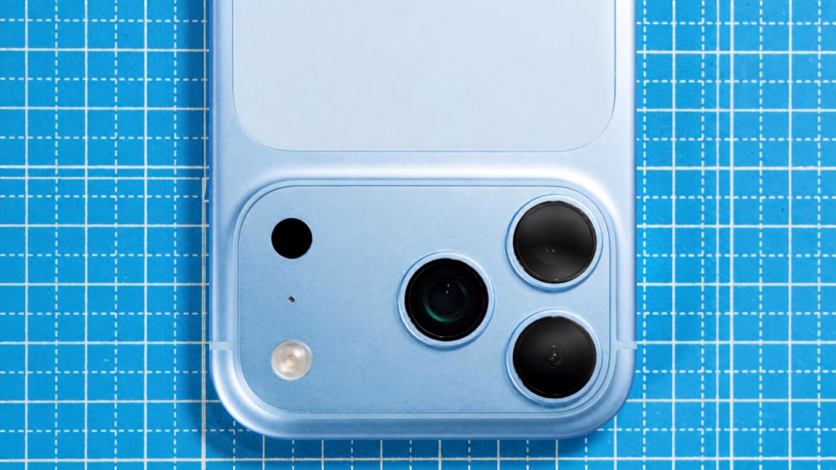
Jakub Zerdzicki/pexels.com
A federal investigation that could ultimately block iPhones, Galaxy smartphones, Pixel devices, AirPods, and Beats headphones from entering the United States was formally opened this week — and the notice appeared in Thursday's Federal Register on September 18 before most consumers had a chance to notice it.
The US International Trade Commission (ITC) voted on September 15, 2026 to institute Section 337 investigation No. 337-TA-1521, formally naming Apple Inc. of Cupertino, California; Samsung Electronics Co., Ltd. of South Korea; Samsung Electronics America Inc. of Ridgefield Park, New Jersey; and Google LLC of Mountain View, California as respondents. The proceeding was launched at the request of BoomCloud 360 Inc. — a small audio technology company based in Encinitas, California, with roughly $6.72 million in total funding — which claims the respondents are importing smartphones and headphones that infringe three of its US patents covering spatial audio enhancement and crosstalk cancellation. The ITC's decision to open the investigation was announced in USITC Press Release 26-134 on September 16, 2026.
The BoomCloud case targets a product scope that dwarfs most comparable ITC disputes in recent memory. An exclusion order covering smartphones from Apple, Samsung, and Google simultaneously would affect a substantial share of all consumer electronics imported into the United States each year — a breadth that is rare in ITC history even when a complainant ultimately prevails.
What BoomCloud Says Its Patents Cover
BoomCloud's ITC complaint, as supplemented on August 31, 2026, asserts three patents before the Commission: US Patent No. 10,524,078, US Patent No. 11,533,560, and US Patent No. 11,051,121. These are distinct from the three patents involved in Apple's parallel declaratory judgment suit in California federal court (US Patent Nos. 10,313,820; 10,721,564; and 10,757,527), which were in the original ITC complaint before the August 31 supplement. BoomCloud appears to be asserting at least six patents total across these related proceedings. The full scope description appears in the Federal Register notice.
The ITC's scope description, published in the Federal Register, identifies the covered technology in precise terms: "spatial enhancement for stereo speakers using gain adjustment of spatial and nonspatial components together with adjustments for asymmetries between left and right speakers; dynamic audio enhancement that applies enhancements based on rendering system information and metadata indicative of an audio consumption software application; and/or spatial audio enhancement using crosstalk processing together with compensation for spectral defects caused by the crosstalk processing."
That description maps to a specific digital signal processing technique. In conventional stereo, the audio signal is split into a sum channel (left plus right, also called the "nonspatial" or center component) and a difference channel (left minus right, called the "spatial" or stereo-width component). BoomCloud's subband enhancement patents cover processing those two components separately across different frequency bands — selectively widening the stereo image in mid frequencies where spatial perception is strongest, while leaving bass and treble unaltered to avoid artifacts. The crosstalk cancellation patents address a second engineering problem: when listening to speakers rather than headphones, each ear hears both speakers, which collapses the stereo image. Cancellation circuits inject a precisely timed and inverted signal to eliminate that bleed. Apple's "Spatialize Stereo" feature — which converts any stereo content into immersive sound on AirPods and Beats headphones — and Samsung's and Google's comparable implementations are what BoomCloud alleges to infringe.
How BoomCloud Got Here
The ITC filing represents the latest move in a litigation campaign that BoomCloud began on January 30, 2026, when it filed patent infringement suits against AT&T Services Inc. and T-Mobile USA Inc. in the US District Court for the Eastern District of Texas, accusing both carriers of infringing by selling Apple devices. In infringement contentions served on March 19, BoomCloud identified a wide range of Apple products as accused — from the iPhone 11 through the iPhone 17 and iPhone Air, along with iPads, AirPods models, Beats Studio Pro, and Powerbeats Pro — as documented in Apple's declaratory judgment complaint.
On June 17, 2026, BoomCloud expanded the campaign to the retail tier, suing Walmart Inc. (No. 2:26-cv-00245), Target Corporation (No. 2:26-cv-00489), and Best Buy Co. Inc. (No. 2:26-cv-00488), again in the Eastern District of Texas and again over the same patent families.
By the time BoomCloud filed at the ITC in August, it had accumulated at least five confirmed district court complaints against carriers and retailers — a pattern that patent litigation specialists recognize as a classic enforcement-ladder strategy: pressure the distribution chain before directly confronting the device manufacturers.
Why the ITC and What It Can Do
The decision to escalate to the ITC is significant beyond the faster timeline. Under Section 337 of the Tariff Act of 1930, the ITC investigates alleged patent infringement involving imported goods and can issue a "limited exclusion order" — a directive to US Customs and Border Protection to block the infringing articles at the border. That is an import ban, in practical terms.
ITC proceedings typically move much faster than district court patent litigation. From institution, the Commission generally reaches a final determination within 15 to 18 months — meaning a ruling in this case could arrive by the first quarter of 2028 if the investigation proceeds on a normal schedule. An administrative law judge will first issue an initial determination, which the full Commission then reviews.
The ITC process also differs from district court in a strategically important way for a small patent licensor like BoomCloud: federal district courts, following the Supreme Court's 2006 decision in eBay Inc. v. MercExchange, L.L.C., 547 U.S. 388 (2006), are reluctant to grant permanent injunctions to entities that do not make competing products. The ITC is not bound by eBay. The Commission can issue import exclusion orders even when the complainant is a patent licensor rather than a manufacturer — giving companies like BoomCloud access to a remedy that district courts would be unlikely to provide.
BoomCloud's ITC filings requested not only a limited exclusion order but also cease-and-desist orders and a bond on respondents' allegedly infringing articles during the mandatory 60-day presidential review period that follows any final determination.
The ITC must set a target date for completing the investigation within 45 days of institution — by approximately October 30, 2026.
What the Sonos Precedent Means
The closest recent ITC precedent for this dispute is the Sonos v. Google case, in which the ITC found in January 2022 that Google had infringed five Sonos home-audio patents and issued a limited exclusion order covering Google Home speakers, Chromecast streaming devices, Pixel smartphones, and Pixelbook laptops. Google subsequently implemented software redesigns — scaling back multi-room audio functionality — to avoid the import ban. US Customs later found that some Google redesigns remained infringing on certain products.
The BoomCloud case targets a product scope that dwarfs the Sonos precedent. The ITC also considers "public interest" factors before issuing any exclusion order, and respondents in high-stakes consumer electronics cases routinely argue that import bans would harm US consumers. The Commission can decline to issue an order, or limit its scope, when it finds that the public interest weighs against broad relief. It rarely does so, however, and courts have affirmed the Commission's wide discretion.
Apple Goes on Offense First
Apple did not wait for BoomCloud to name it directly. On August 5, 2026, three weeks before BoomCloud filed at the ITC, Apple filed a complaint in the US District Court for the Southern District of California (Case No. 3:26-cv-04492), seeking a declaratory judgment that its iPhones, iPads, AirPods, and Beats headphones do not infringe BoomCloud's patents. Apple is represented by Gibson, Dunn & Crutcher and has demanded a jury trial. The company also asked the court to find the case "exceptional" under US patent law — a threshold for awarding attorneys' fees against BoomCloud if Apple prevails.
Apple's complaint cited BoomCloud's own public marketing, including a CNN quote about Beats headphones reproduced on BoomCloud's website. Apple also noted BoomCloud's claim in the AT&T case that its technology has been "licensed and implemented by several large companies, including Qualcomm" — a licensing assertion that, if true, would support BoomCloud's argument that a domestic industry exists in the United States, which is an ITC requirement for Section 337 relief.
Apple Music rolled out Spatial Audio with Dolby Atmos support in June 2021, offering the format at no additional cost to subscribers and enabling it by default on AirPods and Beats devices. The company began paying artists up to 10% higher royalties for tracks available in Spatial Audio, and reported by early 2024 that more than 90% of its listeners had experienced music in the format. The breadth of Apple's Spatial Audio rollout — touching hundreds of millions of users — is precisely what makes BoomCloud's claimed infringement scope so large, and what makes Apple's countermove so aggressive.
Samsung and Google had not filed preemptive declaratory judgment actions as of September 18, 2026. Neither company had issued a public statement about the investigation.
What Is BoomCloud 360?
BoomCloud 360 describes itself as a developer of cloud-based audio enhancement technology for smartphones, headphones, and speakers. Founded in 2014 and headquartered in Encinitas, California, the company raised approximately $6.72 million in total funding across its history, according to CBInsights. It has filed 44 patents. Its three primary patent families were prosecuted by the law firm Fenwick & West; its infringement suits are being handled by litigation firm Russ August & Kabat.
The company holds no known consumer-facing products available for sale — it has not shipped the smartphones or headphones whose features it claims to have invented. That status matters for how the case will proceed: BoomCloud will need to satisfy the ITC's "domestic industry" requirement, which demands that the complainant show it has invested substantially in the US in connection with the asserted patents. Its claimed Qualcomm license — if confirmed — would be one pathway to satisfying that requirement through licensing activity, a theory the ITC has accepted in prior proceedings.
How Long Devices Stay on Shelves
The ITC's 45-day window to set a target date expires around October 30, 2026. An administrative law judge will then conduct discovery and hold a hearing — typically occurring five to eight months after institution, in roughly March to May 2027 — before issuing an initial determination. The full Commission will then review that determination and issue a final ruling, most likely by late 2027 or early 2028.
If BoomCloud prevails and the Commission issues a limited exclusion order, the respondents will have 60 days during the presidential review period to implement approved design-arounds or negotiate a licensing agreement — the outcome the case's economics almost certainly point toward. Most Section 337 investigations of this size resolve through settlement or licensing rather than a final import ban; the threat of the ban is what creates the settlement pressure.
If Apple, Samsung, and Google successfully challenge BoomCloud's patents or defend against infringement, the investigation ends without relief. Apple's declaratory judgment action in California is also running on a parallel track, though district court patent cases often slow or pause when a related ITC investigation is active.
Frequently Asked Questions
Could iPhones actually be banned from the US market?
The ITC has the power to issue an import exclusion order covering any of the accused devices if it finds that BoomCloud's patents are valid and infringed. In practical terms, major consumer electronics companies almost always implement software redesigns or reach licensing agreements before a final ban takes effect — as Google did in the Sonos case in 2022. A complete, permanent iPhone ban is the extreme outcome; the most likely resolution is a licensing deal or a court ruling that the patents are invalid or not infringed.
What is sub-band spatial audio processing, and why does it matter?
Conventional stereo audio captures left-right separation across all frequencies at once. Sub-band processing divides the audio signal into frequency bands — low, mid, high — and adjusts the spatial width of each band independently. BoomCloud's patents claim this approach more accurately mimics how human hearing perceives spatial cues, which are strongest in mid frequencies and weaker in bass. The technique is central to features like Apple's Spatialize Stereo and Dolby Atmos rendering on mobile devices. What is at stake in the ITC investigation is whether the specific method of applying gain to "spatial" (difference) and "nonspatial" (sum) components separately, at the subband level, with crosstalk cancellation and spectral defect compensation, falls within BoomCloud's patent claims — or whether Apple, Samsung, and Google use implementations that are sufficiently different.
Why can a company with no products of its own threaten to block iPhone imports?
The ITC is not bound by the eBay doctrine that governs district court injunctions, which makes federal judges reluctant to issue permanent injunctions for non-practicing entities (companies that hold patents but do not make competing products). At the ITC, patent holders who do not manufacture can still obtain import exclusion orders if they satisfy the agency's domestic industry requirement — which can be met through licensing activity alone. This asymmetry is why small patent licensing companies file at the ITC even against the world's largest consumer electronics makers: the threat of an import ban is a more powerful settlement lever at the ITC than in federal district court.
When will this be resolved?
The ITC typically issues a final determination 15 to 18 months after institution. With 337-TA-1521 instituted on September 15, 2026, a final ruling is expected by late 2027 or early 2028. Apple's parallel declaratory judgment action in the Southern District of California will run on its own timeline, though that case may be stayed or slowed while the ITC investigation proceeds.

-
 C114 Communication Network
 -
 Communication Home
