
 Search

Ultrahuman.com
Ultrahuman rolled out what it calls the most significant software update in the company's history on July 23, 2026. The "Emerald" update transforms the Ultrahuman companion app from a biometric dashboard into what the company describes as a proactive health guidance system — led by a new AI engine called UltraSphere that tells users what to do with their data rather than simply showing it to them. The update is free for all existing Ultrahuman ring users and is already available on both the Google Play Store and Apple App Store.
The central question UltraSphere is designed to answer is one the wearable health industry has failed to answer convincingly for years: you have the data — now what?
UltraSphere: From Numbers to Decisions
Positioned front and center on the redesigned home screen, UltraSphere generates more than 60 context-sensitive prompts Ultrahuman calls "Next Best Actions." These range from a nudge to step outside for morning light exposure to a caffeine cutoff reminder calibrated to an individual's circadian phase to a wind-down signal timed to the user's actual recovery state, not a fixed clock.
What sets UltraSphere apart from a standard notification system is the breadth of signals it draws on. The engine fuses sleep quality scores, recovery readings, heart-rate variability (HRV), skin temperature, menstrual cycle phase, movement data, stress indicators, and — for users of Ultrahuman's M1 or M2 Live continuous glucose monitors — real-time blood sugar readings. The recommendations are also adjusted for external factors: the user's location, local weather conditions, and time of day. A jet-lagged traveler landing in a new time zone will receive different guidance than a night-shift worker beginning a rest cycle at noon.
"All wearable trackers generate data," said Ultrahuman CEO Mohit Kumar. "Data is empowering, but people need something more than a number — they want to know what to do."
How UltraSphere Works — And Where It Gets Hard
UltraSphere runs on the Ring PRO's dual-core processor, using on-chip machine learning to process the fused biometric signals directly on the ring hardware rather than sending raw data to the cloud for analysis. This design choice enables offline access — one of the genuinely useful additions in Emerald — so users can retrieve insights and historical data without network connectivity.
The technical tradeoff is real, however. Running machine learning inference on ring-class hardware requires aggressive model compression: a dual-core microcontroller operating at milliwatt power levels cannot run the same complexity of personalization algorithm that a server-side model can. The signals themselves introduce a second constraint: HRV measured via photoplethysmography (PPG) — the optical sensor method rings use — is meaningfully less precise than the electrocardiogram (ECG) recordings that form the basis of clinical HRV research.
This means UltraSphere's recommendations are generated from compressed models running on indirect, noisy biometric proxies. That is not a fatal flaw — wearable-derived HRV and sleep data are genuinely informative — but it is the structural reason why generating a "Next Best Action" that is correct for a specific person's physiology on a specific day is a harder engineering problem than the marketing pitch suggests. Ultrahuman has not published independent validation of UltraSphere's recommendation accuracy, and the 21% VO2 Max accuracy improvement the company claims is based on an internal study of over 100 athletes, not external peer-reviewed testing.
Published research on health AI wearables in general finds the problem is not unique to Ultrahuman: some smart rings have been shown to overestimate total sleep time by nearly an hour per night, and AI-driven coaching built on those estimates inherits the measurement error downstream.
Redesigned App Built Around Action
Beyond UltraSphere, the Emerald update ships a comprehensive interface redesign with light and dark mode options, plus a restructured Ring tab that emphasizes timely, contextual information over static summaries.
Jade AI — Ultrahuman's existing recommendation layer — has been elevated to a dedicated standalone hub, connecting data across sleep, movement, recovery, blood markers, and continuous glucose readings. Three new tabs have been added: Sleep Screener consolidates all sleep-related data (including AFib detection and a smart alarm) into one view; Longevity surfaces health markers associated with long-term lifespan; and Windows displays time-sensitive insights — circadian phases, optimal caffeine timing, Vitamin D exposure levels — as they shift throughout the day.
The update also introduces Live View for real-time biometric data and Goals, a weekly target tracker.
Read more: Ultrahuman App Adds Les Mills Workouts With AI Recovery Tracking For Personalized Fitness Plans
A significant under-the-hood change is that all health data processing now runs on-device, meaning users retain access to insights and historical data without a network connection — a meaningful improvement for frequent travelers, gym users in poor-signal environments, and anyone concerned about health data leaving their device.
On the fitness side, Ultrahuman refined automatic workout detection, improved heart rate algorithms, and upgraded VO2 Max accuracy by 21%, citing an internal study conducted with more than 100 athletes.
Cross-Device Ambition: Apple Watch Users Welcome
Perhaps the most strategically significant addition in Emerald is cross-device compatibility. Users can now pair the Ultrahuman app with third-party wearables — including the Apple Watch, Garmin devices, WHOOP, and AirPods Gen 3 — to log workouts tracked on those devices within the Ultrahuman ecosystem.
The implementation works through HealthKit on iOS and Health Connect on Android — the standardized data-sharing APIs that allow authorized apps to read activity and biometric data logged by other platforms. This removes the all-or-nothing switching friction that has historically made changing wearable ecosystems difficult. An Apple Watch owner who does not want to replace their primary device can now feed workout data into Ultrahuman's analysis pipeline without owning the ring.
The move signals a deliberate strategic pivot: rather than competing narrowly as a hardware platform, Ultrahuman is positioning its app as a health intelligence layer that can ingest and interpret data from wherever users collect it.
A Company With Something to Prove
The Emerald launch arrives at a meaningful moment for Ultrahuman. The Bengaluru-based company spent much of late 2025 navigating a bruising patent dispute with Oura — Finland's market-leading smart ring maker — that resulted in a temporary US import ban on the Ring AIR after the US International Trade Commission ruled in Oura's favor in October 2025. The ban, which took effect October 21, 2025, cost the company an estimated $50 million in lost US sales and collapsed its domestic market share from 24.6 percent in mid-2025 to single digits by year's end.
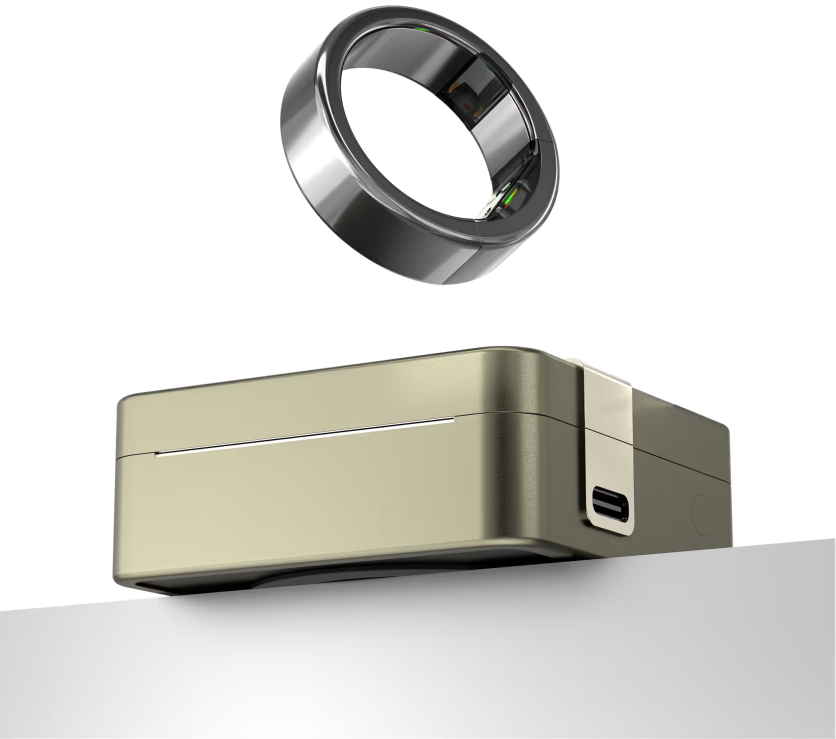
Ultrahuman's response was a full hardware redesign rather than a licensing settlement. The Ring PRO — the company's third-generation ring — features an all-titanium unibody architecture engineered specifically to work around the Oura patents. US Customs and Border Protection cleared the Ring PRO for import on March 24, 2026, and it began shipping globally on June 20, 2026, priced at $479. The Ring PRO carries no subscription fee for core health features.
Oura's $399 Ring 5 began shipping June 4, 2026. An Oura lawsuit in the Eastern District of Texas asserting additional patents against Ultrahuman remains active and unresolved.
Readers should also be aware that in June 2026, Ultrahuman confirmed a data breach that occurred March 27. Attackers used credentials stolen via malware on an employee's laptop to access an internal analytics platform, exposing wellness data — including contact details, transaction history, and fitness-related data — for approximately 0.1 percent of the company's user base. Ultrahuman said no passwords, payment information, production systems, or ring devices were compromised, and that the affected system was isolated within hours of detection.
Against that backdrop, Emerald is as much a statement of platform ambition as it is a feature release. While competitors Oura, Samsung Galaxy Ring, and RingConn have focused primarily on hardware refinements in recent cycles, Ultrahuman is making a clear bet that the next competitive frontier in smart rings is software intelligence — and specifically the ability to translate multimodal biometric data into guidance users can immediately act on.
Read more: Ultrahuman Ring Pro Ships Today: Subscription-Free Ring Targets Oura With 15-Day Battery
Does AI Health Advice Delivered From a Ring Actually Work?
Whether UltraSphere delivers on its promise will depend on factors Ultrahuman has not yet disclosed in detail — principally, how well the underlying models adapt to individual physiology over time. The stated profiles (athletes, new parents, shift workers, frequent travelers) describe broad categories; real health guidance must operate at the individual level, accounting for idiosyncratic baselines that population averages cannot represent.
The wearable health industry has repeatedly promised to turn raw biometrics into meaningful guidance, with mixed results. Context-awareness remains a notoriously difficult engineering problem: a recommendation to wind down at 9 p.m. is useful for a standard office worker and counterproductive for a nurse beginning a night shift. Ultrahuman says UltraSphere accounts for shift workers and travelers — claims that will face real-world scrutiny as users across varied schedules and physiologies put the engine through its paces.
For now, Emerald represents the most explicit effort yet from a major smart ring maker to shift the category's value proposition from passive data logging to active, personalized guidance. How well the on-chip models hold up against the noise in the underlying biometric signals will say a great deal about whether AI health coaching can actually work at scale — or whether the next iteration of the wearable dashboard problem is simply a more sophisticated dashboard.
Frequently Asked Questions
What is the Ultrahuman Emerald update?
Emerald is Ultrahuman's largest-ever platform update for its Ring app, rolled out on July 23, 2026. Its centerpiece is UltraSphere, an AI decision engine that generates more than 60 personalized daily health suggestions — called "Next Best Actions" — by fusing sleep quality, HRV, skin temperature, cycle phase, stress, movement data, and (for CGM users) blood glucose readings with external factors including location, weather, and circadian phase. The update is free for all existing ring users.
Can Ultrahuman now work with Apple Watch or Garmin?
Yes. Emerald adds cross-device compatibility, allowing users to pair the Ultrahuman app with Apple Watch, Garmin devices, WHOOP, and AirPods Gen 3. Workout data from these third-party devices feeds into Ultrahuman's analysis pipeline via HealthKit (iOS) and Health Connect (Android). This means Apple Watch owners can use Ultrahuman's intelligence layer without switching their primary wearable.
How accurate is UltraSphere's AI health advice, and what are its limits?
Ultrahuman has not published independent validation of UltraSphere's recommendation accuracy. The underlying biometric signals — particularly HRV measured via optical PPG sensors — are less precise than the ECG-based measurements that underpin clinical research, and running AI inference on ring-class hardware requires model compression that constrains algorithmic complexity. The 21% VO2 Max improvement Ultrahuman claims is based on an internal study of 100+ athletes, not external peer-reviewed testing. That does not mean the guidance is unhelpful, but readers should understand the signals feeding the AI carry inherent measurement limitations.
Is my health data safe with Ultrahuman?
In June 2026, Ultrahuman confirmed a data breach that occurred March 27 in which attackers gained read-only access to wellness data — contact details, transaction history, and fitness-related information — for roughly 0.1 percent of users. The company said no passwords, payment data, production systems, or ring devices were compromised. Ultrahuman has since strengthened access controls, deployed anomaly detection, and notified regulators. The Emerald update's on-device processing means more data is analyzed locally rather than transmitted to Ultrahuman's servers — which reduces, though does not eliminate, the exposure window.

-
 C114 Communication Network
 -
 Communication Home
