
 Search

Nec-lavie.jp
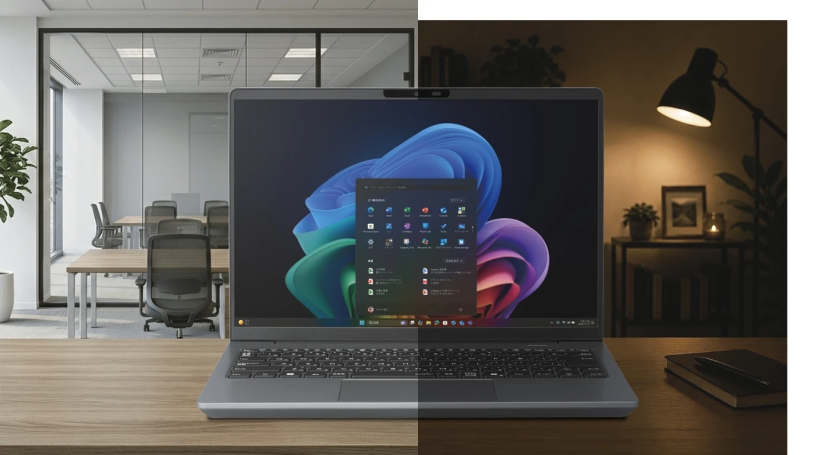
Japan's NEC Personal Computers has pulled off a doubly-constrained engineering feat: a 14-inch business notebook that weighs just 999 grams (2.2 lbs) while carrying a 99.9 Wh battery — the largest cell ever placed in a sub-kilogram laptop. The Lavie BM94C, announced July 23, is also the headline product of a sweeping corporate rebrand that retires NEC's long-running Mate and VersaPro business lines entirely.
That 99.9 Wh figure is not coincidental. The FAA and IATA set 100 Wh as the carry-on ceiling for lithium batteries — anything above that level requires special cargo handling or airline approval. NEC engineered the BM94C to reach the legal maximum a business traveler can bring into a passenger cabin without paperwork. The result is a laptop designed from the ground up around the regulatory rules governing where it will be used.
(Exchange rate as of July 24, 2026; conversions are approximate.)
Engineered to the Carry-On Ceiling
Fitting 99.9 Wh into a sub-kilogram chassis required a materials engineering partnership with Toray, the world's largest carbon fiber producer and a long-time aerospace supplier. The BM94C's base panel uses an aerospace-grade carbon fiber reinforced plastic (CFRP) laminate with resin-reinforced edges. The lid uses the same carbon layup paired with a new ultralight core — a material Toray had not previously supplied commercially — sandwiched between layers of glass-fiber-reinforced resin. Together, this layered structure provides the chassis rigidity needed to protect the battery cell while contributing very little to the total weight budget.
The comparison with NEC's own predecessor shows how far the engineering moved. The Lavie Nextreme, which launched in late May 2026 at ¥308,400 (approximately $1,882 USD), reached a 994-gram (2.19 lb) chassis using a similar Toray carbon body with a 74 Wh battery. The BM94C extends that lineage: 35% more battery energy in a chassis only 5 grams heavier. Achieving that required not just more of the same materials but a new core component that Toray had not put into commercial production before.
The laptop runs on Intel's Core Ultra Series 3 (Panther Lake) processors — the Core Ultra 5 322, Core Ultra 5 335, or Core Ultra 7 355 — launched at CES 2026 and built on Intel's 18A process node, the first consumer chips to use RibbonFET gate-all-around transistors and PowerVia backside power delivery for meaningfully better performance-per-watt than the prior generation. The BM94C uses the lower-to-mid Panther Lake SKUs, which prioritizes efficiency — the right engineering choice for a device whose primary value proposition is endurance.
Read more: Top CES 2026 Remote Work & Productivity Devices: Foldable Laptops, AI, and Ultralight PCs
What the Runtime Claims Actually Mean
Under JEITA 3.0 testing — the Japan Electronics and Information Technology Industries Association's standardized benchmark — NEC rates the BM94C at 30.5 hours of video playback and 50.8 hours at idle. NEC says that is sufficient for an overnight business trip without a charger.
A calibration is warranted here. JEITA testing runs under optimized conditions: reduced screen brightness, Wi-Fi typically disabled, and minimal background activity. Real-world testing by independent review outlets consistently shows JEITA figures — especially idle runtimes — outpace practical mixed-use performance by a factor of two or more. Even so, if the BM94C delivers 14 to 18 hours of genuine mixed-use runtime — a plausible real-world translation of its JEITA scores — it would represent class-leading endurance for a laptop at this weight.
For users who need a top-up, NEC includes 30-minute fast charging capable of supplying enough power for a full eight-hour workday — a manufacturer claim. A one-tap power-saving mode handles situations where even that is unavailable.
Long-Term Battery Health
Large-capacity batteries introduce a degradation challenge that most product announcements underplay. NEC addresses it with an AI-managed charging profile designed to retain approximately 72.7% of original capacity after five years of use — again, a manufacturer claim that has not been independently verified. The approach adjusts charge patterns based on usage habits, avoiding always charging to 100% — a technique that independent research on lithium-ion cell chemistry has shown to meaningfully extend cycle life by reducing calendar aging at high states of charge. For enterprise IT departments that run multi-year hardware refresh cycles, a battery health commitment with a specific percentage target at a specific year mark is more useful than a vague warranty assurance.
Specifications and Connectivity
The BM94C tops a seven-model refresh of NEC's business lineup — all now marketed under the unified Lavie brand. Configurations support up to 32 GB of LPDDR5X memory and SSDs up to 1 TB. The display is a 14-inch panel at 1920×1200 — the 16:10 aspect ratio adds vertical screen real estate compared with 16:9, a practical advantage for document work and spreadsheets.
Port selection is notably generous for a sub-kilogram machine: two Thunderbolt 4 ports, two USB 3.2 Gen 2 Type-A ports, full-size HDMI, and wired Gigabit Ethernet. That combination removes the need for a hub in most office environments — a real benefit for a road warrior machine. Wireless is covered by Wi-Fi 7 and Bluetooth 5.4. The chassis is 18.9 mm (0.74 in) thick and manufactured at NEC's Yonezawa plant in Yamagata Prefecture, Japan.
Read more: Best Laptops for Work in 2026: Top Picks for Productivity, Power, and Performance
Price and Availability
The Lavie BM94C is slated to go on sale in Japan in late July 2026, with prices starting at ¥584,100 (approximately $3,566 USD at the July 24, 2026 exchange rate of 163.81 yen per dollar). That positions the machine firmly in the enterprise segment rather than the prosumer market. The broader Lavie business lineup spans six notebooks and one tablet, with prices starting at approximately ¥404,800 (approximately $2,471 USD), with staggered availability running through September 2026. No international release has been announced.
NEC Retires Mate and VersaPro — and Why That Matters
The brand consolidation deserves more than a footnote. Mate and VersaPro have been NEC's enterprise PC identities in Japan for decades, and their retirement signals a deliberate repositioning. NEC is reframing Lavie — derived from the French for "life" — as a professional brand rather than a consumer one, and is citing AI as a structural design pillar: roughly 70% of the new lineup now qualifies as an AI-capable PC, up from approximately 30% in the prior generation, according to the company.
For enterprise IT departments currently managing Mate or VersaPro deployments, this consolidation is actionable intelligence. Refresh planning on those brands should now account for the fact that the enterprise roadmap runs through Lavie.
Ownership Structure and Data Privacy
Before buying or deploying the Lavie BM94C, IT procurement teams and security-conscious individual buyers should understand the ownership structure.
NEC Personal Computers Ltd. is majority-owned — approximately 95% — by Lenovo Group, a company headquartered in Beijing, China. NEC Corporation retains a small minority stake. This is not a recent development; Lenovo exercised its call option in 2016, acquiring the majority share.
As a Chinese-headquartered company, Lenovo operates under the following legal obligations:
China's National Intelligence Law (2017), Article 7 requires that all organizations and citizens must support, assist, and cooperate with national intelligence work in accordance with the law. This obligation applies regardless of where the company's products are sold, where its servers are located, or what its stated privacy policy says.
The Data Security Law (2021) imposes data localization requirements and grants Chinese authorities access to data held by covered companies.
The Cybersecurity Law (2017, amended in 2025 to add AI governance provisions) establishes additional network security obligations and government access provisions for companies operating under Chinese law.
These are not speculative risks. They are the fixed legal conditions of operating under Chinese jurisdiction. In February 2026, Lenovo faced a class action lawsuit in U.S. federal court alleging that its website tracking systems transferred American consumers' behavioral data to entities linked to China, in potential violation of the DOJ's Data Security Program (28 C.F.R. Part 202), which took effect April 8, 2025. Lenovo has denied the allegations. Separately, Lenovo-branded products are banned from use by the U.S. Department of State and Department of Defense. NEC-branded products have not been named in those specific bans.
What this means practically: The Lavie BM94C is a Windows laptop manufactured in Japan. The device itself runs standard Windows, and data collection at the OS level is governed by Microsoft's privacy settings, not NEC's. The AI Plus Biz software suite included by NEC has not been independently audited for its data practices. The corporate-level legal exposure is real regardless of where the hardware is physically built.
What buyers can do:
- Review and restrict telemetry settings in Windows before first use
- Audit the NEC AI Plus Biz suite for network activity before enterprise deployment
- Apply standard firewall monitoring to flag unexpected outbound connections
- Consult legal counsel before deploying in environments subject to government data-handling requirements
No mitigation fully eliminates the structural legal risk inherent in a device with a Chinese majority-ownership corporate parent.
What the BM94C Means for the Category
The engineering challenge the BM94C addresses — the tradeoff between chassis weight and battery capacity — has historically been treated as a near-fixed constraint. Manufacturers have consistently chosen between going light (and accepting shorter battery life) or going long (and accepting more weight). The BM94C demonstrates that this constraint has room to move when the materials science is sufficiently advanced and the supply chain partnerships are in place.
If the machine delivers real-world runtime in the 14-to-18-hour range, it will have done something genuinely new in the sub-kilogram category: made the laptop that comes back from a two-day trip with battery remaining into a product, not a promise.
The decision for potential buyers is not uncomplicated. The engineering achievement is real. The price is high. The availability is Japan-only. And the ownership structure carries legal implications that enterprise security teams should factor into procurement decisions alongside the headline specifications.
Frequently Asked Questions
How long will the NEC Lavie BM94C battery actually last in real-world use?
NEC's official rating is 30.5 hours for video playback and 50.8 hours at idle under JEITA 3.0 — Japan's standardized battery benchmark, which runs under conditions more favorable than typical office work. Based on patterns across the industry, real-world mixed-use runtime for a machine with these JEITA scores would likely fall in the range of 14 to 18 hours, though no independent review has yet tested the device. The 30-minute fast charge feature — a manufacturer claim — is intended to extend usability when a full recharge is not possible.
Is NEC a Japanese or Chinese company?
The NEC brand has Japanese origins dating to 1979, and the Lavie BM94C is manufactured at NEC's Yonezawa plant in Japan. However, NEC Personal Computers Ltd. is approximately 95% owned by Lenovo Group, which is headquartered in Beijing, China. That ownership structure means Lenovo — and therefore, indirectly, the entity behind NEC-branded laptops — is subject to Chinese laws including the National Intelligence Law (2017), the Data Security Law (2021), and the Cybersecurity Law (2017). Buyers making decisions based on national origin should treat the device as a product of a Chinese-majority-owned company manufactured in Japan.
What is the airline carry-on limit for laptop batteries, and why does 99.9 Wh matter?
IATA and FAA regulations permit lithium batteries up to 100 Wh in carry-on luggage without any special authorization. Batteries between 100 Wh and 160 Wh require airline approval; anything above 160 Wh cannot travel in the passenger cabin at all. The Lavie BM94C's 99.9 Wh battery sits one tenth of a watt-hour below that ceiling — a deliberate engineering choice to maximize battery capacity while remaining fully compliant with the rules governing how the machine will actually be used by the business travelers it targets.
Is the NEC Lavie BM94C available outside Japan?
As of the July 23, 2026 announcement, no international availability has been announced. The device is slated to launch in Japan in late July 2026, with other models in the seven-product Lavie business lineup staggered through September 2026. NEC Personal Computers has in the past offered some Lavie models internationally, but no such commitment exists for the BM94C at this time. The $3,566 USD starting price figure is a conversion at the July 24 exchange rate; the device has not been priced for any market other than Japan.

-
 C114 Communication Network
 -
 Communication Home
