
 Search

Samsung.com
Samsung's Galaxy Z Fold 8 Ultra is in reviewers' hands, and the early verdict from Tom's Guide delivers a compelling but clear-eyed picture: this phone largely earns its new "Ultra" badge, but two omissions — one of them glaring — will determine whether it belongs in your hands.
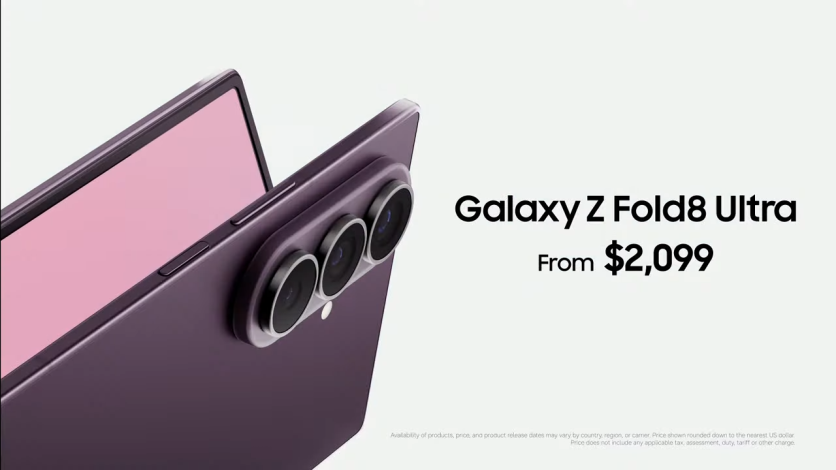
Announced July 22 at Samsung's Galaxy Unpacked event in London, the Z Fold 8 Ultra is the first foldable in Samsung's lineup to carry the "Ultra" designation — a tier the company has reserved for its highest-performance S-series flagships since the Galaxy S series established it. Starting at $2,099 for the 12GB RAM / 256GB base configuration, with a 512GB variant at $2,299 and a 1TB top tier at $2,699, this is unambiguously Samsung's most expensive foldable to date — $100 more than its predecessor at each tier. It goes on sale August 7. (Exchange rate as of July 24, 2026; conversions are approximate.) In Europe, pricing starts at €2,199 (approximately $2,503 USD) for the base configuration. In the UK, the entry-level price is £1,899 (approximately $2,529 USD).
Flex Titanium: How Samsung Rebuilt the Display From the Inside Out
The most significant engineering achievement here is not what you see, but what you no longer see. The Z Fold 8 Ultra's near-crease-free 8-inch inner display is the product of a structural overhaul called Flex Titanium — a redesign of the display stack that replaced the conventional polymer film underneath the OLED panel with a two-layer titanium system.
Here is how it works. Conventional foldable OLEDs use polymer film as the structural backing beneath the panel. Polymer is flexible but soft — under repeated folding stress, it permanently deforms at the fold line, creating the visible groove that owners of every prior Fold model have lived with. Flex Titanium replaces the polymer film with a titanium-alloy film that measures roughly one-third the thickness of a human hair and delivers 20 times the mechanical stiffness of polymer film. That stiffness is the key: a stiffer backing resists permanent deformation, so the crease fails to set in.
Below the alloy film sits a second component — a titanium support plate — which anchors the display module when the phone is unfolded. Samsung engineers introduced micro-patterned holes in the folding section of this plate, allowing the plate to flex at the fold point without cracking while maintaining rigid support everywhere else. Together, the two titanium layers are rated for more than 200,000 folding cycles under standard environmental testing — and Samsung claims the system reduces crease visibility by up to 80% compared to prior generations.
In practice, reviewers who have used the device confirm that the crease is largely imperceptible when the display is on. It becomes faintly visible under direct bright ambient light or when the screen is off, and you can still feel it under your fingertip when scrolling — but it no longer dominates the viewing experience the way it has on every Fold through the Z Fold 7. That is meaningful progress on the single most-cited objection to foldable adoption.
One more technical note on what makes this possible without adding bulk: titanium's stiffness creates an engineering paradox. The same property that prevents crease formation — high tensile strength — also resists folding. Samsung solved this not by softening the material but by perforating it: the micro-patterned holes in the fold zone create controlled flex points while the solid sections retain their structural integrity. It is the same principle used in perforated metal sheets in structural engineering, applied at sub-millimeter precision inside a smartphone, as Samsung's engineering team has described.
Silicon-Carbon Battery: Why 5,000mAh Fits in 4.1mm
The Z Fold 8 Ultra's 5,000mAh battery is a first for Samsung's foldable line — but the capacity number alone misses the engineering point. The reason this larger battery fits in a phone that unfolds to a 4.1mm profile and still weighs 215g (7.6 oz) — the same as its 4,400mAh predecessor — is the anode material.
The Fold 7 used conventional lithium-polymer chemistry with a graphite anode, like virtually every flagship smartphone before it. The Fold 8 Ultra uses a silicon-carbon composite anode. Silicon has roughly 10 times the theoretical lithium storage capacity of graphite, which means the same physical volume of anode material can store substantially more energy. That higher energy density is the direct reason 5,000mAh fits in the same physical footprint and weight budget that previously housed 4,400mAh. Without the chemistry change, a larger battery would have required either a thicker device or a heavier one.
The historical challenge with silicon anodes has been mechanical: silicon expands by roughly 300% during lithium absorption (compared to about 4% for graphite), which causes cracking and degradation over repeated charge cycles. Samsung's silicon-carbon approach addresses this by embedding silicon particles in a carbon matrix, which buffers the expansion and slows degradation — a technique that has matured considerably from its origins in high-capacity EV battery development.
The result in everyday use: early reviewers found the battery life strong enough that forgetting to charge overnight and still reaching mid-afternoon was a realistic scenario. Samsung claims up to 27 hours of continuous video playback, up from 24 hours on the Fold 7. Wired charging speeds have also jumped from 25W to 45W — Samsung says that reaches 67% in 30 minutes. Wireless charging moved from 15W to 20W, though Qi2 magnetic alignment is still absent.
Performance: Snapdragon 8 Elite Gen 5 Does Not Disappoint
Under the hood, the Fold 8 Ultra runs the Snapdragon 8 Elite Gen 5 for Galaxy — the same custom-binned Qualcomm SoC found in the Galaxy S26 series — paired with up to 16GB LPDDR5X RAM and storage options ranging to 1TB. Early gaming tests from Tom's Guide were unambiguous: PUBG Mobile at maximum graphics settings produced no frame drops or notable heat buildup during an hour-long session. That result is consistent with what the S26 Ultra delivered earlier this year using the same chip, and it sets a clear baseline for what to expect from extended use.
Camera System: Ultrawide Leaps Forward, Telephoto Lags Behind
The triple rear camera system on the Fold 8 Ultra is the most capable Samsung has shipped on a foldable: a 200MP primary sensor, a 50MP ultrawide (a major step up from the Fold 7's 12MP ultrawide), and a 10MP telephoto with 3x optical zoom. The main lens and the dramatically upgraded ultrawide produce consistently strong results in early testing, with shots of subjects and environments landing with clear detail and accurate color.
The telephoto is the exception. Early impressions describe its output as closer in quality to the 10MP selfie camera than to the 200MP main lens — a noticeable gap for a $2,099 device. Close-up macro shooting from the main sensor also proved finicky in initial testing; reviewers found the ultrawide handled short-distance subjects more reliably. The inner selfie camera produces images that are grainier and slightly washed out compared to the main shooter, though the foldable form factor offers a practical workaround: flipping the phone and using the rear cameras with the cover display as a viewfinder.
Galaxy AI and Now Nudge: Ambitious, but Not Yet Proven
Samsung has positioned agentic AI — AI that takes sequences of actions toward a goal rather than responding to single prompts — as a structural differentiator for the Fold 8 Ultra, and the large-screen form factor genuinely makes it a natural host for this capability.
The flagship AI feature is Now Nudge, which uses on-device intelligence to surface relevant context from emails, calendar entries, messages, and personal data, proactively suggesting actions: adding dinner plans from a chat thread directly to the calendar, then opening Multi Window to handle the booking. Samsung CEO TM Roh described the intent at Unpacked: the goal is a mobile device that "understands and adapts to each user" rather than waiting to be instructed. The companion Now Brief feature aggregates daily context into a proactive summary.
Task Automation — built in partnership with Google and compatible with more than 40 apps at launch — rounds out the agentic suite alongside Gemini Notebook for meeting notes and content transformation.
Twenty-four hours is not enough time for these features to demonstrate their full potential. Reviewers found that Now Brief had baseline functionality because data transferred over from a prior Samsung device, but Now Nudge needed more time to learn usage patterns before surfacing useful suggestions. MyFanCam — an AI video tool designed to track a single subject — was tested and reportedly does not recognize dogs, only people, a limitation that illustrates the early-stage nature of some features. These details emerged in Tom's Guide's 24-hour hands-on. These AI capabilities will be the central question of the full review evaluation.
What's Missing: S Pen Absent, Under-Display Camera Dropped
Two omissions stand out at this price point, and at least one is significant enough to be a dealbreaker for a specific buyer type.
The S Pen is not supported. Samsung's published explanation is the 4.1mm unfolded profile — achieving that thickness left no physical space for the internal silo the stylus requires. Third-party capacitive styluses function for basic input, but without the Wacom digitizer layer inside the display, Samsung S Pen features — pressure sensitivity, hover detection, Air Commands — are unavailable entirely. For buyers who used the S Pen as a primary productivity input on Galaxy Note or S Ultra devices, this is not a minor inconvenience. It is a capability gap Samsung has not yet solved in its foldable line, and the Z Fold 8 Ultra does not change that.
Samsung has also dropped the under-display camera (UDC) that debuted on the Fold 4 and continued through recent models. The conventional front camera placement is more reliable in practice — biometric speed improves, image quality improves — but it does mean giving up the uninterrupted inner canvas that was a long-standing design aspiration.
Cover Display: Narrower Than It Sounds
The 6.5-inch cover screen runs at a 21:9 aspect ratio — noticeably narrower than the 19.5:9 ratio of most flagship candybar phones. Reviewers who spent significant time with the device found the adjustment real: the wider 8-inch inner display felt paradoxically more comfortable for everyday scrolling than the cover screen. Vertical video fills the cover screen naturally; horizontal content works better once unfolded.
The narrower cover screen is a deliberate engineering trade-off. Achieving the 4.1mm unfolded profile and maintaining the 215g (7.6 oz) weight required a slimmer outer panel geometry. Whether that trade-off is worth it depends heavily on how often you expect to use the cover screen versus the inner display as your primary interaction surface.
Competitive Context: Foldable Market at an Inflection Point
The Z Fold 8 Ultra launches alongside the standard Galaxy Z Fold 8 — which takes a radically different form factor direction, with a shorter, wider near-square inner display at $1,899 — and into a market that Apple is expected to enter with its first foldable iPhone in fall 2026. Samsung's $100 price increase from the Fold 7 was described by CCS Insight's chief analyst Ben Wood as smaller than expected, a signal that Samsung is absorbing some of the cost pressure from ongoing mobile DRAM shortages rather than passing it fully to consumers.
Pre-orders are open now, with trade-in credits of up to $1,200 for qualifying Samsung devices available through the August 7 ship date. Those credits — including a peak value for trading in a Galaxy Z Fold 7 or Galaxy S26 Ultra — historically contract once the device reaches retail shelves.
Read more: Galaxy Z Fold 8 Deals: $1,200 Trade-In Credit Expires When August Shipping Starts
Is Galaxy Z Fold 8 Ultra Worth $2,099?
The case for yes: the Flex Titanium display is a genuine, technically-grounded leap — not marketing language — and the near-disappearance of the crease addresses the most persistent objection to foldable adoption. The silicon-carbon battery closes the gap between foldable and slab stamina in a meaningful way. The ultrawide camera upgrade from 12MP to 50MP is substantial. And the Snapdragon 8 Elite Gen 5 makes performance a non-issue.
The case for caution: the telephoto underperforms for this price tier. The S Pen gap remains unresolved and unapologized for. The 21:9 cover screen demands adjustment, particularly for anyone coming from a wide-screen flagship. And the agentic AI features — the headline differentiator Samsung bet the device's identity on — have not yet proven themselves in sustained daily use. A full review after weeks with the device will determine whether Now Nudge and Task Automation deliver on their architectural promise or remain technically ambitious but practically marginal.
The phone goes on sale August 7.
Frequently Asked Questions
Does the Galaxy Z Fold 8 Ultra support the Samsung S Pen?
No. The Galaxy Z Fold 8 Ultra does not support the S Pen in any form. Samsung's explanation is the device's ultra-thin 4.1mm unfolded profile, which leaves no physical space for the internal S Pen silo the stylus requires. Third-party capacitive styluses work for basic touch input, but Samsung S Pen-specific features — pressure sensitivity, hover detection, and Air Commands — are entirely unavailable because those depend on a Wacom digitizer layer inside the display, which the Fold 8 Ultra does not include.
How does Flex Titanium actually reduce the crease, and is it really gone?
Flex Titanium replaces the polymer film beneath the OLED panel with a dual-layer titanium system: a titanium-alloy film one-third the thickness of a human hair (20 times stiffer than polymer), plus a titanium support plate with micro-patterned holes at the fold zone that allow controlled flex without cracking. Samsung claims up to 80% crease reduction compared to prior generations. In practice, reviewers describe the crease as largely imperceptible when the display is on — visible under direct bright light or when the screen is off, and faintly felt under a fingertip when scrolling, but no longer the dominant visual interruption it has been on every prior Fold. The crease is not gone; it is dramatically reduced.
Why does the larger battery not make the phone heavier or thicker?
The 5,000mAh battery is larger than the Fold 7's 4,400mAh cell, but the phone weighs the same (215g / 7.6 oz) and unfolds to the same 4.1mm profile. The reason is the anode material: the Fold 8 Ultra uses a silicon-carbon composite anode instead of conventional graphite. Silicon stores roughly 10 times more lithium than graphite per unit of volume, which means a meaningfully larger capacity fits in the same physical space. The engineering challenge — silicon's tendency to expand and crack during charging — is managed through embedding silicon particles in a stabilizing carbon matrix, a technique refined from high-capacity battery development in electric vehicles.
When and where can I buy the Galaxy Z Fold 8 Ultra, and what does pre-ordering get me right now?
The Galaxy Z Fold 8 Ultra goes on sale August 7, 2026. Pre-orders are open now through Samsung.com and major carriers. During the pre-order period running through the August 7 ship date, Samsung is offering trade-in credits of up to $1,200 for qualifying devices — with the maximum value for a Galaxy Z Fold 7 or Galaxy S26 Ultra in qualifying condition. Those trade-in values historically decrease once a device reaches retail shelves, making the current window the likely peak.

-
 C114 Communication Network
 -
 Communication Home
