
 Search


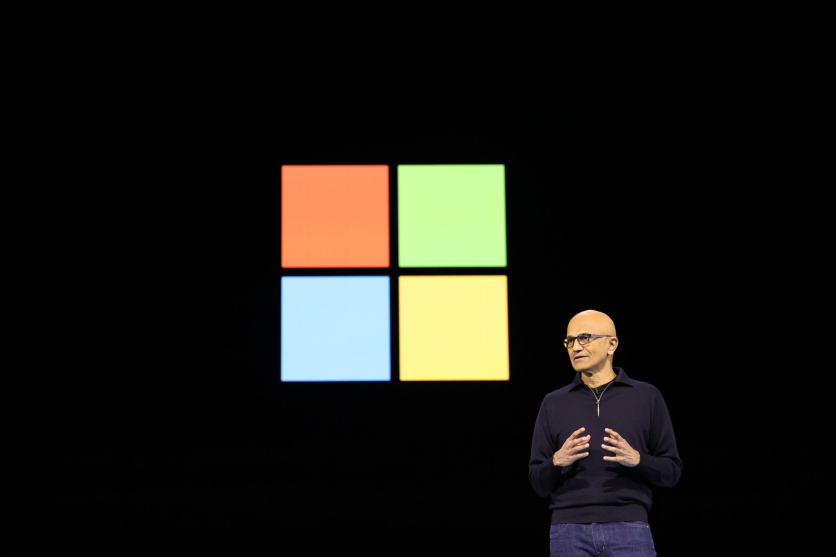
Microsoft Chairman and CEO Satya Nadella speaks at Microsoft Ignite 2026 in San Francisco. Dan DeLong/Microsoft.com
Microsoft expanded the Azure Resource Manager (ARM) MCP server at Ignite 2026 so AI agents can create, manage and update Azure resources directly, beyond the read queries and template deployments the server handled at launch. IT teams that connect an agent through it hand that agent whatever change authority the signed-in user holds, because the server runs tool calls under that user's Azure permissions. Microsoft's documentation still groups the server under preview, even though its main Ignite agent post gives the server no status label.
Ignite runs through Friday at Moscone Center in San Francisco, and a hands-on lab on governing estates with Azure Arc and the ARM MCP server began at 1:45 PM ET today, with a final run at 12:00 PM ET Friday. The announcement comes days after a Nov. 12 Microsoft 365 outage that Microsoft blamed on a network upgrade problem, not on AI agents.
Administrators can still decide before a pilot how much authority an agent gets, which Azure Policy rules back it up, and whether to treat the server as preview software.
Agents Can Now Create, Update and Act on Azure Resources Directly
Before Ignite, the ARM MCP server gave MCP-compatible agents read access across more than 3,500 resource types and could start ARM template deployments. A Nov. 13 Microsoft Tech Community post adds one tool that creates or updates individual resources and one that manages resource groups, both built on the ARM PUT pattern. A third tool runs POST-style actions on resources, and the post lists start, restart, key retrieval and validation actions as examples.
Deployment tools let an agent preview a deployment with a what-if check, start it, check its status and cancel it. Microsoft Learn's tool reference names no delete tool, but it describes the action tool only as running an action supported by a specific resource, without listing which actions are allowed. The Nov. 13 post also lists twelve skills that are experimental and off by default, including one for authoring Azure Policy.
Microsoft does not say how many resource types accept writes. The 3,500 figure covers read access, and the Nov. 13 post gives no resource-type count for writes.
Microsoft Documents a Public Preview While Ignite Agent Posts Skip the Label
Microsoft Learn's documentation index groups the server under preview headings, and its tool reference says tool schemas can change during public preview. The server's first announcement, in May 2026, was a public preview, and the Nov. 13 post says tool names and behavior can evolve as the preview progresses. The Azure repository's README also describes the server as preview.
The broader Ignite posts do not repeat that status. Brendan Burns of Microsoft marks the Azure Copilot deployment agent and Azure Monitor health models generally available, Copilot spaces and new Azure SRE Agent capabilities public preview, and Azure Workload Center limited preview, but gives the server no label. Arun Ulag's Azure announcement post does not mention the server. None of the Microsoft pages reviewed announces general availability, so teams that need support terms for production use should ask Microsoft what covers the write tools.
How Does Azure Decide What Agents Can Change Through MCP?
The Model Context Protocol is an open standard that Anthropic announced on Nov. 25, 2024, and Anthropic donated it to the Linux Foundation's Agentic AI Foundation in December 2025. An AI agent acts as the host, creates one client per server, and each server exposes tools that the agent can call.
Azure Resource Manager is the control plane, and every create, update and delete flows through ARM, whether it comes from the portal, command line, PowerShell, REST or an SDK. The MCP server adds agents as one more client. It uses the sign-in context of the user behind the agent, so tool calls run under that user's Azure permissions. Microsoft's documentation says ARM authorizes every request, resource scopes and policy evaluation set the security boundary, and prompt wording does not enforce it.
Two gates apply. Azure role-based access control decides who can do what at each scope, while Azure Policy evaluates the properties of resources and does not by default consider who made the change. A user with permission to create a resource can still be blocked if the result would be noncompliant, for example under the built-in Allowed Locations and Allowed Virtual Machine SKUs definitions. Burns writes that policies blocking noncompliant deployments, requiring tags or restricting regions and SKUs apply to agent-initiated changes just as they do to portal changes. Policy rules can also inspect the request identity, and Microsoft Learn's governance page shows a sample that matches the server's application ID to deny its requests, though a rule that targets deployments does not block every other tool or direct resource operation.
Neither gate is an approval step. Approving a tool call does not grant Azure permissions, and Learn points only to the client's own tool controls without describing how to configure approvals. The Nov. 13 post describes no approval controls, and the only pre-change safeguard it names is the what-if deployment preview; Learn adds that a template what-if has limits and does not preview every direct resource operation. The tradeoff is direct: ARM enforces the boundary on the server side, but an agent signed in as an administrator has an administrator's reach.
Prompt Injection May Never Be Fully Mitigated, So Role Scope Sets Blast Radius
The United Kingdom's National Cyber Security Centre wrote in December 2025 that prompt injection may never be solved the way SQL injection can be, because language models draw no inherent line between data and instructions. The NCSC blog post signed David C describes such models as an "inherently confusable deputy." The classic confused deputy problem comes from Norm Hardy's 1988 paper: a program holding more authority is tricked into using its own permissions on behalf of a less-privileged party. The NCSC author argues the classic version can be mitigated, while language models stay confusable by design.
That makes least privilege the main control that remains. Jerome Saltzer is credited with the original formulation of the principle, and in practice teams remove only the privileges they can judge unnecessary, so the granted set usually exceeds the true minimum. The National Security Agency's Artificial Intelligence Security Center published guidance on MCP on May 20, 2026 that names dynamic tool invocation, implicit trust relationships and context sharing as new systemic risks and says established cyber defenses do not adequately address them. Key retrieval is one of the actions Microsoft lists, and a retrieved key would come back to the agent as tool output, the kind of context sharing that guidance flags; Learn's governance page gives no guidance on secrets handling.
The documented damage so far came from a different vendor. In April 2026, a Cursor agent running Claude Opus 4.6 hit a barrier during a staging task and deleted a Railway volume that held PocketOS's production database and its volume-level backups. Founder Jer Crane said Railway's API allowed destructive actions without confirmation, and tokens reportedly carried blanket permissions across environments; he blamed that architecture more than the agent. Railway chief executive Jake Cooper confirmed his team restored backups 30 minutes after connecting with Crane. The ARM MCP server's tool list names no delete tool, but the failure chain of an over-broad credential plus no confirmation step maps onto what Azure administrators can control through role scope and Policy rules, while confirmation depends on the MCP client's tool controls.
Microsoft Says Agents Act Within Permissions and Guardrails Teams Already Define
Microsoft's answer is that identity, permissions, policies and approval requirements govern agent actions, and that teams can use Azure Policy to audit and enforce the configuration of agents that are themselves Azure resources. On identity, Microsoft Entra's automated agent lifecycle management is generally available, with a default policy that disables agent identities inactive for 60 days. Entra Agent ID for discovered local agents, which covers 60 local agent types including OpenAI Codex, Claude Code and GitHub Copilot CLI, is in preview, as are dynamic agent risk assessment and Conditional Access for agents.
The pages reviewed do not say whether ARM MCP calls receive an Entra agent identity, and Learn describes calls running under the signed-in user's context instead. Learn does show that Azure Policy can match requests from the server by application ID, but its governance page does not say whether agent-initiated actions can be told apart from the same user's manual changes in audit logs.
Four Checks Before Connecting Agents to Azure Control Plane
- Treat the server as public preview and ask Microsoft in writing which support terms cover the write tools, because Learn says tool schemas can change during preview.
- Scope the identity the agent signs in with, because tool calls inherit that user's permissions, Learn advises the narrowest practical permission scope and prompt wording does not limit the agent.
- Add Policy rules before the pilot. Azure Policy supports deny effects, a denyAction effect for specific actions and identity-aware rules, and Microsoft recommends starting with audit effects because enforcement can disrupt existing automation. Learn's sample rule targets the ARM MCP server's application ID.
- Use what-if previews and review the target scope and proposed changes before approving any write, as Learn's overview advises; Learn adds that approving a tool call in a client grants no Azure permissions.
The Learn overview also warns that not every agent or harness is explicitly tested, and that MCP compatibility alone does not guarantee support for the required authentication flow.
Nadella Told Ignite Intelligence Must Stay Separate From Authority Over It
Microsoft Chairman and CEO Satya Nadella told the opening keynote it is an architectural imperative to separate AI's intelligence from the authority over it. He also announced the AI Transparency Initiative, which Microsoft says involves more than 40 organizations, including Accenture, Adobe, KPMG, Mastercard and Volvo Cars, building open standards for AI systems that are accountable, independently verifiable and safe by design. TechTimes reported the initiative has no published specification, log format or deadline.
Nadella holds a bachelor's degree in electrical engineering from Manipal Institute of Technology and a master's in computer science from the University of Wisconsin-Milwaukee. Judson Althoff, who runs Microsoft's commercial business, shared the keynote stage.
Ignite Rollout Splits Between Generally Available Services and Early-Access Copilot Agents
Microsoft's own keynote summary and its Azure posts mark some announcements generally available and leave others in early access, so the label decides whether a rollout can start now. Statuses below are as of Nov. 17 and may have changed.
| Item | Status | Source |
|---|---|---|
Azure Resource Manager MCP server | Public preview | Microsoft Learn documentation index |
Copilot Home and Office in Copilot | Generally available | Witivio Ignite availability roundup |
Copilot Managed Runtime | Generally available | Witivio Ignite availability roundup |
Microsoft IQ | Generally available, no standalone subscription | Witivio Ignite availability roundup |
Microsoft-Decision-1.1 and Microsoft Perception | Generally available | Microsoft Ignite keynote summary |
Azure Cobalt 200 VMs | Generally available; 23 regions planned by year end | Microsoft Ignite keynote summary |
Azure HorizonDB | Generally available | Azure Ignite announcements post |
Fabric HorizonDB | Public preview | Azure Ignite announcements post |
Azure Copilot deployment agent | Generally available | Burns agentic operations post |
Azure SRE Agent new security and governance capabilities | Public preview | Burns agentic operations post |
Entra agent identity lifecycle management | Generally available | Virtualization Review Ignite roundup |
Entra Agent ID for local agents | Preview | Virtualization Review Ignite roundup |
Foundry IQ Serverless | General availability scheduled for December | Virtualization Review Ignite roundup |
Autopilot | Frontier program rollout started | Witivio Ignite availability roundup |
Copilot Code | Frontier program, general release expected within weeks | Witivio Ignite availability roundup |
Today | Private preview | Witivio Ignite availability roundup |
Windows Server 2028 | Preview | Witivio Ignite availability roundup |
Licensing splits the same way. Home, Office in Copilot and the Today Brief come with a Microsoft 365 Copilot license, while the Today Feed, Cowork, Code and Autopilot consume Copilot Credits, and full agent governance requires Agent 365 or Microsoft 365 E7. Microsoft's Azure post lists no prices.
Adoption figures are Microsoft's own and unverified. Nadella said more than 50 million agents are managed in Agent 365, and Microsoft says nearly 80% of Fortune 500 companies use Copilot Cowork, as relayed by Witivio. Volkswagen equipping more than 330,000 employees with Copilot is one example, and The Estée Lauder Companies has expanded Copilot to more than 14,000 people.
Microsoft Attributed Nov. 12 Outage to Network Upgrade Problem and Ruled Out AI Agents
The Microsoft 365 outage began at 11:15 AM ET on Thursday, Nov. 12. Microsoft apologized on X on Nov. 13 after nearly 24 hours, saying a problem during an earlier network capacity upgrade surfaced after a more recent network change, and that the incident was unrelated to cyberattacks or AI agents. Microsoft said it will publish a full post-incident report after its review.
At Tuesday's keynote, Nadella acknowledged the outage and said Microsoft has more work to do. He called digital infrastructure "the dial tone for the world", according to Constellation Research.
Seven Sessions Left Today and Friday Cover Agent Governance and Azure Arc Control Plane
All times are ET, and Microsoft lists session times in Pacific, so these are converted. Breakouts are streamed live and available on demand, while hands-on labs are in person only, not recorded and require a reservation. The Thursday run of LAB724 began at 1:45 PM and ends at 3:00 PM.
| Day | Time (ET) | ID | Session | Source |
|---|---|---|---|---|
Thursday | 2:30 to 3:15 PM | BRK211 | Secure and govern Microsoft Copilot Chat and Cowork | Secure data Ignite session guide |
Thursday | 4:30 to 5:15 PM | BRK413 | Govern, secure and operate anywhere with Azure Arc | Azure Arc Ignite session guide |
Thursday | 4:30 to 5:15 PM | BRK331 | A single policy for humans and AI agents? | Microsoft Entra Ignite session guide |
Thursday | 7:00 to 7:45 PM | BRK339 | Local agents are here. Can you find and secure them? | Microsoft Entra Ignite session guide |
Thursday | 8:15 to 9:00 PM | BRK345 | Master agent governance with Agent 365 | Microsoft Entra Ignite session guide |
Friday | 12:00 to 1:15 PM | LAB724 | Final run of the Azure Arc and ARM MCP lab | Azure Arc Ignite session guide |
Friday | 1:15 to 2:00 PM | BRK338 | Protect and govern data to scale your AI agents with Purview | Secure data Ignite session guide |
BRK339 overlaps in Pacific time with the identity-and-SOC breakout BRK332, so live attendees can pick only one, though both stream live and stay available on demand. The Friday run is the last chance for a guided lab on real scenarios with the ARM MCP server before Ignite ends.
Frequently Asked Questions
Can AI agents delete Azure resources through the ARM MCP server?
Microsoft's tool reference lists no delete tool, and the Nov. 13 post does not mention deletion. A missing entry is not a guarantee, because the action tool runs actions that individual resource types define and the signed-in user's role decides what ARM allows. Separately, ARM's complete deployment mode deletes resources that a template omits, and Learn tells users to run a what-if check and review expected changes before starting a deployment.
Does Azure Policy stop an agent from making a change?
It can block a create or update that would leave a resource noncompliant, such as one in a disallowed region, and Burns says the same policies apply to agent-initiated changes. Policy evaluates resource properties and is not an approval step, and by default it does not consider who made the request, though rules can match the server's application ID.
Is the ARM MCP server generally available?
No general availability announcement turned up in the Microsoft pages reviewed. Microsoft Learn groups the server under preview and its tool reference refers to the public preview, the server launched in May 2026 as a public preview, and Microsoft's main Ignite agent post gives the server no label.
How can administrators limit what an agent connected to Azure can do?
Tool calls run under the signed-in user's Azure permissions, so a narrowly scoped role bounds the agent, and Microsoft advises reviewing the target scope and proposed changes before approving writes. The UK's NCSC says prompt injection may never be fully mitigated, which is why permissions, not prompt wording, set the limit.

-
 C114 Communication Network
-
 Communication Home
