
 Search


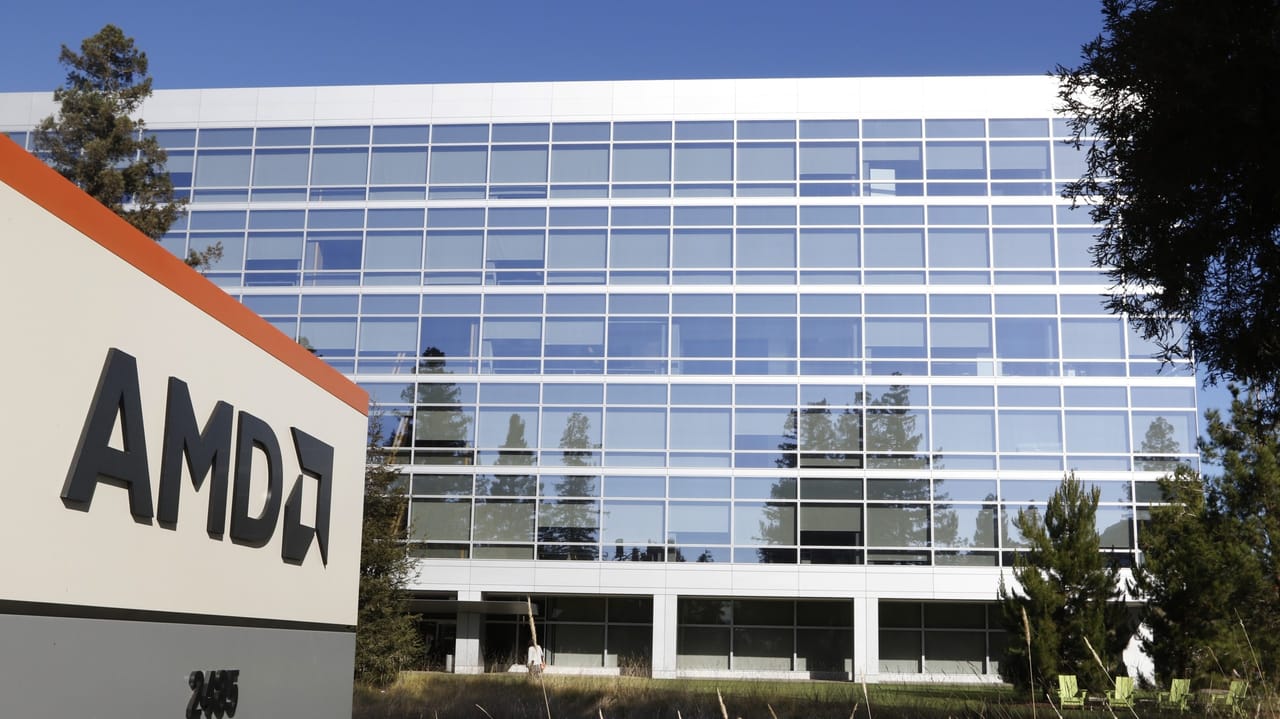
(Source: AMD)
AMD should be a juicy prospect for any telco trying to rearchitect its radio access network (RAN) and build it with general-purpose chips. Headquartered in Santa Clara, it is the only big alternative to Intel for central processing units (CPUs) based on x86 architecture, now a pillar of virtual RAN. Ignoring Chinese companies, it is also the only serious rival to Nvidia in the data center market for graphics processing units (GPUs), which Nokia is using to develop its future 5G and 6G products. Could AMD be a viable alternative for operators that want to construct a GPU-based RAN?
No, would seem to be the short answer. "Probably there's going to be a big, big backlash," said Piotr Weglicki, the telco lead for AMD's server business, when commenting on the use of "power hungry" data center GPUs in the RAN. His position would not entirely rule out AMD's development of a more lightweight GPU to meet the energy constraints of the mobile network. But almost three years have elapsed since Nvidia helped set up the AI-RAN Alliance and began promoting its vision of a GPU-based RAN. In that time, there has been no sign of an AMD response, which now seems less likely than ever.
Much like Intel, AMD continues to prefer the idea of a virtual RAN based on its line-up of CPUs. Most networks today use custom silicon, purpose-built for the RAN to be as energy efficient as possible. Perhaps the main drawback concerns the economics. Unlike CPUs or, indeed, GPUs, custom silicon developed at some expense cannot be sold outside the RAN sector, making the return on investment less attractive. While difficult to develop, it might also need to be replaced more often to accommodate new features.
That explains why a CPU holds some appeal. "What it gives telcos, actually, is access to data-center economics with much bigger R&D budgets with much faster development cycles," said Weglicki during a recent AI-RAN symposium organized by Omdia, a Light Reading sister company. "What we also see is that the general-purpose compute is absorbing the RAN acceleration. With each of the generations, we bring more CPU performance within the same power envelope, and we get much better power efficiency."
Easing off the accelerator
In this respect, AMD's approach is markedly different from that of its main competitor. Intel's latest products combine a CPU with a hardware accelerator, a sliver of custom silicon that handles an energy-hungry task called forward error correction (FEC), part of the critical Layer 1 (or L1) category of RAN functions (the L2 and L3 parts of the stack are widely considered to be less demanding).
Executives at AMD have previously criticized that decision to integrate the accelerator instead of providing it on a separate card, as Intel began by doing. Vendors such as Ericsson now claim to have made their virtual RAN products hardware-independent, meaning they could effectively port the software from an Intel CPU to an AMD one. But Intel's integrated FEC accelerator is seen as an impediment to this portability and an example of "vendor lock-in," as AMD described it two years ago.
AMD's initial strategy was to keep the FEC accelerator on a separate card that an operator would be able to connect to any standard server. But its T2 Telco Accelerator Card relied on a field programmable gate array (FPGA), a type of adaptable chip manufactured by Xilinx, which AMD acquired in early 2022. Those FPGAs have been criticized by some telco executives for being too power hungry, and AMD was unable to attract sufficient interest.
Its latest offerings dispense entirely with the accelerator and would also fit a very strict definition of virtual RAN. By upping the number of cores, the essential components of a CPU, AMD now claims to have a big enough count to handle a software-based FEC on the CPU itself. A model advertised earlier this year features as many as 84 cores, exceeding the 72 found in the most advanced Granite Rapids product from Intel.
"Forward error correction increasingly could be done on software on general-purpose cores, and the consequences of that are huge," said Weglicki during the Omdia symposium. The move gives operators more freedom to allocate CPU resources between network tasks and other workloads as and when required, he claimed. "Operators can decide how much compute they are going to allocate to L1, L2, L3, for instance, how much to AI-RAN models and how much to the edge application."
Samsung likes what it sees
Even so, AMD has made almost no visible progress against Intel so far and needs the big RAN vendors to bite. Geopolitics today rule out Huawei and ZTE as prospective customers, while Nokia appears fully committed to its GPU RAN strategy with Nvidia and Ericsson remains heavily invested in its own custom silicon. Although the Swedish company does now advertise a set of hardware-independent virtual RAN products, its only commercial partner is Intel.
Perhaps the most likely avenue to market is through Samsung, the South Korean company whose networks subsidiary currently ranks as the world's fifth-largest RAN vendor. A bigger advocate of virtual RAN than any of its larger rivals, Samsung has until now offered products that incorporate Intel's CPUs. But it has recently promoted AMD as an alternative option.
"We've been doing quite a bit of work with AMD around their platform that does not have acceleration but can support meaningful multicell capacity," said Alok Shah, the vice president of network strategy for Samsung Networks, earlier this year. "It's an 84-core platform and so that's a path that operators can certainly choose to go down."
A rollout beyond Samsung's footprint, however, would require other vendors to have developed software-only FEC and resolved any power concerns about relying on general-purpose processors for that task. No operator will adopt the technology if it cannot measure up against custom silicon and mainstream virtual RAN on power consumption. But it could realistically present a processor alternative in a small market long dominated by Intel. When it comes to GPU RAN, the industry still appears to be looking at Nvidia or nothing.

-
 C114 Communication Network
-
 Communication Home
