
 Search


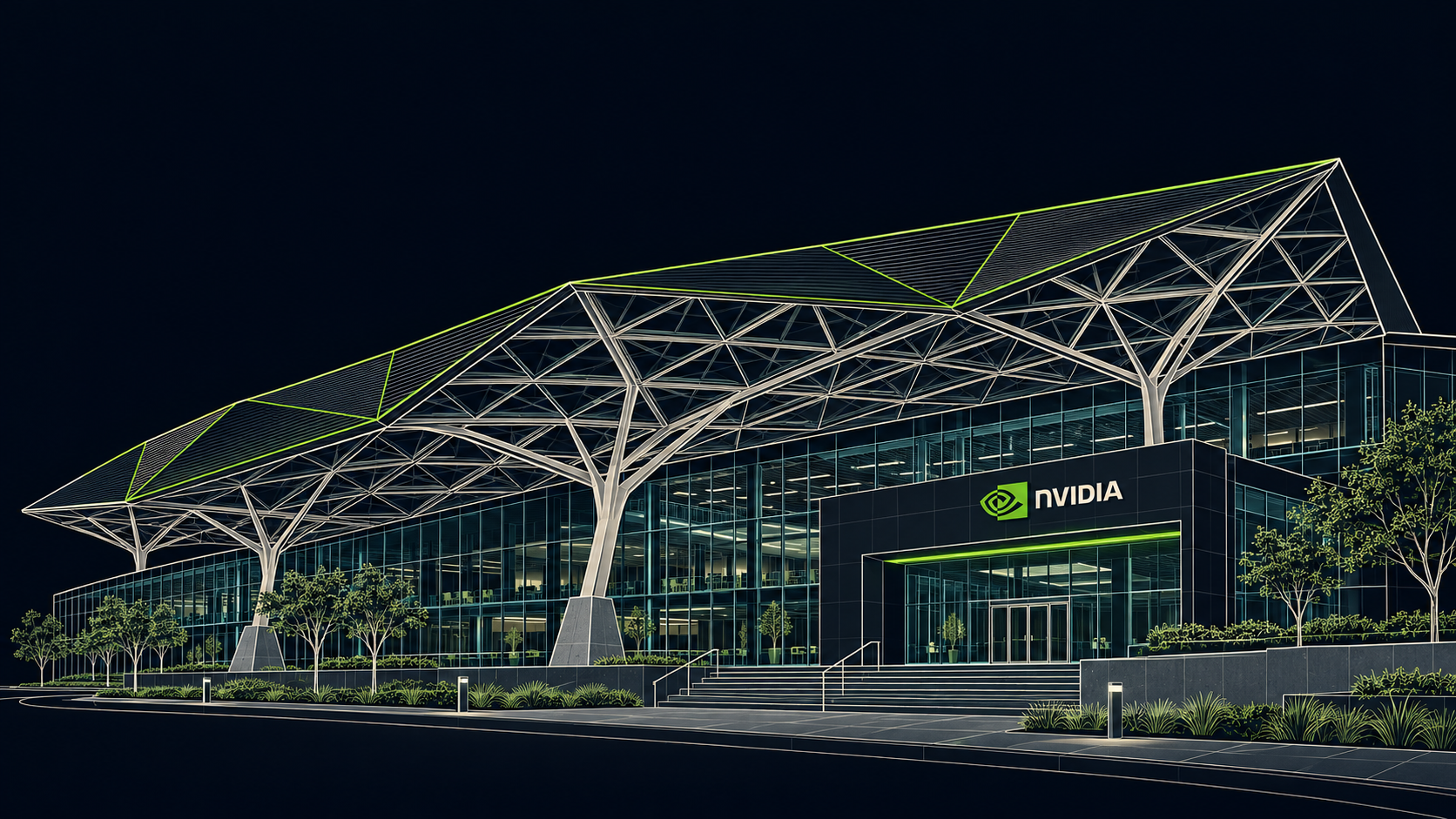
NVIDIA’s quarterly revenue more than doubled as AI infrastructure deployments continued expanding, with fiscal Q3 2027 sales reaching $115.8 billion. The company forecast another sequential increase for Q4, providing a fresh measure of infrastructure demand during a period of heightened investor uncertainty.
No mention of Jensen Huang in the earnings press release
The product transition is moving into customer operation. Vera Rubin systems are running at cloud partners, extending a rollout that already includes production workloads at CoreWeave and Google Cloud’s A5X deployment plans. The platform connects NVIDIA’s opportunity across accelerated computing, CPUs, networking and supporting infrastructure.
The results also provide the first quarterly financial update under interim CEO and CFO Colette Kress. NVIDIA’s existing company profile identifies Kress as interim leader following Jensen Huang’s November departure. The investor call is scheduled for 2 p.m. Pacific; its discussion and Q&A will be covered separately.
“Vera Rubin is off to an explosive start, our roadmap is on track and our ambition has never been greater,” said Kress.
| NVIDIA Q3 FY2027 | Earnings & Infrastructure |
| FINANCIAL RESULTS • Revenue: $115.8B; +20% sequentially, +103% annually. • Data Center: $107.6B; +21% sequentially, +110% annually. • Edge Computing: $8.2B; +42% annually. • EPS: GAAP $2.70; non-GAAP $2.68. • Gross margin: GAAP 74.8%; non-GAAP 74.9%. • GAAP operating income: $77.5B; net income: $65.3B. • R&D: $7.45B; operating cash flow: $48.25B. • Property/equipment and intangible purchases: $4.42B. |
| Q4 OUTLOOK • Revenue: $130B ±3%; additional reporting week. • No China Data Center compute revenue assumed. • GAAP/non-GAAP gross margin: 71%–72%. • Operating expenses: GAAP $11B; non-GAAP $10.7B. |
| PLATFORM & ECOSYSTEM • Vera Rubin NVL72 shipping; cloud deployment expands. • Vera CPUs extend standalone computing opportunity. • Spectrum-X, BlueField-4 and optical interfaces broaden infrastructure scope. • DSX POD integrates factory-built AI infrastructure. • Hugging Face acquisition agreed; completion remains pending. • Packaging, testing and manufacturing expansion continues. • Edge initiatives span PCs, robotics, automotive and AI-RAN. |
| CAPITAL & ACCOUNTING • Shareholder returns: $28.1B. • Remaining buyback authorization: $227.3B. • Dividend: $0.25; payable December 23, record December 2. • FY2027 non-GAAP measures include stock-based compensation. |
Financial and business highlights: NVIDIA’s November 17 release and supporting platform announcements.
Analysis
The quarter cleared an already demanding revenue benchmark. S&P Global’s November 12 Visible Alpha snapshot put consensus revenue at $109.3 billion and Data Center revenue at $101.8 billion. The reported results exceeded those estimates by approximately 6.0% and 5.7%, respectively. That distinction matters: investors were already anticipating very rapid expansion, so the relevant test was delivery above those expectations. S&P Global also identified the Rubin transition and its revenue contribution as central questions heading into the report.
Sentiment entering the announcement was unusually unsettled. Reuters reported that options implied an approximately 8.5% post-earnings move in either direction, more than twice the average move over the preceding eight quarters. Investors were seeking reassurance about demand and execution following the leadership change. Those options prices measured uncertainty; they did not predict the direction of the subsequent share-price reaction.
The outlook also exceeded the market’s aggregate benchmark. Reuters cited an LSEG Q4 revenue consensus of $125.25 billion, placing management’s midpoint approximately 3.8% above expectations. Shares initially rose about 2% in extended trading, according to the report. The guidance therefore supplied near-term reassurance, although an initial trading response does not establish a sustained change in sentiment.
Two qualifications deserve attention when interpreting the outlook. The additional reporting week affects sequential comparability, while the margin forecast makes profitability an important counterweight to revenue growth. However, the margin range was already part of the discussion: Converge Digest’s August earnings coverage recorded management’s expectation that gross margin would bottom at 71%–72% in Q4. It should therefore be evaluated against prior expectations rather than characterized as an entirely new warning. The forthcoming call can clarify the drivers, timing and assumptions.
For infrastructure suppliers, the broader question is how effectively announced capacity becomes productive computing. CoreWeave’s Cognition deployment and Google’s A5X architecture illustrate the dependencies: accelerator performance must be supported by networking, storage, orchestration and liquid cooling. NVIDIA’s expanding platform gives the company exposure across those layers, but deployment announcements alone do not establish customer utilization, financial returns or future orders.
| Company Profile | NVIDIA | |
| Headquarters | Santa Clara, California, USA |
| Leadership | Colette Kress, interim CEO and CFO |
| Status | Public company • NASDAQ: NVDA |
| Core business | Accelerated computing, AI infrastructure, networking and software |
| Infrastructure | Vera Rubin, Blackwell, Vera CPUs, NVLink, Spectrum-X Ethernet, Quantum InfiniBand, ConnectX and BlueField |
| Markets | Cloud and enterprise AI, scientific computing, graphics, robotics, automotive and telecommunications |
Company facts checked against NVIDIA’s corporate information and current announcements.

-
 C114 Communication Network
-
 Communication Home
