
 Search


Microsoft
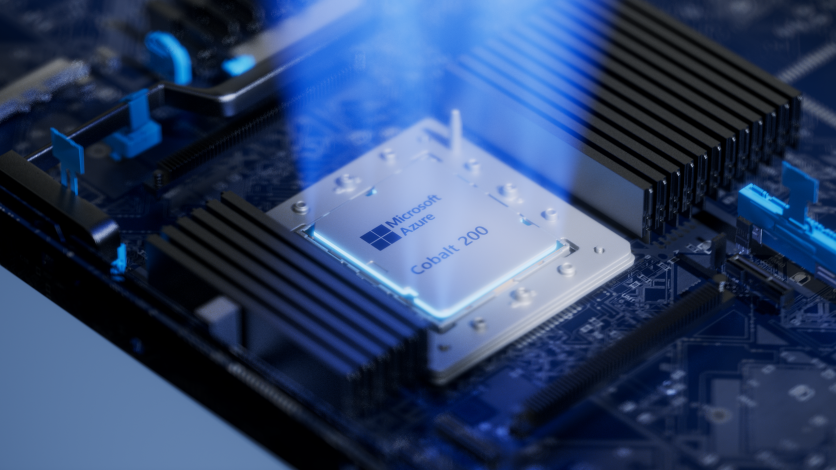
Microsoft made Azure Cobalt 200 virtual machines generally available in 14 Azure regions on Nov. 17 at its Ignite 2026 conference, and the 4-vCPU, 16 GiB Linux size lists at $0.196 per hour in East US, 40% above the $0.14 that Cobalt 100 matching size costs. Microsoft's headline claim is up to 50% better performance than Cobalt 100.
That price gap sets a break-even bar. At 40% more per hour for the same vCPU count, a workload must run at least 1.4x faster per vCPU for Cobalt 200 to cost less per unit of work than Cobalt 100, and Microsoft describes the uplift as measured per vCPU. Microsoft's up-to-50% figure clears that bar by about 7% at best, while the launch post calls these the leading price-performance general-purpose VMs in the Azure fleet without publishing prices or supporting figures.
The launch post came from Rani Borkar, president of Azure Hardware Systems and Infrastructure, and Arun Kishan, a technical fellow and corporate vice president who runs Azure Compute. Cobalt 200 is Microsoft's second-generation in-house Arm server processor, built with 132 Arm Neoverse V3 cores, and the general availability follows an early-access preview announced at Build 2026.
Same-Size Cobalt 200 VM Lists at $0.196 Per Hour, Above AMD's $0.182 and Below Intel's $0.265
In East US, the Intel-based D4s v7 lists at $0.265 per hour, which puts the Cobalt 200 size about 26% below it, while the AMD-based D4as v6 lists at $0.182, which puts Cobalt 200 about 8% above it. All four figures are Linux pay-as-you-go list prices for 4-vCPU, 16 GiB sizes, and Cobalt 200's rate carries a Nov. 1 effective date, while Cobalt 100's carries Oct. 1, 2024.
Cobalt 200 pricing scales in a straight line. A 1-vCPU size lists at $0.0489 per hour and a 128-vCPU size at $6.262, about $0.049 per vCPU hour, compared with $0.035 per vCPU hour for the 4-vCPU Cobalt 100 size. The premium is a list-price comparison for one region and operating system, and the reservation and Spot rates in the FAQ below do not close the gap.
Microsoft's Reported Gains Clear Break-Even by 7% to 36%, While Low-End Chip-Design Gain Falls Short
The launch post reports gains over Cobalt 100 of up to 1.5x on web serving, up to 1.6x on Java workloads, up to 1.5x on AI agent tool execution, 1.9x on database workloads, 1.65x on Microsoft Teams media processing and 1.3x to 4.15x on Microsoft's silicon-design workloads. Divided by the 1.4x break-even bar, those figures translate to price-performance edges of about 7% for web serving and agent tool execution, 14% for Java, 18% for Teams media, 36% for databases, and a 7% shortfall at the low end of the chip-design range.
Microsoft's June preview post listed different workload numbers: up to 135% better on cloud databases, up to 80% on caching, up to 45% on communication encryption and up to 40% on web serving. The 40% web-serving figure lands exactly on the break-even bar. Neither post discloses test configurations, benchmark suites or sample sizes.
Microsoft pitches the VMs for AI agents, and its Ignite Book of News says Cobalt 200 was built for AI agents, which do much of their work outside the AI model on general-purpose CPUs. Its agent tool-execution figure of up to 1.5x versus Cobalt 100 yields the same 7% best-case margin on this math.
What Do Deterministic and Opportunistic Modes Change on Cobalt 200 VMs?
Each Cobalt 200 vCPU is a full physical core with 3 MB of private L2 cache, backed by 192 MB of system-level cache and a memory controller with 12 channels of DDR5 that encrypts memory by default. The chip uses a chiplet design, with two tiles of 66 active cores each, and Microsoft can tune clock speed per core.
Customers choose between two clock policies through a ProcessorMode setting. Deterministic mode holds a steady 3.2 GHz for analytics clusters and services with tight latency goals, while Opportunistic mode boosts to 3.6 GHz when power and thermal headroom allow, for up to 12% more performance with some variability in frequency. The setting is available in the portal, CLI, PowerShell, Azure Resource Manager and Bicep. Dynamic frequency scaling is a power-management technique that adjusts clock speed automatically to conserve power and reduce heat, which is why a boost mode trades predictability for peak speed.
The mode matters for the cost math. A 12% boost would lift a 1.5x gain to about 1.68x and widen the best-case margin over break-even from 7% to 20%, but only in Opportunistic mode and only where headroom exists, and the launch post does not say which mode produced its performance figures. AWS's Graviton guide lists no turbo for Graviton5 at 3.3 GHz, so Cobalt 200's selectable boost is a design choice that AWS's published specifications do not offer for that chip.
The one-core-per-vCPU design is the second variable. Simultaneous multithreading issues instructions from several threads in the same core during the same cycle, so on x86 sizes where a vCPU is a hardware thread, one thread's speed depends on its sibling's load. Phoronix's Graviton5 tests used an Intel instance whose 16 vCPUs were eight physical cores plus their SMT siblings, and Microsoft's own chip-design post notes that its e160adsv7 comparison VM had hyperthreading enabled while the Cobalt VMs did not. Price per vCPU therefore compares different units across architectures.
Launch Post Benchmarks Only Cobalt 100, While Graviton5 Already Has Phoronix Results
Every comparison in the launch post uses Cobalt 100 as the baseline, and none puts Cobalt 200 against Graviton5, Google's Axion or an x86 instance. A separate Nov. 5 Microsoft post reports that Cobalt 200 beat unlabeled selected x86 Azure VMs on chip-design tools, but it uses one internal test case per tool, calls the results early, and says the x86 VMs were not mapped to specific SKUs.
Customer evidence is thinner than the customer list suggests. Amadeus reported flight-search throughput up more than 30% versus Cobalt 100, and InMobi said each 32-core machine handles about 50,000 inferences per second, with no baseline given. OpenAI reported higher throughput and lower latency on Cobalt 200 for ChatGPT workloads, while Databricks and Snowflake offered qualitative statements, all without figures.
Graviton5 has third-party results. Phoronix's Michael Larabel tested 16-vCPU instances with Graviton5, AMD EPYC Turin and Intel Granite Rapids, and his headline finding is that Graviton5 outperforms Granite Rapids but falls short of Turin.
Cobalt 200 Reaches 14 Regions as Microsoft's Own Documents Give 23 and 24 Year-End Targets
Cobalt 200 is generally available in Australia East, Canada Central, Central US, East US, East US 2, Indonesia Central, Italy North, Korea Central, South Central US, Spain Central, Sweden Central, UK South, West US 2 and West US 3, and Microsoft's Azure blog says expansion to 23 regions will follow by the end of 2026.
Microsoft's Ignite Book of News gives a different number: 24 Azure regions by year-end, with its list of existing deployments naming 11 regions and omitting Canada Central, East US 2 and Korea Central. Microsoft expects Cobalt 200 to make up a significant share of new Azure Compute capacity beginning in 2027.
Critical Arm Flaw CVE-2025-10263 Affects Neoverse V3 Cores That Cobalt 200 Uses
The National Vulnerability Database published CVE-2025-10263 on June 9, a flaw rated 9.1 critical that lists Neoverse V3 among several affected Arm CPU designs and may allow writes to resources owned by a higher exception level. The hypervisor project Hafnium notes in its security advisory HFV-1 that its workaround is off by default and must be enabled by integrators.
The flaw sits in Arm's core designs and is not specific to Cobalt, so it applies equally to other Neoverse V3 chips such as Graviton5. Microsoft's earlier description of Cobalt 200 said it uses Arm's Confidential Compute Architecture to keep virtual machine memory isolated from the hypervisor, which makes hypervisor and firmware patch status a fair question for Azure customers handling sensitive data.
Graviton5 Packs 192 V3 Cores to Cobalt 200's 132, While Axion Splits Between V2 and N3 Designs
Graviton5 uses the same Neoverse V3 core generation as Cobalt 200 with 192 cores, which is 60 more, and AWS lists a fixed 3.3 GHz clock for it. Google's Axion is split across two designs: C4A instances use Neoverse V2, while the newer N4A instances use Neoverse N3.
All three chips depend on designs licensed from Arm, which announced its own 136-core Neoverse V3 data center chip in March, and the Federal Trade Commission is reportedly investigating whether Arm could reject or degrade licenses while competing with licensees. Bloomberg reported the probe, as relayed by Reuters, and Arm declined to comment while the FTC did not immediately respond.
For teams running Cobalt 100 today, the launch turns a speed upgrade into a pricing decision. Cobalt 200 costs about 40% more per hour at the 4-vCPU size, sits about 26% below the same-size Intel option and about 8% above the AMD one, and needs a workload gain above 1.4x per vCPU to lower cost per unit of work. Opportunistic mode can add up to 12% for workloads that tolerate frequency variability, and Microsoft's own comparisons are all against its previous chip. The decisive test is a run of your own workload in both clock modes, priced at your own committed rate.
Frequently Asked Questions
Do reservations or Spot pricing change the Cobalt 200 cost gap?
Reservations keep the premium. In East US, a one-year reservation for the 4-vCPU Cobalt 200 size lists at $1,011 versus $726 for Cobalt 100, and a three-year reservation lists at $1,954 versus $1,402, roughly 39% higher in both cases. Spot is the exception, with the Cobalt 200 size at $0.0392 per hour against $0.055566 for Cobalt 100, about 29% lower, but Spot rates move with spare capacity and carry eviction risk, so list figures are a snapshot.
Can Cobalt 200 vCPU prices be compared directly with x86 VM prices?
Not until you check what a vCPU means. Each Cobalt 200 vCPU is a full physical core, but on some x86 sizes a vCPU is a hardware thread that shares a core with a sibling, as in the Intel instance Phoronix tested and the e160adsv7 VM in Microsoft's chip-design post. Cost per physical core, in the clock mode you will actually run, gives a fairer comparison than cost per vCPU.
Will existing Arm VM images run on Cobalt 200?
Microsoft says Cobalt 200 retains compatibility with existing Cobalt 100 deployments, and the launch post lists supported operating systems including Ubuntu, Red Hat Enterprise Linux, SUSE, Debian, Azure Linux, AlmaLinux, Rocky Linux, Oracle Linux and Windows 11 Client. Software that depends on x86-specific binaries or container images still needs porting, as on any Arm VM.
Is Cobalt 200 an AI accelerator for running agents?
No. Cobalt 200 is a general-purpose CPU, and Microsoft's argument is that agents do much of their work outside the model on general-purpose CPUs. The launch post positions Dpsv7 for web and application servers and agentic AI services, Epsv7 for databases, in-memory caches and vector search, and Mpsv4 for large in-memory databases and ERP systems.

-
 C114 Communication Network
-
 Communication Home
